Fuel is the story behind every used-car decision being made in Australia right now. The full restoration of the fuel excise came into effect on 3 August 2026, and by 12 August the daily average retail petrol price across the five largest capital cities was 200.9 cents per litre — 30.0 cpl higher than it was on 20 February. Diesel is higher again, at 241.6 cpl.
Those are the ACCC's numbers, published in its weekly fuel price monitoring report (opens in a new tab) on 14 August 2026. They matter to a private buyer or seller because they change the running-cost arithmetic on three of the most-traded categories on the used market at once: hybrids, electric cars, and diesel dual-cab utes.
What the official figures say
- Average petrol, 5 largest cities (12 Aug)
- 200.9 cpl
- Average diesel, 5 largest cities (12 Aug)
- 241.6 cpl
- Fuel excise, fully restored 3 Aug
- 53.7 cpl
- Electrified share of new sales, May
- 46%
- Battery electric share, July
- 21.7%
1. Hybrids: the larger half of the electrified market
Electric vehicles take the headlines, but conventional petrol-electric hybrids are the bigger seller. The FCAI reported (opens in a new tab) on 3 June that electrified vehicles — battery electric, hybrid and plug-in hybrid combined — made up 46 per cent of new vehicle sales in May 2026, with battery electric vehicles at 20 per cent. On the same basis, that leaves hybrids and plug-in hybrids as roughly the other 26 percentage points: the larger share of the electrified market, and by some distance.
New registrations are what fills the used market three to five years later, so a hybrid-heavy new market today is a hybrid-heavy used market at the end of the decade. What the excise restoration changes sooner is the appeal of the hybrids already on the road.
Two structural reasons that demand holds up, neither of which depends on a price forecast:
- No charging infrastructure required. A large share of Australian urban buyers live in apartments, townhouses or rentals with no dedicated off-street parking, so a wallbox is not an option. A hybrid delivers lower fuel consumption without one.
- Fuel consumption is the whole proposition, so check the official figure. The Australian Government's Green Vehicle Guide (opens in a new tab) publishes the tested combined-cycle consumption for every model sold here. Look up the exact variant and model year you are considering rather than trusting a range quoted in an ad — the difference between grades is often larger than buyers expect.
If you are weighing the three powertrains against each other, our guide to electric vs hybrid vs petrol sets out the running-cost comparison.
2. Used EVs: the questions have changed, and one common claim is wrong
The second-hand electric market has re-priced over the past two to three years. Two things are driving the supply side, and both are observable rather than forecast: new EV prices have fallen as more entry-level models arrived, and the first wave of three-year novated leases written under the federal electric car FBT exemption is now reaching the end of its term, which puts ex-lease Teslas, Polestars and Ioniqs into the used market in numbers. The exemption's current status — including what changed for plug-in hybrids on 1 April 2025 — is covered in EV fringe benefits tax explained.
For a buyer, the evaluation has shifted away from timing belts and gearboxes and toward the battery. What the evidence actually supports:
- Degradation is gradual, not a cliff. Geotab's analysis of more than 22,700 EVs found average degradation of 2.3 per cent a year, projecting to about 81.6 per cent of original capacity at eight years. Australian data agrees: Pickles tested more than 1,500 EVs and found an average state of health of 96 per cent. The full picture, including how charging habits change the rate, is in EV battery health and degradation.
- Get a state-of-health reading, not an estimate. An OBD2 scan with a model-specific app, the car's own display where it has one, or a professional test through the NRMA or mycar. A test that reads individual cell voltages catches imbalance that a single headline number hides.
- Check the charging hardware is included — both the portable 240V trickle cable and a Type 2 to Type 2 cable for public charging.
Do not assume a 70 per cent capacity floor on the battery warranty. It is one of the most repeated claims about used EVs and it is not what the Australian manufacturer warranty pages say. Toyota states 70 per cent for the bZ4X and BYD guarantees at least 70 per cent retention over 8 years / 160,000 km, but Nissan expresses it as bars on a gauge, and MG and Hyundai state no percentage at all. MG's high-voltage battery cover is 7 years / 150,000 km — not the headline vehicle warranty of up to 10 years / 250,000 km, which comparison sites routinely confuse it with. Read the specific brand's terms, and check whether the servicing conditions were met.
The full pre-purchase list is in buying a used electric car.
3. Diesel dual-cabs: the fuel gap is now the biggest variable
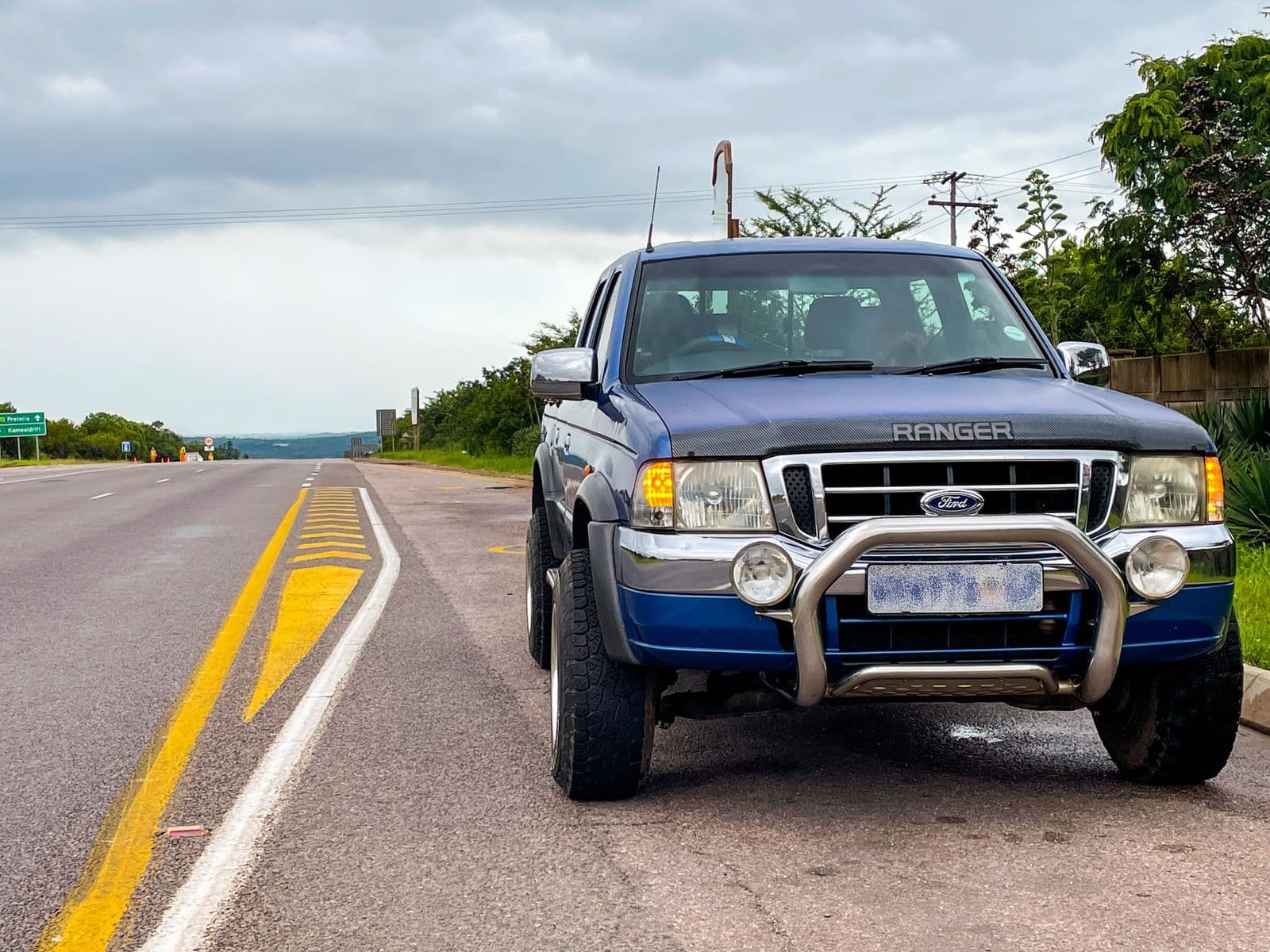
The Ford Ranger, Toyota HiLux, Isuzu D-Max and Mitsubishi Triton remain among the most searched vehicles in the country, and nothing in the fuel figures changes what a dual-cab is for. What has changed is the size of the gap: on the ACCC's 12 August figures, diesel at 241.6 cpl is running 40.7 cents a litre above petrol, and diesel has risen 65.0 cpl since 20 February against petrol's 30.0 cpl.
For a high-kilometre commuter that gap is worth modelling before you buy. For a vehicle bought to tow — the caravan, boating and horse-float use cases where a 3,500 kg braked capacity is the requirement — there is no petrol equivalent in the segment, so the gap is a running cost to budget for rather than a reason to switch.
One consistent piece of seller-side market behaviour worth knowing, offered as observation rather than as a measured figure: standard, unmodified, low-kilometre dual-cabs attract more enquiry than heavily accessorised ones. Buyers read a suspension lift, oversized mud tyres and an ECU remap as evidence of hard off-road or towing use, whether or not that is fair to the individual vehicle. If your ute is modified, keeping the original parts and the service history is what answers that objection.
What these figures do and do not tell you
The fuel prices are official ACCC monitoring data and the sales figures are the FCAI's own published releases. Neither is a used-price index. We have not quoted days-on-market or residual-value percentages, because no primary source publishes them — figures of that kind circulate widely, come from commercial valuation datasets, and we would not state one as fact. Treat any resale forecast you read, here or elsewhere, as an opinion about the future rather than a measurement of the present.
Strategic takeaways
If you are buying: the steepest depreciation happens in the first three years, so a three-to-five-year-old car with a complete logbook history is where the value sits. If you have off-street charging, run the sums on a used EV against an equivalent petrol car at today's fuel prices — the gap is wider than it was in February.
If you are selling: put the real figures in the ad. For a hybrid or a diesel, that means the official combined-cycle consumption for your exact variant and the most recent major service. For an EV, a recent state-of-health reading and the remaining battery warranty term answer the two questions every buyer will ask. In a market with plenty of supply, an afternoon spent detailing the car and assembling the documents is what separates a quick sale from a listing that sits.