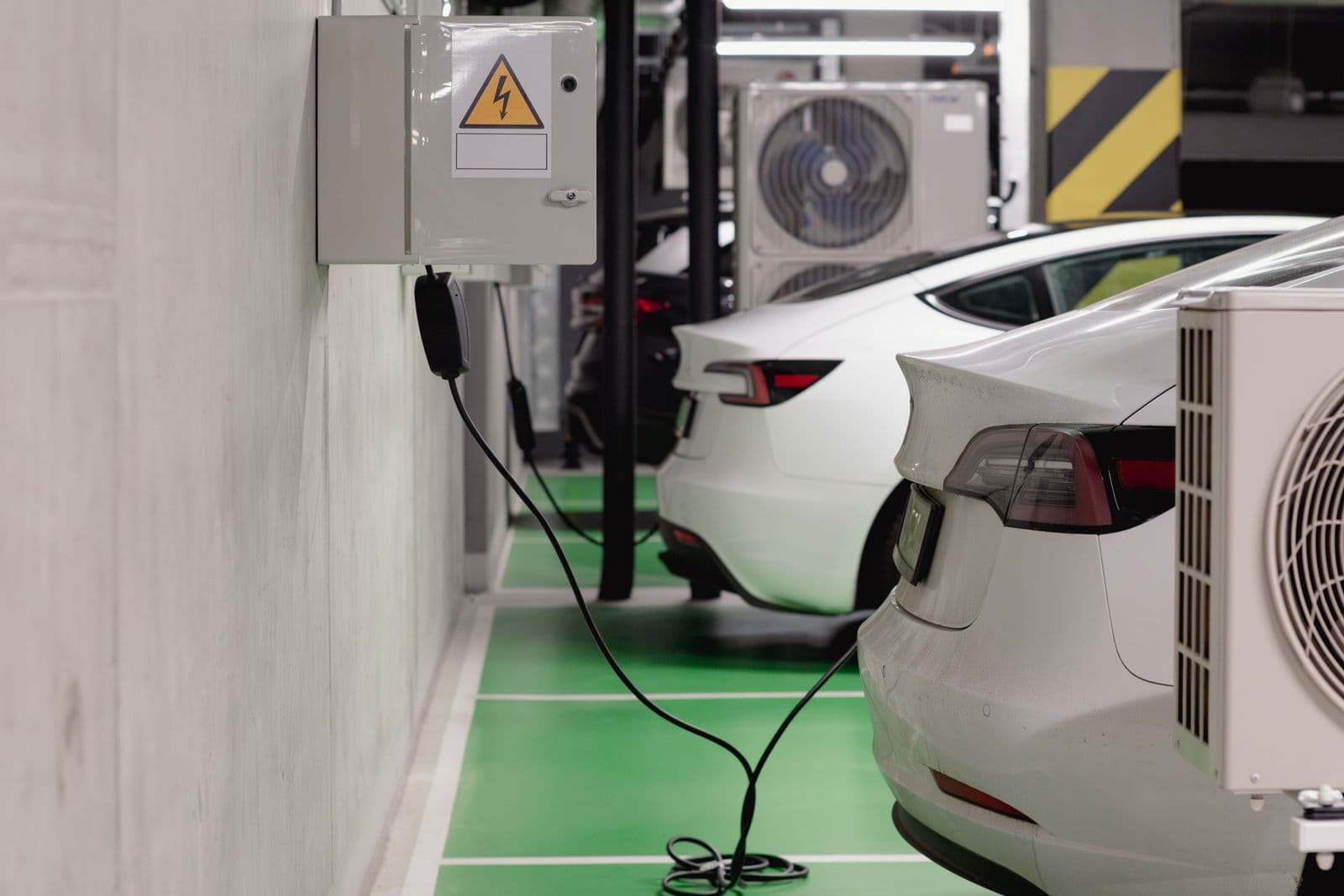
If you have looked at a novated lease on an electric car, you have probably been told it is "FBT free". That is broadly true, Treasury’s statutory review found it was successful at encouraging EV uptake, and it is one of the main reasons electric cars have sold the way they have in Australia since 2022 — and it comes with four conditions, a price cap, a reporting consequence that catches people out, and an announced end date.
Two things people get wrong most often. The exemption does not mean the benefit disappears from your tax affairs — it is still a reportable fringe benefit, and that figure can raise your HELP repayment, reduce Family Tax Benefit and Child Care Subsidy, and affect child support. And a home charging station is not covered, even when a lease bundles one in.
What the exemption actually does
Section 8A of the Fringe Benefits Tax Assessment Act 1986, inserted by the Treasury Laws Amendment (Electric Car Discount) Act 2022 (opens in a new tab), removes FBT from the private use of an eligible electric car provided by an employer. It applies to benefits provided on or after 1 July 2022.
In a novated lease, FBT is normally the thing that makes the arrangement expensive. Removing it is what lets the lease payments come out of your pre-tax salary without an offsetting FBT bill, and it is why the same car can cost noticeably less through a lease than it does bought outright. The ATO confirms that salary packaged arrangements are inside the exemption (opens in a new tab).
The four conditions
The ATO states four conditions, and the car has to meet all of them.
- It is a zero or low emissions vehicle — a battery electric vehicle or a hydrogen fuel cell electric vehicle. Since 1 April 2025, a plug-in hybrid does not count; see our guide to that change.
- It was first both held and used on or after 1 July 2022. Held means owned, leased or otherwise made available; used means used or available for use by anyone. A car first put into use on 30 June 2022 is disqualified permanently, and that disqualification follows the car through every later owner.
- It is used by a current employee or their associates.
- Luxury car tax has never been payable on the importation or sale of the car.
The vehicle also has to be a car in the FBT sense — designed to carry less than one tonne and fewer than nine passengers including the driver. Electric motorcycles and scooters are not cars and do not qualify.
The price cap is the luxury car tax threshold
Condition four is really a price cap, because LCT becomes payable above a threshold. For electric cars the relevant figure is the fuel-efficient threshold, and the value has to be under it at the first retail sale and at every sale after that.
LCT fuel-efficient threshold by financial year
- 2026-27
- $91,661
- 2025-26
- $91,387
- 2024-25
- $91,387
- 2023-24
- $89,332
- 2022-23
- $84,916
Source: the ATO's luxury car tax rate and thresholds (opens in a new tab) table. The threshold did not move between 2024-25 and 2025-26; that is what the ATO publishes, not a typo.
What counts toward that value is where the trap sits. The LCT value includes GST, customs duty, dealer delivery, and accessories, modifications and options fitted before delivery. It excludes stamp duty, transfer fees, registration and CTP insurance. So a car advertised at $90,000 driveaway may sit comfortably under the threshold once on-road costs come out — and a car listed below the threshold can be pushed over it by a few factory options and delivery. Read a "under the LCT threshold" claim carefully, and see our luxury car tax guide for the detail.
It is still a reportable fringe benefit
This is the part that surprises people. The 2022 Act inserted s 135P(3) into the FBT Act, which says that in working out an employee's individual fringe benefits amount you disregard section 8A — in other words, the exemption applies to the tax, not to the reporting.
If the taxable value of your reportable fringe benefits exceeds $2,000 in an FBT year, a grossed-up figure appears on your income statement. You are not taxed on it directly, but the ATO lists a long set of things it feeds into, including:
- Medicare levy surcharge liability (not the ordinary Medicare levy)
- Compulsory HELP, VSL, SFSS and apprenticeship loan repayments
- Family Tax Benefit Part A and Part B, and Child Care Subsidy
- Child support obligations
- Division 293 tax, the super co-contribution, and the private health insurance rebate
For someone with a HELP debt and children in care, the reportable amount can quietly claw back a meaningful share of what the lease saved. It is worth modelling with your own numbers before signing, not after. The full list is on the ATO's page on consequences of having a reportable fringe benefits amount (opens in a new tab).
What is covered, and what is not
Alongside the car itself, the exemption covers the associated car expenses: registration, insurance, repairs and maintenance, and fuel — which for an electric car means the electricity used to charge it.
Not covered:
- A home charging station. The ATO is explicit that it is not a car expense. It may instead be a property or expense payment fringe benefit, and be subject to FBT. Where a lease rolls charging hardware in, the ATO says its cost has to be separately identified.
- Car parking fees while charging at a commercial charging site — a separate benefit from the electricity.
- Periodic subscriptions, such as a GPS service.
- Non-business accessories fitted after purchase — wheels, tint, paint protection, personalised plates. These raise the car's base value, which raises the reportable amount.
Home charging: the shortcut rate
Rather than separating car charging from household electricity on one meter, the ATO publishes a cents-per-kilometre shortcut in PCG 2024/2 (opens in a new tab).
EV home charging shortcut rate
- From 1 April 2022
- 4.20 c/km
- From 1 April 2026
- 5.47 c/km
A different method applies to plug-in hybrids, because their consumption has to be apportioned between electricity and petrol. The guideline does not apply to electric motorcycles or scooters. If you also charge at commercial stations and cannot accurately determine the home share, you have to pick one method: use the shortcut rate and disregard the commercial cost, or claim the commercial cost and not use the shortcut at all.
What changes from 1 April 2027
On 5 May 2026, as part of the 2026-27 Federal Budget, the Government announced that the exemption will be replaced by a phased discount. This measure is not yet law, and an announced measure is not something to plan a four-year lease around until it passes.
As announced:
- The current exemption continues in full until the end of March 2027.
- From 1 April 2027, electric cars costing $75,000 or less keep a full (100%) FBT discount; those above $75,000 but below the LCT threshold get a 25% discount.
- From 1 April 2029, all eligible electric cars below the LCT threshold get the 25% discount.
The Government has said existing leases will not be affected, and that a car retains the treatment in place when the arrangement starts, for the life of that arrangement. The current statement of the measure is on the ATO's page for the electric car discount change (opens in a new tab).
Can a used electric car qualify?
Yes — and for a used-car buyer this is the most useful thing on this page. The "first held and used" test is a property of the car, not of you. The ATO's own worked example has an employer buy an EV in June 2022, first make it available in July 2022, then sell it in 2023 to another company, whose car benefits remain exempt.
The LCT condition is what usually decides it, and it has to be checked against every past sale. If the car was over the fuel-efficient threshold when it was new, LCT was payable then, and no later buyer can use the exemption. Where a car's sale history is unknown, the ATO expects you to work out whether LCT would have been payable — searching the VIN, establishing the build date, and researching what it sold for new.
Practically: a used battery electric car can be FBT-exempt on a novated lease if it was first held and used on or after 1 July 2022 and stayed under the fuel-efficient threshold at every sale. A used plug-in hybrid bought today cannot be, because a new lease is always a new commitment.
Before you commit
Ask the salary packaging provider, in writing, for the car's first-held-and-used date, its original retail price against the threshold for that year, and a full breakdown of what is inside the lease that is not an exempt car expense. Then check the answer against the ATO's electric cars exemption page (opens in a new tab), and talk to a registered tax agent about the reportable amount against your own circumstances.