Heading into harvest and the summer holidays, the federal government has quietly extended an emergency fuel measure for a second time. Suppliers can keep holding 20 per cent less petrol and diesel than their baseline reserve obligation until 31 January 2027, as long as they push more fuel into the domestic market and prioritise regional supply, Energy Minister Chris Bowen announced in late September (opens in a new tab). The same announcement says the National Fuel Security Plan is still sitting at level 2, and that 41 fuel ships arrived in September.
That is the plain-English version of a year Australian drivers would rather forget: a war in the Middle East, a fuel-tax cut to soften pump prices, and a country discovering how few days of fuel it actually keeps on hand.
- 49 days
- Australia's oil stocks, net-import cover (IEA, Mar 2026)
- 200 days
- Japan's oil stocks, same measure
- 90 days
- IEA minimum for member countries
In Australia
Earlier this year the government put numbers on how thin things were. In May, with steady consumption and no new imports, Australia held about 43 days of petrol, 33 days of diesel and 28 days of jet fuel (opens in a new tab), according to SBS's report on the government's fuel security package. That package, announced by the Prime Minister on 6 May (opens in a new tab), puts $3.2 billion into a government-owned reserve of about one billion litres, aims for at least 50 days of diesel and aviation fuel onshore, and lifts the minimum stockholding obligation by around 10 days across all fuel types.
The budget papers add the other half of the picture: the government says it is supporting "our two refineries" (opens in a new tab), and it cut fuel excise by more than half for three months. That cut was then stepped down from 32 cents to 16 cents a litre from 1 July and ended on 2 August (opens in a new tab), with the ACCC warning retailers it would act on misleading claims about price moves. If you want to know where each cent of a litre goes, we broke it down in what makes up the price of petrol.
The minister's advice to the rest of us has been consistent: "buy the fuel they need, no more and no less." (opens in a new tab)
The world view
The International Energy Agency asks its members to hold oil stocks equal to no less than 90 days of net imports (opens in a new tab). Going into the crisis, IEA figures charted by Statista put Australia at 49 days, well below that line (opens in a new tab).
The trigger was a long way from here. The conflict has constrained the Strait of Hormuz, which SBS describes as carrying roughly a fifth of global oil movement (opens in a new tab). When a chokepoint like that tightens, a country that keeps a few weeks of stock feels it at the pump and, worse, at regional depots first.
Another perspective: Japan
Japan is the interesting contrast. It produces almost no oil of its own, so it treats stockpiling as a matter of national safety, and the same IEA data puts it at about 200 days of net imports (opens in a new tab), roughly four times Australia's cover. Japan didn't fix its exposure by abandoning petrol cars. It fixed it by deciding that tanks of stored fuel were cheap insurance and paying for them year after year, in good times as well as bad.
That's the lesson we'd take. Australia's problem in 2026 was days of stock, not the existence of fuel.
Our take
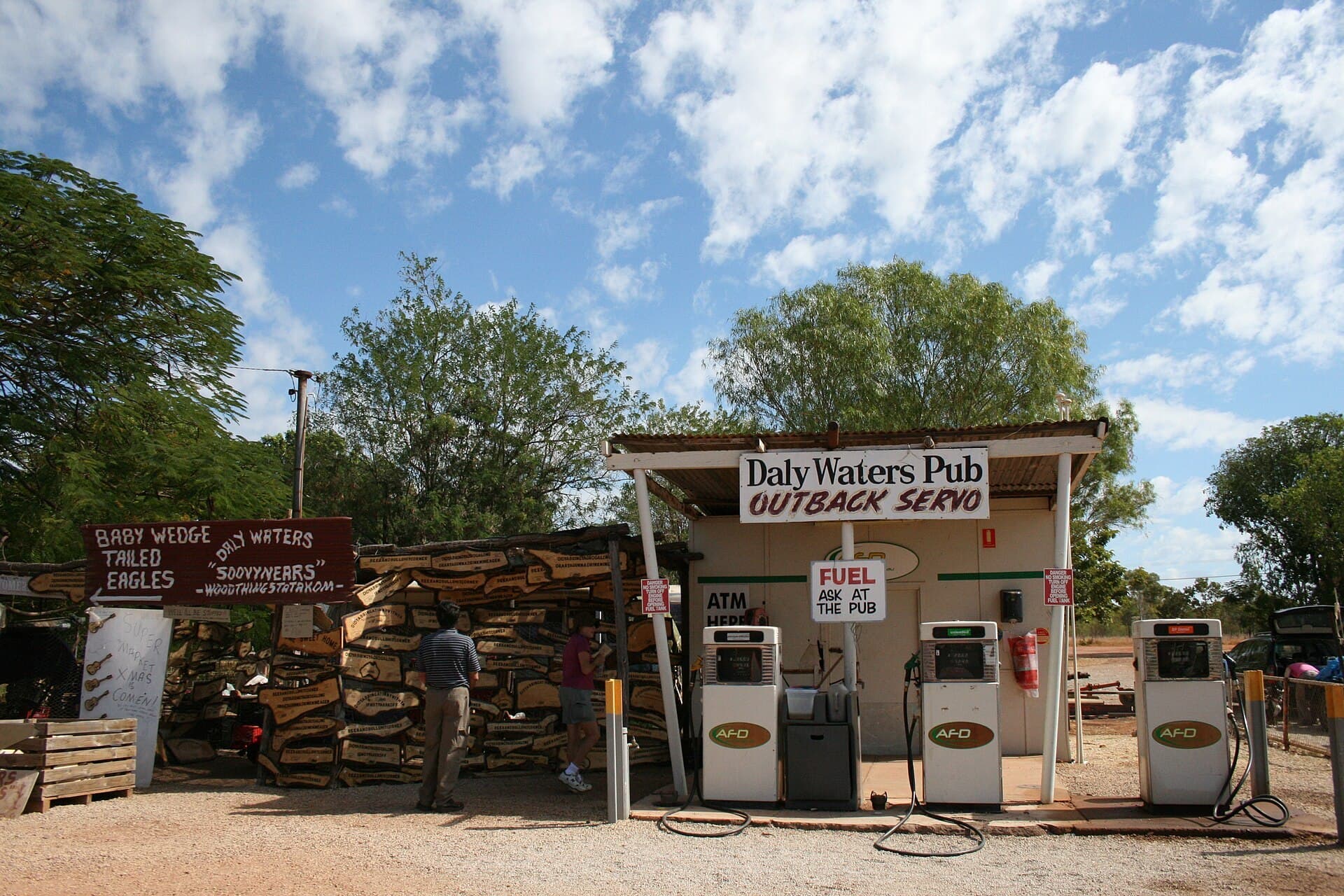
We think the 2026 scare gets misread. It has been used as one more argument that the petrol and diesel network is fragile and on its way out. Our view is the opposite. The servos, the tankers, the depots and the roadhouses in places like Daly Waters all kept doing their job. Diesel still runs the harvest, the road trains and the mines, and a petrol car can be refuelled in five minutes almost anywhere you can drive. That network is built, paid for and working.
What failed was the part behind it: two refineries left, weeks rather than months of stock, and a habit of assuming the next tanker always arrives. Those are fixable with storage and policy, which is exactly what Canberra is now (belatedly) funding.
There is a fair counterpoint, and we'll answer it. An electric car doesn't need a tanker from the Gulf, so in a fuel shock its owner is insulated. True, for that one driver. But the freight, farm and mining fleet that keeps the shelves full is diesel, and it isn't switching any time soon. And the electricity has its own constraints, as we argued in the grid problem is your street. Swapping one bottleneck for another isn't security.
So keep the car you have if it works for you, keep it maintained, and push your representatives for the boring stuff: bigger tanks, more days in reserve and a refinery or two kept alive. The opposition argued in May for a 60-day stockholding obligation (opens in a new tab); on Japan's example, more days is the right direction whoever is counting.
Nothing in the September extension changes what you pay or how you fill up. It gives suppliers room to keep fuel moving to regional areas through harvest and the holidays. If you're towing or touring the outback this summer, plan your stops as you always would.
Related
Related reading
- What makes up the price of petrol in Australia: benchmark, excise, GST and margins
A 205-cent litre broken into its five parts using ACCC August 2026 figures, how price changes reach the pump, and the full timeline of the 2026 excise cut and restoration.
- The Grid Problem Isn't National. It's Your Street.
My argument: the EV rollout is running ahead of the wires in the ground. The national average hides the street-level problem — and Australia skipped the efficiency step entirely.
- Electric cars aren't as green as the brochure says
The carbon spent building the battery, the coal behind the plug, the cobalt mines and the batteries nobody recycles. What the electric car brochure leaves out.
Photo: "Daly Waters in Northern Territory, Australia" by www.gondwananet.com, via Wikimedia Commons (opens in a new tab), licensed CC BY-SA 3.0 (opens in a new tab).