Comprehensive car insurance in Australia is still getting dearer faster than prices in general. The Australian Bureau of Statistics' insurance index rose 5.6 per cent in the year to August 2026 (opens in a new tab), against 4.0 per cent for the CPI as a whole. ASIC's August review of car insurance put premium growth at 8 per cent over 2024-25 (opens in a new tab), on top of more than 42 per cent growth in the average comprehensive policy between 2019 and 2024.
Part of the reason is sitting in your driveway. Repairs account for roughly 60 per cent of what insurers pay out on car claims, according to the Insurance Council of Australia's motor insurance policy paper (opens in a new tab), and the same paper says driver-assistance systems mean repairers "must handle complex recalibrations and higher-cost components". Insurer data in that paper shows the average repair took about 61 days in 2024, up from about 39 in 2019.
That matters whether you are buying or selling. The car you choose sets part of your insurance bill for every year you own it, not just on the day you pay for it. Here is what the numbers actually measure, why a modern car costs more to fix, what the United Kingdom did when its premiums spiked harder than ours, and what to do at your next renewal.
At a glance
- ABS insurance index
- +5.6% in the year to August 2026, CPI +4.0%
- Car premiums, 2024-25
- +8%, after more than 42% from 2019 to 2024 (ASIC)
- Average repair time
- About 39 days in 2019, about 61 days in 2024 (ICA)
- Callers who got a cut
- 31% of those who contacted their insurer, with no change to cover (ASIC)
- UK average premium
- 635 pounds at its Q1 2024 peak, 560 pounds in Q1 2026 (ABI)
Four sources, four different numbers
Every headline about car insurance quotes a different figure, and they are mostly not contradicting each other. They measure different things.
The ABS tracks prices, not bills. It builds its insurance index from web-scraped quotes for a fixed set of customer profiles (opens in a new tab), varying insured value, customer age, vehicle age and dwelling type. Its Insurance class bundles comprehensive car cover with home, contents and compulsory third party (CTP) insurance (opens in a new tab), and its monthly tables do not split car insurance out. The ABS series (opens in a new tab) shows the annual rate easing to 2.1 per cent in September 2025, then climbing back through 2026. The September 2026 figures are due on 28 October.
ASIC and CHOICE. The 8 per cent figure in ASIC's report is sourced to CHOICE (opens in a new tab), which wrote that new-policy prices were flat over the same period and "the price rise came entirely from policy renewals by loyal customers". CHOICE's separate comparison of new-customer quotes found a 4.4 per cent rise between January 2025 and January 2026.
The Insurance Council reports what policyholders paid across the market: an average of $1,052 a year for comprehensive cover as of June 2024, up 42.35 per cent on 2019, with the average claim rising from $3,658 to $5,202 over the same years, according to its policy paper (opens in a new tab), which draws on APRA and industry statistics.
Comparison sites report quotes. Canstar (opens in a new tab) analysed more than 56,000 quotes for policies in its star ratings, with a target excess of $800 to $1,000, and found the average comprehensive premium up 5 per cent, or $111, over 12 months, to a market average of $2,460. Canstar says it may receive referral fees from providers. Compare the Market (opens in a new tab) priced entry-level electric and hybrid models for one driver, a 34-year-old man in Brisbane, and found battery-electric quotes up from $2,071 to $2,306 between March 2025 and March 2026.
- 5.6%
- ABS insurance index, year to August 2026
- 8%
- Car premium growth, 2024-25 (CHOICE, cited by ASIC)
- 42%
- Average comprehensive premium growth, 2019 to 2024 (ICA)
- 5%
- Canstar quoted premiums, year to mid-2026
The gap between the Insurance Council's $1,052 and Canstar's $2,460 is a gap in method and timing: one averages what every policyholder paid in 2024, the other averages fresh quotes for set scenarios in 2026. Use quote surveys for direction and comparison, not as a forecast of your own bill.
Why a crash costs more to fix
Sensors in the bumper and the windscreen
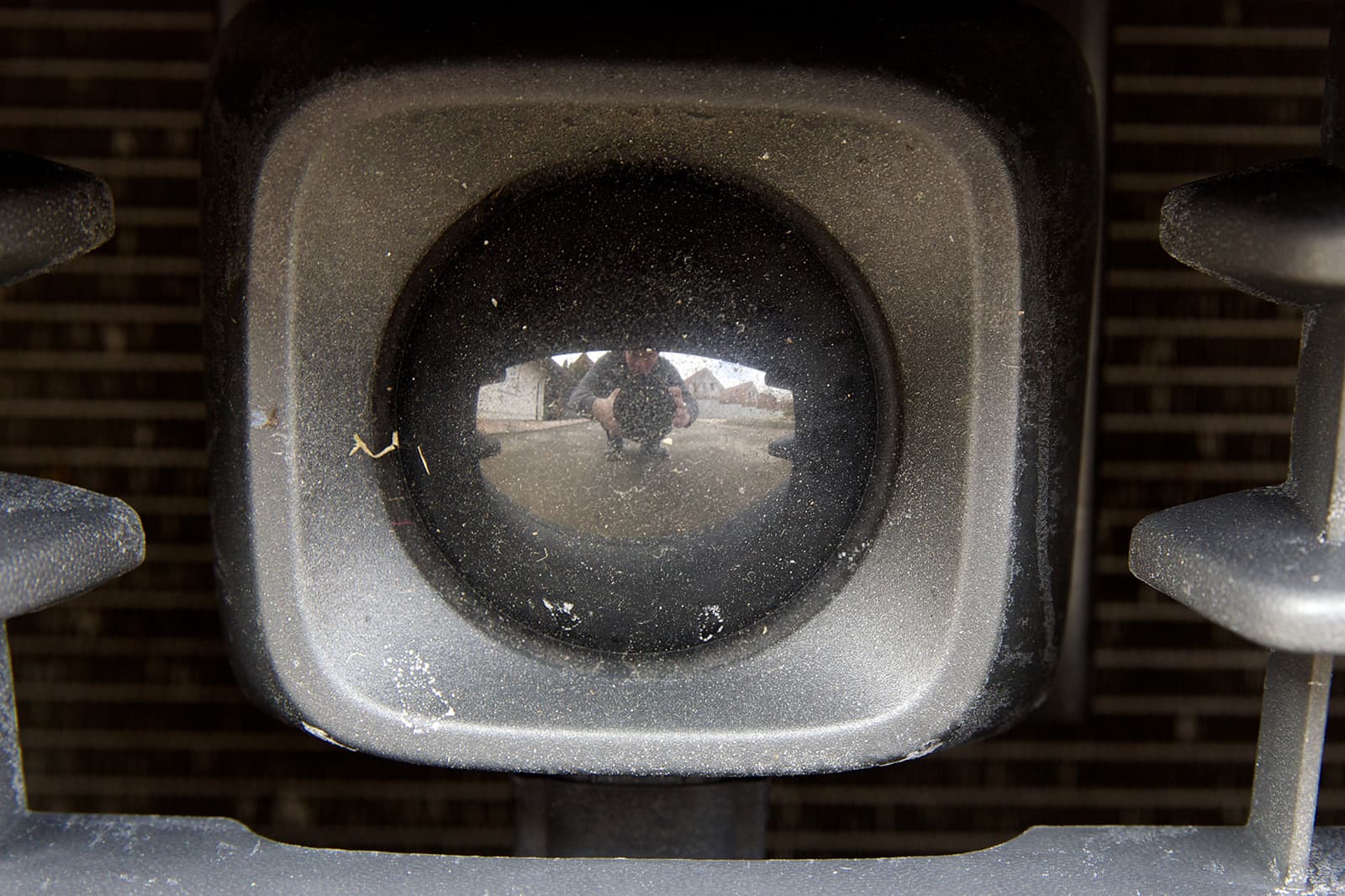
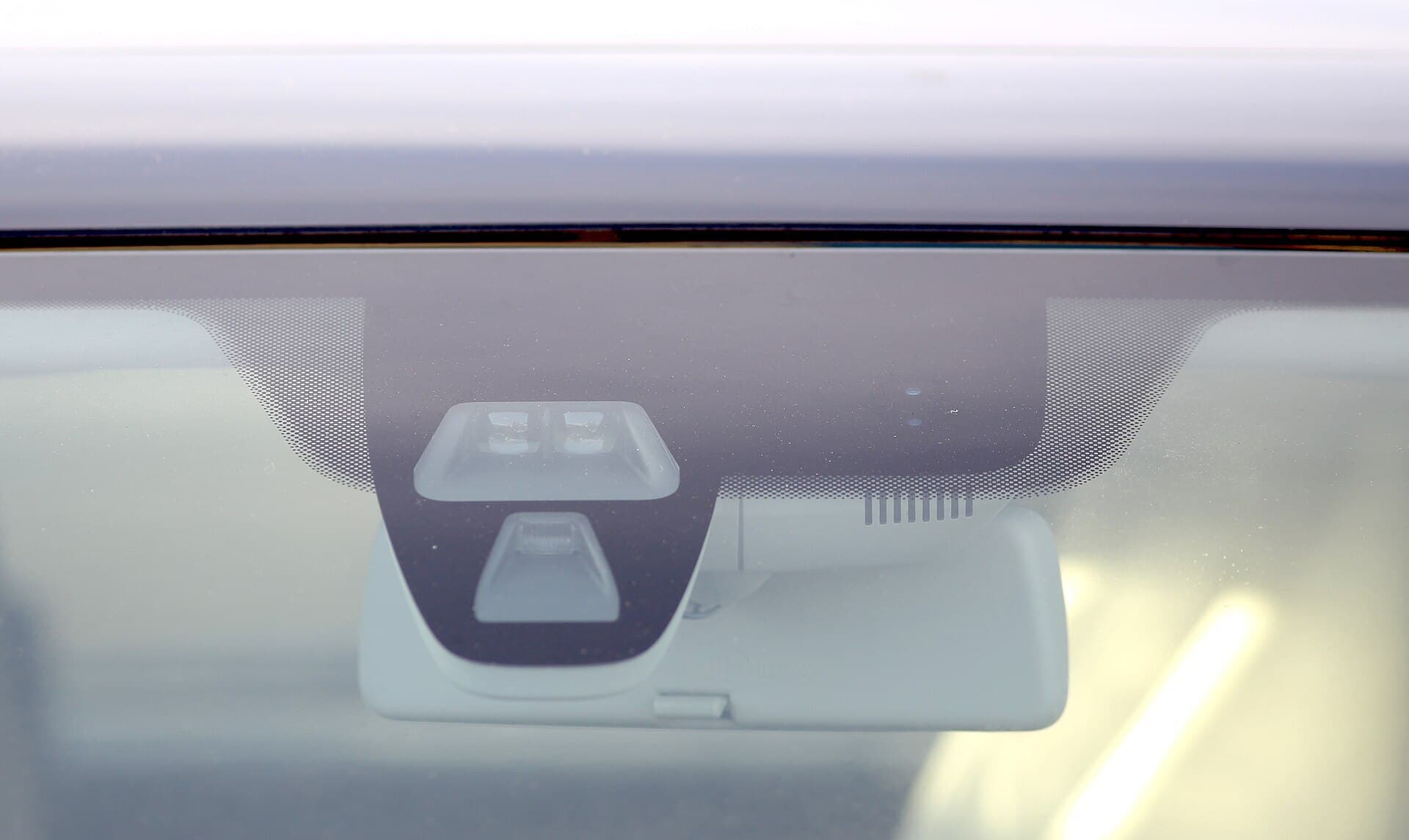
The Insurance Council's paper names advanced driver assistance systems (ADAS) directly: automatic emergency braking, lane-keeping and adaptive cruise rely on radar units in the grille or bumper and cameras behind the windscreen, and the paper says the shift to these systems "has significantly increased average repair costs".
The most detailed costing we found is American. In a December 2023 AAA study (opens in a new tab) of three 2023 models, ADAS work added up to 37.6 per cent to the repair bill after a crash. In a minor rear collision, ADAS parts averaged US$684 of a US$1,698 estimate; in a windscreen replacement, the ADAS share was US$360, or 25.4 per cent. Prices differ here, but the extra steps (replace the sensor, then calibrate it) are the same. The pattern is not new either: back in 2015 the IIHS reported (opens in a new tab) that collision claims on Hondas with a grille-mounted radar cost US$522 more on average, which it put down to repairing the radar.
Headlights and parts you cannot buy
Lighting is going the same way. Allianz's German technical centre says the average headlight price rose 77 per cent (opens in a new tab), from 708 euros in 2015 to 1,251 euros in 2025, and that whole units are often replaced even where a bracket repair would have done.
Access to parts is the other half. In July 2026 the Insurance Council asked the federal government to require carmakers to sell genuine parts to independent repairers on fair and reasonable terms (opens in a new tab), noting that some manufacturers will sell a part to the car's owner but refuse to sell the same part to the repairer the owner has chosen.
Not every measure points the same way. The ABS index for spare parts and accessories bought by households was up only 2.1 per cent in the year to August 2026 (opens in a new tab), and it fell for several months earlier in the year. Crash parts are a different market from the accessories aisle, though, and the same ABS table shows maintenance and repair of motor vehicles up 6.2 per cent.
People and time
Labour is about 30 per cent of claims costs, and the Insurance Council's paper cites ABS earnings data showing weekly pay for automotive electricians up 54.5 per cent between 2018 and 2023, panelbeaters up 32.9 per cent and vehicle painters up 20.3 per cent. Slower repairs cost money twice: the industry body says insurers' rental car costs have risen 70 per cent since 2019 (opens in a new tab) as cars wait longer for parts and technicians.
Dearer cars, more write-offs, and electric cars
About a quarter of claims costs are write-offs. The Insurance Council says some new-car segments rose by up to 39 per cent in price between 2019 and 2024 and used values by about 32 per cent, and that some insurers report write-off frequency up around 20 per cent since 2019, as repair bills and waiting times push more cars past their insured value.
Electric cars sit at the sharp end. The paper says EVs often need specialised parts, diagnostic tools and technicians, and the limited number of repairers servicing them adds cost. Compare the Market's economic director said "the rising cost of labour and parts continue to push premiums higher" (opens in a new tab), particularly for EVs, and its quotes for the Xpeng G6 and Toyota bZ4X each rose 24 per cent in a year. UK figures below tell a similar story, with one caveat for hybrid fans.
The case for the sensors
This is where honest evidence cuts against a simple story. The same technology that costs more to fix also prevents crashes. The UK's insurance trade body says advanced technologies such as sensors and cameras are helping to improve road safety and bring down the frequency of claims (opens in a new tab), even as they make repairs dearer. The IIHS found property damage liability claims were 15 per cent less frequent, and bodily injury liability claims 35 per cent less frequent, on Subarus fitted with the EyeSight automatic braking system, in data it published in 2015.
So the trade is fewer crashes, but dearer ones. Whether the net effect lowers or raises an Australian premium, we could not find published Australian data that settles it, and insurers price frequency and repair cost together. Our reading is that the safety case is real, and that the cost problem is mostly about repairability: sensors mounted where low-speed knocks land, whole light units replaced for a cracked bracket, and parts sold on terms the repairer cannot get.
What the renewal notice will not tell you
ASIC's Report 838 (opens in a new tab) looked at eight brands from five insurers, covering about 72 per cent of the market, and surveyed 2,039 people in January 2026. No insurer in the sample explained, in quote or renewal documents, the key factors behind the premium or why it had changed. Of respondents who recalled being given any reason for an increase, 73 per cent got a generic one, typically rising costs.
Consumers should not have to guess why premiums have changed.
The report's most useful finding is practical. Only 30 per cent of respondents contacted their insurer about the renewal, but 31 per cent of those who did (opens in a new tab) had their premium reduced without changing their cover, and a further 25 per cent (opens in a new tab) cut it by raising the excess or trimming cover or extras. Where insurers charged more for instalments, paying annually could save 10 to 20 per cent, and that was not made clear in renewal notices.
There are limits to what the regulator can do. ASIC says it has no powers over how premiums are set, only over the accuracy and transparency of what insurers tell customers. The General Insurance Code of Practice requires a renewal notice to compare this year's premium with last year's, and says insurers should explain how the change is calculated. ASIC is separately suing RACQ Insurance (opens in a new tab) over allegedly misleading premium comparisons in renewal documents; the case has not been decided.
Another perspective: the United Kingdom
What happened
Britain had a sharper version of the same squeeze. The Association of British Insurers, which tracks the price customers actually paid on around 28 million policies a year, says premiums rose 25 per cent in 2023 (opens in a new tab), and the average comprehensive premium reached 635 pounds in the first quarter of 2024. The ABI notes that quote-based trackers typically show higher averages than its price-paid data, one reason UK headlines quote such different averages.
The Financial Conduct Authority's claims analysis (opens in a new tab) of 12 insurers found that accidental and property damage claims made up about 65 per cent of the increase in claims costs between 2019 and 2023. Lead times before repairs began more than doubled, from 15 to 31 days, repair times rose 36 per cent, and the average labour rate went from 35 to 45 pounds an hour. Average repair costs rose 42 per cent for petrol and diesel cars, to 3,344 pounds, and 44 per cent for electric cars, to 4,197 pounds. Hybrids rose fastest of all, by 68 per cent, which tempers any idea that a hybrid is automatically the cheap car to fix.
What it did
The government's Motor Insurance Taskforce (opens in a new tab), which reported in December 2025, did not propose new pricing rules. It relied on FCA analysis that higher premiums between 2019 and 2023 were largely driven by claims costs outside insurers' control, including more complex and expensive cars, supply delays and skilled labour shortages. Its actions target those costs instead: skills and training, claims handling, a review of the vehicle risk rating system so manufacturers consider repairability at the design stage, and new battery health measures for EVs. It is also considering giving independent repairers access to EV battery repair information, which it says could limit the number of EVs written off too readily. By the third quarter of 2025, the average premium had fallen to 551 pounds, and the ABI put the first quarter of 2026 at 560 pounds (opens in a new tab).
The bigger structural change came earlier. Since 1 January 2022, FCA rules have required that a renewal price be no higher than the equivalent price for a new customer, ending the practice known as price walking. The FCA's July 2025 evaluation (opens in a new tab) found that after the reforms, prices for new motor customers rose 111.14 pounds while existing customers' rose only 22.71 pounds, despite heavy inflation. It estimated a fall of 6.63 pounds per motor policy attributable to the rules, worth a central 1.6 billion pounds over ten years. There was a catch: compulsory excesses in motor policies rose.
What Australia can learn
| Feature | Australia | United Kingdom |
|---|---|---|
| Renewal price rule | No equivalent rule we could find | Renewal price no higher than new-customer price since 2022 |
| Regulator and pricing | ASIC polices disclosure, not price-setting | FCA rules govern pricing practices |
| Main policy response | Industry roadmap and right-to-repair push | Taskforce on claims, skills and repairability |
| Recent premium trend | Still rising faster than CPI | Falling through 2025, steady in early 2026 |
CHOICE's finding that last year's Australian rise came from renewals while new-policy prices were flat is exactly the pattern the UK rules were written to stop. The UK experience also shows the trade-offs: newcomers paid more and excesses crept up, and the taskforce itself notes that while premiums are easing, claims costs are still trending upwards. Disclosure, which is where ASIC is pushing, helps people negotiate. It does not fix the cost of a radar unit.
What it means if you're buying or selling
Get a quote before you choose the car. The Insurance Council (opens in a new tab) lists vehicle type among the main pricing factors, because certain cars claim more often or cost more to repair. Compare the Market's figures show quotes moving by very different amounts from one model to the next. Price two or three shortlisted models, in the exact variant, before you commit.
Understand agreed versus market value. With agreed value, you and the insurer fix the payout, and Moneysmart (opens in a new tab) warns the insurer may reduce it each year, so check it at every renewal. Market value is set by the insurer, not by what you think the car would fetch. Our guide to car insurance and CTP (opens in a new tab) explains the options in more detail.
Weigh the excess. A higher excess lowers the premium, but Moneysmart (opens in a new tab) reminds you that you must be able to pay it when you claim.
At renewal, ask and compare. Check last year's premium against this year's, ask the insurer what changed, and ask for a better price. Pay annually if you can. Moneysmart notes (opens in a new tab) that 74 per cent of people in ASIC's survey who received a renewal notice were quoted a higher premium than the year before. Canstar estimates switching could save as much as 26 per cent, which is its best case, not a typical result.
Declare modifications. The Financial Rights Legal Centre (opens in a new tab) says you must take reasonable care not to give an insurer wrong information; if a misrepresentation matters, the insurer may charge the higher premium it would have charged, reduce the claim or, where it would not have insured you, refuse it.
Keep the paperwork on sensor repairs. After a windscreen or bumper repair on a car with driver-assistance systems, we would ask the repairer to confirm in writing that calibration was done, and keep that record with the service history.
If you're selling, we would expect careful buyers to price insurance into their offer, especially on models with expensive sensors, lights or batteries. Describe the exact variant, and show repair and calibration records if the car has had panel work. When you are ready, a MotorLoop listing is free, and you can buy, sell & show cars in one place.
Our take
This is our view. Complexity is not a one-off cost paid at the dealership. It comes back every year in the premium, because a car full of sensors, sealed light units and parts you cannot buy freely is a car that is expensive to put right after a car-park bump. The evidence above backs that up, from the Insurance Council's own paper to the FCA's repair data.
We are not arguing against automatic emergency braking. The crash data says it works, and we would rather have fewer crashes. The fight worth having is over repairability: sensors that can be recalibrated quickly by any competent shop, headlights that can be repaired rather than replaced, and genuine parts sold to independent repairers on fair terms. The UK's taskforce asked insurers and carmakers to review vehicle risk ratings with repairability in mind; Australia should be asking carmakers the same questions.
For buyers, the cheapest car to insure is usually the simplest car that does the job, and often the one you already own. Get the quote before you fall for the car, and treat your renewal notice as the start of a conversation, not a bill.
Header photo: Nozilla (opens in a new tab) via Wikimedia Commons, CC BY-SA 3.0 (opens in a new tab).
Related
- Car insurance and CTP in Australia: what's compulsory and what's not (opens in a new tab)
- Car insurance in Australia: FAQs (opens in a new tab)
- Car insurance around the world: how other countries cover their drivers (opens in a new tab)
- Insuring a classic: agreed value, laid-up cover and the questions to ask (opens in a new tab)