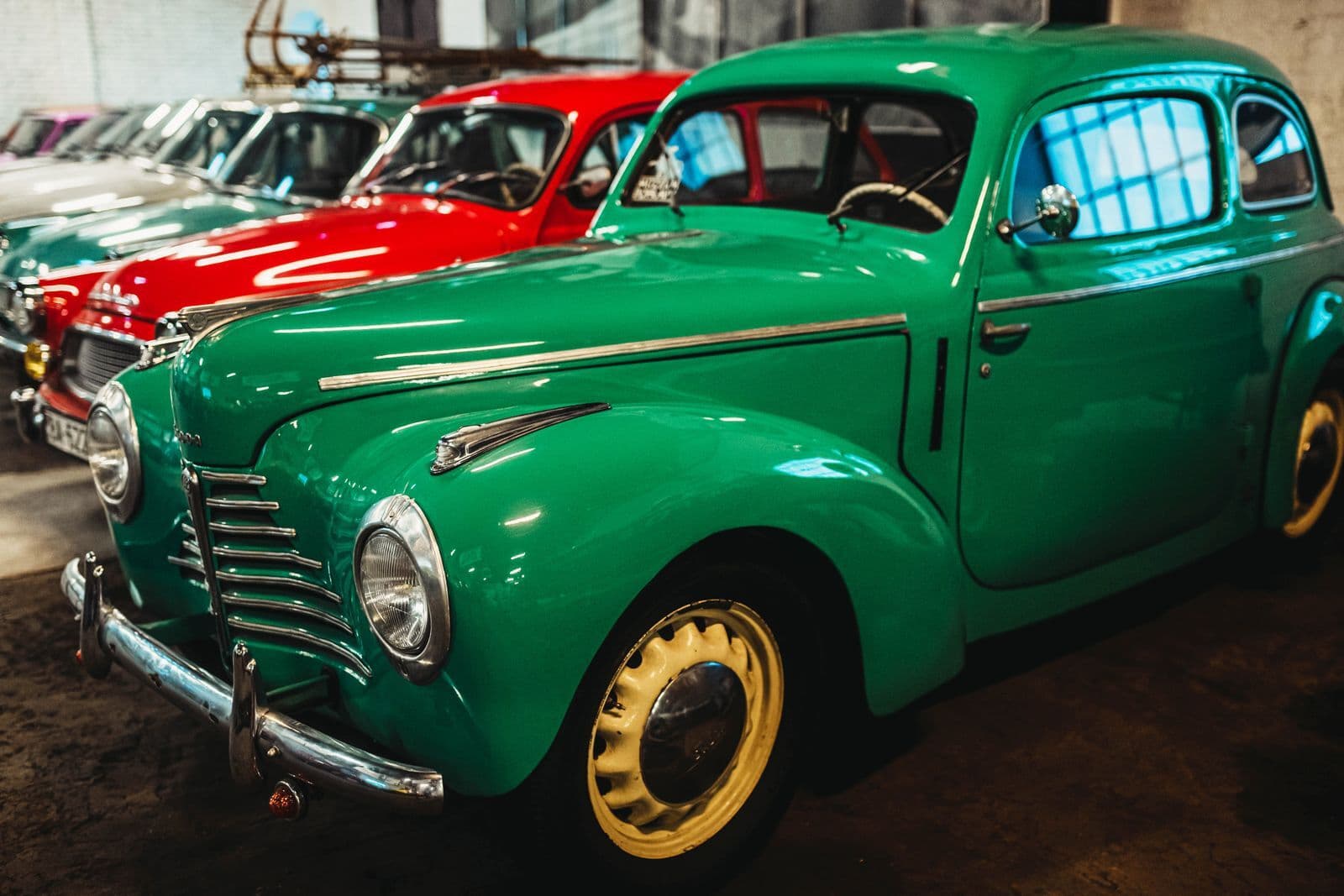
Insuring a classic works differently from insuring a commuter: the payout is agreed with the insurer before anything goes wrong, the premium rewards limited use, and a project car can stay covered under laid-up insurance even while it can't be driven. This guide explains how agreed value operates mechanically, when laid-up cover fits, the requirements insurers commonly attach, and the questions worth asking before you sign.
Why classics break the usual insurance assumptions
Everyday car insurance assumes one thing about value: it falls. Comparison site Canstar notes the opposite tends to be true for collectables — "classic car values often go up with time (not like your typical everyday vehicle where the value goes down)" — which is why its overview of enthusiast, vintage and classic car insurance (opens in a new tab) warns that a regular comprehensive policy might not be the best fit for a treasured car.
There's also no single definition of what makes a car a classic. Canstar shows two Australian insurers sorting the same garage differently: one splits its clients into classic (older than 30 years), emerging classic (15 to 30 years) and modern (under 15), while another uses veteran (pre-1919), vintage (1919–1930) and classic (over 15 years). The practical takeaway: what your insurer calls the car shapes the products you'll be offered, and the exact level of cover comes down to what each provider deems appropriate. Not every provider offers classic-specific products at all — Canstar advises checking each Product Disclosure Statement (PDS) for what is and isn't covered (Canstar (opens in a new tab)).
Specialist products exist because of this mismatch. Insurers such as Shannons build their whole offering around motoring enthusiasts, with features like limited-use and club plate cover and "laid up cover for restorations" listed alongside their standard benefits (shannons.com.au (opens in a new tab)).
Agreed value, explained mechanically
Agreed value is the engine of classic car insurance, and the mechanism is simple:
- At policy start, you and the insurer settle on a dollar figure for the car. Canstar describes this as a value "determined between the policyholder and the provider", taking in the vehicle's condition, rarity and desirability — and notes insurers will often ask for photos of the car, or the car itself, when negotiating (Canstar (opens in a new tab)).
- The figure captures the car you actually built, not a catalogue version. Shannons states its agreed value "reflects your car's worth including performance upgrades, aesthetic enhancements and all the modifications listed on your policy" (Shannons — Classic Car Insurance (opens in a new tab)).
- If the worst happens, the number was already fixed. Because the valuation debate happened when the policy began, an agreed-value settlement doesn't hinge on someone pricing your car like an ordinary used model on the day of the claim — which is precisely the outcome enthusiasts are buying.
- At renewal, revisit the figure. Values move, and Canstar's guidance is that a renewal "needs to reflect that change in value". It also passes on advice from club officials: provide photos and documentation of recent restorations, reconditioned components and new parts, trim or tyres when establishing or updating a value.
Negotiation is genuinely two-sided, too. Canstar relays club experience that owners often propose the figure themselves — the insurer accepts it, rejects it, or asks to see the vehicle first (Canstar (opens in a new tab)).
One related feature to understand is salvage rights — keeping the unrepaired wreck after a total-loss write-off, which matters because parts alone can be worth saving. Age thresholds apply and differ by insurer: Shannons says comprehensive policyholders keep the unrepaired vehicle if it's over 35 years old (though not where the car was stolen and settled as a total loss) (Shannons — Classic Car Insurance (opens in a new tab)); Enthusiast Motor Insurance automatically includes salvage rights for vehicles over 30 years and offers it optionally from 15 years (enthusiast.com.au (opens in a new tab)).
Laid-up cover: insuring a car that doesn't move
A restoration project presents an awkward problem: the car isn't being driven, but fire, theft, falling branches and workshop damage don't care. Laid-up cover exists for exactly this window. Canstar describes it as the reduced-premium option "while a car is off the road being restored" (Canstar (opens in a new tab)), and Shannons markets laid-up cover for restorations among its enthusiast features (shannons.com.au (opens in a new tab)).
Enthusiast Motor Insurance explains the concept plainly: it is "stationary cover", so "if it's moving under its own power it's not covered". Under its product, the laid-up vehicle must be located at the address listed on the schedule, at a garage or workshop for repair or other work, or be in the process of loading, unloading or transport — and the policy also covers parts removed from the car while they're kept at those same locations (enthusiast.com.au (opens in a new tab)). The use cases stretch beyond restorations, too: Enthusiast frames the cover around cars in storage and transport generally — maintenance stints, display duties, project cars not yet drivable, even show or race cars moving between events. The boundaries matter: driving the car anywhere typically ends the cover, so the switch back to road use needs to happen before the wheels turn.
Specialist cover lives and dies in the Product Disclosure Statement. Both Canstar's overview and Enthusiast's own laid-up page steer readers to the PDS for the full conditions — read it before you rely on any benefit summarised on a marketing page, because the exclusions around use, storage and drivers are where claims go wrong.
Requirements insurers commonly ask about
None of the following is universal — these are common features and conditions across specialist products that you should confirm against each policy:
- Where the car is kept. Night-time storage appears on Canstar's list of factors influencing enthusiast premiums, alongside the car's agreed value, make, model, age and odometer reading (Canstar (opens in a new tab)).
- Limited use and distance. How much you drive affects the policy: Canstar reports some insurers include kilometre limits and require regular odometer checks, and that some policies stipulate the insured car cannot be your main mode of transport.
- Club membership and club plates. Registration style feeds the premium conversation — Shannons lists club plate cover among its tailored features, and Canstar notes some insurers offer event-specific cover (wedding hire, car club tours and enthusiast events) provided the insurer knows how the car will be used.
- Named or declared drivers. Enthusiast's FAQ describes a "Declared Driver" policy that covers only the approved people behind the wheel, priced accordingly (enthusiast.com.au (opens in a new tab)).
- Multi-vehicle discounts. Garages tend to fill up; Canstar notes some policies discount each additional classic insured under a multi-vehicle arrangement.
- Choice of repairer. Both Shannons ("your choice of repairer") and Canstar identify this as a staple benefit, which matters when only a handful of shops will touch your car.
Questions to ask before you sign
Take this list to the quote conversation:
- How is the agreed value set now, and how do we review it at renewal as values move?
- Exactly which uses are covered — club events, shows, weddings — and which are excluded?
- Is laid-up cover available, what does "laid up" mean in this PDS, and how do I switch back to road cover before I drive?
- Are parts removed from the car covered while they're off it?
- Do salvage rights apply, at what vehicle age, and what happens if the car is stolen rather than crashed?
- Can I nominate my own repairer, and are modifications, accessories and treatments such as paint protection included within the agreed value?
- Who is allowed to drive the car, and does limiting drivers change the price?
- What evidence — photos, receipts, an inspection — will speed up setting and updating the value?
Where registration and insurance meet
Two threads tie the rego side of classic ownership to the insurance side. First, a car driven on Australian roads needs compulsory third party cover at minimum — Canstar makes that point for classics specifically (Canstar (opens in a new tab)). Second, if you register through a concessional or club-plate scheme, the permitted days and purposes become part of how the car is actually used — and insurers price and assess against real use. If conditional registration is on your radar, read our companion guide to club plates and concession registration (opens in a new tab) before you lock in either decision, since the scheme you choose shapes both the logbook in the glovebox and the policy in the drawer.
And when you're ready for the next shed find, start with the used cars (opens in a new tab) on MotorLoop — listing your own car is free when the collection needs thinning.