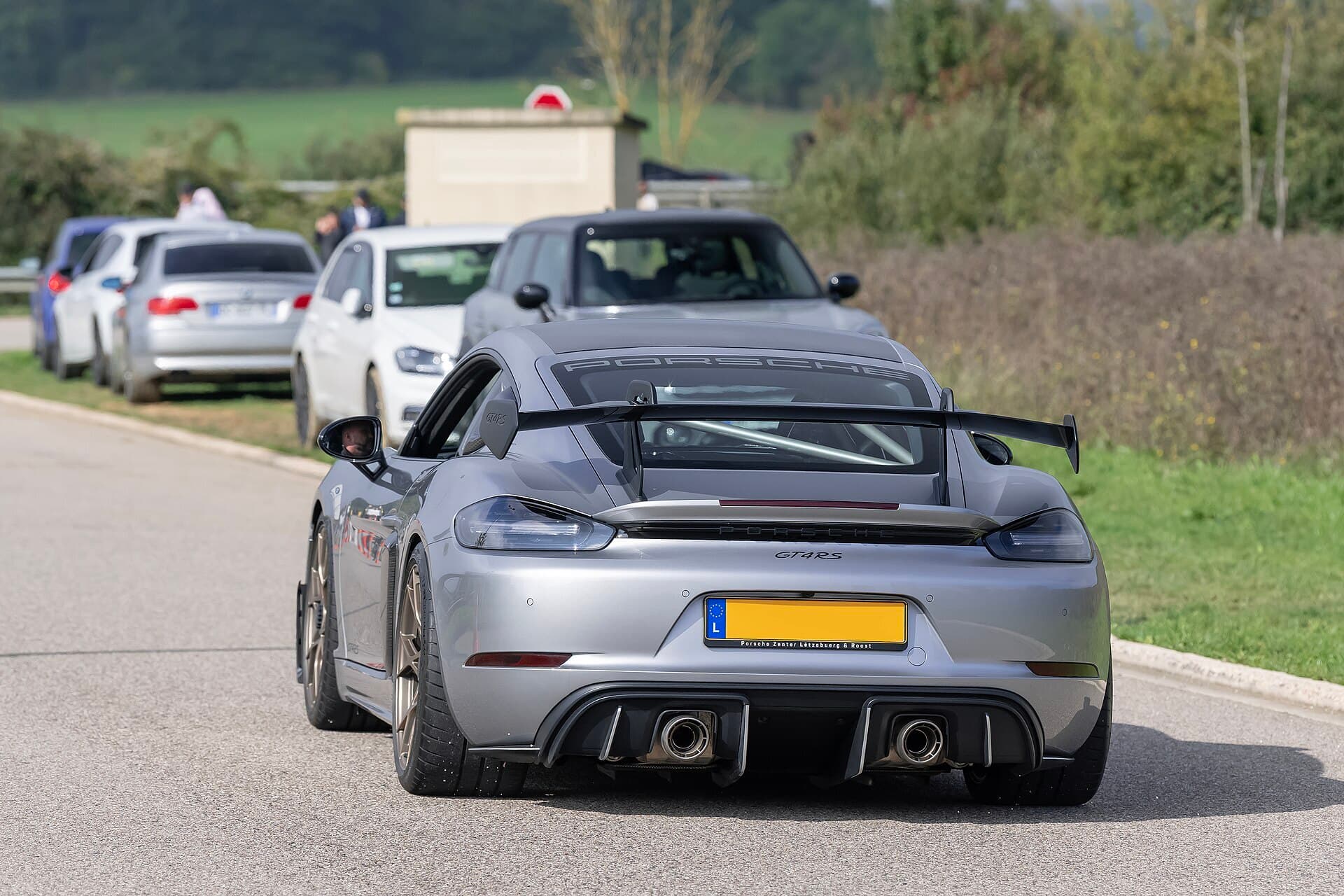
Porsche has confirmed that the next Boxster and Cayman will be battery-electric. At its Capital Markets Day in Weissach on 7 October, the company said the "all-electric 718 Boxster and Cayman models" are expected to support sales "in their first full year of production in 2028", according to Porsche's own release (opens in a new tab). No petrol version appears in that plan.
The petrol 718 is already finished. Porsche's sales release says plainly that production ended in October 2025 (opens in a new tab), and the model line delivered 3,291 cars worldwide in the nine months to September, down 79 per cent, according to Porsche's third-quarter figures (opens in a new tab). If you want a Boxster or Cayman with an engine behind the seats, from here on you are shopping in the used market.
That matters most for the naturally aspirated 4.0-litre six-cylinder cars: the GTS 4.0, GT4, Spyder, GT4 RS and Spyder RS. Here is what Porsche said, how the petrol car bowed out in Australia, and how to buy, hold or sell one sensibly.
At a glance
- Next 718
- Battery-electric, full production year 2028
- Petrol 718 production
- Ended October 2025
- 718 deliveries, Jan-Sep 2026
- 3,291, down 79 per cent
- Top petrol 718s
- 4.0-litre flat-six, 368 kW, 9,000 rpm
- 911
- Stays combustion and hybrid
What Porsche said on 7 October
The announcement sat inside a strategy Porsche calls Sportwagenschmiede '35, which is mostly about cost and margin. The Capital Markets Day release (opens in a new tab) targets a break-even point below 200,000 cars a year, about 20 per cent fewer model variants, and records a socially responsible reduction of 9,000 jobs already agreed with employee representatives.
The product news was brief. After the electric 718, Porsche will present a new SUV in 2028 featuring "internal combustion and plug-in hybrid powertrains", sold alongside the current electric Macan. It is also developing a mid-engined super sports car platform for a model line above the 911. And it says it is "sticking to its three-pronged powertrain approach" of combustion, plug-in hybrid and electric, with investment in "brand-defining combustion engine/PHEV drives". Those engines are headed for other model lines, not the 718.
The petrol 718 that wasn't
That is a reversal of what enthusiasts heard a year ago. In September 2025, Motor1 reported Porsche's strategy update as keeping combustion engines for the "top" versions of the next Boxster and Cayman (opens in a new tab). After the Capital Markets Day, Motor1 reported that Porsche head of corporate communications Matthias Rauter had clarified the combustion-engine 718 duo "was never actually confirmed for a comeback" (opens in a new tab), and Motor1 points out the earlier slide spoke of a "potential midterm drivetrain portfolio".
The electric car is also late. In March 2022, then chief executive Oliver Blume said, "By the middle of the decade, we want to offer our mid-engine 718 sports car exclusively in an all-electric form," according to GoAuto (opens in a new tab). Wheels later pointed to the bankruptcy of Porsche's battery supplier for the 718 project (opens in a new tab) as one of the problems.
What we know about the electric car comes from investor material and press reports. According to Motor1 (opens in a new tab), Porsche's investor document promises an "innovative battery concept [that] preserves Porsche mid-engine character": the pack sits behind the seats, where the engine used to live, and Porsche's head of vehicle architecture, Robert Meier, put 55.2 per cent of the weight over the rear axle. The same report, citing Top Gear, says the cars will offer the Taycan's optional E-Shift system, which simulates gear changes and engine sound. Porsche has not released a weight; Motor1 relays an Auto Express estimate of around 1,700 kg, which we treat as unconfirmed.
The 911 and the Macan
The 911 stays with an engine. Speaking at the annual general meeting in June, chief executive Michael Leiters described its performance hybrid as "a fundamental building block, a sort of elixir of life for the future", according to Motor1 (opens in a new tab), and Motor1 has since reported him making it clear that "the 911 will never be electric" (opens in a new tab). The petrol Macan, meanwhile, is done: Porsche says production of the combustion-engined variant ended in summer 2026 (opens in a new tab).
How the petrol 718 bowed out
Porsche delivered 18,612 Boxsters and Caymans in 2025, down 21 per cent "due to the model line's phase-out", and states that "Production ended in October 2025", according to its full-year delivery release (opens in a new tab). The same release blames part of its European decline on "supply gaps for the combustion-engined 718 and Macan models due to EU cybersecurity regulations".
Europe lost the car earlier. Wheels reported that the 718 was cancelled in Europe over cybersecurity rules rather than emissions (opens in a new tab), with the limited-run GT4 RS and Spyder RS not caught, and a rush to register run-out stock before the cut-off.
The last new variant tells you where the line peaked. When Porsche launched the Spyder RS in 2023 it wrote: "As the last new 718 to feature a combustion engine, the Spyder RS marks the crowning achievement of the model line that was launched in 2016," per Porsche Australia's newsroom (opens in a new tab).
What happened in Australia
Australian buyers lost the ability to order a new 718 well before the factory stopped. In December 2023, CarExpert reported that Porsche had told dealers orders for the 718 would end in the third quarter of 2024 (opens in a new tab), and that Porsche said the car's emergency braking system was not compliant with rules arriving in 2025. Those rules are ADR 98/00, which requires car-to-car autonomous emergency braking from "1 March 2023 for all new model vehicles and 1 March 2025 for all new vehicles", according to the Office of Impact Analysis (opens in a new tab). Man of Many has reported that production for our market stopped from September 2024 (opens in a new tab); we could not confirm that date with Porsche Cars Australia.
It went out popular. Wheels reported that 2024 was the 718's biggest-selling year in Australia (opens in a new tab). Porsche's own figures still feel the gap: its Overseas and Emerging Markets region fell 19 per cent in the nine months to September 2026, "driven in part by product availability gaps related to the 718 model line and the combustion-engined Macan", according to the third-quarter release (opens in a new tab).
We could not find a Porsche Cars Australia statement on timing or pricing for the electric 718 here. With 2028 named as the opening full production year, our expectation is that local deliveries are some way off.
Four cylinders or six
The 982-generation 718 launched in 2016 with turbocharged flat-four engines: 220 kW from 2.0 litres in the Boxster and 257 kW from 2.5 litres in the Boxster S, according to Porsche's launch release (opens in a new tab), which noted it was "the first time since the late 1960s" Porsche had used four-cylinder flat engines in its sports cars. Wheels' verdict was that the fours found new buyers but didn't win over the traditionalists, and that the flat-six returned in 2019 (opens in a new tab) with the GT4 and Spyder.
The GTS 4.0 followed in 2020 with a naturally aspirated 4.0-litre six that revs to 7,800 rpm, launched with a six-speed manual and closely related to the GT4 and Spyder engine, according to Porsche's US release (opens in a new tab). At the top sit the RS cars. The GT4 RS (opens in a new tab) uses the 911 GT3's engine, makes 368 kW, revs to 9,000 rpm and weighs 1,415 kg on the DIN standard; it comes with Porsche's PDK dual-clutch gearbox and no manual option, and Porsche said Australian deliveries would start from mid-2022. The Spyder RS (opens in a new tab) shares that powertrain at 1,410 kg.
- 368 kW
- GT4 RS and Spyder RS output
- 9,000 rpm
- RS rev limit
- 1,415 kg
- GT4 RS kerb weight (DIN)
- 7,800 rpm
- GTS 4.0 rev limit
The world view, from Porsche's own numbers
Electric cars are not failing at Porsche, and it would be dishonest to pretend otherwise. In 2025, 22.2 per cent of the cars it delivered worldwide were fully electric, and in Europe one in three was, according to the full-year release (opens in a new tab). More than half of 2025's 84,328 Macans were electric, and 7,002 electric Cayennes had reached customers by September this year.
The picture for electric sports cars is less convincing. Taycan deliveries fell 22 per cent in 2025, "mainly due to the slowdown in the adoption of electromobility", and a further 31 per cent in the nine months to September 2026. Over the same period the 911 grew 12 per cent to 42,217 cars while the Cayenne, Macan, Panamera and Taycan each fell, and Porsche's sales chief Matthias Becker said: "Our customers are deliberately choosing the exclusive and most emotionally engaging versions of our sports cars" (third-quarter release (opens in a new tab)).
Then, on 15 October, Porsche showed the Mission S (opens in a new tab), previewing a mid-engined super sports car platform above the 911 that Leiters calls "a permanent and versatile addition to our customer offering". Porsche's description says "the engine is positioned centrally in the vehicle" and pairs "classic switches and buttons" with displays, with no permanently integrated centre screen. It has not detailed the powertrain. Read together, the entry-level mid-engined Porsche is going battery-electric, while the platform planned above the 911 is described with an engine in the middle.
Another perspective: Japan
Japan has a car target that sounds like an EV mandate but isn't one. Its industry ministry says "Japan has set a goal for all sales of new passenger vehicles to be electrified vehicles by 2035", and its definition includes hybrids, according to METI's energy agency (opens in a new tab). Hybrids were about 50 per cent of new passenger car sales in the 2023 financial year, against 3.5 per cent for EVs, fuel-cell cars and plug-in hybrids combined, and the ministry says e-fuel for hybrids is under research towards commercialisation in the early 2030s.
The carmakers have built on that room. On 28 May 2024, Subaru, Mazda and Toyota held a joint workshop on new engines (opens in a new tab) for the electrification era: Subaru's horizontally opposed engine, Mazda's rotary and Toyota's inline four, which Toyota said supports a line-up "from family cars to sports cars".
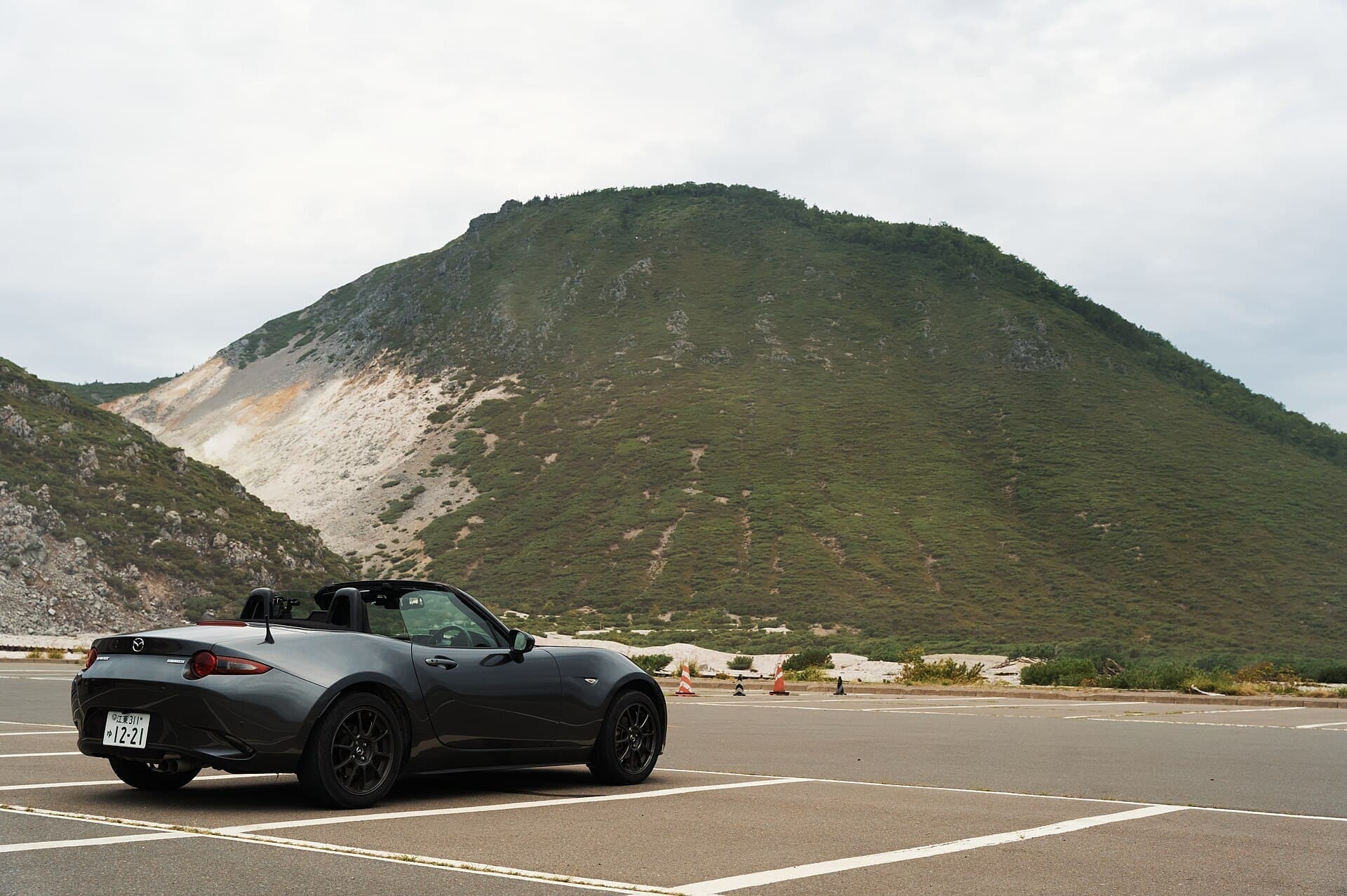
Mazda began mass-producing the MX-5 at its Ujina plant in Hiroshima in April 1989 and passed one million cars in April 2016, according to Mazda (opens in a new tab). Its global sales and marketing chief, Manabu Osuga, said in March that the next MX-5 will stay petrol-powered and under one tonne, telling GoAuto (opens in a new tab): "right now, that technology is very heavy, and if we apply that to the MX-5, we will not satisfy our fans." Chief executive Masahiro Moro has hedged that, telling Auto Motor und Sport, via GoAuto (opens in a new tab), that "The successor must also be ready for a scenario without a combustion engine," with a target of 1,000 to 1,200 kg. GoAuto puts the current ND at roughly 1,070 to 1,140 kg, and Mazda has not announced timing.
Toyota's GR86 is still on sale in Australia from $43,940, with a naturally aspirated 2.4-litre flat-four making 174 kW at 7,000 rpm and a six-speed manual available, according to CarsGuide (opens in a new tab). We could not find an official Toyota statement on its successor.
| Feature | Next Porsche 718 | Next Mazda MX-5 |
|---|---|---|
| Powertrain | Battery-electric | Petrol, per Mazda sales chief |
| Weight | Not released; about 1,700 kg reported | 1,000-1,200 kg target |
| Timing | Full production year 2028 | Not announced |
| Plan B | No petrol version planned | Structure ready for no engine |
What can Australia take from this? Our NVES is a fleet average rather than a ban, but it puts a number on heavier-emitting cars. In the 2025 performance period Mazda carried 508,517 units of liability across 38,465 covered vehicles, and Porsche 33,448 units across 1,653, while Toyota Australia earned 2,890,625 units of credit, according to the regulator's spreadsheet (opens in a new tab). Japan's broad definition of "electrified" lets makers meet targets with hybrids while keeping light petrol cars in the range. We think the lesson is that rules aimed at outcomes leave room for a car like the MX-5 to adapt rather than vanish, and that Australia's NVES review should keep that room open for enthusiast cars.
What it means if you're buying or selling
If you're buying
Start with the engine, because it decides the car's character and probably its future value.
- Turbo four (718, S, and pre-2020 GTS): the 2.0 and 2.5-litre flat-fours are quick and the cheaper way in.
- Naturally aspirated six (GTS 4.0, GT4, Spyder): the 4.0-litre cars, and the ones we would chase. The GTS 4.0 launched with a manual.
- RS (GT4 RS, Spyder RS): 9,000 rpm, dual-clutch PDK, no manual. Some may have track history, so ask directly.
Ask for the full service history from a Porsche Centre or a recognised specialist, and pay for an independent pre-purchase inspection by a Porsche specialist that covers the engine, clutch or PDK, brakes, tyres and any sign of track use or crash repair. Check the VIN on the government's vehicle recalls site (opens in a new tab). If you want the dealer route, Porsche's Approved pre-owned program (opens in a new tab) runs a 111-point check and includes at least 12 months of Porsche Approved Warranty.
On new-car emissions rules, low-volume sports cars carry a heavy per-car NVES load; we broke down that bill here (opens in a new tab).
If you're holding or selling
We could not find an Australian price index or official data tracking 718 values, so treat what follows as our expectation, not a forecast. With no new petrol 718 being built and Porsche reporting strong demand for its emotive derivatives, we expect the naturally aspirated six-cylinder cars to hold their appeal better than the turbo-four cars, which we expect to depreciate like most used sports cars. Values can still fall with interest rates, the wider market or a flood of run-out stock, so don't treat any car as a guaranteed investment.
If you drive and enjoy yours, there's little reason to rush. If you're selling, a complete service history, the original parts if you've modified it, and clear photos of the car's condition will matter more to enthusiast buyers than a polished description. When you're ready, you can buy, sell & show it on MotorLoop, and it's free.
Our take
This is our view. Fast is not the same as felt. We expect the electric 718 to be quick, and the battery-behind-the-seats layout shows Porsche understands what made the mid-engined car special. But the 4.0-litre cars weren't about numbers on a timing sheet. They were about a flat-six climbing to 9,000 rpm behind your head, in an RS that weighs around 1,415 kg. Simulated gearshifts and engine sounds are Porsche admitting that the sensation matters; we'd rather have the real one.
The fair counterpoint is that Porsche isn't guessing. More than a fifth of its 2025 deliveries were fully electric, the electric Macan outsold the petrol one that year, and rules like Europe's cybersecurity regulations and our own NVES make low-volume combustion cars harder to justify. A company has to sell what it can build and register. We accept that. What tells us more is where Porsche is keeping its engines: in the 911, which its chief executive says won't go fully electric, and, going by Porsche's own description, in the mid-engined car planned above it. The engine is moving upmarket, and the entry ticket to a mid-engined Porsche with a flat-six behind you is now a used car.
We're also sceptical about the long run. Porsche has a strong record here: in September it extended its classic infotainment retrofit to more than 300,000 cars from 2009 to 2016 (opens in a new tab). Whether battery modules and software for an electric sports car will be supported as well in 20 years is an open question, and we could not find a Porsche commitment on it. A naturally aspirated six with a service book is a simpler bet.
So if you love these cars, buy a good one, look after it, and drive it. Some people want A to B; others enjoy the journey. The 718 was built for the second group.
Header photo: Alexandre Prevot (opens in a new tab) via Wikimedia Commons, CC BY-SA 4.0 (opens in a new tab).
Related
- Porsche's 992 Cup car runs its last Bathurst this weekend. The flat-six is the point (opens in a new tab)
- Porsche delivered 16% fewer cars in the first half of 2026 — and made more money (opens in a new tab)
- The Porsche 918 Spyder: The Car That Made the Tesla Roadster Look Like a Science Project (opens in a new tab)
- Australia's emissions rules bill a Ferrari about $7,300 a car. Britain is easing its own (opens in a new tab)