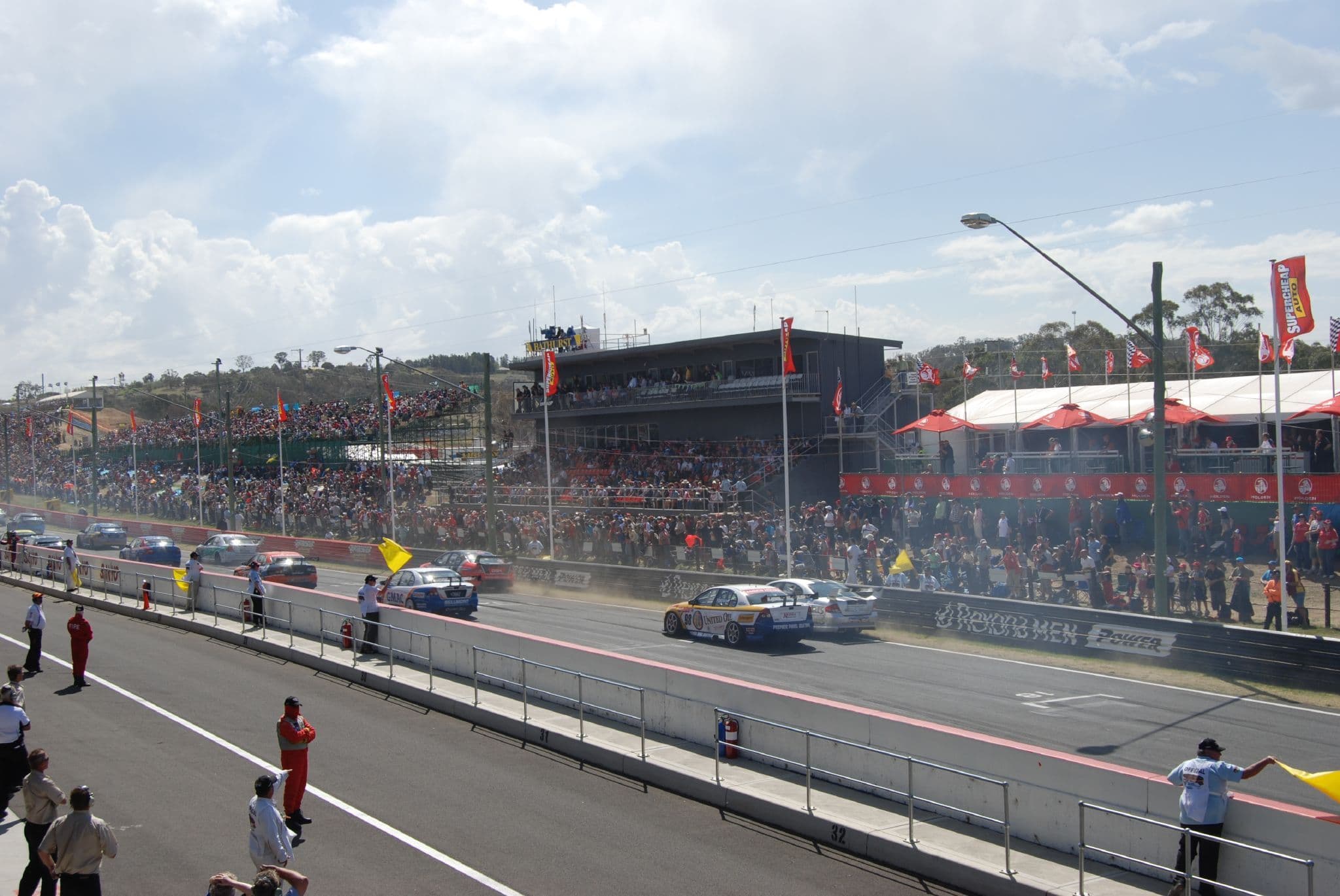
With three laps to go at Mount Panorama on Sunday, Anton De Pasquale was leading the Bathurst 1000 and nose to tail with two rivals. By the top of the mountain he was slowing, and a car that had looked certain to win was a lap down. The winners were Brodie Kostecki and Todd Hazelwood in the #17 Dick Johnson Racing Mustang.
According to Autosport's race report (opens in a new tab), Team 18 short-fuelled De Pasquale at his final stop to gain track position, "but overdid it". The Chevrolet Camaro slowed on the final climb up Mountain Straight and was classified a lap down. We'd call that a very Bathurst ending.
In Australia
The race ran at record pace in near-perfect conditions with no safety car until lap 156 of 161, Autosport reports (opens in a new tab). Chaz Mostert hit the wall at Forrest's Elbow with five laps to go, and the safety car that followed set up the fuel gamble. Kostecki's own day was far from clean: his car lost more than 25 seconds at its penultimate stop when a brake rotor would not mount on the hub. His summary: "the Mountain always chooses the winner."
The cars burn a purpose-made fuel. For 2026 BP supplies Supercars (opens in a new tab) with a blend of 85 per cent ethanol and 15 per cent bio-gasoline made from waste material. BP describes it as 100 per cent from renewable materials, based on third-party certified feedstock, and says it is not sold to the public at BP stations.
The world view
Endurance racing elsewhere has been moving the same way: keep the combustion engine, change what goes in the tank. TotalEnergies supplied all 62 cars at the 2022 24 Hours of Le Mans (opens in a new tab) with a fuel made partly from wine-production by-products, which the company says cuts lifecycle CO2 by at least 65 per cent. That figure is the company's own claim and we have not seen it independently checked.
Another perspective: France
Le Mans is also a fuel-and-stops race, so France is the closest comparison. The shared lesson is that the fuel can be reinvented while the format, a driver, a tank and a pit stop, stays intact.
Our take
This is our view. A fuel gamble works as drama because the stakes are simple and visible: a tank fills in seconds, and a team can get the number wrong on the last lap. Everyone watching understands what happened.
We think that's what gets lost when racing talks about the future. Petrol and ethanol infrastructure is already built, paid for and working in every country the sport visits. The Bathurst ending happened because the fuel, the cars and the mountain are all things a fan can see and understand. We would rather racing keep the engines and keep inventing fuels than lose that.
That isn't a swipe at anyone who wants an electric car for the commute. It's a plea for the drivers and fans who enjoy the journey, not just the arrival.
Renewable-fuel claims come from the suppliers, and a fuel that isn't sold at the pump doesn't help the family hatchback. The racing case is strong; the road case is a separate argument.
Related
Related reading
- Porsche's 992 Cup car runs its last Bathurst this weekend. The flat-six is the point
Carrera Cup is at Mount Panorama for the 992 GT3 Cup car's final Bathurst before the 992.2 arrives. We think its naturally aspirated flat-six is the reason to watch.
- Ferrari's new manual is a computer you shift. It proves the clutch pedal still matters
Ferrari's 12Cilindri Manuale fakes a gated manual with sensors over a dual-clutch box. We think it shows drivers still want three pedals, and the real thing is simpler.