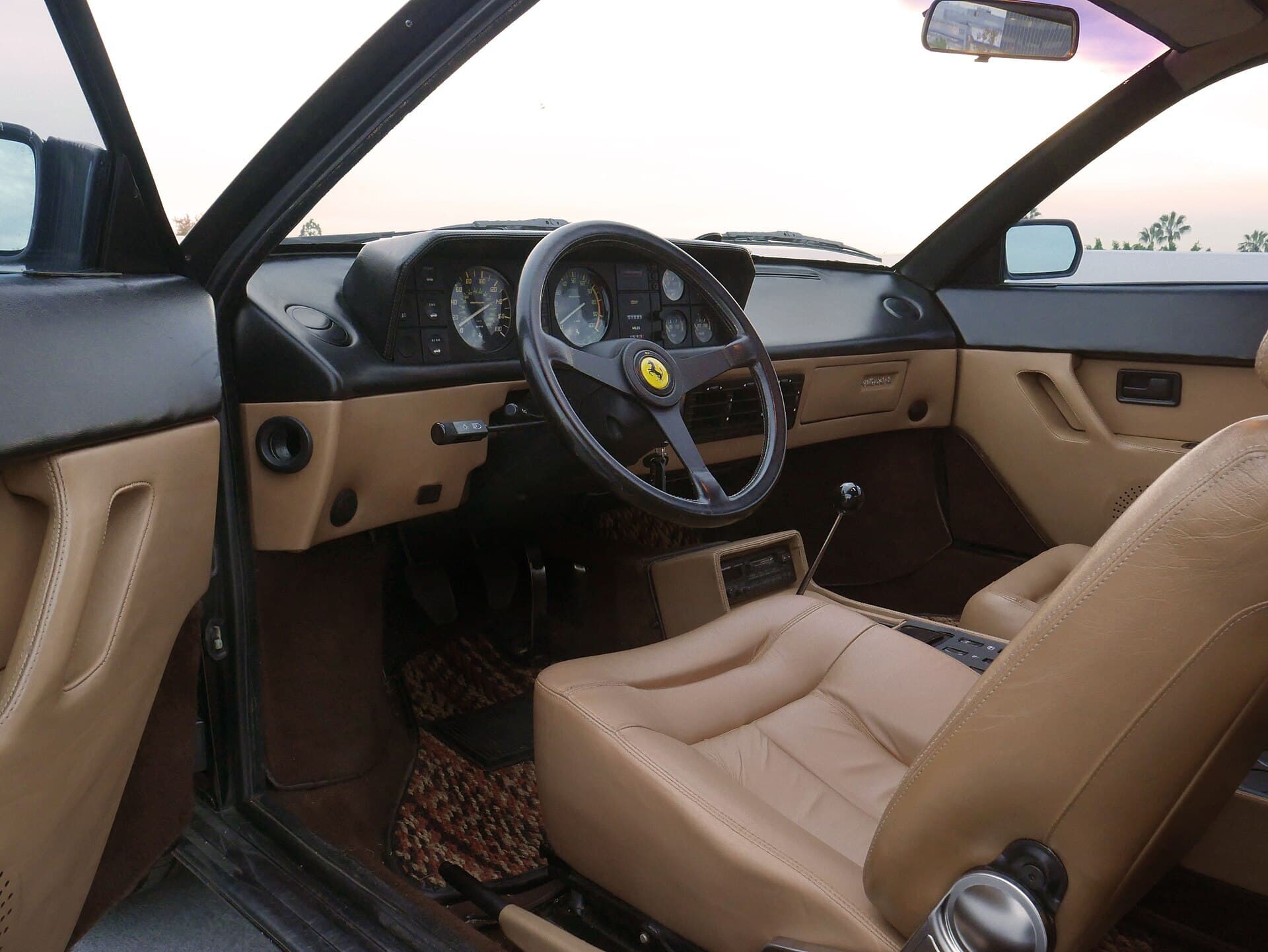
Ferrari has put a gated gear lever and a clutch pedal back into a road car, and almost nothing about them is connected to the gearbox. The new Ferrari 12Cilindri Manuale (opens in a new tab), unveiled in Maranello on 3 July 2026 and limited to 1,499 cars, uses what Ferrari calls a "Manuale By-Wire" system: sensors read the lever and the pedal, and software tells the existing 8-speed dual-clutch transmission what to do.
It is a strange, brilliant and slightly sad piece of engineering. For Australians who still like changing their own gears, it says two things at once: carmakers have worked out that the clutch pedal was worth something, and the way they are bringing it back is with more computer, not less.
Ferrari 12Cilindri Manuale at a glance
- Unveiled
- 3 July 2026, Maranello
- Production
- 1,499 cars
- Engine
- Naturally aspirated V12, revving to 9,500 rpm
- Gearbox
- 8-speed dual-clutch, driven by-wire
- Manual mode
- Six gears plus reverse, open gate
How a fake manual works
According to Ferrari's release (opens in a new tab), the gear lever is a mechanical module fitted with two angle sensors and a mechanism that recreates the clicks and load changes of an old Ferrari gearbox. It can physically block a gear if the clutch isn't pressed or the selection isn't allowed. The clutch pedal is also by-wire: a position sensor reads it, and that reading is turned into hydraulic actuation of the dual-clutch unit's clutch.
In manual mode you get the first six gears and reverse. Ferrari says that if you get the clutch and throttle wrong, the car can jerk or stall, on purpose, because that is what a real manual does. Even the noises the lever makes were given their own development work.
Carmakers have worked out the clutch pedal was worth something. They are bringing it back with more computer, not less.
In Australia
You don't need a Ferrari budget to buy three pedals here. Nissan has added a six-speed manual to the 2026 Nissan Z Nismo (opens in a new tab) at no extra cost over the nine-speed automatic, priced at $95,000 before on-road costs, with the regular Z Coupe from $76,800 in either form and first customer cars due from September 2026. That's a conventional manual, though even it offers automated rev matching (opens in a new tab) to blip the throttle on downshifts for you.
The Ferrari, by contrast, deliberately does not blip the throttle (opens in a new tab) for you, so the driver has to heel-and-toe. That's a nice touch, and a telling one: the most expensive way to drive a manual in 2026 is to have the electronics stay out of the way.
The world view
The manual's decline is easiest to see in the US, where the government keeps careful records. The US Environmental Protection Agency's 2026 Automotive Trends Report (opens in a new tab) says manual transmissions were fitted to almost 35% of new vehicles in model year 1980, and have been below 1% of production since model year 2021.
The EPA is fair about why. Modern automatics are now generally more efficient and can perform better than manuals, partly because they added gears faster; the agency says the average automatic overtook the average manual on gear count in model year 2012. That's the honest case against the stick, and we accept it: on a stopwatch and a fuel bill, a good modern automatic usually wins.
But the top of the market has started moving the other way. Ferrari is one sign. McLaren is another: its McL 6GT concept (opens in a new tab), shown at Monterey Car Week in August, previews a production supercar due in 2028 with a twin-turbo V8, rear-wheel drive and a six-speed manual, reported as McLaren's first since the F1 of 1992.
Another perspective: the United States
The US numbers make the Ferrari more interesting, not less. When fewer than one new vehicle in a hundred has a clutch pedal, a manual stops being a transmission and becomes a feature people pay for. Ferrari and McLaren are selling it to their most committed buyers at the very top of the price list, while the mass market keeps moving to automatics, hybrids and EVs that don't offer one at all.
That's the same pattern we wrote about in the Tesla Roadster piece (opens in a new tab): when cars get faster and easier, the thing people start paying extra for is the feeling of doing it themselves.
Our take
We think the 12Cilindri Manuale is a confession. The industry spent two decades telling drivers that paddles and dual-clutch boxes were simply better, and on paper they are. Now one of the most famous names in the business has engineered a mechanism whose job is to make clicks, add resistance, and let you stall a V12, because buyers missed it. Synthetic EV sounds and fake gearshifts made the same admission: the drama of the machinery was worth something.
But look at how it was done. The Ferrari's manual is sensors, software and a control unit deciding what your left foot meant. It's clever, and Ferrari will look after it, but it's the opposite of what we like about an old-school manual: a part you can see, understand and, in a lot of older cars, fix or adjust yourself.
So our view is simple. If the feel of a clutch and a gate is what you're after, you don't need a by-wire V12. A manual Nissan Z, an older Porsche 911 with three pedals, or a simple, well-kept manual from the 1980s or 90s delivers the real thing, without asking a computer for permission to change gear. Buy the one you can drive, and ideally the one you can fix.
Related
Related reading
- The Tesla Roadster is coming — but is fast the same as felt?
Tesla's Roadster is set for an October 1 reveal after nine years of promises. It may be the car that teaches us the difference between fast and felt.
- Porsche's 992 Cup car runs its last Bathurst this weekend. The flat-six is the point
Carrera Cup is at Mount Panorama for the 992 GT3 Cup car's final Bathurst before the 992.2 arrives. We think its naturally aspirated flat-six is the reason to watch.
- Ferrari's road to icon status: the models that made the marque
How Ferrari became the definition of the exotic car: the racing origins, the 250 GTO, the F40 and the modern era — the models that built the world's most valuable badge.
Photo: 1988 Ferrari Mondial interior with gated shifter, by Decampos (opens in a new tab), via Wikimedia Commons, licensed CC BY-SA 4.0 (opens in a new tab).