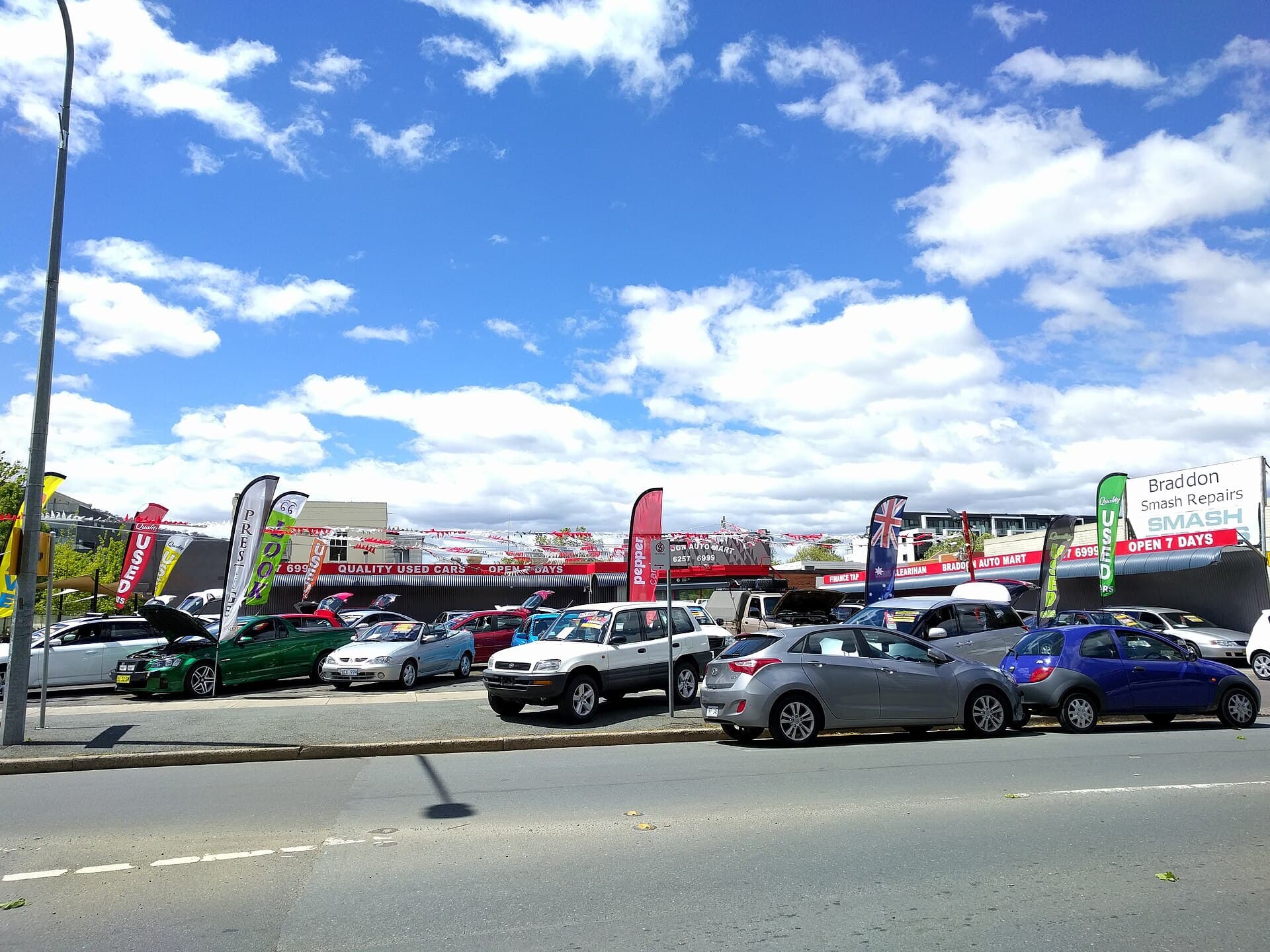
Australia's used car market spent the first half of 2026 tilting towards buyers. Spring is tilting it back. The Australian Automotive Dealer Association (AADA) and AutoGrab (opens in a new tab) counted 258,127 used vehicles sold in September, up 6.0 per cent on August and the third consecutive monthly rise, while the number of cars listed for sale fell to 390,184, which is 10.9 per cent below July's peak of 437,855.
So is it still a buyer's market? Partly, and a little less each month. Cars took an average of 52.8 days to sell in September (opens in a new tab), the longest of any month we could check this year, and by June more than half of one-to-five-year-old cars (opens in a new tab) were selling for less than their asking price. But AutoGrab now counts 66 sales for every 100 cars listed (opens in a new tab), up from 55 in July. Buyers still have room to negotiate. That room is shrinking.
Underneath the totals, the fuel-price shock that began in March (opens in a new tab) has re-ranked what holds its value. Hybrids are the steadiest, and petrol and diesel cars have carried most of the discounting (opens in a new tab). In August, used electric car sales grew faster than any other fuel type (opens in a new tab), according to AutoGrab. At the same time a wave of discounted new EVs, and further out a wave of ex-lease ones, raises real questions about where used EV values go next.
At a glance
- Used vehicles sold, September
- 258,127 (up 6.0% on August)
- Listed for sale, September
- 390,184 (down 10.9% from July)
- Average days to sell, September
- 52.8
- Sales per 100 listings
- 66 in September, 55 in July
- New vehicles sold, September (VFACTS)
- 102,924 (up 0.9%)
How the first half put buyers in charge
In the first six months of this year, 1,300,018 used vehicles were sold nationally (opens in a new tab), down 6.6 per cent on the first half of 2025. June sales were 16.2 per cent lower than June 2025, and AutoGrab reported that "Every State and Territory sold fewer used vehicles" than a year earlier. Supply kept building while sales softened, so cars sat longer and sellers cut prices.
The discounting figures are the ones a buyer should remember. In May, for the first time this year, more than half of all vehicles sold had their asking price reduced before the sale (opens in a new tab), and the average cut on those cars was 3.4 per cent. By June more than half of one-to-five-year-old cars were selling below asking and the average discount had widened to 3.7 per cent (opens in a new tab). Petrol and diesel cars took most of that pressure. Hybrids, in AutoGrab's words, "remained the most pricing-resilient fuel type".
Selling times stretched too: 45.6 days on average in March, according to the AADA and AutoGrab's April release (opens in a new tab), then 51.8 days in May and 52.1 days in July (opens in a new tab).
A market can be busy and slow at the same time, and in July it was both.
One distortion to set aside: June's dip was largely dealers clearing demonstrators before the end of the financial year. Demo sales rose to 22,427 in June, then fell 49 per cent to 11,418 in July, the AADA said (opens in a new tab).
Spring: more sales from a shrinking pool
Since July the trend has turned. Sales rose to 240,311 in July (up 11.8 per cent), 243,514 in August (opens in a new tab) (up 1.3 per cent) and 258,127 in September, which is 20.1 per cent higher than June. Listings went the other way, from the July peak to 422,509 in August and 390,184 in September. AutoGrab's Odgers put it simply: "more vehicles are selling from a smaller pool of stock."
It isn't a clean swing yet. The same September data (opens in a new tab) shows the average time to sell rising from 51.5 to 52.8 days. Our reading: buyers have stopped sitting on their hands, but sellers haven't yet regained pricing power. The first-half stock overhang is being worked through, not gone.
Who is doing the selling matters too. Private sellers moved 139,036 vehicles in July, close to 58 per cent of the total (opens in a new tab). Dealers took around 22 more days than private sellers to sell equivalent one-to-five-year-old cars, despite discounting less often and less deeply, and the two channels achieved almost identical retained values on that stock: 80.1 per cent for dealers and 80.2 per cent for private sellers (opens in a new tab). Dealer share of all sales recovered to 43.9 per cent in September.
Four-wheel-drive and all-wheel-drive vehicles made up 46.2 per cent of September's used sales, up from 44.6 per cent a year earlier, and the Ford Ranger was the best-selling one-to-five-year-old used vehicle in seven of the eight states and territories in August (opens in a new tab).
We could not find a current public used-price index split by fuel type, including the Datium Insights–Moody's Analytics index. So this piece relies on retained-value, discounting and days-to-sell data from the AADA and AutoGrab, plus Datium's weekly snapshots. Retained value is the share of a car's original price it fetches when sold. The monthly sales counts include dealer demonstrators.
What's holding value, fuel type by fuel type
Hybrids: the steady middle
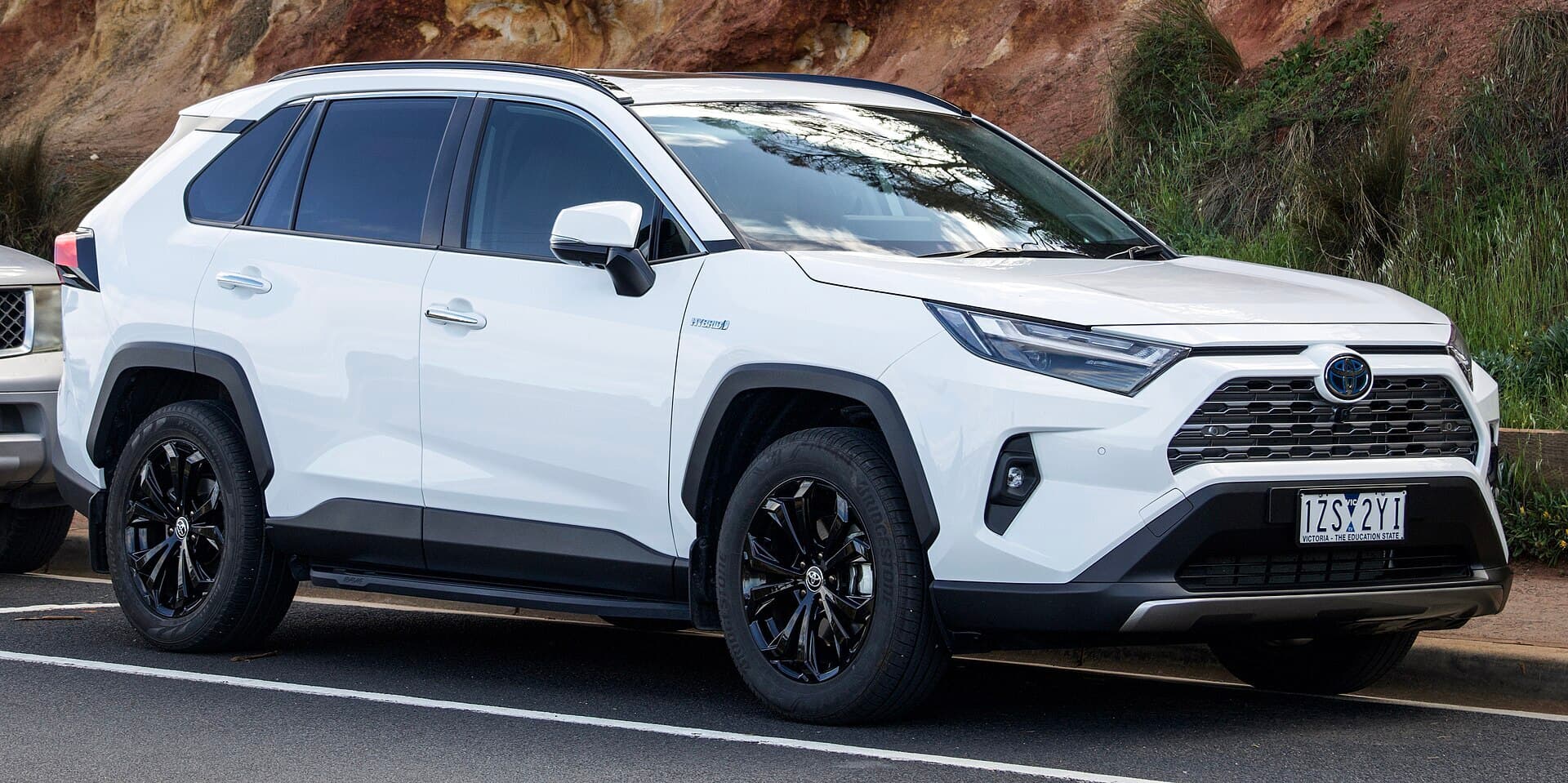
AutoGrab's analysis for the AADA (opens in a new tab) found 28,395 used hybrids were sold between January and April, 11.2 per cent of sales of 2021 to 2025 model-year vehicles. Hybrid supply tightened from 53.8 days in January to 42.3 days in April, while petrol and diesel supply moved the other way. Model-year 2025 hybrids averaged more than 100 per cent retained value, meaning they sold for more than their original purchase price, and even 2021 model-year hybrids kept 88.2 per cent. The Toyota RAV4 and Corolla accounted for eight of the top ten hybrid models by sales volume.
Petrol and diesel: carrying the discounts
Petrol and diesel cars were the ones most often discounted through the first half, and in the new-car market they are losing ground quickly. FCAI figures (opens in a new tab) show new petrol vehicle sales fell 36.2 per cent and diesel 18.4 per cent in September compared with a year earlier, and Cox Automotive Australia (opens in a new tab) says new 4x4 ute sales were down 13 per cent, "driven by diesel costs".
That doesn't make a used Ranger or HiLux hard to sell; the Ranger still tops the near-new market in most states. But prices are moving week to week. In Datium Insights' snapshot for the week to 5 October, the HiLux and Ford Everest were the largest decliners among the 15 most-traded vehicles (opens in a new tab), each down a little over 3 per cent, and Datium's overall price measure then fell 3.1 per cent (opens in a new tab) and 2.1 per cent (opens in a new tab) in the next two weeks. Single weeks are noisy: weather, not climate.
Used EVs: hotter than the headlines, with a catch
The March fuel shock did more for used EVs than any incentive. AutoGrab reported (opens in a new tab) that used EV sales more than doubled from 3,176 in February to 7,557 in March, while available stock fell 38 per cent. Prices had softened through late 2025, but residual values had begun to stabilise and recover from January. At Manheim's Australian auctions, Cox Automotive Australia reported in April (opens in a new tab) that the average sold price of a battery electric vehicle had jumped from 99.7 to 113.5 per cent of the vendor's reserve, with average sold prices up about 20 per cent overall.
Over the first half, used EV sales rose 54.6 per cent (opens in a new tab) year-on-year and the average time to sell fell from more than 60 days in January to fewer than 40 by June. In the September quarter, monthly sales climbed from 3,496 in July to 5,417 in September, lifting EVs to 2.1 per cent of all used sales.
The catch is in the same table. Used EV listings rose (opens in a new tab) from 9,015 in July to 10,888 in September, and the average time to sell an EV lengthened from 43.3 to 48.8 days. More supply and slower selling, alongside cheaper new EVs, is the kind of setup that tends to come before softer prices. That is our view, not a forecast in the data.
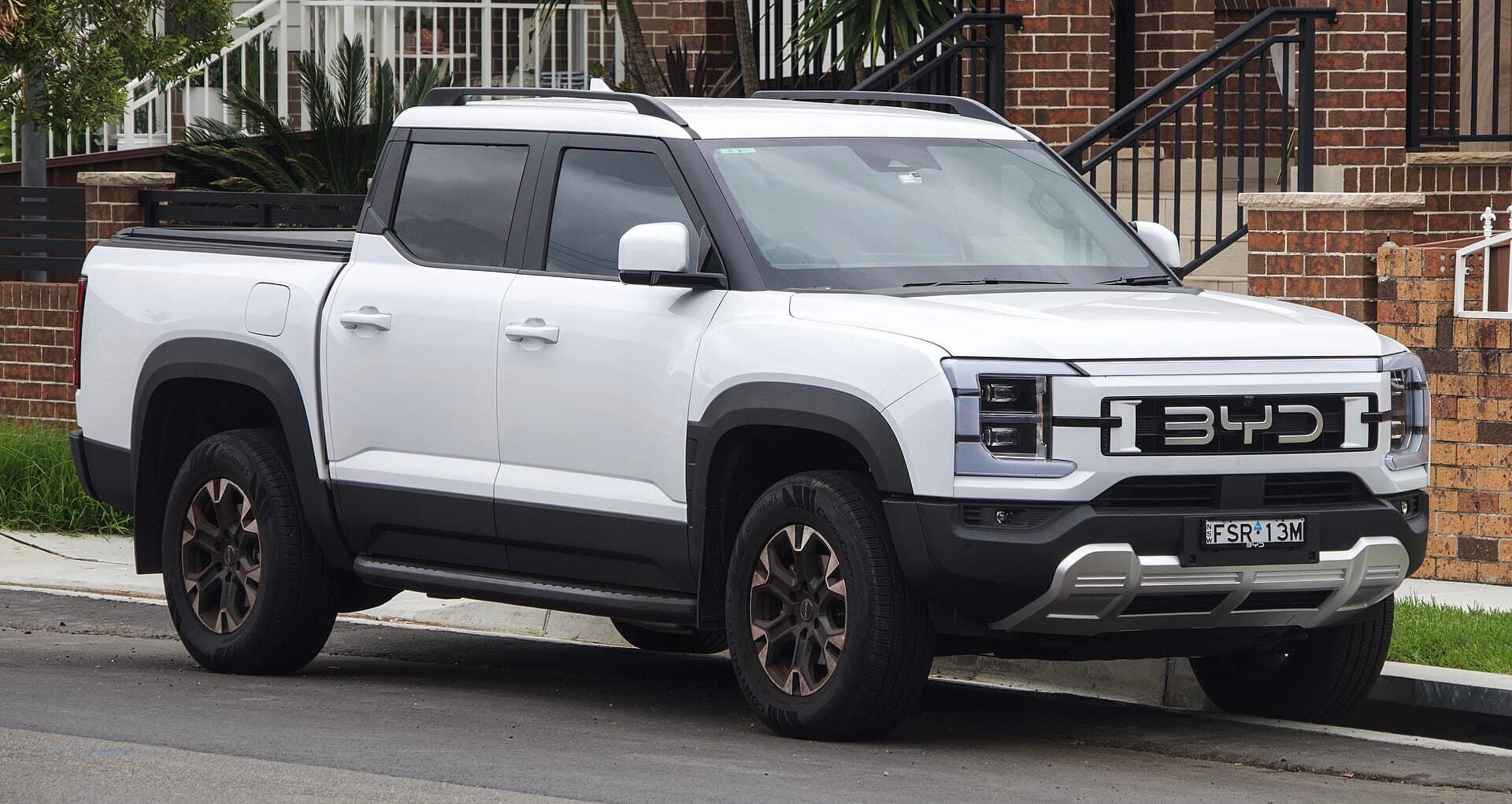
Selling fast is not the same as holding value. In August's state-by-state data (opens in a new tab), the MG ZST sold in 23.2 days in Queensland having kept 60.7 per cent of its original value, while the BYD Shark 6 plug-in hybrid ute was the fastest seller nationally at 27.9 days and retained 92.1 per cent. The Suzuki Jimny kept 102.7 per cent and took 58.3 days to sell.
The new-car backdrop: discounting across the showroom
The FCAI's VFACTS count for September (opens in a new tab) was 102,924 new vehicles, up 0.9 per cent on September 2025. The AADA and Cox Automotive quote a higher figure of 108,778 (opens in a new tab), which combines VFACTS with Electric Vehicle Council data; on that basis the year-to-date total is 957,698, and Cox says (opens in a new tab) the market is on track for a third successive annual record, close to 1.3 million.
Battery electric vehicles were 24.2 per cent of September's new-car market from all sources, up from 11.3 per cent a year earlier; plug-in hybrid sales rose 122.7 per cent and conventional hybrids 20.7 per cent.
The number that matters most to used prices is the discount. Cox Automotive Australia says "every brand is discounting", with an average invoice-level price cut of around 9 per cent, driven by "a degree of oversupply" and the arrival of Chinese brands. BYD, for example, cut its Atto 1 Essential to $19,990 drive-away from September, making it Australia's cheapest new car, according to CarExpert (opens in a new tab). Asked about resale values, BYD Australia's chief product officer Sajid Hasan told the outlet that an owner selling now would "probably see an impact". When a new car gets thousands of dollars cheaper, used ones reprice too.
The world view: one fuel shock, many markets
The forces moving Australia's used market are not local. In April, FCAI chief executive Tony Weber linked rising EV interest to "the disruption to fuel supply caused by conflict in the Middle East" (opens in a new tab). By July, AADA research (opens in a new tab) found 55 per cent of Australians agreed rising petrol and diesel prices make EVs more attractive. In the United States, Cox Automotive's chief economist (opens in a new tab) links weaker wholesale car prices to the same conflict, record diesel prices and rising interest rates.
Another perspective: the United States
Cox Automotive's Manheim Used Vehicle Value Index tracks US wholesale prices adjusted for mix, mileage and season. Its story this year rhymes with ours.
What happened
In September the index was 205.9 (opens in a new tab), down 0.6 per cent year-on-year and 1.1 per cent on August. Cox's Jeremy Robb said depreciation was steeper than usual for the time of year, with diesel valuations under clear downward pressure as diesel prices hit record highs, even though diesels are just over 3 per cent of units. EVs went the other way: Cox's EV index was up 4.3 per cent on a year earlier while the non-EV index fell 1.6 per cent.
By mid-October the index had firmed to 207.4, 2.2 per cent above a year earlier. But Cox's Jonathan Gregory (opens in a new tab) cautioned that prices did not actually climb (unadjusted values fell 2 per cent), that much of the annual gain reflected a weak base a year ago, and that "The firmer values reflect leaner inventory rather than stronger buying." He also flagged a turn in EVs: up 6.8 per cent year-on-year, but down 0.7 per cent in early October, with momentum "fading as more off-lease EVs come to market".
Cox's September EV Market Monitor (opens in a new tab) adds that used EVs reached a record 3.3 per cent of US used sales, yet the average used-EV listing price slipped 1.8 per cent in the month to US$36,767, while staying 6.4 per cent above a year earlier.
What Australia can learn
- Fuel prices re-rank powertrains quickly, in both directions. The US premium for used EVs, built on high fuel prices, is already easing as supply arrives. A used EV's value in 2026 is partly a bet on what fuel costs next year.
- Tighter stock is not the same as stronger demand. Cox reads the US October firming as a supply story. Australia's falling listings alongside longer selling times look similar to us.
- The off-lease wave lands eventually. Cox Automotive Australia estimated in April (opens in a new tab) that 130,000 to 140,000 new battery EVs could be sold here in 2026, and that about half are on novated leases, putting them into the used market within four to five years.
| Feature | Australia | United States |
|---|---|---|
| Latest direction | Sales up three months running, listings down | Index down in September, firmer in early October |
| Used EVs | Sales rising, but listings and days to sell rising too | Up 6.8% year-on-year, slipping in October |
| Diesel | New 4x4 ute sales down 13% | Valuations under pressure |
| Off-lease EV supply | Expected within four to five years | Arriving now |
What it means if you're buying or selling
If you're buying
- Don't wait for a bigger crash. The deepest average discounts the AADA reported this year were in May and June. Since then sales have risen three months running and listings have fallen.
- Negotiate hardest on petrol and diesel cars. That is where the discounting has been concentrated. Expect much less give on a hybrid; AutoGrab says hybrids have held their value best.
- Compare dealer and private prices on like-for-like cars. Retained values were almost identical in July whichever channel sold them, so a dealer premium should buy you something you value, such as finance, after-sales support or a trade-in.
- Buy a used EV on evidence and on today's new prices. Ask for a battery state-of-health report, then check what the same model costs new right now. A big new-car discount resets what a used one is worth, and more ex-lease stock is on the way.
- Do the standard checks on any car. Run a PPSR search for money owing and write-off history, get an independent inspection, and match the service book to the odometer.
If you're selling
- Stock is tightening, so this is a reasonable time to list. Fewer competing cars and rising sales help you. Our view is that listing before the calendar ticks over to 2027 makes sense too, because to anyone filtering by year your car becomes a year older on 1 January.
- Price to the market from day one. More than half of cars needed a price cut before they sold in May and June, and the average car still takes over 50 days. A realistic opening price usually beats a series of reductions.
- Weigh private sale against trade-in with real numbers. Private sellers sold close to 58 per cent of cars in July and sold near-new stock faster than dealers. Our guide to trade-in versus selling privately (opens in a new tab) works through the difference with an example. If you go private, MotorLoop is free for private sellers.
- Hybrid owners hold a strong hand. Supply is tight and retained values are high, so there is little reason to accept a quick lowball offer.
- EV owners should bring evidence. A recent battery health report and the remaining warranty term answer the first two questions any buyer will ask, and with new-car prices falling, an asking price anchored to what you paid will sit.
Our take
This is our view. The used market has turned from a clear buyer's market into something more balanced, and the shift favours people who act in the next couple of months. Buyers can still negotiate on ordinary petrol and diesel cars; sellers of hybrids and well-kept utes are in a good position.
On EVs, the 2026 evidence cuts against the story that used EVs are simply collapsing in value; fuel prices pushed demand up sharply. But that support lasts as long as the fuel shock behind it, and the pressures on the other side haven't gone away: heavy new-car discounting, a large novated-lease fleet that will eventually be sold, and the open question of how repairable and serviceable today's battery packs and software will be in ten years. We would want a solid discount, a battery report and a clear warranty position before paying near-new money for a used EV.
For most people, the smartest money move this spring is the unglamorous one. If your current car is sound, simple and paid off, keeping it is often cheaper, and in our view greener, than replacing it. If you do need to buy, a well-maintained three-to-six-year-old petrol car bought at a fair discount, or a hybrid if the sums work for your kilometres, is the middle road we keep coming back to.
A fair price on a simple, well-kept car still beats chasing whatever the fuel price made fashionable this month.
Header photo: Nick-D (opens in a new tab) via Wikimedia Commons, CC BY-SA 3.0 (opens in a new tab).
Related
- Australian used car market trends: why hybrids dominate, EV pricing realignment and the resilience of the dual-cab (opens in a new tab)
- Trade-in vs selling privately: the difference worked through (opens in a new tab)
- The private seller's playbook: how to price, photograph and list your car (opens in a new tab)
- PPSR check: what a vehicle history search tells you before you buy (opens in a new tab)