Trading your car in at a dealership is convenient, but wholesale trade-in offers are typically 15% to 30% below true market value to ensure dealer profit margins. Selling your vehicle privately through MotorLoop puts that margin back into your pocket.
However, a successful private sale doesn't happen by accident. High-performing listings that sell within days rather than months rely on accurate market pricing, professional-grade visual presentation, transparent listing descriptions, and proactive communication.
Here is your end-to-end playbook for achieving top dollar on your private vehicle sale.
1. Valuation & Pricing Strategy: Finding the Sweet Spot
Setting the wrong asking price is the single most common reason cars sit on classifieds platforms for months without inquiries.
THE GOLDEN RULE OF PRICING
Buyers search using strict filter brackets ($10,000, $15,000, $20,000, $25,000, $30,000). Pricing your vehicle at $25,250 removes you from every buyer searching with a hard cap of $25,000.
Three-Step Market Comparison Method:
- Filter by Identical Specifications: Search active listings for your exact make, year, model variant (e.g., Mazda 3 SP25 Astina vs Maxx Sport), transmission, and fuel type within your state.
- Analyse Odometer Adjustments:
- The Australian average driving distance is roughly 12,000 to 15,000 km per year.
- If your vehicle is significantly below the average mileage for its model year, price towards the top 15% of comps.
- If your mileage is above average, price closer to the median to encourage steady buyer inquiries.
- Build in a Controlled Negotiation Buffer:
- Private buyers almost always negotiate. If your target walk-away number is $22,000, list the car at $23,500.
- This gives you a $1,500 buffer to concede during inspections while still securing your financial target.
2. Preparation & Detailing: Maximising Visual Value
A $150 professional detail (or three hours of focused DIY preparation) routinely translates to an extra $1,000–$2,000 in perceived value.
- De-clutter Completely: Remove all child booster seats, dash figurines, personal charging cables, toll tags, and gym bags.
- Deep Clean the Wheels & Tyres: Clean brake dust from wheels using a dedicated alloy wheel cleaner. Apply a matte/satin tyre dressing (avoid glossy, greasy formulations).
- Headlight Restoration: If plastic headlight lenses are yellowed or oxidised, use a $25 DIY headlight restoration kit. Clear lenses instantly take 5 years off a car's apparent age.
- Deodorise the Cabin: Avoid overpowering artificial air fresheners (which make buyers wonder what smell you are attempting to mask). Use an ozone treatment or neutral fabric upholstery shampoo.
3. Photography Masterclass: The 12-Shot Standard Deck
High-resolution, well-composed photos build buyer trust before they ever send an inquiry message.
Shooting Conditions:
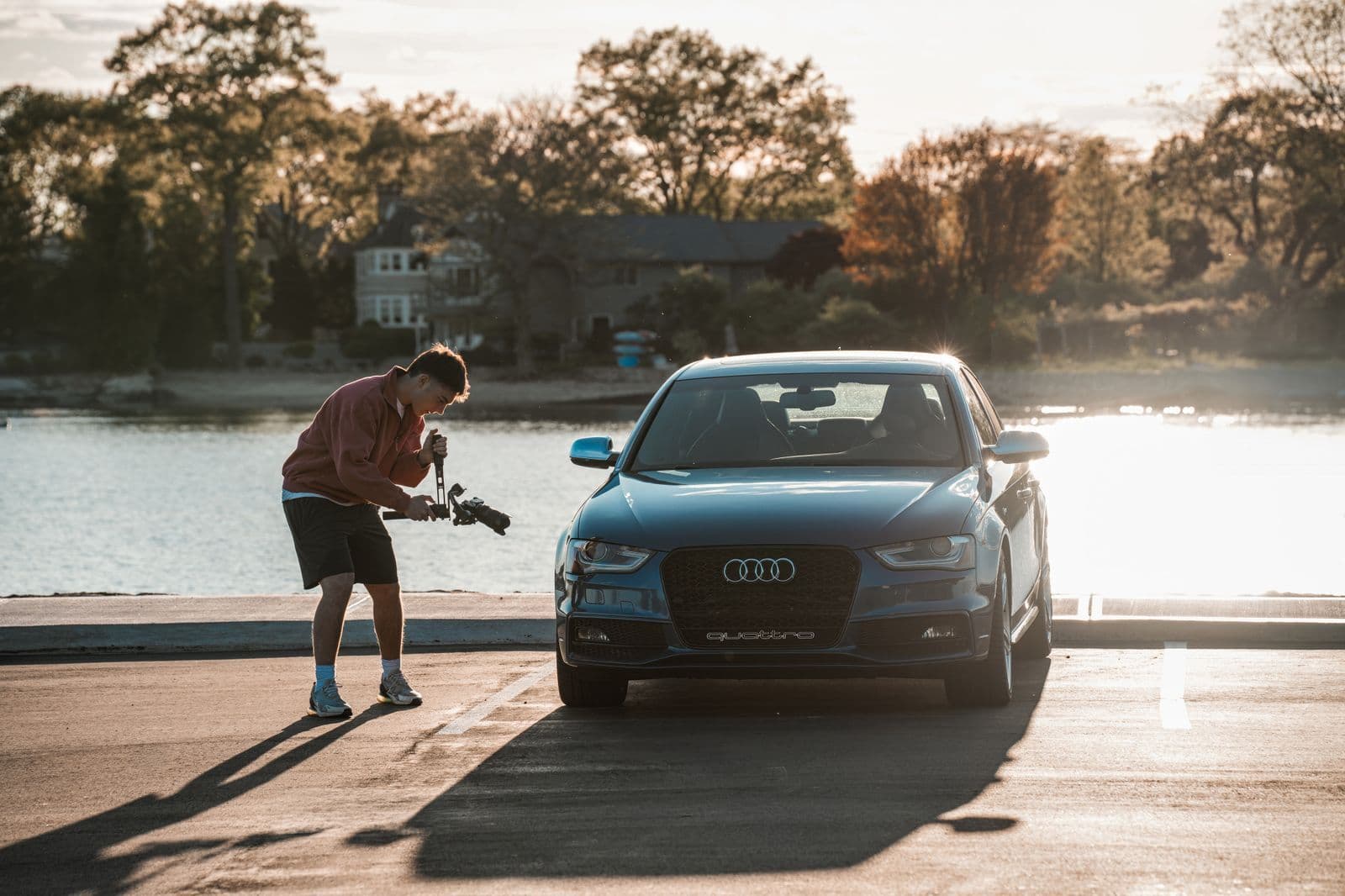
- Timing: Shoot during "Golden Hour" (the first hour after sunrise or the last hour before sunset). Harsh midday sun washes out paintwork, creates extreme cabin shadows, and causes glass reflections.
- Location: Choose a neutral, uncluttered backdrop: an open parkland car park, the top deck of a quiet shopping centre parking garage, or a clean industrial estate. Avoid parking across messy suburban driveways or in front of garbage bins.
- Camera Setup: Hold your phone horizontally (landscape mode) at chest/headlight level rather than looking down from eye height.
THE 12 ESSENTIAL PHOTOS EVERY LISTING NEEDS
- Front three-quarter angle (wheels turned slightly toward the camera lens)
- Rear three-quarter angle
- Direct side profile (revealing stance and door lines)
- Direct front facing shot
- Direct rear facing shot
- Cockpit wide view (taken from the rear seat showing steering wheel and centre console)
- Instrument cluster (engine running with zero error lights and showing odometer)
- Infotainment screen (Apple CarPlay/Android Auto active, navigation, reverse camera)
- Front and rear seat upholstery condition (showing bolsters)
- Boot space (with cargo blind, parcel shelf, and spare tyre well)
- Clean engine bay (dusted and wiped down)
- Documentation: Stamped logbooks, owner manuals, and both factory remote keys
4. Copywriting That Pre-Empts Buyer Questions
A sparse three-sentence description invites endless repetitive questions, while a structured, informative listing attracts pre-qualified, serious buyers.
Proven Listing Template:
2021 Toyota RAV4 GXL Auto AWD — Single Owner, Full Dealer Service History
Up for sale is our well-maintained 2021 Toyota RAV4 GXL AWD, finished in Crystal Pearl White over black cloth interior.
Purchased brand new from [Dealership Name] in October 2021. Kept garaged day and night, non-smoker, and no pets. Only selling due to upgrading to a 7-seat family SUV.
Key Highlights:
- Odometer: 54,200 km
- Registration: Current VIC Registration until March 2027
- Roadworthy: Sold with a valid Certificate of Roadworthiness (RWC) included
- Ownership: 1 mature owner from new
- Keys: 2x Original factory smart key fobs
Factory Features & Options:
- 2.5L Petrol AWD drivetrain with Multi-Terrain Select
- Toyota Safety Sense (Radar Cruise Control, Lane Keep Assist, Blind Spot Monitoring)
- Apple CarPlay & Android Auto integration
- Factory Toyota carpet floor mats and heavy-duty boot tub liner
- Genuine Toyota detachable tow bar (used solely for bicycle carriers)
Service History & Maintenance:
- Full logbook servicing exclusively completed on schedule at [Dealership Name]
- 10k, 20k, 30k, 40k, and 50k km scheduled services completed
- Major 50,000 km service completed recently with new front/rear brake pads and fresh engine fluids
- Brand new Michelin Primacy tyres fitted 4,000 km ago
Inspections welcome in [Suburbs/City]. Proof of driver’s licence required for all test drives. Genuine buyers only; lowball offers without inspecting will be politely ignored.
5. Managing Inquiries, Test Drives, and Safety
Screening Buyers
- Distinguish between serious prospects and automated spam. Legitimate buyers ask specific questions regarding service milestones, roadworthy timing, or availability for viewing.
- Avoid communicating through external email links or weird third-party shipping agent arrangements.
Conducting Safe Test Drives
- Meet in a Safe Location: Conduct daytime viewings at your residential home or a busy public location (e.g., local railway station or shopping precinct car park).
- Inspect Driver's Licence: Take a photo of the prospective buyer’s current driver’s licence before handing over the keys.
- Always Accompany the Buyer: Never allow a prospective buyer to drive the vehicle unaccompanied. Sit in the front passenger seat throughout the test route.
- Clarify Insurance: Ensure your comprehensive vehicle insurance policy covers unlisted drivers over 25 years of age.
6. Closing the Deal & Legal Handover
When you agree on a price with a buyer:
- Deposit: Request a 5% to 10% non-refundable holding deposit via direct bank transfer / Osko if they need time to organise remaining funds.
- Instant Bank Transfer: Use Osko/PayID for the final balance. Ensure the funds have cleared and are visible in your available bank balance before handing over keys and vehicle registration documents.
- State Transfer Notice: Complete the Notice of Disposal / Transfer of Registration form online through your state transport portal (VicRoads, Service NSW, TMR QLD) immediately after handover to ensure any subsequent speed camera or parking fines are not attributed to you.