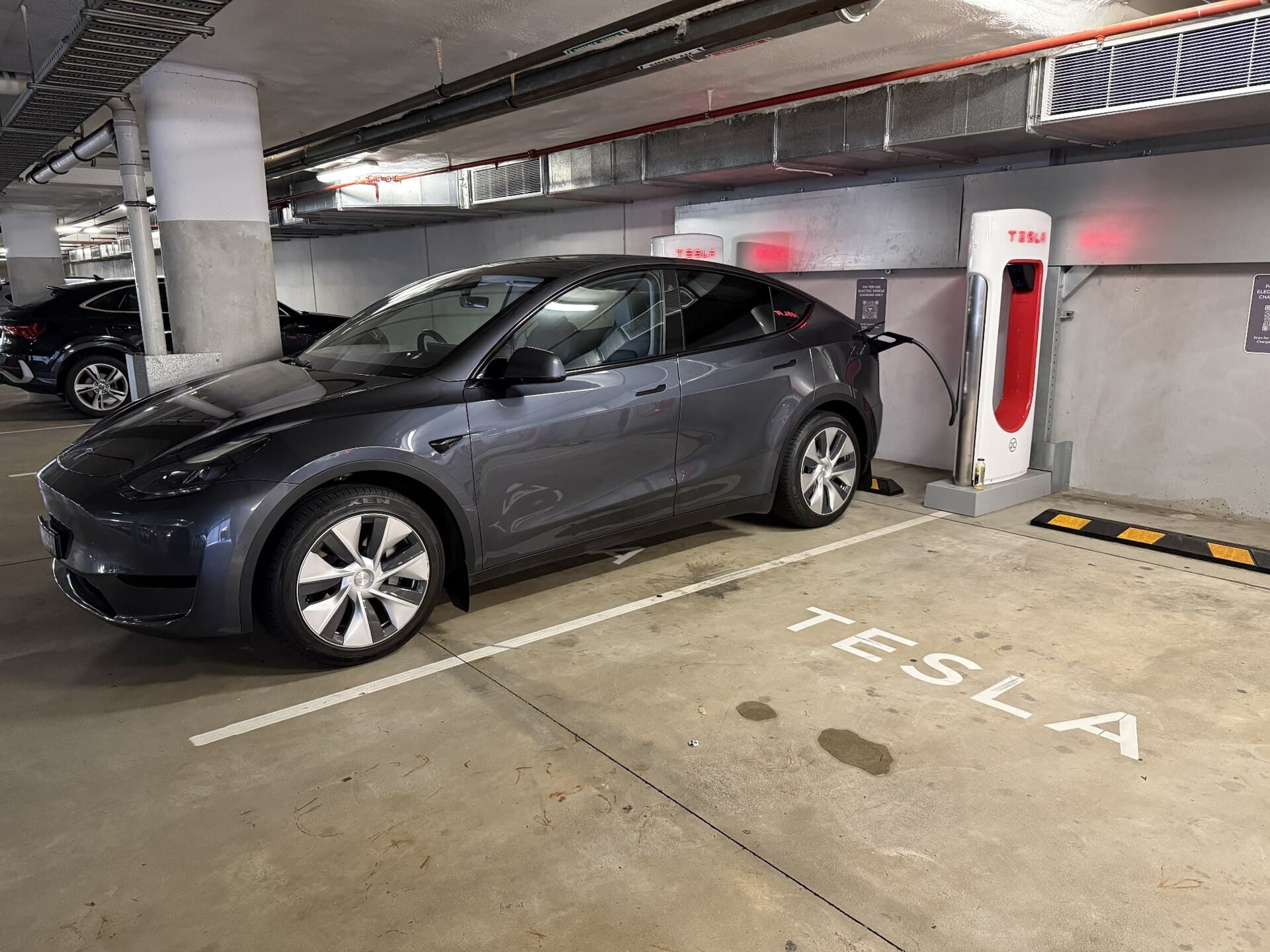
Tesla delivered 45,755 cars in Australia in the first ten months of 2026, according to Electric Vehicle Council figures reported by EV Central on 3 November (opens in a new tab). That's up 94 per cent on last year and just 361 cars short of the 46,116 record it set in 2023, with two months to go. Yet in October BYD sold more than twice as many cars here as Tesla did, and the feature Tesla calls "Full Self-Driving" still makes you, not the car, responsible. Our view: Tesla is a big EV seller in Australia again, but it is no longer the automatic choice, and the self-driving promise deserves the same scepticism we've given its other promises.
Tesla in Australia, November 2026
- Deliveries Jan to Oct 2026
- 45,755 (EVC)
- 2023 full-year record
- 46,116
- October 2026
- 4,050, down 28.4% on September
- Model Y share of 2026 volume
- 85.3%
- BYD in October
- 10,025 sales, second brand overall
The sales trend through 2026
The year has been strong. EV Central reports Tesla's October figure of 4,050 was down 28.4 per cent on September's 5,654 and its quietest month since April, but still far above the 916 it delivered in October 2025. The Model Y family did most of the work: 39,035 of Tesla's 45,755 deliveries this year (opens in a new tab), or 85.3 per cent, including 1,010 of the longer Model Y L in October alone. The Model 3 added 945 in October and 6,720 for the year.
Tesla reports through the Electric Vehicle Council rather than VFACTS, so its numbers sit beside the industry's official tally rather than inside it. Put them together and October was a big month for EVs generally. The NRMA, using both sets of figures, put battery EVs at 23.1 per cent of the 107,493 new vehicles sold in October (opens in a new tab), against 7.3 per cent a year earlier. Fuel prices helped. When pump prices hit records in March, CarExpert reported EV sales jumped to a then-record 14.6 per cent share (opens in a new tab) and the Model Y was the third-best-selling vehicle in the country.
Still the default EV? Not on the brand table
Here's the shift. The Model Y was still Australia's best-selling EV model in October, fourth overall with 3,105. But the BYD Sealion 7 was right behind it in fifth with 2,524, and BYD also had the Atto 2 and the Shark 6 ute in the top ten. As a brand, BYD sold 10,025 cars in October (opens in a new tab), second only to Toyota and up 153 per cent. Tesla's 4,050 put it 11th.
So Tesla has the single most popular electric model, but a buyer walking into the EV market in 2026 has a much wider choice than they did in 2023. In our view the idea that "EV" means "Tesla" in Australia is over. That's not a criticism of the Model Y, which plainly sells. It's a change in what the default looks like.
Tesla has the most popular electric model in Australia. It no longer has the EV market to itself.
'Full Self-Driving' on Australian roads
Tesla switched on FSD (Supervised) in Australia in September 2025. In a submission dated 16 October 2026 (opens in a new tab) to the Senate Select Committee on Productivity, Tesla said its cars had covered more than 160 million kilometres with the feature engaged across Australia and New Zealand, and reported 40 per cent fewer collisions than when it wasn't engaged. Those are Tesla's own figures. It asked for public-road driverless trials from 2027 and for the planned Automated Vehicle Safety Law, expected around 2029, to be brought forward by two years.
The same submission is clear on the key point. Tesla states FSD (Supervised) is still a Level 2 system, meaning the driver must stay in control. In plain English, it's driver assistance. If it does something wrong, the person in the seat is answerable for it.
Australian researchers think the rules haven't caught up. A group from UNSW, the University of Melbourne and Monash argued that supervised systems "fall between the cracks of existing law" (opens in a new tab). They point out that once a car meets the Australian Design Rules, makers can switch on or change automation features through software updates without submitting safety data or seeking approval, and aren't required to share crash, near-miss or handover data.
That last point matters most to us. We've written before about the company grading its own safety homework (opens in a new tab). A 40 per cent collision claim may be right, but it's a claim. Until a regulator can check the data, we'd treat it the way we'd treat any sales brochure. And the name "Full Self-Driving" for a system that legally requires your full attention is, in our view, a bad name for a safety feature.
The world view
Globally Tesla is holding up, not racing ahead. Its Q3 2026 report to the US Securities and Exchange Commission shows 486,532 deliveries and 464,391 vehicles produced (opens in a new tab) in the quarter, almost all of them Model 3 and Model Y. Electrek reported that was down 2.1 per cent on the 497,099 delivered in Q3 2025 (opens in a new tab), which is still Tesla's best quarter on record. So Australia's near-doubling this year is well ahead of the company's global trend.
China: where the new default is being set
China is the country that explains Australia's showroom. In October, new-energy vehicles (battery EVs and plug-in hybrids) made up a record 67.5 per cent of China's passenger car retail sales (opens in a new tab), according to the China Passenger Car Association data reported by CnEVPost. BYD led domestic NEV retail with 250,301 cars, followed by Geely, Leapmotor, Changan and SAIC-GM-Wuling. Tesla wasn't in that top seven.
Tesla China is still a big exporter, though: it shipped 59,012 cars overseas in October, fourth among China's exporters behind BYD's 165,194, Chery and Geely. In other words, the competition Tesla faces in Australian showrooms is the same competition it faces in China, and in China it's losing ground to brands Australians barely knew five years ago.
What it means if you're buying or selling
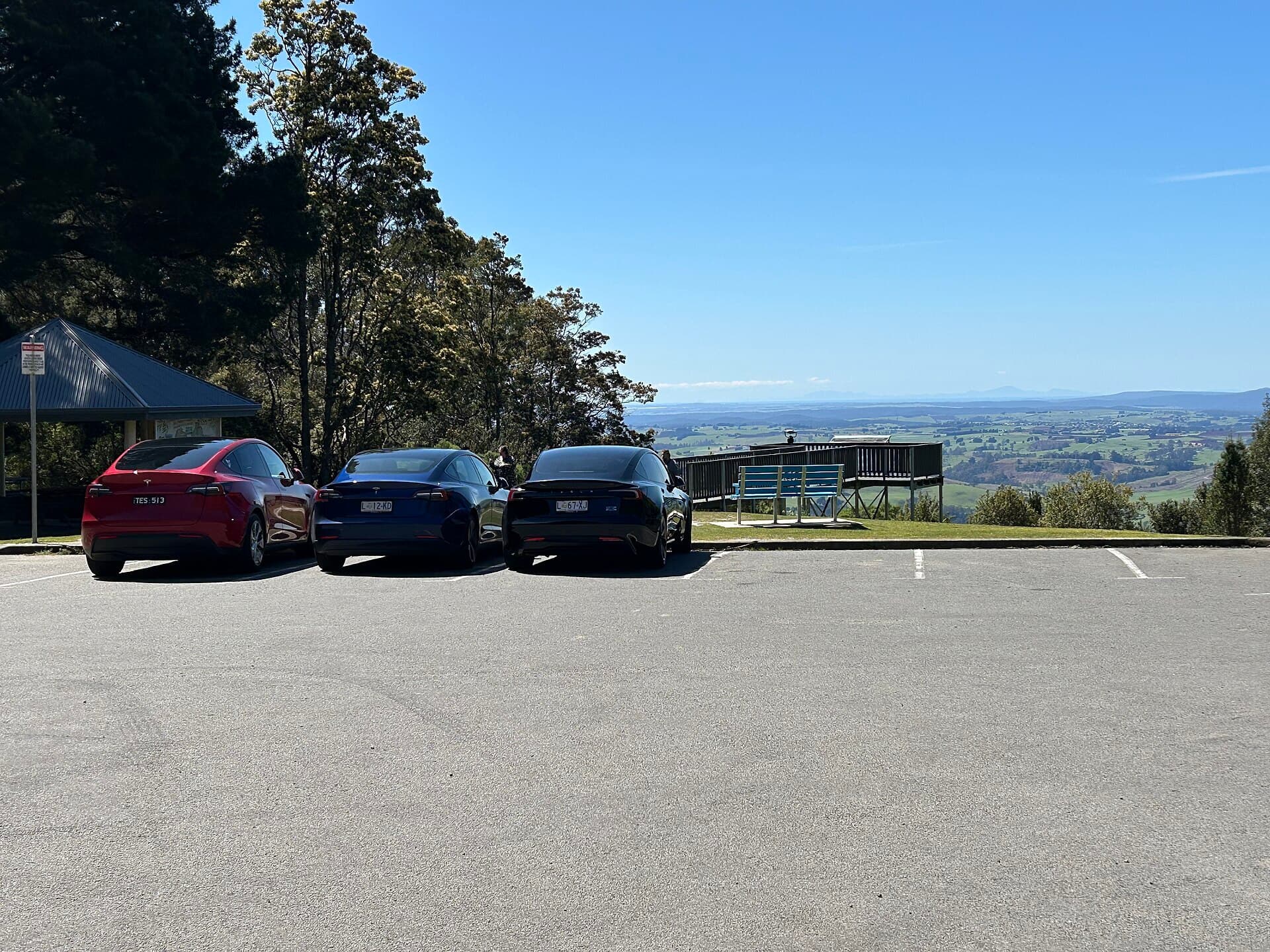
Buying new. If you want an EV, cross-shop. The Model Y is still the top-selling electric model, but BYD and others now sit in the top ten. Ask each brand about service networks in your area, parts lead times and how long they'll support the software. Our summer road-trip test of regional charging (opens in a new tab) is worth reading if you drive outside the cities.
FSD on a used Tesla. Find out exactly what software the car has and whether it transfers with the car. Features that are paid for in software don't always follow the car to its next owner, as we covered in our piece on features you've already bought (opens in a new tab). Get it in writing.
Selling a Tesla. A record sales year means more used Teslas coming, and more new competition. Price against recent sales, not last year's, and have the battery health and service records ready. You can buy, sell & show cars on MotorLoop, and it's free.
Our take
Credit where it's due: Tesla has had a very strong year in Australia, and the Model Y is still the electric car more Australians buy than any other. But the brand that used to be the EV market is now one seller among many, and its biggest rival on the brand table outsold it more than two to one in October.
On self-driving, we'd keep our feet on the ground. Tesla's own paperwork says the driver is in charge. The data behind its safety claims isn't independently checked, and Australian law, according to the researchers who study it, hasn't caught up. Believe the miles driven, not the miles promised. For now, Full Self-Driving means you drive.
Header photo: Leesieoh (opens in a new tab) via Wikimedia Commons, CC BY-SA 4.0 (opens in a new tab).
Related
- Tesla's Cybercab is live in Austin, and the promise deserves a harder look (opens in a new tab)
- Cybertruck: the spectacle that never became a success. So why does Elon get a pass? (opens in a new tab)
- The summer road trip test: regional EV charging has grown up, but it still isn't a servo network (opens in a new tab)
- Your car can sell you features it already has. The next owner may not get them (opens in a new tab)