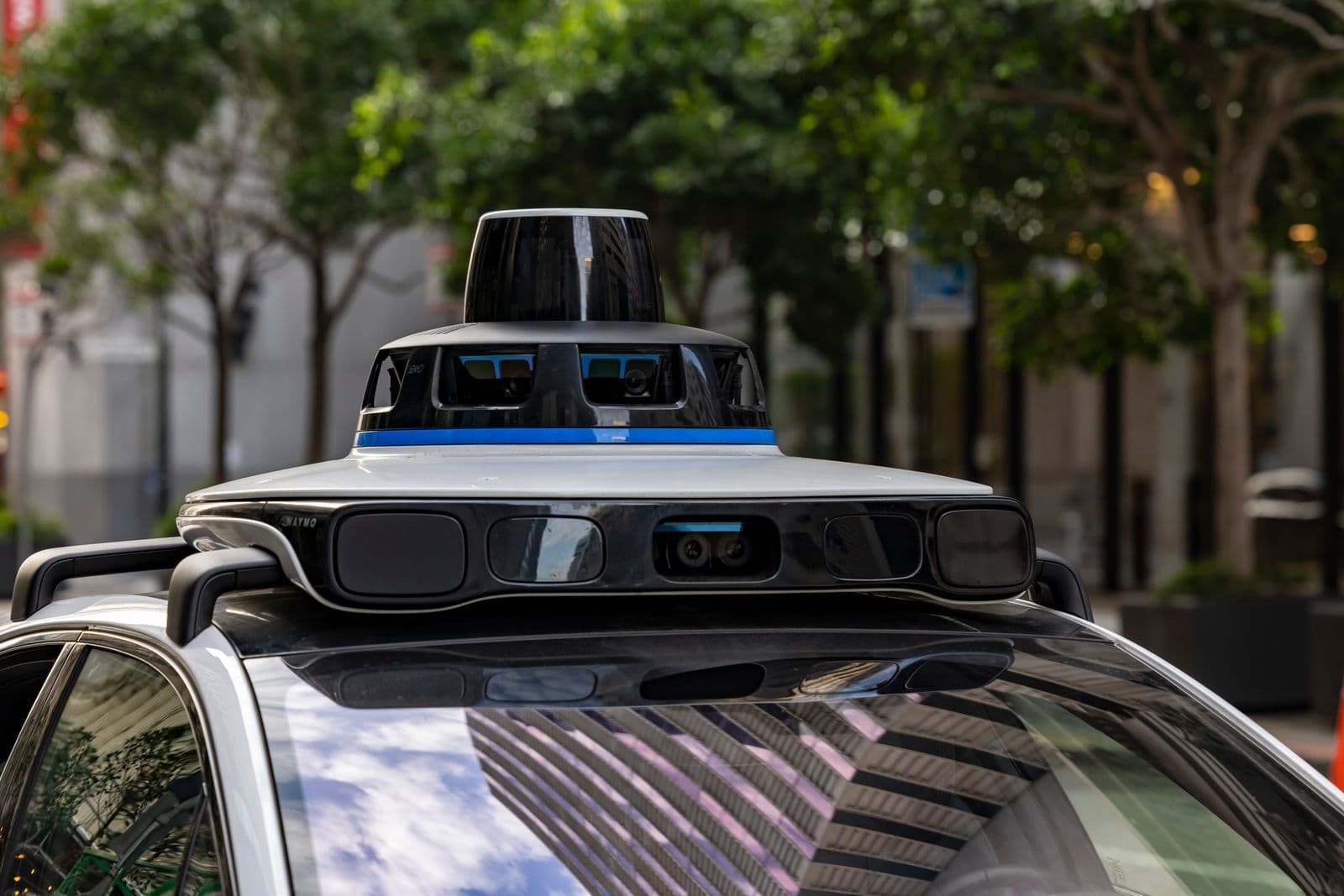
Tesla's purpose-built Cybercab — a two-seat car with no steering wheel and no pedals — began carrying paying passengers in Austin, Texas, on 3 September 2026. Within hours, the United States' road-safety regulator had opened an investigation into how Tesla certified it.
This is an editorial. It argues a view — ours, the MotorLoop team's — and every fact underneath it is linked to its source, so you can check our working and disagree with the conclusion.
- Cybercab enters paid service
- 3 September 2026, Austin
- Robotaxi service launched
- 22 June 2025, Austin
- Rides without a safety monitor
- Six US metro areas
- Cybercabs registered in Texas
- 45
- Steering wheel and pedals
- None fitted
- Federal review
- NHTSA audit query AQ26002
What just happened
Tesla first switched on its Robotaxi service in Austin on 22 June 2025, using modified Model Ys with a human safety monitor in the front passenger seat. The launch was deliberately small: hand-picked riders, a fenced service area, and a person whose only job was to watch the car and intervene. Within days, early riders had posted videos of the cars driving on the wrong side of the road, braking for no visible reason and stopping in intersections, and the National Highway Traffic Safety Administration said it was in contact with the manufacturer the day after launch. The caution, it turned out, was warranted.
Fifteen months on, the service has grown — city by city, each behind its own geofence. It now runs without an in-car safety supervisor in Austin, Dallas, Houston, Miami, Orlando and Tampa, with the San Francisco Bay Area still supervised, and Tesla's second-quarter reporting put cumulative paid robotaxi miles at about 2.4 million. That is real progress, and it should be acknowledged as such. It is also, in the context of American road use, a rounding error — US drivers cover billions of miles a day.
On 3 September 2026, the Cybercab joined the paid fleet in Austin. It is a different kind of vehicle: two seats, butterfly doors, and no steering wheel or pedals at all. Texas motor-vehicle records show 45 Cybercabs authorised for driverless operation in the state, alongside a Model Y robotaxi fleet estimated at a little over 150 in Austin.
The distinction matters more than the number. A Model Y robotaxi is a conventional car running software, and if the software fails there is at least the physical possibility of a person taking over. The Cybercab is designed around the absence of a driver — there is no wheel to grab and no pedal to stand on. It is the point of the whole exercise, and it means the question "what happens when the software is wrong?" no longer has a human-shaped answer. If the software stops, so do you.
Hours after that launch, NHTSA opened Audit Query AQ26002 into Tesla's decision to put a car with no manual controls on public roads. An audit query is not a finding of wrongdoing; it is a formal demand for information, and many close with no action. But federal rules currently require manual controls such as brake pedals; Tesla had self-certified the Cybercab as compliant, and the audit will examine the process and data behind that claim. When a regulator opens a file on your certification process within hours of your launch party, it is telling you — politely, and on the record — that it does not intend to be a bystander.
The promise keeps moving
Here is the part we think deserves a harder look.
In October 2016, Tesla told buyers that every car it was building had the hardware needed for full self-driving. People paid for that future in advance, as an option on their purchase. In 2019, Elon Musk told investors: "Next year for sure, we'll have over a million robotaxis on the road." The service that actually arrived began with about 20 cars, five years late. In 2024 he said a Cybercab ride would be cheaper than the bus. And six weeks before the Cybercab's launch event, Tesla's own quarterly update quietly dropped the vehicle from its volume-production plans for this year, naming battery-pack capacity as the constraint. The 45 cars on Texas roads are a fraction of a production line rated for more than 125,000 vehicles a year.
Read that sequence again, slowly. The hardware was ready in 2016. A million robotaxis were certain in 2020. The bus-killer was priced in 2024. The launch fleet in 2026 is 45 cars, and volume production of the vehicle that just launched has already slipped out of this year's plan.
None of this proves the technology will never arrive. Waymo, Alphabet's driverless service, has been carrying paying passengers at scale for years, and Amazon's Zoox won its final federal approval in July and is charging for rides in Las Vegas. Driverless transport is coming, and parts of the case for it are genuinely good — no drunk or distracted driver at the wheel, new mobility for people who cannot drive themselves.
But the specific promise — that this will make your life easier, soon, as advertised — has now been sold, missed, re-sold and re-missed for the better part of a decade. And notice the rhythm of it: each missed date was followed not by an apology or a smaller claim, but by a bigger one. A million robotaxis became a purpose-built robotaxi became a cheaper-than-the-bus robotaxi. A pattern like that is not a roadmap. It is marketing. There is also an incentive worth naming plainly: a company valued in large part on a driverless future has every reason to keep that future vivid, and every reason to keep it just over the horizon — close enough to price in, far enough away never to audit.
Our view: believe the miles driven, not the miles promised.
Grading your own homework
The regulatory frame around all of this deserves a plain-English pass, because it explains both the launch and the audit.
In the United States, there is no pre-approval for a new car. Manufacturers self-certify that their vehicles comply with the Federal Motor Vehicle Safety Standards, and the regulator's heavy tools are mostly reserved for after the fact: defect investigations, audit queries, recalls. Most of the time this system works well enough, because most of the time a new car is an incremental variation on a machine the rules were written for.
The Cybercab is not that. Those standards were written around a human driver — they assume a steering wheel, pedals, and a person to hold responsible. A vehicle with none of those does not fit the form it is being marked against, and fitting it is, in the first instance, the manufacturer's own interpretation of the rules. That is what AQ26002 is actually about. Not "is the Cybercab safe?" — the audit cannot answer that from a desk — but "show us how you decided it was compliant." The answer may be thorough and sound. The point is who grades first: the company grades its own homework, and the teacher checks the working afterwards, in public, only if it chooses to open a file.
None of this is unique to Tesla — self-certification is standard industry practice, and rivals benefit from the same latitude. But a framework built for incremental engineering is now being asked to absorb a vehicle whose defining feature is the absence of the person the rules assumed would be there. Something has to give: either the rules catch up, or the interpretation stretches. Watching which one happens, and how fast, tells you a lot about who the system is actually for.
Other countries have chosen the slower path on purpose. Australia and much of Europe broadly require explicit approval steps before a driverless service carries the public — a gate in front of the launch, not an audit behind it. That caution is usually framed as inertia. After a launch that was followed within hours by a federal audit, it reads a little differently.
What a ride without a person costs
The convenience case is real, and we don't want to straw-man it. Nobody should have to make conversation when they don't want to. A car that shows up sober, alert and unbothered at 3am has genuine value. For some riders — many women travelling alone at night, anyone who has ever had an abusive, creepy or simply frightening driver — the absence of a stranger in the car is not a drawback at all. It is the feature. Any honest argument has to hold that, and ours does.
But count what quietly disappears when the driver does.
Start with the small exchanges that make up getting around a city. The driver who tells you the restaurant moved two blocks last month. The one who points at the police car around the corner. The chat that changes your evening, or at least shortens it. The person who watches you fumble for keys and waits until you're actually through the gate before pulling away. None of these are in the fare, and all of them are in the trip.
Then there is the driver as a city's informal safety net. Drivers are the people who notice. A human driver can see that a passenger is unwell and head for a hospital instead of the pin. They can break a rule when the rule is wrong — mount a kerb for an ambulance, wait through a dangerous situation, refuse to leave someone vulnerable on a dark street. A driverless car executes the trip it was given. It has no discretion to be kind, and no way to be asked.
And there is the livelihood question, which the industry prefers to keep abstract. Taxi and rideshare driving is accessible work — the kind of job that absorbs migrants whose qualifications aren't recognised yet, students, people between careers, people whose English is new. A driverless fleet does not redeploy those people. It doesn't need to. The fare income that was spread across thousands of households concentrates upward, to the platform that owns the cars and the software. That may be efficient. We should at least say out loud what the efficiency is made of.
One visitor to Austin put it better than we could when FOX 7 asked about the Cybercab: "I kind of feel like I want the human to stay human."
Our concern is not that people become robots overnight. It is that a city which removes people from every ordinary interaction slowly trains the rest of us to expect less of each other — that sterile starts to read as normal, then as preferable. We have already watched this happen once, with self-checkouts and apps that replace the two-minute conversation at the counter. Each step was convenient. Each step was small. The sum of them is a daily life with measurably fewer people in it. Convenience should serve human contact, not quietly replace it.
The honest case for driverless
If this editorial only argued one side, it wouldn't be worth your time. So here is the strongest version of the other one, made sincerely.
The most dangerous component in any car is the human being holding the wheel. Drink, fatigue, distraction, speed, anger — most serious crashes trace back to human choices, not mechanical failure. A driver that never drinks, never texts, never falls asleep at 2am and never gets angry in traffic removes the single biggest risk factor on the road. That is not a small thing. If driverless systems deliver even a substantial fraction of their promise, the road toll falls, and every number in that statistic was a person.
Waymo has been carrying paying passengers for years, publishes its safety data, and its record over meaningful driverless mileage is genuinely encouraging. That matters, because it means the safety case is not hypothetical — it is being demonstrated, at scale, by a competitor, right now.
The mobility case is just as strong. Think about who cannot drive: elderly people who have surrendered a licence and with it their independence, people with disabilities, people with impaired vision. For them, a car that drives itself is not a convenience — it is the difference between depending on another person's availability and going where they want, when they want. Add reliable supply at 3am, in outer suburbs taxis avoid, and the service starts to look less like a gadget and more like infrastructure.
All of that can be true at once — and none of it requires buying the whole package. You can want the safety outcome and still ask who holds the software keys. You can welcome the mobility and still ask what happens to the drivers. You can cheer Waymo's record and still note that a company's promises and a company's product are different things, priced differently, and that one of them has a decade-long record of arriving late. The technology's virtues and the business model's risks are separate questions. A launch does not become honest because some of the promises are good ones.
Whoever owns the software owns the ride
This is the part we find hardest to wave away.
In the robotaxi model, one company designs the car, writes the driving software, runs the app, takes the payment, holds your account, collects the trip data and pushes changes to the vehicle over the air, overnight. The car itself is a sensor platform: the Model Ys navigate on eight cameras watching the street, and Tesla's consumer cars also carry a cabin-facing camera. Every journey is tied to a named account and stored.
Sit with what that data is. An origin-destination history, tied to your name, is a pattern of life: where you live, where you work, which doctor you visit, which bar you leave at 1am and how often. External cameras watch the street; what the service records inside the cabin, and how long it keeps any of it, has not been published in anything like the same detail as the mileage figures. A company doesn't need ill intent for this to matter. It only needs the data to exist — because data that exists can be breached, subpoenaed, sold, or quietly repurposed by a terms-of-service update you accepted with a thumb-tap while the car was already outside.
Then there is the deeper shift: over-the-air updates as private legislation. The car you ride in tonight can be a different product tomorrow morning, changed by a software push, not a law. The wider industry has already normalised this direction of travel — subscriptions for hardware already fitted to the car, features moved behind paywalls, capabilities switched on and off remotely. When one company owns the vehicle, the app, the payment rail and the data, an update is not just engineering. It is policy. It decides where the service runs and which suburbs it skips — a geofence is private zoning, drawn by the platform. It decides what a ride costs at 6pm on a Friday. It decides what the screen shows you on the way.
To be plain: we are not accusing Tesla of manipulating anyone today. This is about capability and concentration, not present conduct. The same architecture that can deliver a safety fix overnight can also decide where the service runs, what it costs, what it records and what it shows you — accountable to shareholders rather than voters, and revised in a release note rather than a parliament.
Nor is this a Tesla-specific worry. Waymo belongs to Alphabet. Zoox belongs to Amazon. When the vehicles, the software and the data of everyday transport concentrate in a handful of technology giants, the question stops being "does the car drive itself well?" and becomes "who watches the people it answers to?" On current form the honest answer is: a federal audit opened hours after launch, because the company largely grades its own homework. Self-certification is standard industry practice — and that is exactly why the question matters.
What it means if you're buying or selling in Australia
As at September 2026, we could not find a driverless ride-hailing service approved to operate in Australia, and local regulators are watching the American pilots rather than racing to copy them. Australia's vehicle rules have their own long history of going their own way, and they were written assuming a human driver. Changing that slowly, and deliberately, used to look like caution for its own sake. After a launch followed within hours by a federal audit, it looks more like a control group.
For buyers, the practical translation is simple. The autonomy on sale in Australian showrooms today is driver assistance, not a driver. If you're weighing up what a current car can actually do, our guide to what AEB, lane keeping and adaptive cruise really do is the honest baseline. And if you're buying, buy the car for what it does today — not for the robotaxi network it might join one day.
Be especially wary of paying a premium for autonomy promised later. There is now a decade of precedent for what that's worth: features sold as "coming" have a poor record of holding value the way metal, kilometres and condition do. The same caution applies to insurance and resale. Policies here are still written around a human driver, and an insurer asking "who was driving?" is not set up for the answer "no one" — so don't price a car, or a claim, on a future the paperwork doesn't recognise yet.
For sellers, the mirror-image advice holds: describe the driver-assistance features your car actually has — AEB, adaptive cruise, lane keeping — because they genuinely sell cars, and buyers are right to care about them. Just don't sell the promise. A listing that trades on "full self-driving capability" is asking the buyer to pay for a delivery date nobody can give them.
The expensive mistake is buying a car today on the strength of a robotaxi future that has been promised, and postponed, for most of a decade.
Related
- ADAS decoded: what AEB, lane keeping and adaptive cruise actually do
- Why Australian cars are different: right-hand drive and our own design rules
- Steam, nuclear and six-stroke: car technologies that never took the road — the road is littered with promised futures.
FAQs
Is the Tesla Cybercab legal?
Tesla self-certified the Cybercab as compliant with US federal vehicle rules, which is the standard process for every new car sold in America. Hours after the 3 September 2026 launch, NHTSA opened Audit Query AQ26002 to examine the process and data behind that certification — federal rules currently assume manual controls like brake pedals. As at September 2026 the Cybercab is operating under that self-certification while the audit runs. The audit is not a finding of wrongdoing, and it may close with no action.
Does the Cybercab have a steering wheel or pedals?
No. It is a two-seat vehicle with butterfly doors and no manual driving controls at all — there is no wheel to grab and no pedal to press if something goes wrong. Texas motor-vehicle records show 45 Cybercabs authorised for driverless operation in the state. That absence of a human fallback is precisely what makes it different from the modified Model Ys the service launched with.
Can I ride in a driverless taxi in Australia?
Not as at September 2026. We could not find a driverless ride-hailing service approved to operate anywhere in Australia, and Australian vehicle rules are written around a human driver. Local regulators are watching the American pilots rather than racing to copy them — so for now, the autonomy available here is driver assistance, and the law expects you to keep supervising it.
Is a robotaxi safer than a human driver?
That is the open question, and anyone who answers it with certainty is ahead of the evidence. Most serious crashes trace back to human choices — drink, fatigue, distraction, speed — so removing the human removes the biggest risk factor on the road, and Waymo's published safety record over years of paid driverless operation is genuinely encouraging. But Tesla's own service is young: about 2.4 million paid miles against billions of human miles driven every day. Early data is encouraging, not conclusive. Believe the miles driven, not the miles promised.
What is NHTSA Audit Query AQ26002?
It is a formal information-gathering audit opened by the US National Highway Traffic Safety Administration within hours of the Cybercab's 3 September 2026 launch. It examines how Tesla certified a car with no steering wheel or pedals as compliant with federal rules that currently assume manual controls. An audit query is not a penalty and not a recall — it is the regulator asking to see the working. It can close quietly or escalate, and as at September 2026 it remains open.
Does a robotaxi record me?
Some recording is inherent to the model. Robotaxi trips are booked through an app and tied to a named account, so the operator holds an origin-destination history linked to your identity. Tesla's Model Y robotaxis navigate using eight external cameras, and Tesla's consumer cars also carry a cabin-facing camera; Tesla has not published comparable detail about what its robotaxi service records inside the cabin or how long trip data is retained. That gap between what is known about the miles and what is known about the data is part of what this editorial is asking about.