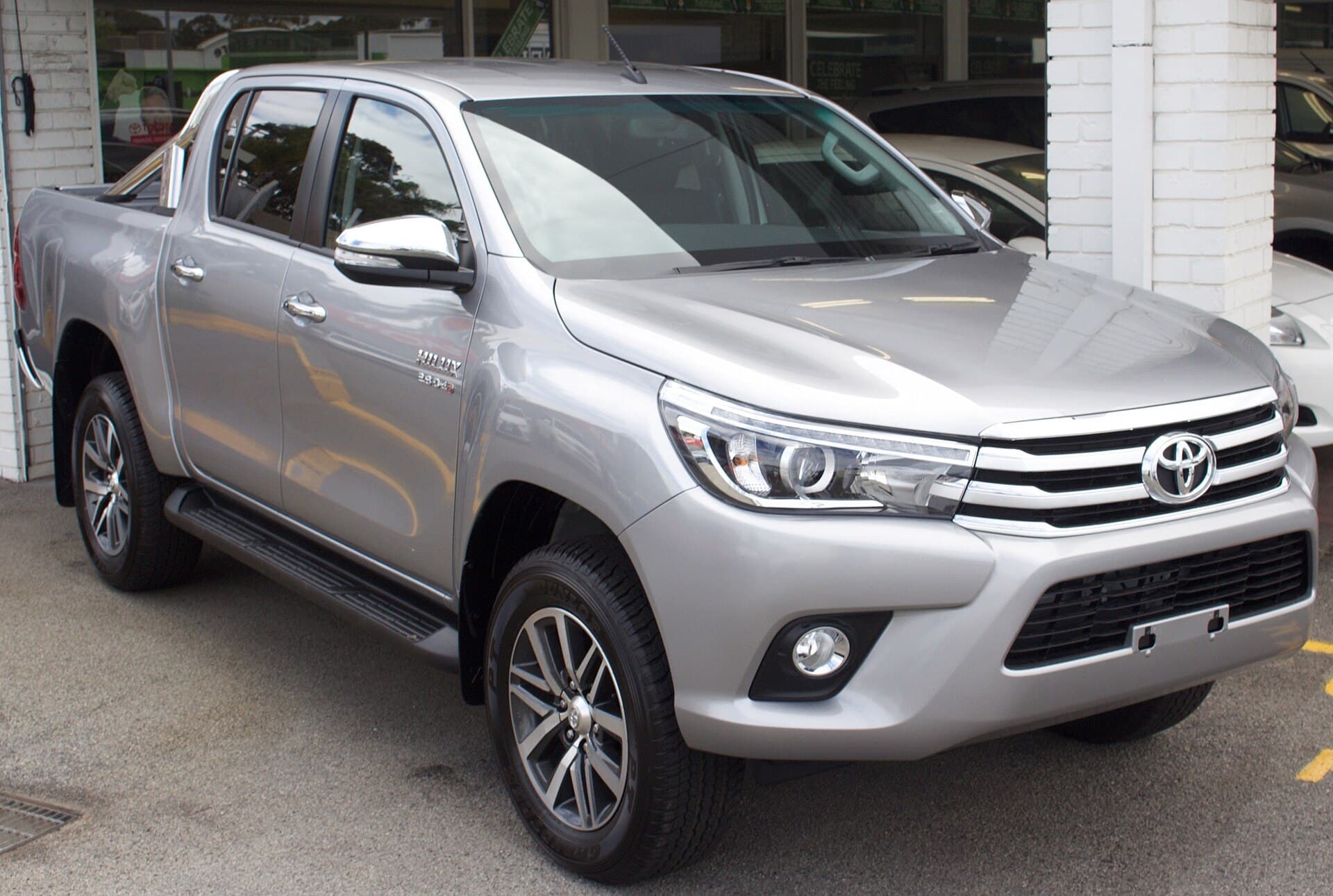
Toyota Australia has agreed to pay $750 million to settle the two class actions over the diesel particulate filters fitted to HiLux, Prado and Fortuner diesels, and the deal still has to be approved by the Federal Court. CarExpert reported the agreement on 13 October (opens in a new tab), quoting a Toyota Australia spokesperson: "The settlement is subject to Court approval."
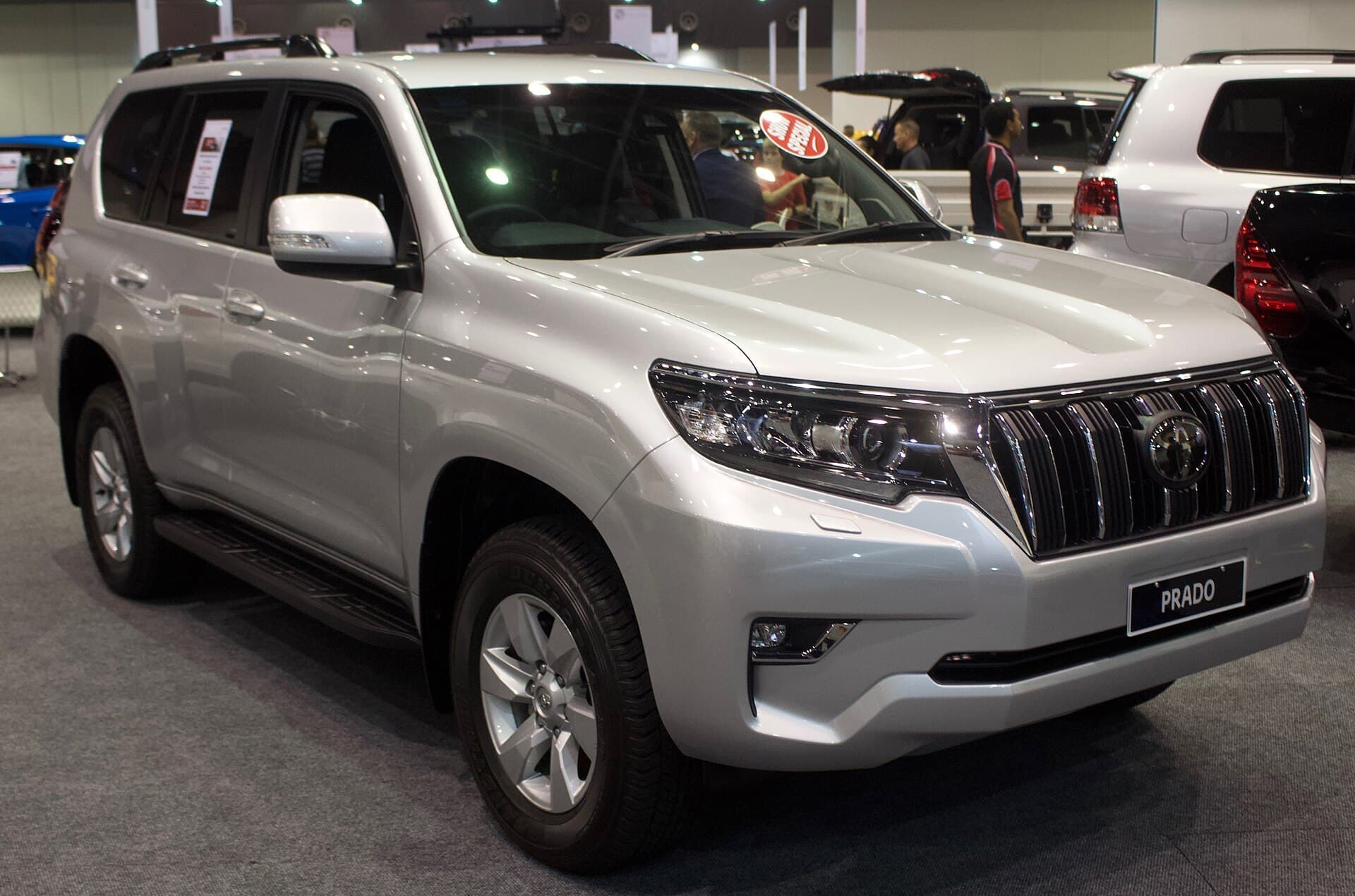
The claims cover vehicles with Toyota's 1GD-FTV or 2GD-FTV turbo-diesel engines. In April 2022 the Federal Court recorded that 264,170 of them were supplied to consumers in Australia between 1 October 2015 and 23 April 2020, each with a DPF system the Court found defective (opens in a new tab).
What the settlement does not yet tell anyone is how much an individual owner will receive, or when. If you own one, bought one or are about to buy one, the useful questions are who is covered, what the 2020 repair means, and why selling the vehicle can change what you are owed.
At a glance
- Settlement
- $750 million, subject to Federal Court approval
- Announced
- 13 October 2026
- Vehicles
- 264,170 HiLux, Prado and Fortuner diesels supplied 1 October 2015 to 23 April 2020
- Registration deadline
- 4pm, 26 August 2026 (now passed)
- Free repair
- Available from Toyota since 2020
What Toyota has agreed to
The $750 million covers two proceedings. The original, Williams v Toyota (NSD 1210 of 2019) (opens in a new tab), acts for people who acquired one of these diesels, new or used, between 1 October 2015 and 23 April 2020 (opens in a new tab). The second, the Taylor action, was filed in 2025 for people who bought one used, by private sale, between 24 April 2020 and 31 July 2025, from someone who bought it new in the original period, and who still own it (opens in a new tab). The Federal Court ordered in August 2025 that the two be case managed and heard together (opens in a new tab).
Toyota's statement, as reported by CarExpert (opens in a new tab), included an apology: "We apologise for any inconvenience or discomfort experienced by our customers." The company also said it remains committed "to providing a free-of-charge remedy that has been available since 2020".
What we could not find, when we checked on 22 October, was any published settlement notice, distribution scheme or approval hearing date. The applicants' update page (opens in a new tab) still led with its July 2026 notice, which said the parties were in confidential settlement talks and that group members "are likely to receive money if the parties reach a settlement".
That July notice is also where the hard deadline sits. Group members who wanted a share of any settlement had to register by 4pm on 26 August 2026 through the group member portal at toyotaclassaction.deloitte.com.au (opens in a new tab). The solicitors warned that people who did not register remain group members but "may not receive any money", and that the settlement terms may stop them making a later claim against Toyota over the same subject.
What $750 million looks like per vehicle
Nobody has published a per-owner figure, so treat what follows as arithmetic, not an entitlement. Divide $750 million by 264,170 vehicles and you get roughly $2,840 a vehicle. That ignores the second class of private buyers, and the case is funded by Balance Legal Capital (opens in a new tab); how much of the settlement goes to legal costs and the funder's return, rather than owners, has not been published.
For comparison, after the 2022 trial the representative applicant was awarded $7,474.59 for the reduction in value of the applicant company's Prado (opens in a new tab), within a total award of $18,401.76. That award rested on a 17.5 per cent reduction-in-value finding that later courts said had to be reworked. We cannot tell how the settlement figure was arrived at, and neither side has said.
Large buyers feature too. Toyota's evidence at trial, cited in the judgment, was that there were 185,816 unique purchasers of the 264,170 new vehicles, 582 of whom bought more than 20 and five more than 500 (opens in a new tab).
How the case got here
The defect, in the court's words
The agreed facts adopted by Justice Lee describe the problem plainly. The DPF has a finite capacity to store soot, which must be burned off periodically in a process called regeneration (opens in a new tab). In these vehicles, under certain conditions, deposits built up on the diesel oxidation catalyst that sits with the filter, which stopped regeneration working. The referee whose report the Court adopted found the system "was not designed to function effectively during all reasonably expected conditions of normal operation and use in the Australian market", and that the design defect involved "both mechanical defects and defective control logic and associated software calibrations".
The symptoms will be familiar to anyone who owned one: excessive white smoke and foul-smelling exhaust during regeneration, and DPF warnings showing too often or for too long. One detail surprises people. The agreed facts name the key trigger as regular continuous driving at roughly 100 km/h (opens in a new tab), the court's "High Speed Driving Pattern", not the short city trips usually blamed for blocked filters.
The same judgment records that from February 2016 Toyota Australia, called TMCA in the judgment, was aware that some customers were bringing vehicles to dealers with white smoke during regeneration and DPF warnings (opens in a new tab). A change applied in production in 2018 did not fix it. The countermeasure that worked, the "2020 Field Fix", arrived in May 2020; the referee listed its elements as an "ECM reflash, DPF assembly replacement, Additional Injector Housing Assembly replacement", and vehicles produced from June 2020 carried the countermeasure.
The issues were escalated to the top levels of TMCA and its parent company in Japan, Toyota Motor Corporation (TMC); and a number of countermeasures were introduced, tested and failed.
The regulator took a different path from the courts. In December 2020, according to CarExpert's report of the announcement (opens in a new tab), the ACCC accepted a court-enforceable undertaking from Toyota and no penalty was imposed, after complaints that vehicles were "repaired on multiple occasions without remedying the DPF issues". The question of compensation was left to the class action.
Three courts, three answers on the money
The liability findings have held up all the way. The Federal Court found in April 2022 that the vehicles were not of acceptable quality under the Australian Consumer Law, and that Toyota engaged in misleading or deceptive conduct in marketing them (opens in a new tab). Those findings were not challenged in the High Court and remain binding.
The fight was over how much the defect cost owners. The applicants argued for a 25 per cent reduction in value; Justice Lee settled on a range of 15 to 20 per cent and took the middle, 17.5 per cent (opens in a new tab). In March 2023 the Full Federal Court cut that to 10 per cent and said the 2020 fix had to be taken into account (opens in a new tab).
The High Court then set a different test. On 6 November 2024 it allowed the owners' appeal and dismissed Toyota's (opens in a new tab). Its summary says damages are the amount by which the goods' value was reduced at the time of supply, assessed using what is known at trial about their condition, "which includes the effectiveness, cost, inconvenience and timing of any repair of a defect in the goods". Because neither lower court had done it that way, the case went back to Justice Lee to reassess, and that reassessment is what this settlement, once approved, would replace.
Why owners were warned about the repair
Two consequences of the High Court ruling matter to anyone holding one of these vehicles. First, group members who have sold, or who sell, their vehicle are not entitled to reduction-in-value damages (opens in a new tab) under section 272(1)(a) of the Australian Consumer Law. They may still be paid for other losses (opens in a new tab), which the solicitors list as including excess GST, stamp duty, luxury car tax, finance charges and income lost taking time off for DPF repairs.
Second, Toyota wrote to owners in around October 2024 inviting them to have the DPF system repaired (opens in a new tab). The notice issued by the Federal Court that followed warned that if they did, Toyota would argue they had lost their reduction-in-value entitlement, "something which Toyota did not include in their letter". How the settlement treats repaired and unrepaired vehicles is one of the things its published terms will need to answer.
What a DPF is, and why your diesel has one
A DPF is a filter in the exhaust that captures diesel particulate matter, or soot, and stores it until it can be burned off; a diesel oxidation catalyst alongside it helps raise the temperature for that burn. Toyota fitted the system because, as the agreed facts record, the vehicles had to comply with national emissions standards prescribed by the Australian Design Rules (opens in a new tab). Justice Lee noted Toyota's own submission that the DPF System "is in place to ensure compliance with emissions rules".
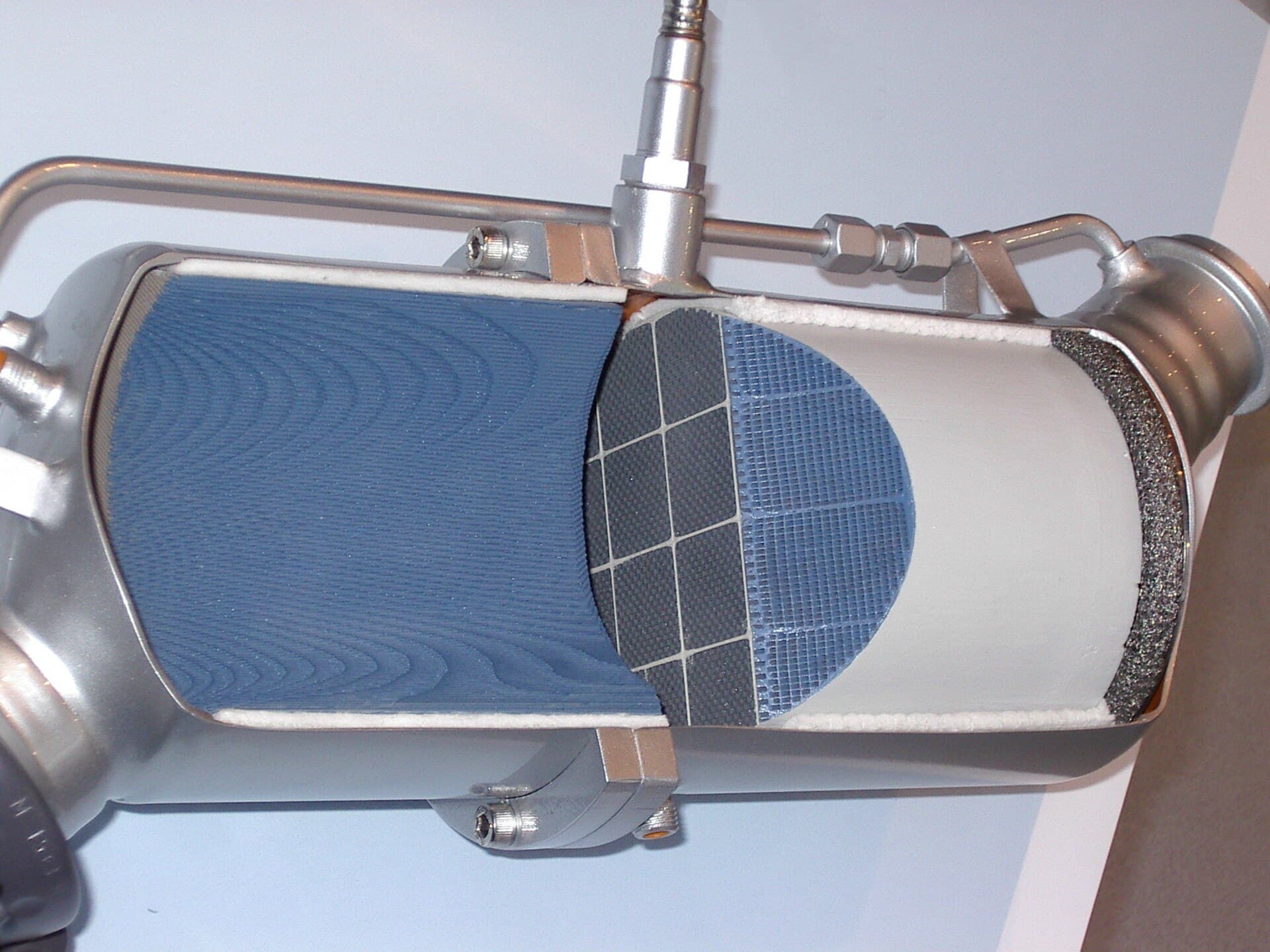
The health case behind those rules is solid. In 2012 the World Health Organization's cancer agency classified diesel engine exhaust as carcinogenic to humans (opens in a new tab), finding sufficient evidence that it causes lung cancer. The Toyota case was never about whether a filter should be there. It was about a filter system the Court found was not designed for all reasonably expected conditions of normal use in Australia.
Another perspective: the United States
The diesel case most Australians remember is Volkswagen's, and the American handling of it is the useful comparison. It was a different kind of wrong. The US Environmental Protection Agency alleged that Volkswagen installed software designed to detect emissions testing and turn full emissions controls on only during the test (opens in a new tab), so that in normal driving its 2.0-litre cars emitted nitrogen oxides at up to 40 times the standard. Nothing like that was alleged against Toyota; the Toyota case is about a filter that did not work as designed.
What stands out is the speed and shape of the remedy. The EPA issued its notice of violation on 18 September 2015 (opens in a new tab). A federal court approved the first settlement, for 2.0-litre vehicles, on 25 October 2016 (opens in a new tab), roughly 13 months later. Owners could have their car bought back at its "fair replacement value" as of 17 September 2015, the day before the EPA's notice, or have a lease ended at no cost, with that option open for two years. Volkswagen had to buy back or fix at least 85 per cent of the affected cars, paying US$85 million into an environmental mitigation trust for every percentage point it fell short nationally, and it estimated the cost of the 2.0-litre package at up to US$10.033 billion.
The US Federal Trade Commission said owners would receive between US$12,500 and US$44,000 each (opens in a new tab), depending on the model, year, mileage and trim.
| Feature | Australia: Toyota DPF | United States: VW diesel |
|---|---|---|
| The problem | Defective filter design, found by a court | Test-cheating software, alleged by the regulator |
| Who drove redress | Privately funded class action | EPA and FTC orders plus a class action |
| Owner remedy | Damages; free repair since 2020 | Buyback, lease exit or approved fix, plus compensation |
| Time to settlement | Filed 2019; settled October 2026, pending approval | Notice September 2015; approved October 2016 |
| Value date | Value at supply, judged with what is known at trial | Value the day before the EPA notice |
Australia can take three lessons from that. The US case shows a regulator-led settlement can arrive fast, and fixing the valuation date before the EPA's notice meant the scandal itself did not shrink owners' payouts. The US also gave owners a choice to hand the car back, where the Australian route pays damages and leaves the owner with the vehicle. And in Australia's favour, the finding that won the Toyota case was about quality, not intent: the Court held the vehicles were not of acceptable quality because of a defective design, and owners pursued that right themselves without waiting for a regulator to do it for them.
What it means if you're buying or selling
If you own one
If you registered by 26 August, there should be nothing to do yet beyond watching for the settlement notice and the approval hearing on the class action website (opens in a new tab). The notice issued by the Federal Court (opens in a new tab) gives 1800 324 984 for questions, alongside the portal. If you missed the deadline, ask the solicitors directly what the settlement terms mean for you rather than assuming you are out.
If you're buying one
On the published class definitions, a private purchase made after 31 July 2025 falls outside both actions, so do not pay extra for a vehicle on the promise of class action money, whatever the seller says. The Taylor update notes that any right to money for reduction in value is tied to ownership of the vehicle (opens in a new tab), and neither action extends to buyers after that date.
What does travel with the vehicle is the hardware. Ask for the service history and look for the DPF repair in it; if it is missing, a Toyota dealer may be able to check the vehicle's records by VIN before you commit. Our guide to DPFs and short trips (opens in a new tab) explains the engineering behind what to look for.
On the test drive, the court record tells you what to watch: heavy white smoke, a foul exhaust smell, and DPF warnings that appear often or stay on. Because the Court linked the fault to sustained highway running, ask how the vehicle has been used, not just how it drives around the block today.
When did you buy it, new or used, and from whom? Has the 2020 DPF repair been done, and is it on a dealer invoice? How many unscheduled DPF visits are in the logbook? Is it mostly driven in town or on the highway? Are you a registered group member, and have you checked what selling does to your claim?
If you're selling one
That rule comes straight from the notice issued by the Federal Court (opens in a new tab), though claims for other losses may survive a sale. If you do sell, put the repair invoice and logbook in the listing; a buyer who can see the fix is done has one less reason to haggle. We could not find published data on what the case has done to resale values, so we will not guess at a figure.
Our take
This is our view. The HiLux built its name on being the thing you could rely on when everything else broke, and for years owners of these diesels were sent back to dealers with a filter system that, the Court found, was not designed for normal Australian use. That is the cost of layering emissions hardware and its software onto a workhorse without proving it on the sustained 100 km/h running the Court identified as the trigger.
We are not against particulate filters. The health evidence on diesel exhaust is clear, and a filter that works earns its place. Our complaint is with complexity owners cannot see, check or fix themselves, and with how long redress took. Williams was filed in 2019; seven years later owners are still waiting for an approved figure, while American Volkswagen owners had a court-approved buyback within about 13 months of the EPA's notice.
The positive lesson is the Australian Consumer Law. The guarantee of acceptable quality held at every level of the court system here, and it is not the same thing as a manufacturer's warranty; in 2020 the ACCC raised concerns that consumers can be misled about how the two interact (opens in a new tab). If you are buying a used diesel of this generation, we would buy the one with the repair on paper. If you own one, keep your paperwork, watch for the settlement notice, and think before you sell.
Header photo: EurovisionNim (opens in a new tab) via Wikimedia Commons, CC BY-SA 4.0 (opens in a new tab).
Related
- Toyota DPF owners face a 26 August deadline as three engine cases continue (opens in a new tab)
- DPFs and short trips: the Australian case that broke the pattern (opens in a new tab)
- Used car inspection checklist: what to look for (opens in a new tab)
- PPSR check: what a vehicle history search tells you before you buy (opens in a new tab)