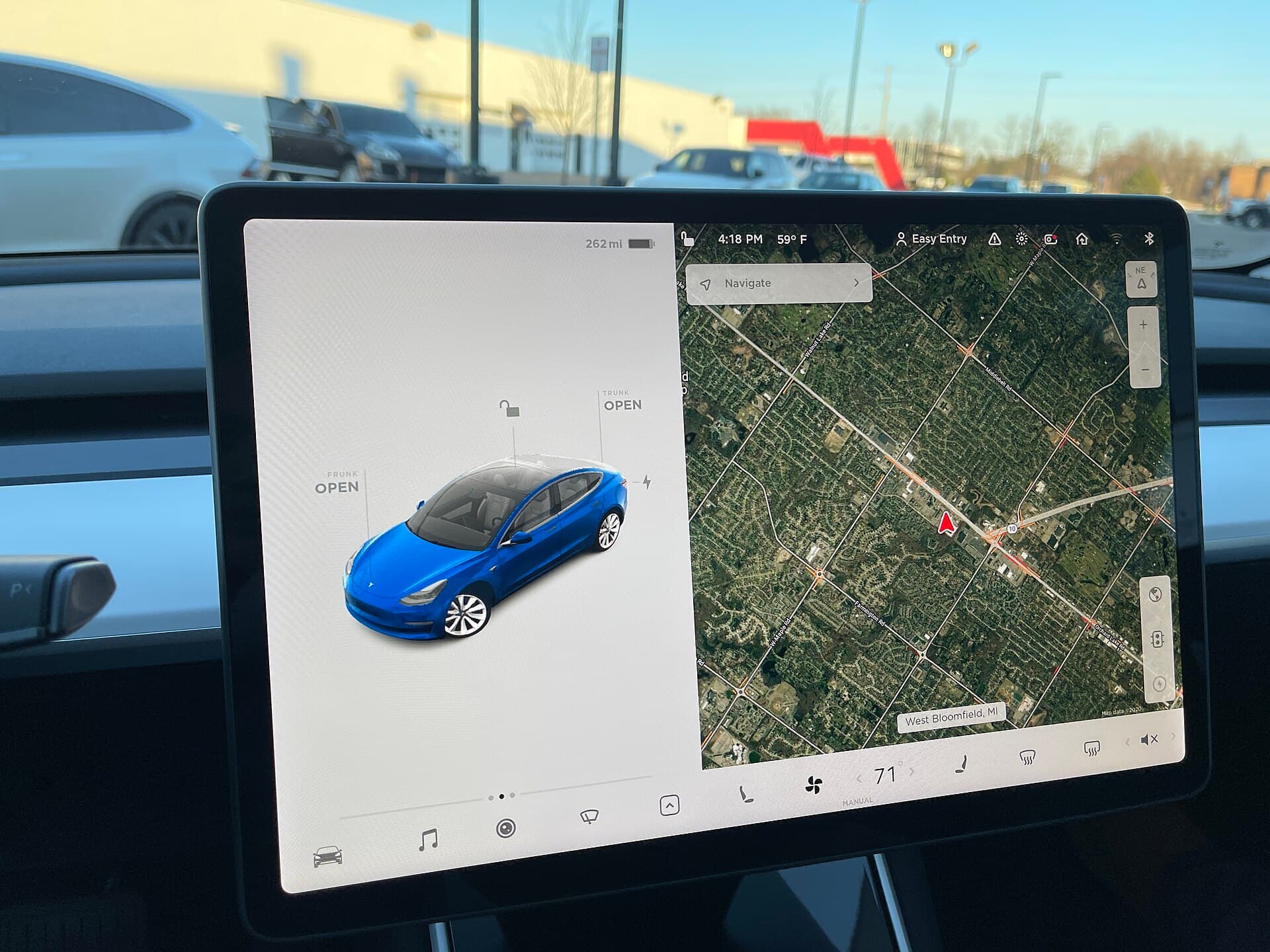
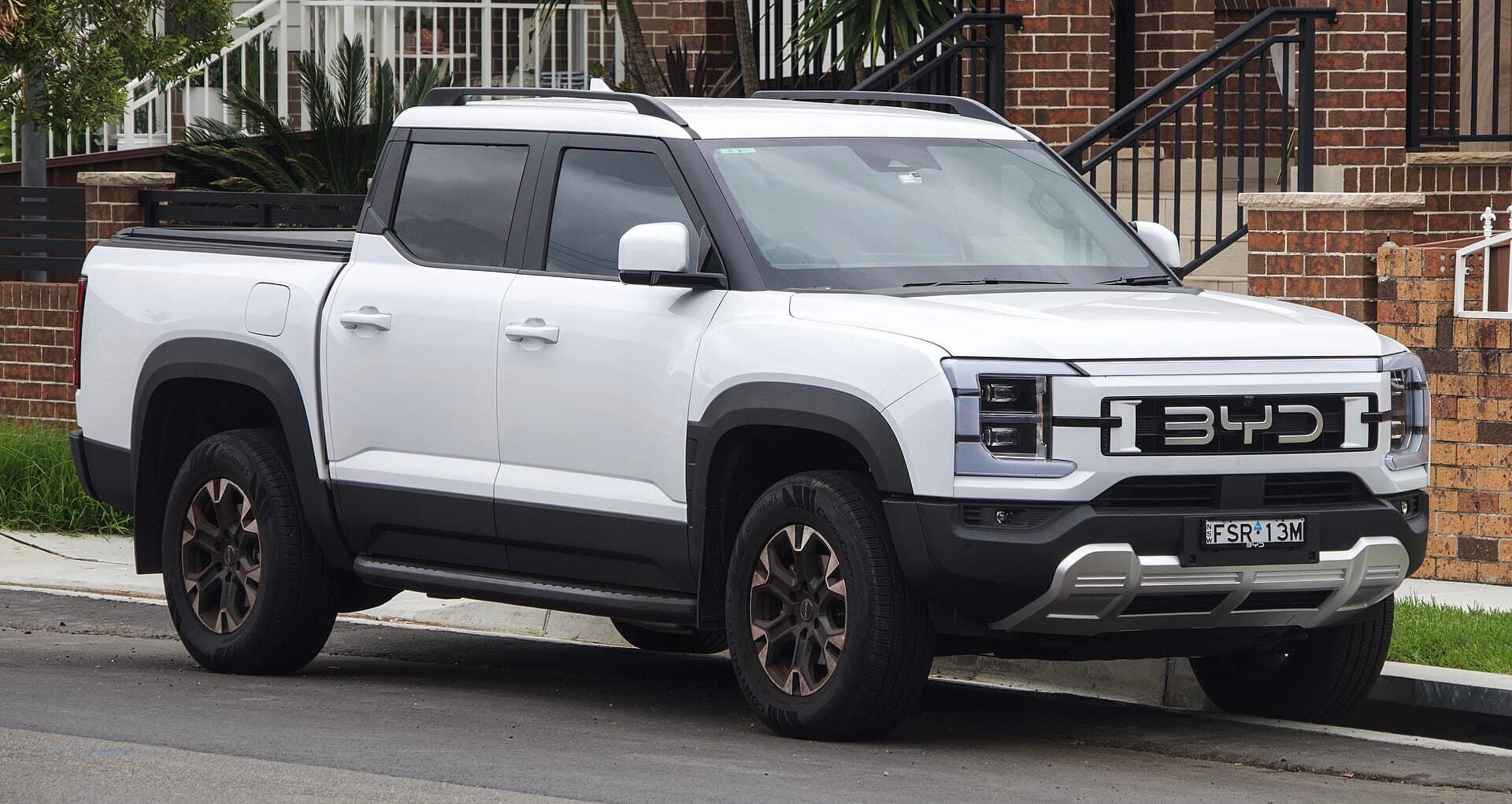
A modern car collects data about where you go and how you drive, sends it somewhere, and accepts instructions back over the mobile network. In September a security researcher working with the ABC's Four Corners reached into a BYD Shark 6 while it was being driven (opens in a new tab), tracked its location and turned off its headlights, CarExpert reported. So who can see into your car, and who can switch things off? The honest answer in Australia today is: more people than you'd think, and the law has not caught up.
We think this is the part of the electric and connected-car story that gets the least attention. Range and charging are arguments about convenience. Data and remote control are arguments about who is in charge of a machine you paid for.
Connected cars in Australia, late 2026
- Privacy investigations
- OAIC is investigating Toyota and Hyundai; no finding of wrongdoing
- Draft privacy law
- Exposure draft released 31 August 2026; not yet in Parliament
- Connected Toyotas here
- More than one million, the company says
- Forecast
- 93% of new cars with embedded connectivity by 2031 (Austroads, via Allens)
What happened in Australia this spring
Three things landed within a few weeks of each other.
The demonstration. The Four Corners program focused on three Chinese brands, BYD, Xpeng and Leapmotor. According to CarExpert's account of the program (opens in a new tab), an Xpeng insider showed the company could remotely see a car's location, speed, steering angle, seat position, whether passengers were on board and whether it was braking or accelerating. A cybersecurity expert got into a BYD Shark 6's internal network, reportedly listened to calls, tracked the ute and switched off its headlights while it was moving.
The makers' responses matter and belong in the same breath. BYD said its Australian customer data is stored in Australia on Telstra servers, and CarExpert later reported BYD would make software changes to close the access path (opens in a new tab) the researchers found. Xpeng said it cannot remotely immobilise or disable a customer's vehicle in Australia, and that nobody in China or any third party can either. CarExpert also made the point that over-the-air software updates, which can touch battery management, steering and lights, are not unique to Chinese EVs.
The investigations. The Office of the Australian Information Commissioner (OAIC), the federal privacy regulator, is investigating Toyota and Hyundai (opens in a new tab) over how they collect and use customers' personal data and how they obtain consent, CarExpert reported in August, citing Choice. The three questions are whether the companies collect more than they need to run the car and its services, whether data goes to third parties such as marketers without the owner's consent, and whether it is destroyed or de-identified when no longer needed. No finding has been made against either company. Hyundai told Choice it "takes privacy and data protection seriously", and Toyota's sales chief John Pappas told CarExpert in October that "any highly sensitive data is fully encrypted inside the car, is never transmitted".
The draft law. On 31 August the Attorney-General released an exposure draft of the next round of Privacy Act changes. Law firm Corrs Chambers Westgarth's summary of the draft (opens in a new tab) says precise geolocation tracking data would become "sensitive information" that generally needs consent to collect, and that the consultation paper asks whether the approach deals with the risks from connected vehicles. Submissions closed on 18 September. It has not been introduced to Parliament and may change or not proceed.
What the law covers now, and what it doesn't
Under the current Privacy Act, data from a connected car is often personal information because a person can reasonably be identified from it, law firm Allens wrote in March (opens in a new tab). The same article lists the regulator's concerns as personal details inferred from location data, the quality of consent, and data passed on to brokers and insurers.
Allens also records what is missing. A 2023 federal discussion paper asked whether telecommunications law suits connected vehicles and, in the firm's words, little has moved since. The Cyber Security Act 2024 sets minimum security standards for smart devices but excludes road vehicle components. The Australian Signals Directorate's 2025 guidance reported connected vehicles recording conversations without consent, and the eSafety Commissioner warned in November 2025 that connected cars are being misused for coercive control in family violence.
Our reading: there is privacy law that applies to your car's data, enforced after the fact by a regulator. There is no Australian rule we could find that says who may send a command to your car, or that the owner must hold the final say. We covered the related question of features sold back to you by software (opens in a new tab) last month. This is the same problem with higher stakes.
Remote control is not hypothetical
The clearest documented case of cars stopped by a network problem did not involve a hacker or an electric car. In late November 2025, hundreds of Porsches across Russia would not start (opens in a new tab), The Moscow Times reported. Russia's largest dealer group, Rolf, said the cars had lost contact with their satellite-linked alarm modules and that the fault affected "all Porsche models and engine types". Some owners got going again by disabling or rebooting the tracking unit, others by disconnecting the battery for hours. The cause was not confirmed, and Porsche had not commented when the report was published.
That is a factory anti-theft system doing what it was built to do: stop the engine when the link looks wrong. Nobody had to break in. And it is the fairest evidence against the simple version of our own argument, because many of those cars burn petrol.
So we'll put it precisely. The risk comes from the connection, and a connected petrol car carries it too. But a battery electric car cannot exist without the software and the connection in the way an older car can, and the cars with no modem at all are now the exceptions. Toyota told CarExpert that almost every current model offers its connected services, naming the LandCruiser 70 Series, GR86 and Tundra as the ones that don't.
A carburettor cannot receive a message. That used to be a limitation. We now think it is a feature.
The United States: treat the car as a security problem
The United States has gone further than any country we looked at, and it did so on national security grounds rather than consumer ones.
In January 2025 the US Commerce Department's Bureau of Industry and Security finalised a rule on connected vehicles (opens in a new tab). It bans the import and sale of passenger vehicles containing certain connectivity and automated-driving software with a sufficient link to China or Russia from model year 2027, and the related hardware from model year 2030. The department's stated reasons were that such access "could allow our foreign adversaries to extract sensitive data" and to "remotely manipulate vehicles". A government put in writing that a car can be manipulated from a distance, and legislated on that basis.
America's consumer regulator has acted on the data side as well. In January 2026 the Federal Trade Commission finalised an order against General Motors and OnStar (opens in a new tab) over allegations that GM collected and sold precise location and driving-behaviour data from millions of vehicles without consent. The order bans GM for five years from giving that data to consumer reporting agencies and, for 20 years, requires express consent before it collects, uses or shares connected-vehicle data. That was a domestic maker, not a foreign one.
Elsewhere the picture is mixed. The European Union's Data Act gives drivers rights over the data their car produces, which we covered in the subscriptions piece linked above. China, for its part, has banned Teslas from various government and military sites, CarExpert noted. Every major bloc is treating the car as a moving sensor. They just disagree on whose sensor it is.
| Feature | Australia | United States |
|---|---|---|
| Rule on who supplies car connectivity software | None found | Ban on China- and Russia-linked software from model year 2027 |
| Regulator action on car data | OAIC investigating two makers; no findings | FTC order against GM: 5-year ban on sharing data with reporting agencies |
| Location data treated as sensitive | Proposed in a draft bill | Consent required from GM under the order |
What it means if you're buying or selling
Buying. Ask the dealer or seller, in writing if you can, what connected services the car has, what data they send, and whether they can be switched off without losing safety functions such as emergency calling. Read the maker's connected-services privacy policy before you sign, not after. If privacy matters a lot to you, an older or simpler car with no modem is a legitimate choice, and we'd say a good one.
Buying used. Check that the previous owner's account has been removed from the car and its app. A former owner who can still see the car's location or unlock it remotely is a real risk, which is the eSafety Commissioner's warning in practical form. Our used EV checklist (opens in a new tab) covers the rest.
Selling. Before handover, sign out of the car's app, delete your profile, wipe saved addresses, phone contacts and garage-door codes, and do a factory reset if the car offers one. Tell the buyer you have done it. You can buy, sell & show cars on MotorLoop, and it's free.
A used connected car may still be linked to the previous owner's phone app. Before you pay, ask the seller to remove the car from their account in front of you, and confirm with the maker that the car is now registered to you.
Our take
Our view is plain. A car that reports your movements to its maker, and accepts commands you did not send, is partly somebody else's car. Most makers will use that reach responsibly most of the time. Toyota says the sensitive data never leaves the vehicle. Xpeng says it cannot disable a car here. We take them at their word, and we note that no Australian regulator has found against any maker.
But "trust us" is not a control, and the Russian Porsche outage shows what one bad day on a network looks like: hundreds of healthy cars that would not start. A fault in a naturally aspirated car with no modem stops one car, in one driveway, and a person with a spanner can usually find it. A fault in a connected fleet can stop the lot at once, and the owner holds none of the keys. We said the same about software recalls (opens in a new tab) and about the network inside the car (opens in a new tab).
We'd like Australia to settle three things before 2031, when nearly every new car is forecast to be online: location data needs real consent, owners get a working off switch for data sharing, and any remote command that can stop or limit a car has to be disclosed up front. Until then, the simplest privacy setting on the market is still an older car.
Header photo: SirAsdof (opens in a new tab) via Wikimedia Commons, CC BY-SA 4.0 (opens in a new tab).
Related
- Cars are computers on wheels now, and the CAN bus trusts what it hears (opens in a new tab)
- Your car can sell you features it already has. The next owner may not get them (opens in a new tab)
- Toyota is recalling 8,521 electric C-HRs for a software error, and the fix can't be sent over the air (opens in a new tab)
- The ACCC is taking Subaru to court over who gets to fix your car (opens in a new tab)