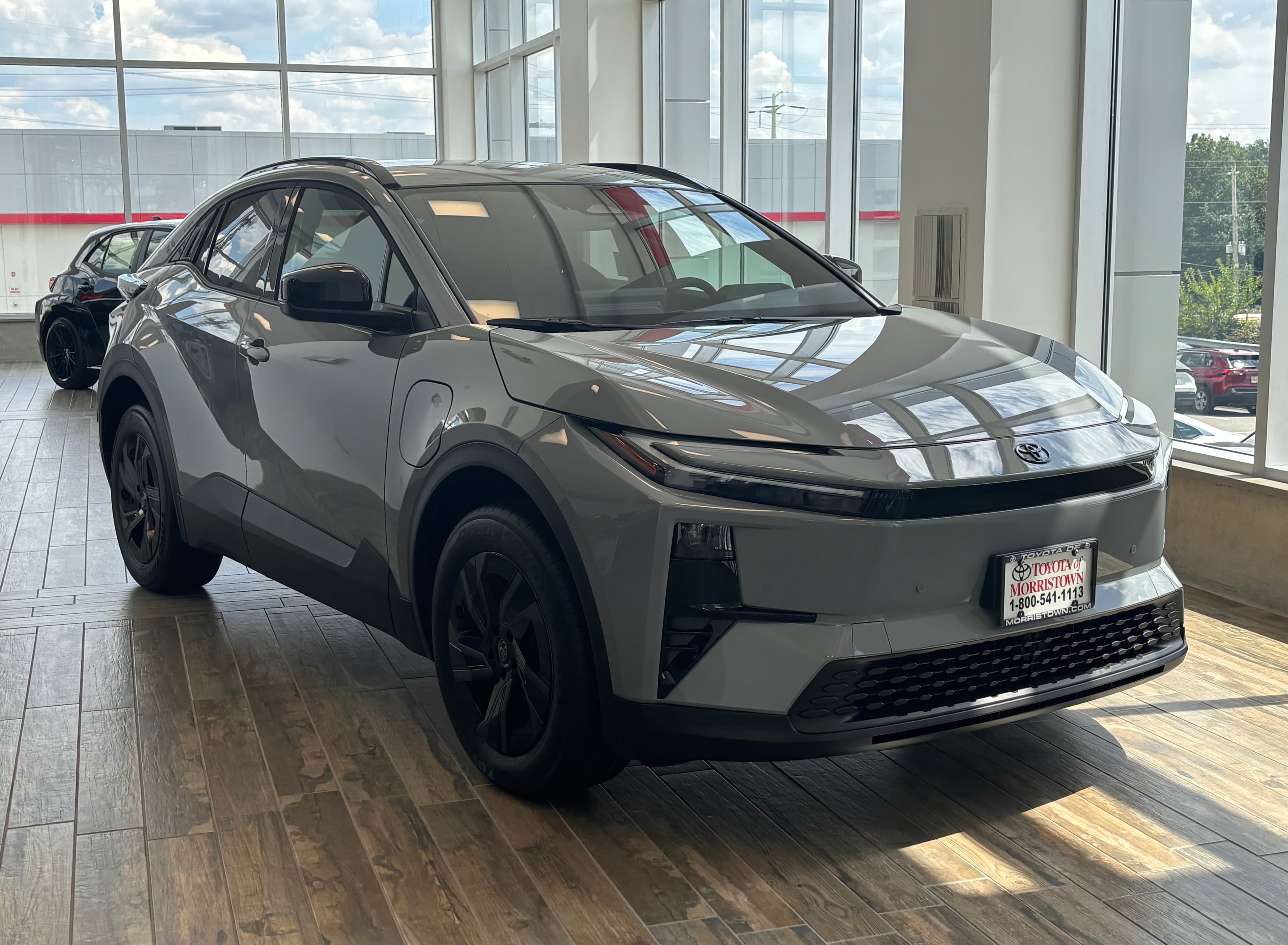
Toyota is recalling 8,521 of its new electric C-HR crossovers in the United States because a software programming error can overcharge the drive battery and shut the drive system down while the car is moving. The fix is a software update. The catch, according to the recall filing with the US regulator (opens in a new tab), is that the control unit involved can't take it over the air, so owners have to book a dealer visit. Owner letters go out from 18 October.
Why does an American recall of 8,521 cars matter here? Because the same car is on its way. Toyota Australia has confirmed the all-electric C-HR for local showrooms in mid-2027, sitting below the bZ4X as its entry-level EV, according to cars24's report of the confirmation (opens in a new tab). And because the C-HR is a small example of something bigger: the car is now a computer, and a computer fails in a way a carburettor never did.
The Toyota C-HR BEV recall
- Vehicles
- 8,521 (US, model year 2026)
- Fault
- Software can let the traction battery overcharge, cutting drive power
- Fix
- BEV ECU software update, at a dealer only
- NHTSA campaign
- 26V570000 (Toyota 26TA17)
In Australia
Australia's recall register is already filling with the same kind of notice. On 30 September Peugeot's importer recalled about 550 of its 308, 3008, 408 and 5008 models built in 2024 and 2025 because a software issue can deactivate the interior door handles while the engine is running, which could stop someone getting out in an emergency. The remedy is a software update at an authorised dealer, as CarExpert reported from the notice (opens in a new tab). A week later two Sinotruk truck recalls landed for a software fault that can make predictive cruise control brake unexpectedly and affect the emergency braking system, per the recall tracker RecallAU (opens in a new tab).
None of those cars has a broken part. The metal is fine. A door handle that stops working because a line of code says so is a new kind of failure, and it is the kind that reaches every car running that code at the same moment.
When the electric C-HR arrives here in 2027, it will presumably ship with the corrected software. That isn't the point. The point is that the next error, in whatever model, will be found the same way: after thousands of cars are already on the road, with a fix that depends on the carmaker's servers, the car's hardware being able to accept it, or a trip to a dealer. If you want to check whether a car you own or are about to buy has an open notice, our guide to how recalls work in Australia walks through the VIN lookup.
The world view
Software is now a recall category in its own right. Recall Masters' 2025 State of Recalls report counted 447 regulator-mandated campaigns plus 223 voluntary notices in the US last year, covering more than 28 million vehicles, with software and electronics accounting for 119 campaigns and about 8.19 million vehicles, as Digital Dealer summarised the report (opens in a new tab). In the fourth quarter of 2025 alone, about 1.3 million recalled vehicles, roughly 15 per cent of the quarter's total, could be repaired by an over-the-air update, according to BizzyCar's analysis of NHTSA data (opens in a new tab).
The scale is the story. In February Ford recalled 4,381,878 vehicles, from the F-150 to the Ranger and Maverick, because the integrated trailer module can lose communication with the vehicle and knock out trailer brakes and lights. Ford's remedy was a software update, pushed over the air or done at a dealer, per the NHTSA filing (opens in a new tab). That is the upside of the connected car: four million fixes without four million workshop visits.
Now the downside. In October 2025 Jeep recalled 24,238 Wrangler 4xe plug-in hybrids because, in the regulator's words, "a software error in an over-the-air update may cause a loss of drive power", per the NHTSA record (opens in a new tab). The update was meant to patch the telematics system. Instead it broke communication between the telematics box and the hybrid control processor, which could reset while driving, and rolling the software back was the cure, as The Drive reported from the filing (opens in a new tab). The same pipe that delivers the fix delivered the fault.
Four million cars can be fixed overnight. Twenty-four thousand can be broken the same way.
Another perspective: China
China, which now builds a large share of the cars sold here, has decided an over-the-air update is a product change, not a convenience. In February 2025 its industry ministry and market regulator issued a joint notice requiring carmakers to file every OTA software upgrade with the government before pushing it, to obtain a product change permit when an update alters main technical parameters, and to run any update that fixes a defect through the formal recall rules. Owners must also be notified and must confirm before an upgrade is installed, according to the law firm CMS's summary of the notice (opens in a new tab).
We don't often hold up Beijing as a model of consumer freedom. But on this one point its regulators have grasped something ours have not written down: a company that can change how your car behaves from a server is exercising a power that deserves a paper trail, and the owner should get a say before it happens.
Our take
We think the electric C-HR recall is a small, honest example of a trade the industry made on our behalf. A modern EV is a networked computer with wheels. Its throttle, its brakes' regeneration, its door handles and its ability to drive at all are mediated by software written far away and changed at the maker's discretion. When that software is right, the car is wonderful. When it is wrong, it is wrong in every car at once, and the fix is on the maker's timetable, not yours.
A naturally aspirated petrol car does not have this failure mode. Its faults are local, mechanical and visible, and in most cases a competent mechanic, or a determined owner with a manual, can fix them with parts that will still exist in 20 years. We have written before about what happens when the computer fails and why real buttons are a guarantee and screen buttons are a hope. This is the same argument one level down.
The honest counter-case is Ford's: over-the-air repair meant 4.38 million owners didn't lose a day at the dealer, and recalls that used to take years to complete can now close in weeks. We accept that. Our answer is that the Jeep case shows the channel runs both ways, and the Toyota case shows the channel doesn't always exist, so the owner ends up with the worst of both: a car that can be altered remotely and still needs a workshop when it matters. Meanwhile the owner's own control over the thing they bought keeps shrinking.
Ask the dealer two questions. Can this car take safety-related software updates over the air, or does each one mean a service visit? And can you decline or defer an update? The answers tell you who really holds the keys.
Related
- How car recalls work in Australia (and how to check your VIN)
- When the computer fails: a newer kind of breakdown
- China now builds more than a third of Australia's new cars. Who fixes them in 2036?
Photo: 2026 Toyota C-HR SE AWD in a US showroom, by BuickRiviera99 via Wikimedia Commons (opens in a new tab), licensed CC BY-SA 4.0.