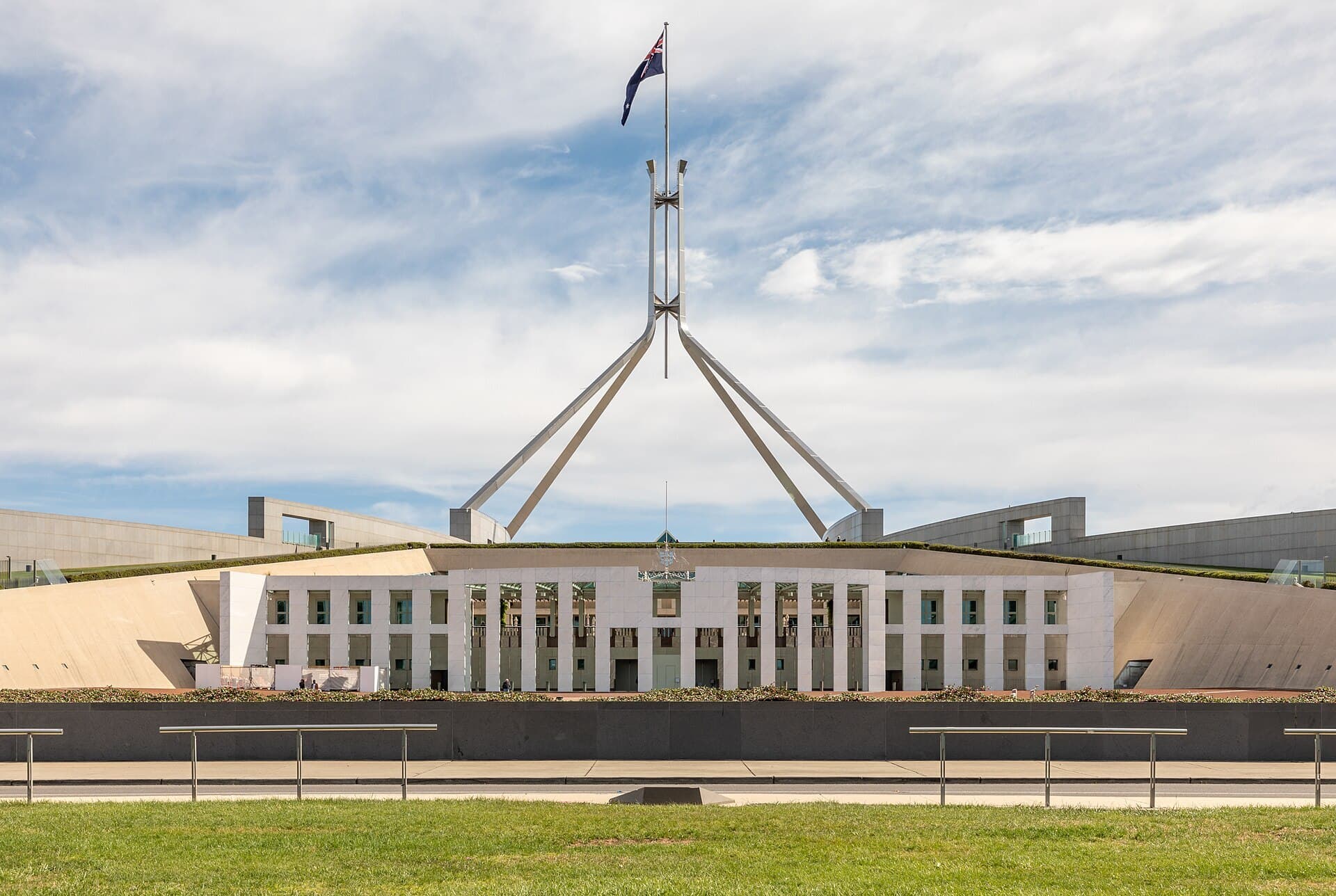
The federal Coalition says it will scrap Australia's car emissions rules if it wins government. On 23 September, shadow energy minister Dan Tehan said the Coalition's Scrap Net Zero (Cheaper Energy) Bill would repeal the New Vehicle Efficiency Standard Act 2024 (opens in a new tab) and would be introduced "within 30 days of the Coalition sitting on the government benches".
For anyone buying or selling a car this year, the short answer is that nothing changes yet. The standard stays law unless a new parliament votes to remove it, and no carmaker has paid a penalty under it: the first infringement notices are not due until February 2028 (opens in a new tab).
The longer answer is more interesting. The first year of results shows which brands owe and which earn, the biggest ute sellers were on the earning side, and much of what is changing in showrooms right now traces to fuel prices and global product plans as much as to Canberra. Here is what the rules do, what repeal would and would not change, and what the United States learned by doing it first.
At a glance
- The pledge
- Repeal the NVES Act within 30 days of a Coalition government
- In force since
- 1 January 2025, with compliance from 1 July 2025
- First results (Jul-Dec 2025)
- 40 of 59 suppliers beat their target
- Penalties paid so far
- None. First notices from February 2028
- Battery EV share, September 2026
- 24.2% of new sales (FCAI)
What the Coalition has promised
Mr Tehan's 23 September statement lists the repeal of the NVES Act alongside repealing the Climate Change Act 2022, removing the Safeguard Mechanism, revoking four offshore wind zones and lifting the legislative ban on nuclear energy. On cars, it says only that the standard has affected vehicle choice and pricing. A follow-up release for his electorate a day later calls it "Labor's family car and ute tax" (opens in a new tab) and says it "drives up the cost of some of Australia's favourite vehicles and limits consumer choice". Neither release we read puts a dollar figure on how much prices would fall.
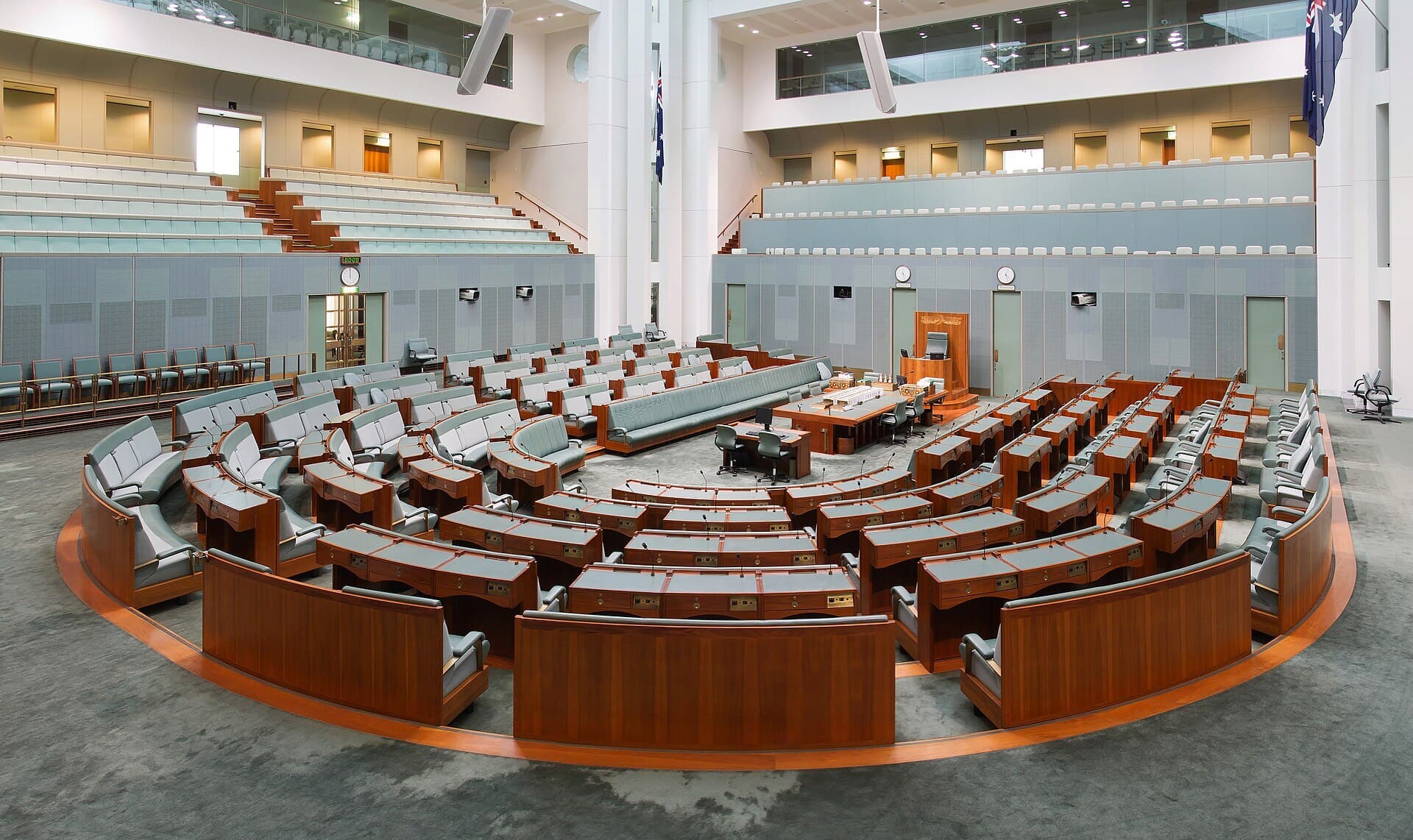
Two things have to happen before any of that applies. The Liberals and Nationals have to win the next federal election, and the bill has to pass. A bill becomes law only after it is agreed to in exactly the same form by the House of Representatives and the Senate (opens in a new tab) and receives Royal Assent. Whether that should happen is a question for voters. Our job is to explain what is on the table.
What the NVES actually does
The standard came into effect on 1 January 2025 (opens in a new tab) and sets CO2 targets for new passenger cars and light commercial vehicles such as utes and vans up to 4.5 tonnes gross vehicle mass (GVM, the maximum loaded weight). Compliance became mandatory on 1 July 2025 (opens in a new tab).
It is a fleet average, not a ban. Each supplier's cars are measured against a target that is adjusted for each vehicle's weight, so a brand can still sell thirsty models if it sells enough efficient ones to balance them. The regulator says plainly that the scheme "will not stop you from buying a ute or four-wheel drive" (opens in a new tab).
The Act (opens in a new tab) sets two sets of headline limits, in grams of CO2 per kilometre. Type 1 covers cars, SUVs and lighter off-roaders: 141 in 2025, 117 in 2026, 92 in 2027, 68 in 2028 and 58 in 2029. Type 2 covers utes, vans and heavy body-on-frame off-road wagons rated to tow 3 tonnes or more: 210, 180, 150, 122 and 110 over the same years.
Credits and penalties
A supplier that beats its target earns units, which it can keep or sell. One that misses accrues a liability, which it can clear by buying units or earning them in later years. Under section 44 of the Act, units issued for 2025 lapse on 1 February 2029 if unused.
For the 2025 period, the last day to clear a shortfall is 31 December 2027. Anything still outstanding becomes a final emissions value in February 2028, and the penalty in the infringement notice is that number multiplied by $50 (opens in a new tab). If a supplier refuses to pay, the regulator can go to court and seek up to $100 per unit.
What is already scheduled to change
Two things are coming regardless of the pledge. From 1 July 2027, vehicles with a GVM between 3.5 and 3.855 tonnes that are required to meet new CO2 testing rules lose their exemption and count towards a supplier's fleet, under a determination made in September 2026 (opens in a new tab). The explanatory statement says these vehicles compete with those under 3.5 tonnes, and that most of the five submissions received raised concerns about people who need heavier vehicles for work.
And the Act requires a review of its operation to start before 31 December 2026 (opens in a new tab). The FCAI said in August that it expects the review to begin in the final quarter of 2026 (opens in a new tab) and to look at vehicle availability, affordability and choice. We could not find a published terms of reference.
The first scorecard
The regulator published its first results on 18 February 2026 (opens in a new tab). Between July and December 2025, 59 suppliers registered 620,947 covered vehicles. Forty beat their target and generated 17.2 million units; after the liabilities of the other 19, there was a net surplus of 15.9 million units. Twelve per cent of covered vehicles were zero-emission. For Type 1 vehicles the average CO2 number was 114 against an average target of 144; for Type 2 it was 199 against 214.
- 620,947
- covered vehicles, Jul-Dec 2025
- 17.2m
- units earned
- 1.22m
- units of liability
- 15.9m
- net surplus units
The per-supplier spreadsheet (opens in a new tab) is where it gets useful for buyers. The biggest liabilities sat with Mazda (508,517 units), Nissan (215,261), Subaru (139,635) and Hyundai (84,563). If none of that were ever cleared, $50 a unit would work out to about $661 per Mazda covered in the period, $776 per Nissan and $529 per Subaru, on our arithmetic. General Motors' local operation, which registered 1,552 vehicles, would carry about $2,100 per vehicle.
On the other side of the ledger, the big ute brands earned units in year one. Toyota's local arm, which supplied 115,504 covered vehicles, earned 2.89 million. Ford Australia earned 426,261, Isuzu 365,080 and Great Wall 405,198. The Ranger and HiLux were two of the three best-selling models in September (opens in a new tab), so the brands most associated with diesel utes were not the ones facing penalties for 2025. BYD's two supplier entities earned about 6.28 million between them, and Tesla 2.21 million.
Two caveats matter. This was a half-year, measured against the loosest targets in the scheme's schedule. And it is a lab-test scheme: a vehicle's emissions number is the official CO2 figure entered on the vehicle register (opens in a new tab), and the AAA's Real-World Testing Program found 130 of 170 petrol, diesel and hybrid cars it tested used more fuel on the road (opens in a new tab) than their lab results. As the AAA's managing director put it, carmakers "are more incentivised to build cars for performance in the laboratory tests used to regulate vehicle emissions than they are to prioritise fuel economy in the real world".
Has anyone paid, and are prices already up?
Nobody has paid a penalty, because none can be issued before February 2028. Whether brands have priced the expected cost into their cars is a different question, and the answers vary.
The government's position is that the scheme is not hurting buyers. Infrastructure Minister Catherine King said the first results showed "vehicles becoming cheaper in real terms last year, after adjusting for inflation" (opens in a new tab). The Electric Vehicle Council said the same results "expose the scaremongering" (opens in a new tab) around the scheme's introduction and argued for strengthening future targets.
The industry is more cautious. The FCAI said in February that the targets fall sharply each year to 2029 and that "any additional costs generated by the NVES will likely be passed on to new car buyers" (opens in a new tab). Toyota Australia told CarExpert in October that it supports the NVES but expects price pressure on light commercial vehicles from 2027 (opens in a new tab), and will ask the review for "a more pragmatic, realistic light commercial vehicle target". The same CarExpert report says the scheme has already contributed to price rises for the Ford Ranger and Mustang.
Mazda, the biggest debtor, has moved. In March its local managing director, Vinesh Bhindi, told GoAuto that passing penalties on to customers "will be the last option we take" (opens in a new tab), adding that "there will be very cheap credits available at a point in time". By October, according to The Driven (opens in a new tab), he was more confident of meeting the targets without penalty through to 2029 and was not interested in joining a push to weaken or remove the scheme.
The caravan lobby is worth hearing too, because towing is where the anxiety sits. In its 2024 submission the Caravan Industry Association of Australia said it was supportive in principle (opens in a new tab) of a strong standard but wanted penalties aimed at "vehicles that unnecessarily pollute" rather than "vehicles used for genuine purposes". We could not find a statement from the FCAI, the EV Council or the caravan association on their own websites responding specifically to the September pledge.
What repeal would and would not change
Repeal would remove the fleet targets, the liabilities and the credit market. Brands that owe units would stop owing them, brands that earn units would lose something to sell, and the plan to bring heavier vehicles into the scheme from July 2027 would fall away with the Act.
What it would not obviously change is the demand side, which has moved sharply this year. The FCAI's chief executive said the March jump in EV sales reflected "disruption to fuel supply caused by conflict in the Middle East" (opens in a new tab) as well as the review of the EV fringe benefits tax concession, though he cautioned it was too early to call it a structural shift. By the June quarter, the AAA's EV Index had electric and hybrid cars at 49.16 per cent of new sales (opens in a new tab), with battery EVs at a record 21.03 per cent. In September, battery EVs took 24.2 per cent of the market (opens in a new tab), plug-in hybrid sales were up 122.7 per cent on a year earlier, and petrol sales were down 36.2 per cent.
Nor would it change where the cars come from. In September, China supplied 35.5 per cent of new vehicles sold here, Japan 22.5 per cent, Thailand 17.3 per cent and South Korea 9.6 per cent, the same FCAI release shows. Those factories build to their makers' global plans and their home rules. Toyota, for example, describes a "multi-pathway" approach across roughly 190 markets, according to the CarExpert report. An Australian repeal would not bring back a petrol engine that a carmaker has dropped worldwide.
The world view
Australia is not the only country rethinking its rules. Britain ran a consultation that closed on 23 October (opens in a new tab) on its zero emission vehicle mandate, testing whether to cut the 2030 target for zero-emission cars from 80 per cent to 70, 60 or 50 per cent. Its consultation paper (opens in a new tab) also notes that the European Commission proposed in December 2025 to reduce its 2035 target from a 100 per cent cut in tailpipe CO2 to 90 per cent, which "remains subject to agreement", and that Canada announced plans in February 2026 to replace its EV sales standard with fleet-average greenhouse gas standards.
Another perspective: the United States
The US has gone further than most, and it did it in three steps.
First, in July 2025, the budget reconciliation law, Public Law 119-21 (opens in a new tab), cut the civil penalty rate for missing the corporate average fuel economy (CAFE) standards from $5 to $0.00. The rules technically remained, but breaking them cost nothing. The same law ended the federal clean vehicle tax credit for cars acquired after 30 September 2025.
Second, in February 2026, the Environmental Protection Agency rescinded its 2009 endangerment finding and repealed all greenhouse gas standards (opens in a new tab) for light, medium and heavy vehicles, effective 20 April 2026.
Third, on 30 September 2026, the National Highway Traffic Safety Administration published a final rule recalibrating CAFE for model years 2022 to 2031 (opens in a new tab), taking effect on 30 November. It removes credit trading, sets standards without counting electric cars, and argues that past rules pushed makers into designs buyers did not ask for, citing the near-disappearance of the station wagon in favour of crossovers that qualified as light trucks.
What happened to prices? NHTSA projects that if the savings are passed on, new vehicles would cost an average of US$1,289 less by model year 2031 than under the old rules, while gasoline consumption would be 4.6 per cent higher through 2050. Those are the regulator's projections, not observed prices. We could not find a primary source measuring an actual fall in US showroom prices since the penalties went to zero.
| Feature | Australia | United States |
|---|---|---|
| Type of rule | Fleet-average CO2 target | Fuel economy standard, CO2 rules repealed |
| Penalty for missing it | $50 a unit by notice, from 2028 | US$0.00 since July 2025 |
| Credit trading | Yes, between suppliers | Removed by the 2026 CAFE rule |
| Where it stands | In force, review due to start by end-2026 | Rolled back in 2025-26 |
The lesson for Australia is in NHTSA's own words. A regulator that has just loosened its rules still says rules reshape the cars people get. The difference is scale and source: four countries supplied about 85 per cent of the new vehicles sold here in September, so our rules mostly decide which of the world's models get shipped to Australia, while the world's product plans decide what exists to ship.
What it means if you're buying or selling
Don't time a purchase around the pledge. Repeal needs an election win and both houses, and penalties for 2025 do not fall due until 2028 anyway. Over the next year, prices are more likely to move with fuel costs, the dollar and the fight between established and Chinese brands than with the NVES.
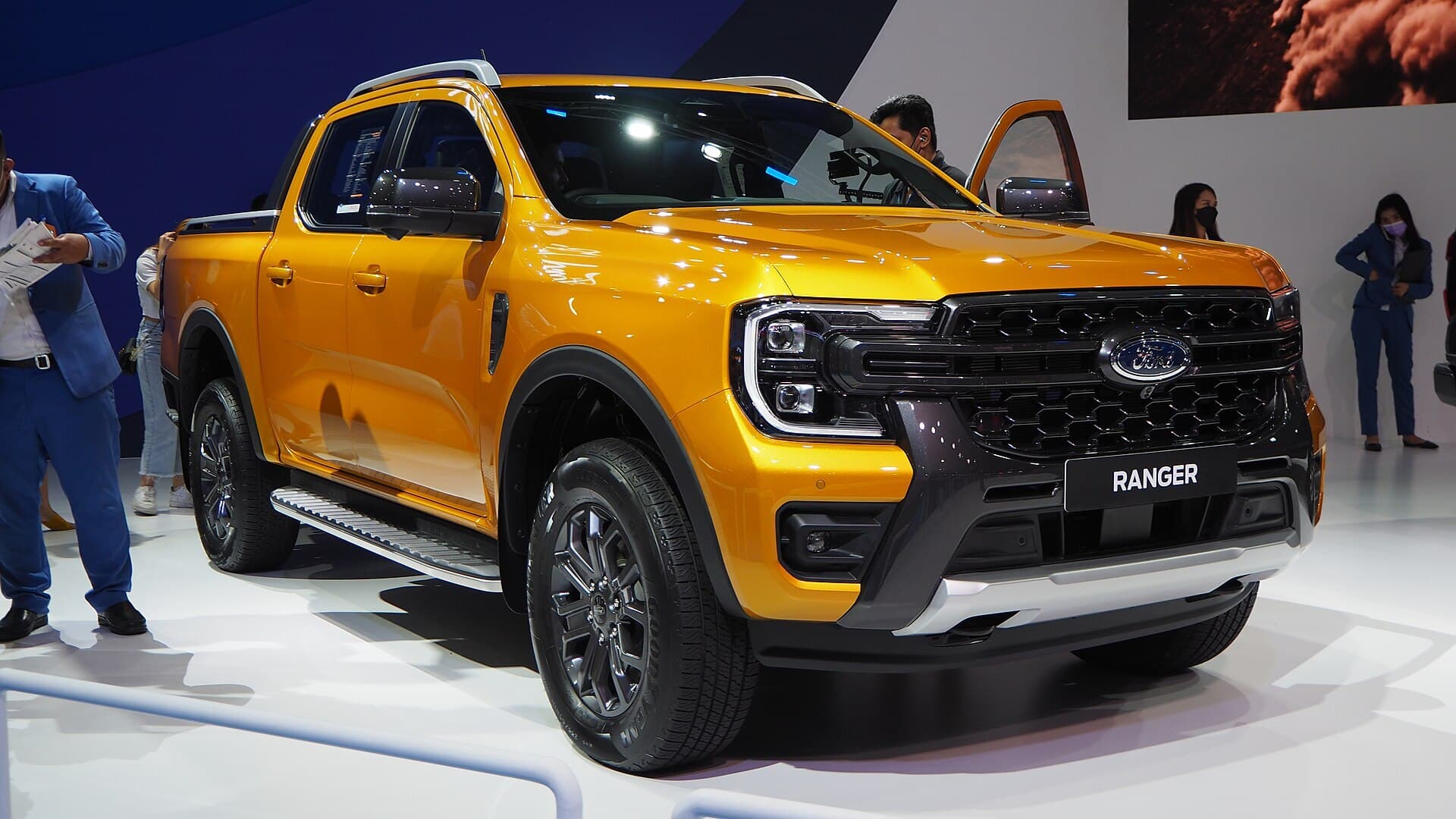
Utes and 4WDs. Ute buyers face the most uncertainty in both directions. Under the current law, Toyota expects price pressure on light commercial vehicles from 2027, the same year heavier vehicles start counting towards fleet targets. Under repeal, that pressure goes. If you need a diesel ute for work, buy it when the work needs it, compare drive-away prices across brands, and don't pay a premium on the theory that diesels are about to be banned. They are not.
Petrol sports cars. Low-volume enthusiast brands carried some of the biggest liabilities per car in the 2025 figures (opens in a new tab): Ferrari's shortfall works out to roughly $7,300 for each of its 108 cars on our arithmetic. Repeal would remove that, but these cars are priced for a global market, so don't expect a sudden discount.
Cheap hybrids and simple petrol cars. The disappearance of the simple petrol small car is being driven partly by global product decisions. Kia's new Seltos, for instance, is hybrid-only here and dearer (opens in a new tab), and repeal would not necessarily bring the petrol version back.
Selling a used ute or 4WD. The regulator points out that 70 per cent of Australians buy their cars second-hand (opens in a new tab). If new diesel utes get dearer from 2027, good used ones may hold their value; if the rules go, that support weakens. Meanwhile, new light commercial sales were down 13.2 per cent in September and diesel sales down 18.4 per cent, the FCAI says. Our view is that a well-kept, honestly described ute with service records will sell either way. If you are ready to sell, you can sell or show it on MotorLoop, and it's free.
Our take
This is our view.
We don't think a car site should tell anyone how to vote. But we can say what we'd want from whoever is in charge.
First, the review due to start this year should look at evidence, not slogans. The first year shows a scheme that most suppliers beat comfortably, a credit pile 14 times the size of the liabilities, and costs landing hardest on small brands and specialist vehicles. That is a case for fixing the edges at least as much as for keeping or scrapping the whole thing.
Second, we'd like the review to consider a small-maker carve-out, as we argued when the first results came out (opens in a new tab). Britain exempts its micro and small-volume makers (opens in a new tab) from its 2030 phase-out of new combustion-only cars. A hundred-odd sports cars a year don't move the national figure.
Third, measure what cars do on the road, not just in a lab. The AAA's testing shows how wide the gap can be, and a rule built on lab figures rewards the wrong engineering.
Fourth, treat a working ute as a tool. If the review can find a fair way to handle genuine work vehicles without letting lifestyle models off the hook, that is a targeted fix. Wholesale repeal is a different policy choice, and voters can weigh it.
Whether the rules stay or go, start with the evidence. The first year says the problems are at the edges.
Last, the option no law changes: the car you already own, kept well, is often the cheapest and lowest-impact car you'll ever drive.
Header photo: Dietmar Rabich (opens in a new tab) via Wikimedia Commons, CC BY-SA 4.0 (opens in a new tab).
Related
- Australia's emissions rules bill a Ferrari about $7,300 a car. Britain is easing its own (opens in a new tab)
- Kia's new Seltos is hybrid-only and dearer. The simple petrol small SUV is quietly disappearing (opens in a new tab)
- Why engines are built this way: the rules behind the trade-offs (opens in a new tab)
- Luxury car tax thresholds rise for 2026-27 (opens in a new tab)