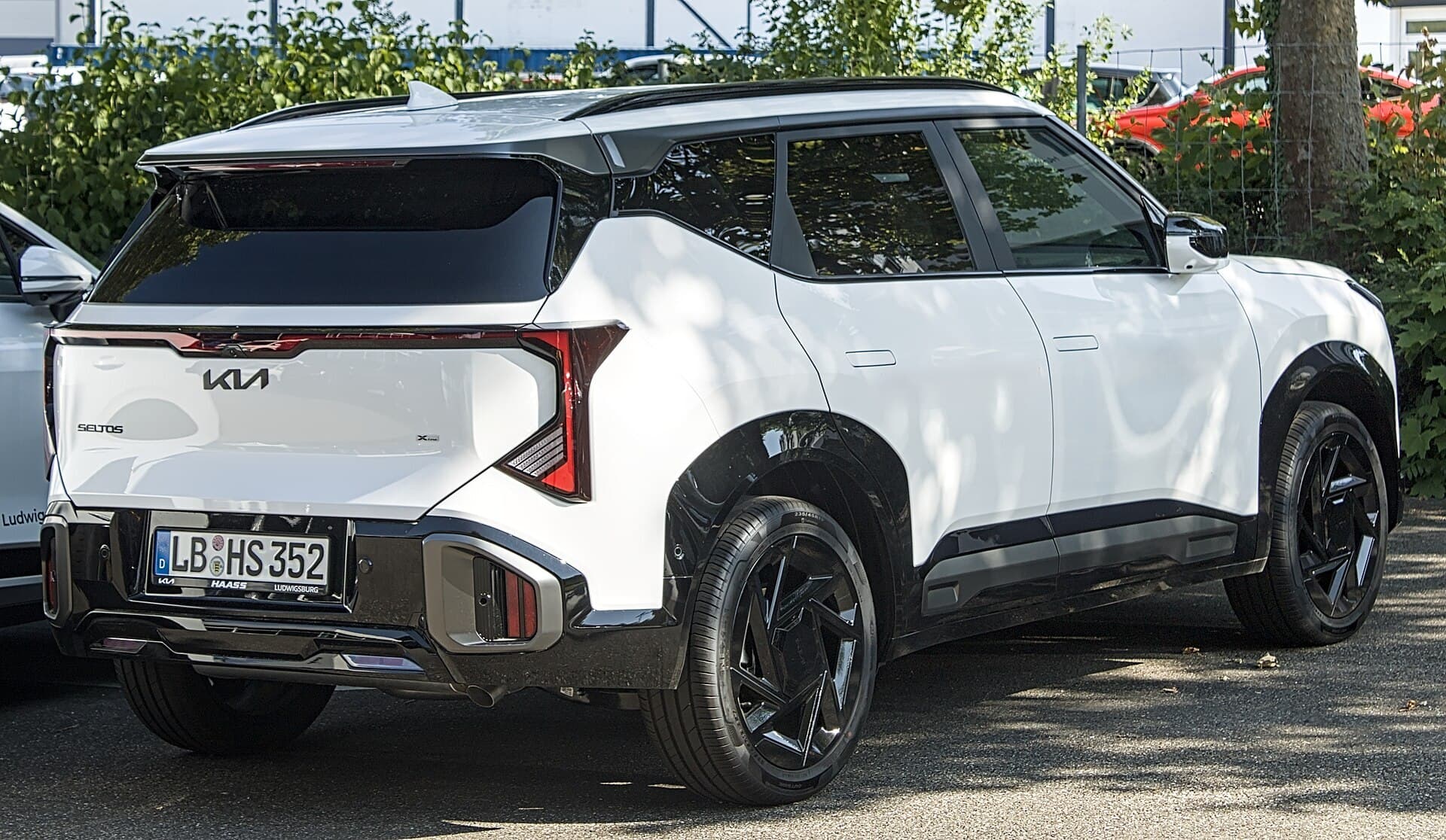
The new Kia Seltos lands in showrooms this month, and the version most Australians would have bought, a plain front-drive petrol car, is no longer on the menu. Every 2027 Seltos sold here is a hybrid, built around a 1.6-litre four-cylinder, an electric motor and a six-speed dual-clutch gearbox, CarExpert reports (opens in a new tab). The entry Seltos S now starts at $39,990 drive-away, and the range tops out at $55,490 for the all-wheel-drive GT-Line.
That entry price is up $4,670 drive-away on the outgoing car, according to Chasing Cars (opens in a new tab), which puts part of the rise down to losing the old 2.0-litre petrol engine as the price leader. It is still priced a touch under the hybrid Hyundai Kona and Toyota Corolla Cross, which tells you where this class has gone: the cheap, simple petrol small SUV is being phased out across the board, not by one brand.
2027 Kia Seltos at a glance
- Powertrain
- 1.6L petrol hybrid, 6-speed DCT
- Entry price
- $39,990 drive-away (S)
- Top price
- $55,490 drive-away (GT-Line AWD)
- Rise at entry
- $4,670 drive-away
- Petrol-only version
- Not offered in Australia
In Australia
The Seltos is not an outlier. The FCAI's September 2026 sales release (opens in a new tab) shows petrol vehicle sales down 36.2 per cent on September 2025, diesel down 18.4 per cent, conventional hybrids up 20.7 per cent and battery-electric cars at 24.2 per cent of the month's market. The overall market barely moved, up 0.9 per cent, so this is buyers being steered into different powertrains rather than buying more cars.
Some of that steering is regulatory. Australia's New Vehicle Efficiency Standard started on 1 January 2025, and its passenger-car CO2 target falls from 141 g/km in 2025 to 117 in 2026, 92 in 2027 and 58 by 2029, as the NRMA set out (opens in a new tab) when the Act (opens in a new tab) passed. Kia hasn't said the standard is why the petrol Seltos went, and we won't put words in its mouth. Our view is that a fleet target that tightens that quickly makes a petrol-only budget car the hardest thing on the price list to justify, and the buyer pays the difference.
What does the buyer get for that money? Better fuel use in traffic, almost certainly, though Kia hadn't published the Seltos's official fuel figure when CarExpert reported its pricing. What they also get is more hardware: a traction battery, an inverter, an electric motor and a dual-clutch gearbox where the old car had an engine and a conventional automatic. More parts is more cost up front, and in our view more cost later, out of warranty, when something in that chain needs replacing.
The world view
Europe has already made this trip. In the first eight months of 2026, hybrid-electric cars were the EU's most popular powertrain at 36.6 per cent of new registrations, with battery-electric cars at 21.7 per cent and plug-in hybrids at 10 per cent, ACEA reports (opens in a new tab). Petrol fell to 21.7 per cent, from 28 per cent a year earlier, and petrol and diesel together were 29 per cent.
The pattern is the same as here: the plain petrol car is shrinking fastest, and the hybrid is where most mainstream buyers are landing, whether they went looking for one or not.
Another perspective: Japan
Japan is the country that worked out hybrids first, and it is a useful counterweight to the idea that the only destination is a battery car. In 2024, 54.8 per cent of new passenger cars sold in Japan were hybrids, while battery-electric cars were just 1.35 per cent, according to the US Department of Commerce's market guide (opens in a new tab), which put hybrid sales at 2,040,181 out of 3,725,200 passenger cars.
That is evidence that cuts both ways, and we should say so. Japan's long run with hybrids shows the technology can be durable and that a big service and parts network can grow around it. It also shows a market choosing a petrol-burning car that uses less fuel, rather than abandoning petrol, which is closer to our view than the brochure version of the future.
The hybrid isn't the villain. The disappearing choice is.
Our take
We think hybrids are a sensible middle road, and a far better bet for most Australian drivers than a full battery car, especially outside the cities where the fuel network already works. We have no quarrel with anyone who buys the new Seltos.
Our quarrel is with the choice quietly disappearing. A small, naturally aspirated petrol car with a conventional gearbox was the cheapest way into a new car, the easiest thing for a home mechanic or a country workshop to keep running, and the version most likely to be repairable at a sensible price in 15 years. When that option goes, buyers pay thousands more for hardware they may not need on a mostly-highway commute.
So here's what we'd do. If you want a hybrid, buy one with the longest battery cover you can get and keep the service book stamped. If you want simple, look hard at a low-kilometre used petrol small SUV from the last few years while there are plenty of them around. And if your current car is safe and paid off, keeping it is often the cheapest and lowest-impact move of all.
Related
- Australia's emissions rules bill a Ferrari about $7,300 a car. Britain is easing its own (opens in a new tab)
- Servicing a hybrid: what is different (opens in a new tab)
- Want to save the planet? Buy a used car and add the features yourself (opens in a new tab)
Photo: Alexander Migl (opens in a new tab), via Wikimedia Commons (opens in a new tab), CC BY-SA 4.0 (opens in a new tab).