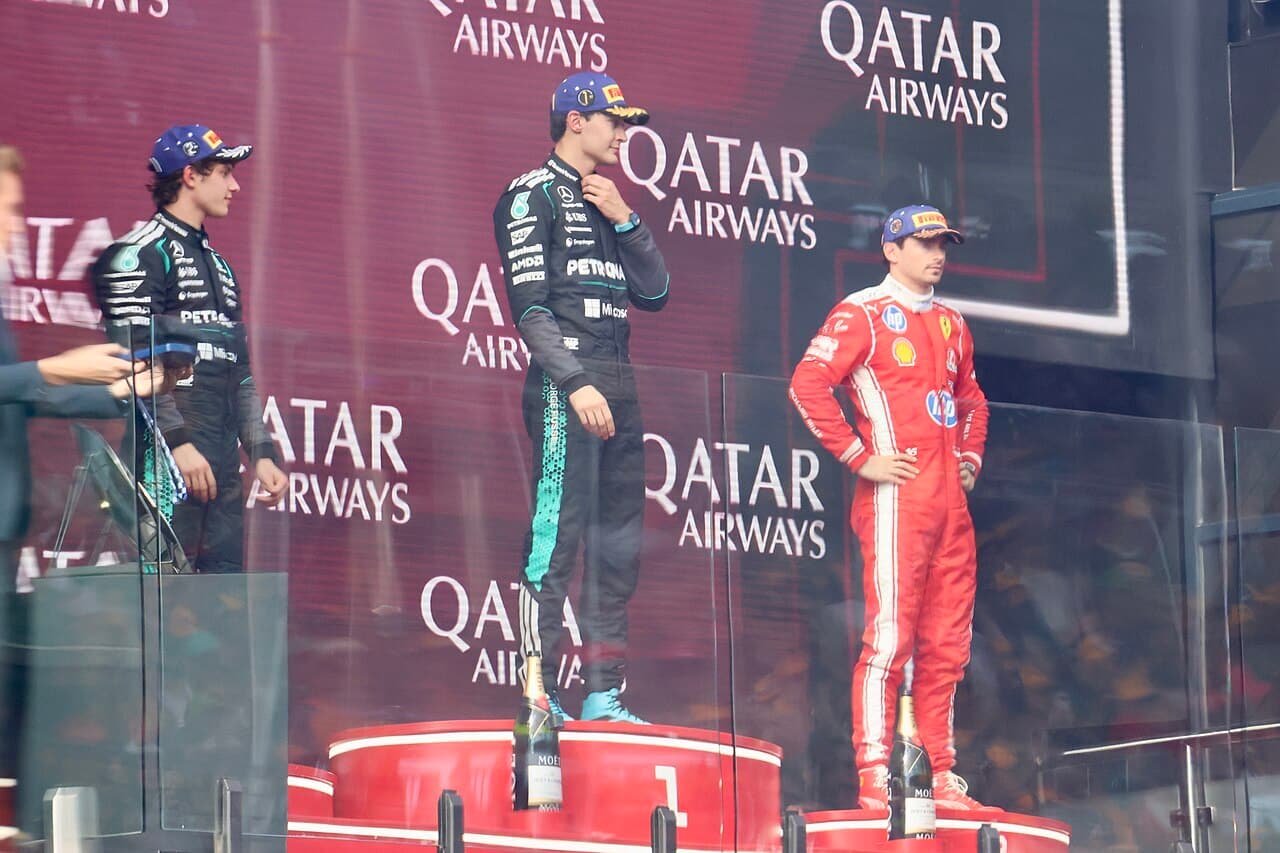
Formula 1's first season under its new engine rules is down to its last three races, and the title is all but settled. Formula 1's official standings (opens in a new tab) show Mercedes' Kimi Antonelli on 390 points, 111 clear of Max Verstappen, with Las Vegas, Qatar and Abu Dhabi still to run. Oscar Piastri, Australia's great hope after 2025, is seventh. Our view: the 2026 formula has been a qualified success, and the part worth celebrating is the fuel, not the battery.
Formula 1, 2026 so far
- Races run
- 20 of 23
- Leader
- Kimi Antonelli (Mercedes), 390 points
- Second
- Max Verstappen (Red Bull), 279 points
- Oscar Piastri
- Seventh, 152 points (McLaren)
- Next race
- Las Vegas, 19 to 21 November
Where the championship stands
The official 2026 results page (opens in a new tab) lists 20 Grands Prix completed, from Melbourne on 8 March to Brazil on 8 November. Antonelli has won nine of them: China, Japan, Miami, Canada, Monaco, Belgium, Italy, Spain and the United States. Verstappen has won three in the back half of the year, George Russell three, Lando Norris three, and Lewis Hamilton and Charles Leclerc one each.
Behind Antonelli and Verstappen the fight for third is close. The standings have Russell on 262, Hamilton on 261, Leclerc on 249 and Norris on 246.
According to the 2026 calendar (opens in a new tab), the season finishes with Las Vegas (19 to 21 November), Qatar (27 to 29 November) and Abu Dhabi (4 to 6 December). Three Grands Prix are worth 25 points each to a winner. Even if every one of those weekends also carried an eight-point sprint, our arithmetic puts the most any rival could add at 99 points. That's less than Antonelli's 111-point lead, so the drivers' title looks out of reach for everyone else.
- 390
- Antonelli's points after Brazil
- 111
- His lead over Verstappen
- 9
- Grand Prix wins for Antonelli in 2026
A hard year for Piastri, and a big one for Australian fans
Piastri's numbers tell their own story. He sits seventh on 152 points, while his McLaren teammate Norris has 246 and three wins, at Hungary, the Netherlands and Brazil, according to the official results. Piastri doesn't appear among this year's race winners.
That hasn't dimmed interest at home. The 2026 Australian Grand Prix at Albert Park drew 483,934 people over four days, a Melbourne record (opens in a new tab), with 137,869 on race day. Russell won it. The 2027 event is set for 1 to 4 April, as our Albert Park event listing (opens in a new tab) records.
We think Australian fans will keep turning up whatever Piastri's form, because the attraction is the machinery as much as the flag. But a home driver fighting at the front makes the difference between a big crowd and a sold-out city, and McLaren's car will be the thing to watch over the summer.
What the 2026 rules actually changed
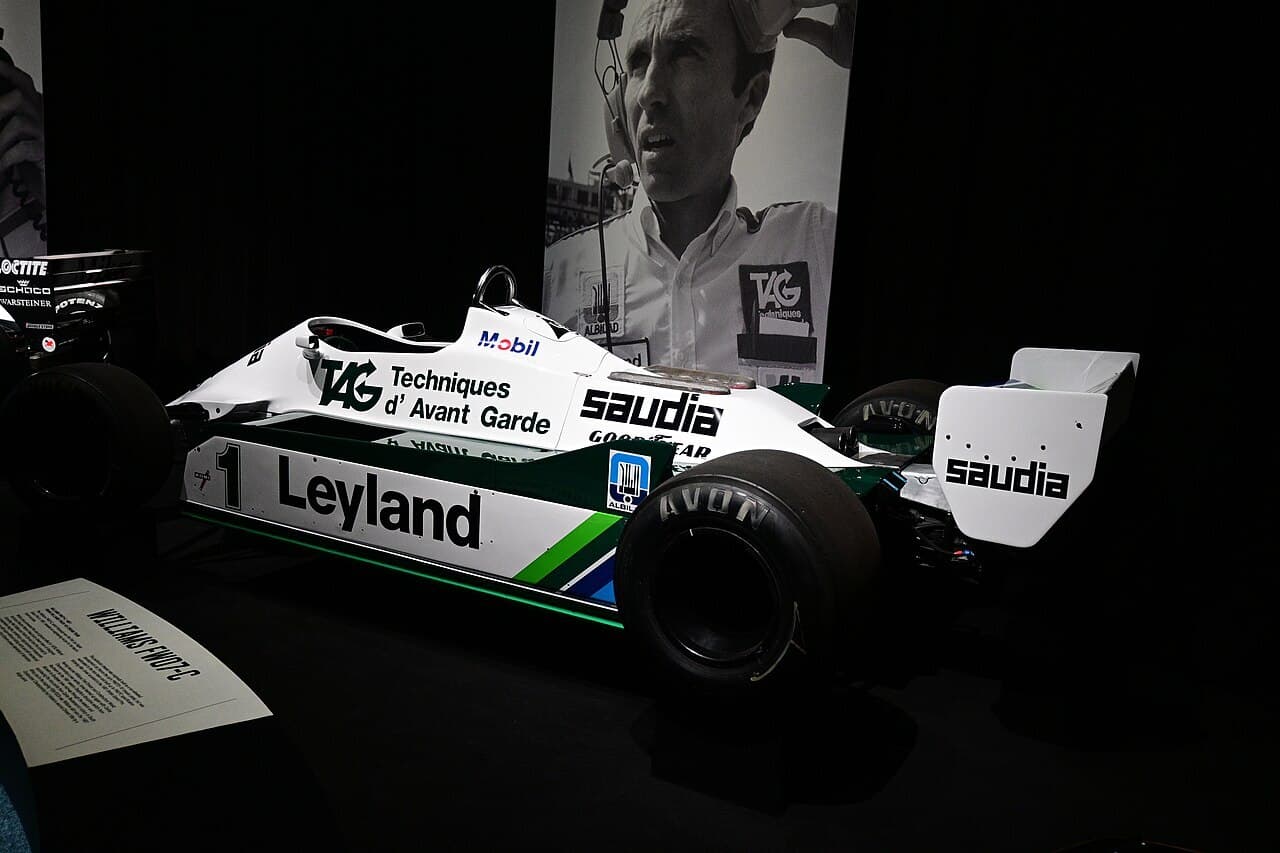
The rules were signed off years ago. When the FIA's World Motor Sport Council approved them in 2022, Formula 1 reported (opens in a new tab) that the engines would keep the V6 internal combustion layout, that electrical power would rise to up to 50 per cent, that the energy recovery system's output would rise to 350 kilowatts, and that the complex MGU-H (a generator attached to the turbocharger) would be removed. The same article said the cars would run on advanced sustainable fuel, and that the rules were meant to make it attractive for new manufacturers to join.
That last aim has shown up on the grid. The official standings list Audi and Cadillac as teams this year.
Our view: the fuel is the important bit
Here's where we land. A bigger battery in a racing car is clever, but it isn't news to anyone who's driven a hybrid. The lesson Formula 1 is teaching the road-car world is that a combustion engine can keep running, and keep sounding like an engine, if you change what goes in the tank.
That fits what we've argued before. In our view the internal combustion engine was never the problem; the carbon in the fuel was. A V6 that can run on sustainable fuel keeps the mechanical drama, the noise and the skills of engine building alive, and it keeps the fuel network we've already paid for useful. A sport that could have gone fully electric chose instead to keep a combustion engine at the heart of the car. We think that tells you something.
The fair objection is that sustainable fuel is expensive and made in small volumes, so it's an easy promise for a sport with Formula 1's budgets and a much harder one for a family car. That's true today. Our answer is that racing has long been where expensive technology starts before it gets cheaper, and fuel that works in an existing engine helps the cars already on the road, not just the next ones sold.
What we'd still change
We'd like the combustion side to carry more of the show. In our view the sound and the mechanical side of a Grand Prix car are a big part of why nearly half a million people went to Albert Park, and anything that makes the cars quieter or more dependent on battery management takes something away from the people who paid to stand there.
The next stop: the United States
The championship moves to Las Vegas next, and the United States is worth a closer look. The race runs on the Strip, a street circuit laid out on public roads in the middle of a city.
America's place in Formula 1 has grown. The official 2026 calendar includes three US rounds: Miami in May, the United States Grand Prix in October and Las Vegas in November. An American car brand also has its own team this year: Cadillac, with Valtteri Bottas and Sergio Perez listed in the official standings. They haven't scored a point yet, which is what you'd expect of a new team in its first season.
In our view the American push matters for the rules debate. US buyers still love big engines, and a manufacturer selling cars there has every reason to want a racing formula that keeps combustion relevant. A sport chasing American fans is unlikely to drop the engine in a hurry.
| Feature | Australia | United States |
|---|---|---|
| Grands Prix in 2026 | One, Albert Park | Three: Miami, United States GP, Las Vegas |
| Home team | None | Cadillac, new for 2026 |
| Driver to watch | Oscar Piastri, seventh | Cadillac's Bottas and Perez |
| City race | Albert Park, Melbourne | Las Vegas Strip |
What it means if you're buying or selling
Buying. If Formula 1's choice to keep combustion has you thinking about a performance car, our view is that a naturally aspirated or simple turbocharged petrol car is a sensible buy. The fuel network is everywhere, parts and mechanics are easy to find, and F1's direction suggests the engine has a longer future than some predicted.
Hybrids. F1's hybrid systems are a long way from a road car's, so don't read a racing result as a verdict on your next hybrid. Judge any road hybrid on its warranty, battery coverage and service costs.
Selling. Race weekends lift interest in sports cars. If you're listing a coupe or sports car, mention the engine, gearbox and service history clearly. You can buy, sell & show cars on MotorLoop, and it's free.
The Las Vegas Grand Prix runs from 19 to 21 November local time. Check your broadcaster's schedule for Australian times.
Our take
We think Formula 1's first season of the new rules has delivered a dominant leader, a good scrap behind him and a hard year for Australia's best driver. That's racing. The bigger story is the engine. The sport kept a V6 at the centre of the car and asked the fuel to change instead, and in our view that's the right lesson for everyone who loves engines: keep the machinery, clean up what it burns.
Some people want to get from A to B. Formula 1 is for people who care how the car gets there, and so are we. Bring on Las Vegas, and bring on Albert Park in April.
Header photo: Yu Chu Chin (opens in a new tab) via Wikimedia Commons, CC BY-SA 4.0 (opens in a new tab).
Related
- Formula 1 Australian Grand Prix 2027: Albert Park, Victoria (opens in a new tab)
- Europe backs away from its 2035 engine ban. What it means for petrol and hybrid buyers here (opens in a new tab)
- The psychology of the EV vs the naturally aspirated car (opens in a new tab)
- Porsche's 992 Cup car runs its last Bathurst this weekend. The flat-six is the point (opens in a new tab)