The argument used to be simple: the sports car was faster, and faster settled it. That argument is over. A mid-range family EV now out-accelerates most of the supercars your bedroom wall was covered in, and yet the people who love naturally aspirated engines haven't moved an inch. That isn't stubbornness, and it isn't nostalgia — at least not only nostalgia. The two camps are buying different products. One is buying transport. The other is buying an experience. And the interesting question isn't which is better; it's why the same drive can be a triumph of engineering to one person and a sensory-deprivation tank to the other.
Borrow a Tesla for a weekend and both halves of this become obvious within a day. The performance is genuinely astonishing — the throttle response makes almost every combustion car feel like it's thinking about your request before actioning it. And yet the drive slips out of memory almost as it happens. Smooth, silent, effortless — and strangely hard to remember.
An EV is engineered to make the journey disappear. A naturally aspirated car is engineered to make the journey the point. Neither is wrong — they are different answers to different questions.
The spec sheet has stopped mattering
Let's concede the numbers completely, because they deserve it. Electric motors deliver peak torque from zero revs, with no gearbox pause and no build-up. In a straight line, an ordinary EV embarrasses machinery that cost ten times as much a generation ago. If driving enjoyment were a function of acceleration figures, the argument would already be finished and the naturally aspirated engine would be a museum piece.
It isn't finished. Which tells you the enjoyment was never really coming from the numbers.
What the brain actually keeps
Psychologists who study memory have observed for decades that vivid, multi-sensory, varying experiences encode more strongly than smooth, constant ones — it's the intuition behind Daniel Kahneman's much-cited "peak-end rule", which holds that we judge an experience by its most intense moment and its ending rather than by its average. A drive with peaks gets remembered. A drive without them gets summarised.
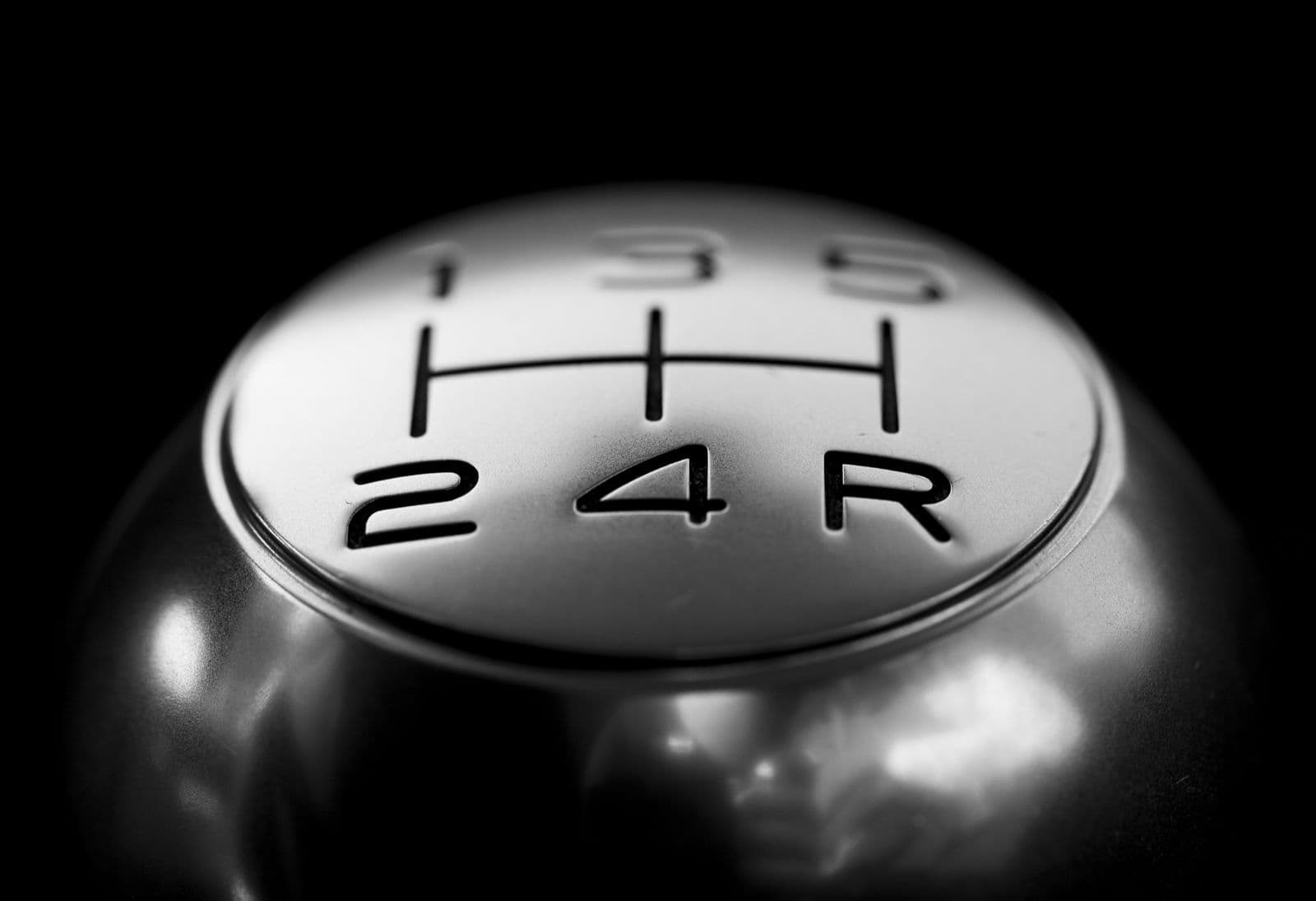
A naturally aspirated engine is practically a machine for manufacturing peaks. The sound rises and hardens in direct proportion to what your right foot is doing. The vibration through the seat and wheel changes character with the revs. Every gearshift is a small event — a decision, a mechanical response, a new note. All of it is correlated with speed, so your ears, hands and spine are receiving the same story your eyes are, in real time.
The roller coaster comparison is exact. Nobody rides a roller coaster to arrive. Strip out the drops, the twists and the noise and you have an efficient elevated railway — measurably better transport, and nobody would queue for it. The twirls are not friction to be engineered out of the experience. The twirls are the experience.
The instrument you play versus the appliance you use
There's a second ingredient beyond sensation: participation. A manual, naturally aspirated car makes you a working part of the machine — choosing gears, matching revs, managing the engine's moods. Get it right and you feel it immediately; get it wrong and you feel that too. Psychologists call the state this produces "flow": absorption that comes from a task demanding continuous skill and returning continuous feedback. It's the difference between playing an instrument and pressing play.
Most EVs, by design, remove the participation along with the noise. One pedal, one ratio, no revs to manage. Some manufacturers have started bolting the sensation back in — synthetic soundtracks, simulated gearshifts on some performance EVs — which is either clever theatre or an admission, depending on your mood. Either way, it concedes the point: the machinery's drama was worth something after all.
The honest case for silence
Now the concession in the other direction, in its strongest form: for most driving, immersion is exactly what you don't want. The commute is not a roller coaster and shouldn't try to be. Refinement — silence, smoothness, the absence of vibration — is one of the hardest things in automotive engineering, and the EV's serenity is an achievement, not a deficiency. If your Tuesday consists of forty minutes of stop-start arterial traffic, a car that makes the journey disappear is doing you a genuine service. Vivid memories of the Monash car park are not an asset.
A-to-B people and journey people
Which lands us at the real divide, and it isn't electric versus petrol. Some drivers want to get from A to B in maximum comfort and minimum drama — for them the drive is a cost, and the EV minimises it brilliantly. Others want the freedom, control and texture of the time between A and B — for them the drive is the product, and the naturally aspirated car maximises it.
Most of us, honestly, are both people on different days. Which is why the emerging pattern makes such tidy sense: the EV for the week, when transport is the job — and the loud, vibrating, gear-laden thing in the shed for Sunday, when the journey is the job. That's not hypocrisy. That's owning one appliance and one instrument.
What this means on MotorLoop
If your weekend car exists for the journey rather than the destination, it deserves an audience even when it's not for sale — MotorLoop's showcase listings let you share a car without selling it (opens in a new tab), and listing is free. And if you're assembling the two-car answer, browse used cars — the A-to-B half and the Sunday half are both in there.
Related
- Supercar, hypercar, exotic: what the labels actually mean (opens in a new tab)
- The rotary engine: how Mazda made the Wankel work — and why it came back (opens in a new tab)
- Showcase your car online: share the car without the hard sell (opens in a new tab)
FAQs
Why does a naturally aspirated car feel faster than an EV that's actually quicker?
Because your sense of speed is built mostly from feedback — noise, vibration, gearshifts and effort — rather than from the speedometer. A naturally aspirated car floods you with signals that rise with velocity, so moderate speed feels like an event. An EV delivers greater acceleration with almost none of those signals, so the same g-force registers as less drama and encodes as a weaker memory.
Are EVs boring to drive?
Not inherently — instant torque is genuinely thrilling the first dozen times, and the refinement is an engineering achievement in its own right. What most EVs lack is variation and participation: the sound, vibration and gear-work that make a drive feel like something you did rather than something that happened to you. Some performance EVs now simulate engine sound and gearshifts to reintroduce exactly that.
Should my next car be an EV or a sports car?
They answer different questions, so start with the job. If the drive is a cost you want minimised — commuting, errands, A to B — the EV's quiet efficiency is hard to argue with. If the drive is the point — the weekend road, the trip taken for its own sake — the sensory, mechanical car earns its keep. Plenty of households are settling the argument by running one of each.