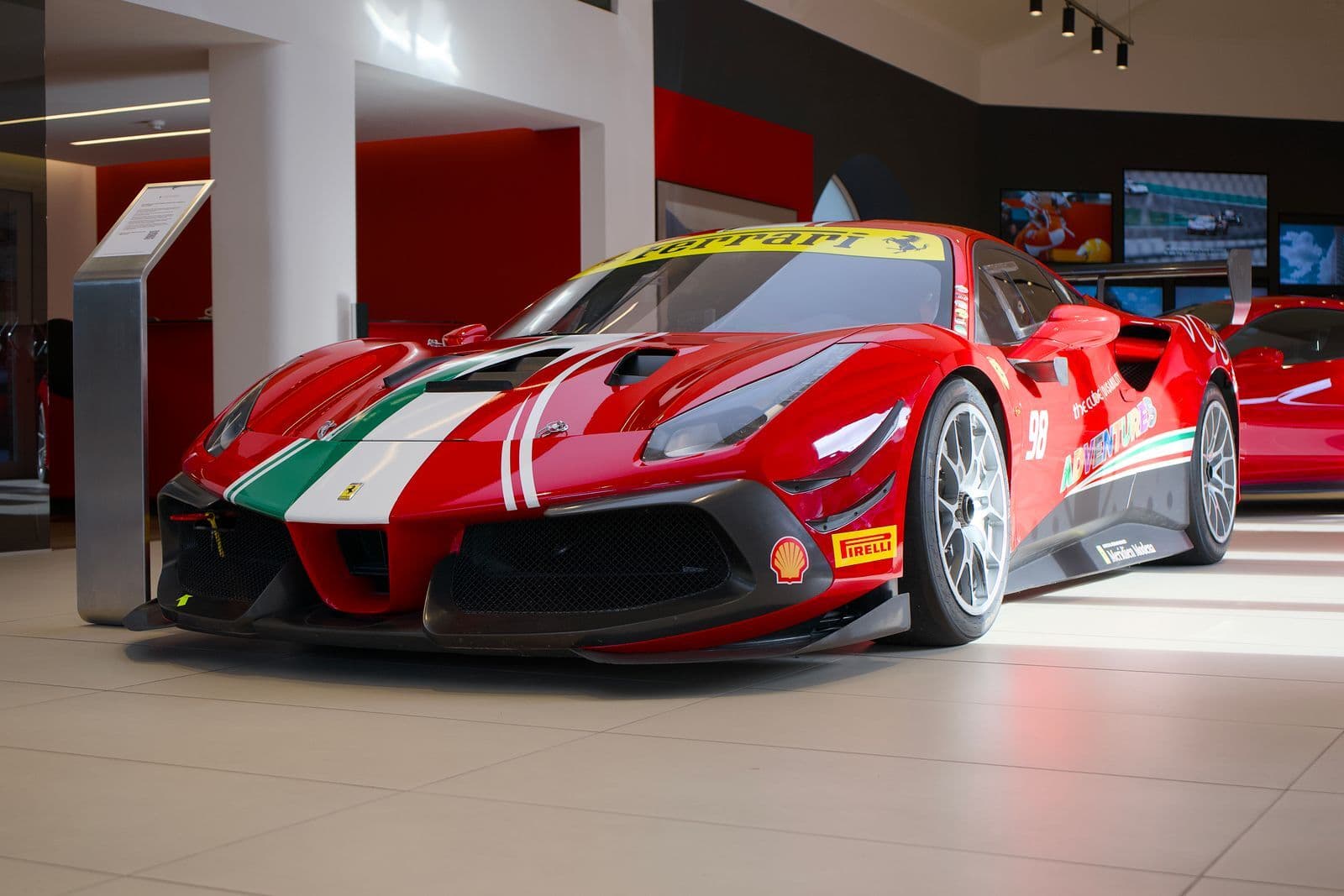
Every conversation about exotic cars eventually arrives at Ferrari, because Ferrari is the reference — the marque against which "exotic" itself is calibrated. That status wasn't marketed into existence; it was accumulated, model by model, across nearly eighty years of a company that has never wavered from one founding logic: the road cars exist to fund the racing, and the racing makes the road cars mean something. Understanding a handful of those models is understanding how a small factory in Maranello became the most valuable automotive brand mythology on Earth.
Enzo Ferrari sold road cars, by his own famous framing, to pay for his racing team. That inversion — competition first, customers second — is the origin of the aura every Ferrari still trades on.
The founding logic: 1947 and the 125 S
Enzo Ferrari had run racing teams (including Alfa Romeo's) for decades before the first car bearing his own name — the V12-powered 125 S — emerged in 1947. The choice of a jewel-like twelve-cylinder engine for even that first car set the house style: Ferrari would be defined by its engines, and the engines by racing. Victories through the 1950s and 60s — grands prix, Le Mans, the Mille Miglia era — did the brand-building; the road-going 250 series translated it into product for the wealthy, each car a certificate of association with the winning team.
The artefact: 250 GTO
If one car explains Ferrari values, it's the 250 GTO — a racing homologation special of the early 1960s, built in numbers commonly cited around 36, that combined competition success, era-defining beauty and extreme scarcity. It has become the blue-chip standard of the collector world: reported sales at the very top of the market have reached figures around the US$50 million mark and beyond in recent years. The GTO matters to this series less as an unobtainable trophy than as proof of the depreciation fork at maximum amplitude: scarcity plus story plus racing pedigree, compounding for sixty years.
The people's Ferraris — and the mid-engine conversion
Ferrari's genius was building a ladder under the myth. The Dino of the late 1960s (a "junior" model originally badged without Ferrari script, now thoroughly embraced) answered the Miura's mid-engine provocation and began the mid-engined V6/V8 line that became the marque's commercial spine: 308, 328, 348, 355, 360, 430, 458, 488, F8 and today's 296 — the "entry" Ferraris that carried the badge to more owners than the V12 flagships ever did, and the pool where most Australian Ferrari ownership actually happens.
The manifesto: F40
In 1987 Ferrari marked its fortieth anniversary with the F40 — a raw, turbocharged, carbon-and-kevlar statement with famously few concessions to comfort, launched in Enzo's lifetime shortly before his death in 1988. It has come to be remembered as the distilled thesis of the analogue supercar: light, brutal, spectacular. Its succession — F50, Enzo, LaFerrari — turned the "halo every decade or so" pattern into an institution, each generation's example instantly collectible and each teaching the market to pre-order the next.
The modern balancing act
Today's Ferrari sells more cars than at any point in its history — SUV included — while guarding scarcity through allocation, waiting lists and invitation-only specials; it went public in 2015 and has repeatedly ranked among the world's strongest brands. The tension between growth and exclusivity is real, and how the marque manages electrification (its hybrids are here; a full EV has been long signalled) will define the next chapter of the mythology. For buyers, the practical translations are unglamorous: provenance and service history dominate value, the running-cost structure is real, and the marque-specialist inspection is non-negotiable.
What this means if you're buying or selling on MotorLoop
Ferrari listings live and die on documentation — books, belts (on the older cars), and the paper trail that proves the story. Sellers: photograph all of it. Buyers: the V8 ladder is where realistic ownership starts, and the first-exotic playbook applies in full. Listing is free — and a Ferrari that isn't for sale deserves a showcase page anyway.
Related
- The Lamborghini Miura and the birth of the supercar
- Supercar depreciation: the heroes and the craters
- Buying your first exotic car in Australia: the realistic path
- Showcase your car online: share the car without the hard sell
FAQs
Why are Ferraris so expensive?
Scarcity is managed deliberately — allocation, waiting lists, limited runs — atop a mythology built on eight decades of racing success, and in Australia the tax stack compounds it further. The brand's value proposition is association with that history, which is why provenance moves individual car prices as much as condition does.
What is the most valuable Ferrari?
The 250 GTO of the early 1960s sits at the top of the collector market — roughly 36 built, racing pedigree, era-defining styling — with top reported sales around the US$50 million mark and beyond in recent years. Exact figures vary by sale and reporting, but no other model matches its consistency at the summit.
What's the most realistic Ferrari to own in Australia?
The mid-engined V8 line — 308 through to 458, 488 and their successors — is where most real-world Ferrari ownership happens: built in comparatively higher volumes, well supported by specialists, and subject to the same rules as any exotic purchase: specialist inspection, complete history, and honest running-cost budgeting.