On 1 October, New South Wales started making battery brands pay for what happens to their products when they die. The Product Lifecycle Responsibility Regulation 2026 came into effect that day (opens in a new tab), and it covers AA and AAA cells, button batteries, power banks, removable rechargeables of 5 kg or less, and the batteries in e-bikes and e-scooters (opens in a new tab). The state government calls NSW the "first state in Australia to implement a mandatory regulation for batteries" (opens in a new tab).
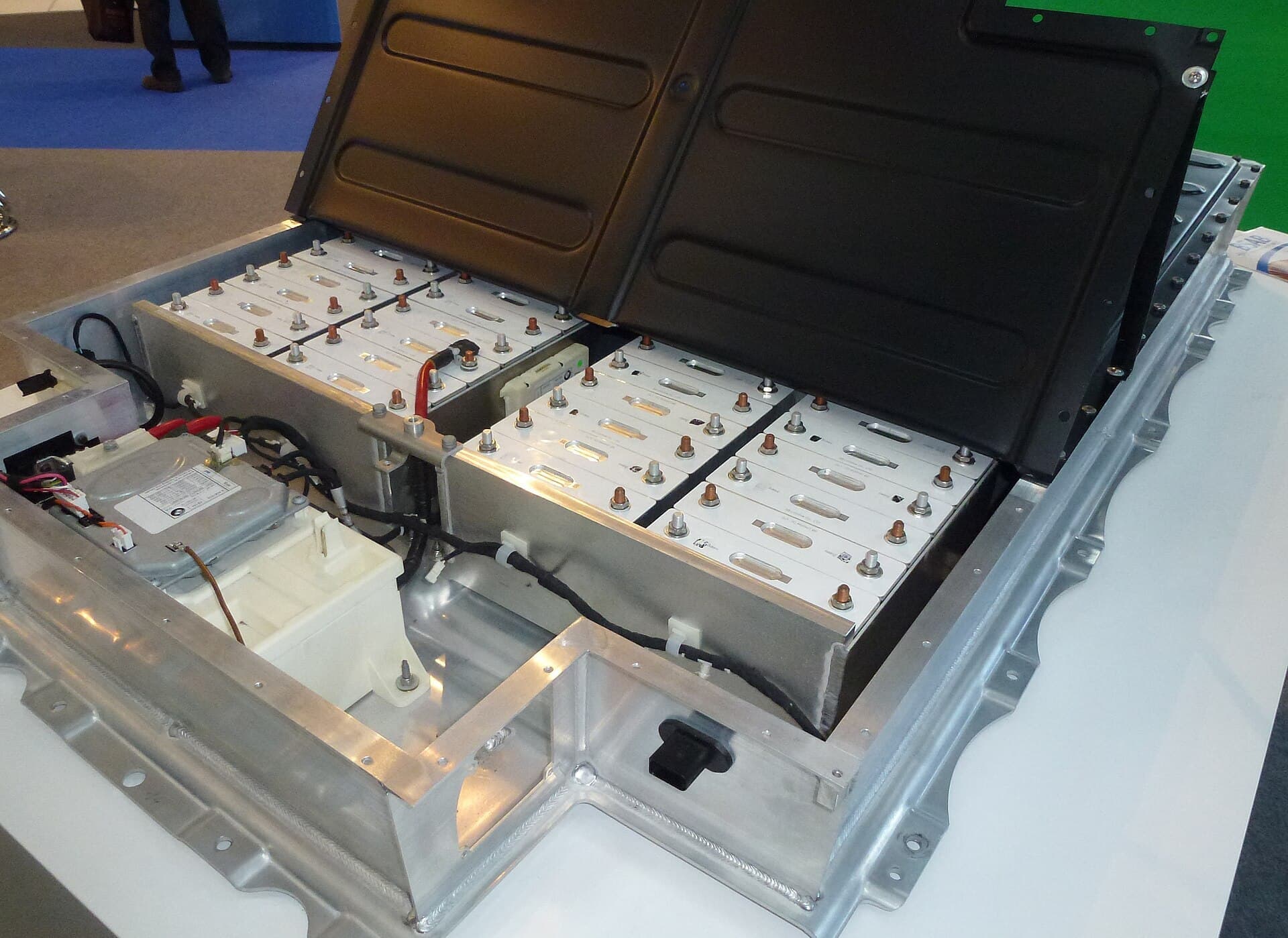
What it does not cover is the traction battery in an electric car. That pack is neither a small removable battery nor an e-bike battery, so it falls outside the list. And when we went looking for a national scheme that makes a carmaker responsible for a traction battery at the end of its life, we could not find one. The Productivity Commission's circular economy report (opens in a new tab), released in January, recommended that the federal government analyse whether such a scheme would be worth having. That is a study of a scheme, not a scheme.
For EV owners, that splits the problem in two. The e-bike battery in your garage now has a legally backed path in NSW. The big battery in the car still depends on whatever your carmaker, its recycler and your insurer have arranged.
At a glance
- NSW scheme started
- 1 October 2026
- What it covers
- AAA to D cells, 9V and button cells, power banks and removable rechargeables up to 5 kg, e-bike and e-scooter batteries
- Penalty for suppliers
- Up to $880,000
- EV traction batteries
- Outside the NSW list; the Productivity Commission wants a national cost-benefit study
- EU battery passport for EVs
- Required from 18 February 2027
What changed in NSW on 1 October
The NSW Environment Protection Authority (EPA) published the regulation on 20 February 2026 (opens in a new tab), saying it establishes "NSW's first mandatory product stewardship scheme". Product stewardship means whoever puts a product on the market shares responsibility for it after you are done with it. The trigger was fire: Fire and Rescue NSW recorded 332 lithium-ion battery-related incidents in 2025 (opens in a new tab), many sparked by batteries crushed or thrown into household rubbish.
What the scheme covers
The EPA's list of regulated batteries (opens in a new tab) is:
- AAA, AA, C, D, 9-volt and 6-volt lantern sizes
- button and button cell batteries
- removable rechargeable batteries weighing 5 kg or less
- rechargeable batteries that power e-micromobility devices such as e-bikes and e-scooters, removable or not
- portable power banks weighing 5 kg or less
Law firm Hamilton Locke notes that lead-acid, mobile phone and laptop batteries are expressly excluded (opens in a new tab), and that grid-scale and home energy storage batteries are not captured (opens in a new tab).
What brand owners have to do
The obligations fall on brand owners supplying more than 24 kg of batteries into NSW a year (opens in a new tab), a group that includes whoever brings a battery into the state to sell. They must provide enough safe, accessible collection points, lodge action plans for keeping batteries out of landfill, tell the public where to recycle, and report on what was supplied and recycled. Recycling must be done by a recycler certified to the Australian Standard AS/NZS 5377:2022 (opens in a new tab). Suppliers who fail to comply could face penalties of up to $880,000 (opens in a new tab).
The EPA's preferred model is for brand owners to join a product stewardship organisation and pay fees based on the batteries they supply (opens in a new tab). As of mid-October, Hamilton Locke reported that the EPA had not yet appointed one (opens in a new tab), so for now each brand owner must meet the requirements itself.
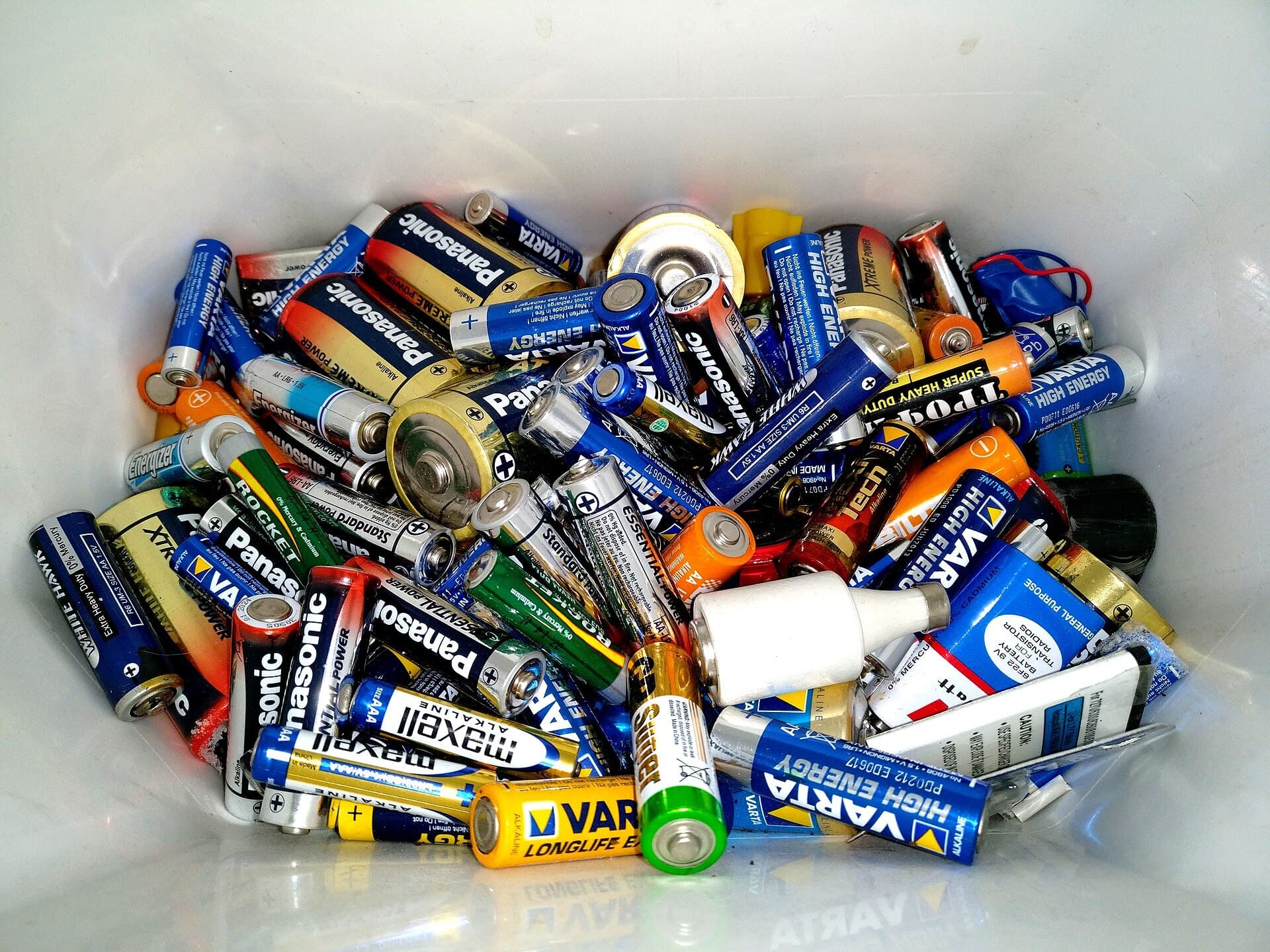
The mandatory scheme sits on top of a voluntary national one. B-cycle, run by the Battery Stewardship Council, reports on its impact page (opens in a new tab) that 18.5 per cent of available batteries are collected for recycling, that 66 per cent of in-scope battery importers have joined, and that 49 per cent of people still put batteries in household waste.
- 18.5%
- of available batteries collected under B-cycle
- 10%
- of lithium-ion batteries recycled in Australia in 2021
- 49%
- of portable batteries collected for recycling in the EU in 2023
The battery that isn't on the list
An electric car's traction battery is not a small removable battery and not an e-micromobility battery, so the NSW scheme does not reach it. The EPA's own disposal guide (opens in a new tab) points owners of used car batteries to automotive shops, battery shops and community recycling centres; it does not mention traction packs. B-cycle drop-off points do not take batteries from home energy storage systems or caravans (opens in a new tab), let alone a car. The next product NSW is regulating is solar panels, from 2028 (opens in a new tab).
Federally, the picture is a queue. The environment minister's product stewardship priority list is still the 2023–24 list of clothing textiles, tyres, plastics in hospital healthcare products, mattresses and child car seats (opens in a new tab), unchanged while the Recycling and Waste Reduction Act 2020 is reviewed. The same page says Canberra has committed to a mandatory scheme for small electrical products and solar systems. EV batteries are not on it.
The Productivity Commission's final report (opens in a new tab) found that neither solar systems nor EV batteries "are managed in a consistent or comprehensive way" at end of life. It cited Battery Stewardship Council and UTS research forecasting a stock of just over 4 million tonnes of EV batteries by 2050, with about 200,000 tonnes reaching end of life that year. Its Recommendation 5.2 says Canberra should urgently establish a national scheme for small-scale solar, but for EV batteries should first "analyse the costs and benefits", because "There is currently no equivalent analysis for a national EV battery product stewardship scheme." It favours an industry-led, co-regulatory model. We could not find a published government response committing to that analysis.
Where a dead or crashed EV pack goes today
Much of the answer comes from carmakers themselves. In its submission to the Commission, the Federal Chamber of Automotive Industries (FCAI) said many carmakers contract domestic recyclers to collect, transport and pre-process traction batteries into black mass (opens in a new tab), which it describes as "a valuable mixture of materials recovered from spent lithium-ion batteries". The FCAI was frank on two points: those efforts target batteries under recall or warranty "rather than actual end-of-life", and the black mass "is then sent overseas for material separation and refining".
The federal National Battery Strategy (opens in a new tab) says much the same. It describes Victoria's Envirostream turning lithium-ion batteries into a mixed metal dust that goes into cathode manufacturing outside Australia, and cites CSIRO figures that in 2021 Australia recycled 99 per cent of lead-acid batteries but 10 per cent of lithium-ion ones.
We send most lithium-ion batteries overseas for processing, where they can still end up in landfill.
The Productivity Commission found limited onshore processing capacity and few facilities able to safely take apart complex packs (opens in a new tab), and, citing industry submissions, wrote that solar and EV battery waste "is often stockpiled or illegally dumped or exported to other countries". The wider end-of-life vehicle system is murky too: the FCAI estimates about 850,000 vehicles reach end of life each year and roughly 400,000 tonnes of material is landfilled or exported "without visibility" (opens in a new tab), and it wants proof of responsible disposal required before a car can be deregistered.
Private operators fill some of the gap. Infinitev, a hybrid and EV battery specialist, says it reuses a pack where possible, repurposes it for stationary storage when it can no longer serve a car, and recycles it last (opens in a new tab), claiming full traceability and zero landfill. Its EV battery refund scheme (opens in a new tab), by its own fine print, "is not an official government program" and carries no guarantee to buy a battery.
Crash damage is the other way out of a car, and the best evidence we found is British. UK research body Thatcham Research's February 2026 Insurability Blueprint (opens in a new tab) says batteries average 40 per cent of a vehicle's new value, and describes a three-year-old EV with minor side-impact damage to a battery bracket that would frequently be written off, because the casing damage requires a new battery worth more than the depreciated car. We could not find equivalent Australian write-off figures.
The evidence that cuts the other way
Our view is sceptical, so here is the counter-evidence.
Big batteries can be recycled at scale when the material pays. Lead-acid recycling runs at 99 per cent according to the National Battery Strategy (opens in a new tab), or about 90 per cent "thanks to the financial value of lead" (opens in a new tab) by the FCAI's figure.
Packs are lasting. Geotab's fleet-data analysis of more than 22,700 EVs across 21 models (opens in a new tab) found average capacity loss of 2.3 per cent a year, projecting 81.6 per cent of original capacity after eight years. The Productivity Commission notes that most EV batteries in Australia have not yet reached their end of use (opens in a new tab).
EV packs are not the fire problem. The same report says that of 673 lithium-ion battery fires attended by NSW emergency services from January 2022 to June 2024, five involved EVs.
Second life is real. The National Battery Strategy notes EV batteries need replacing at 70 to 80 per cent of original capacity (opens in a new tab), which leaves useful capacity for stationary storage.
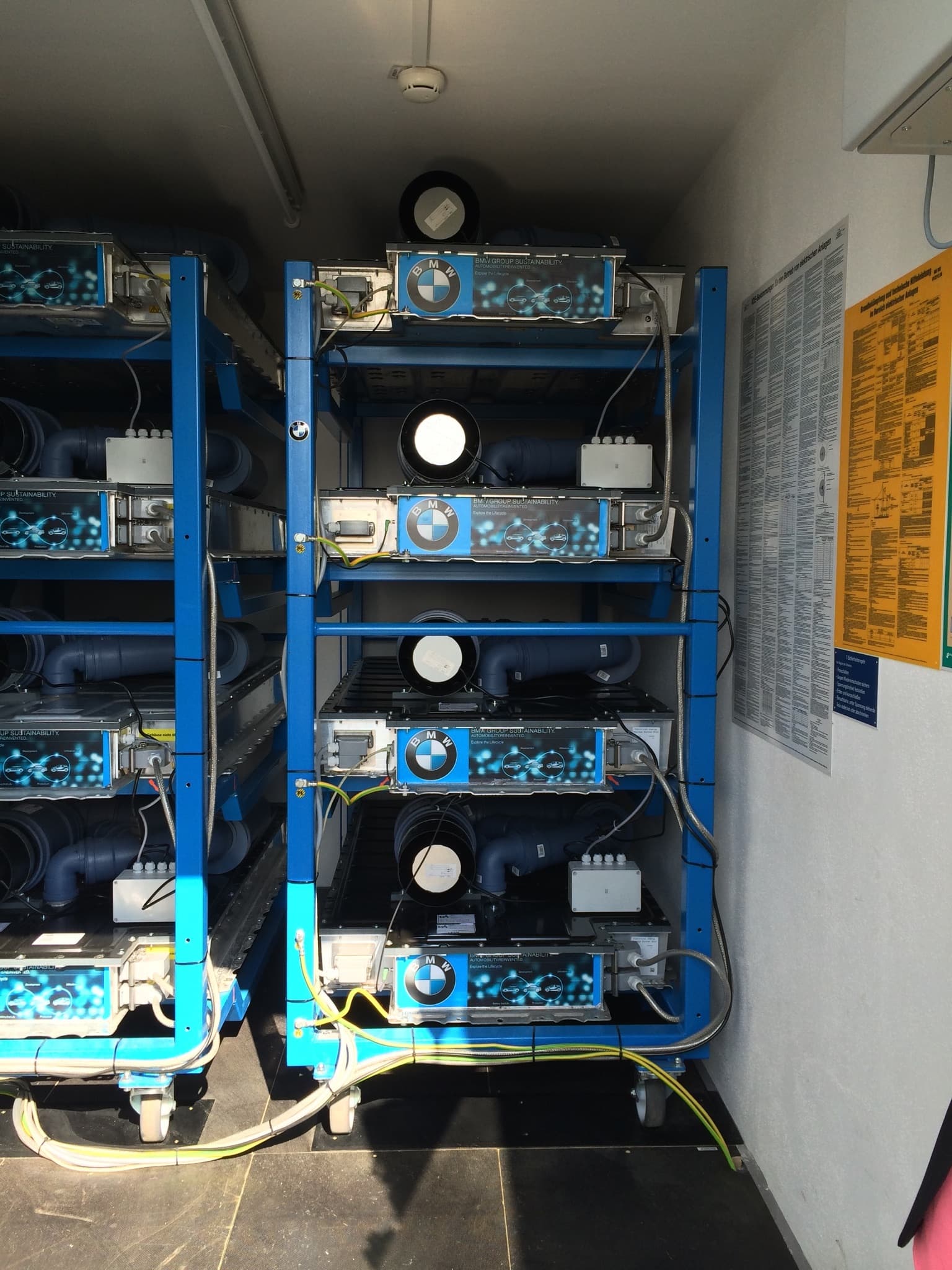
Our answer: all of that delays and shrinks the problem, but none of it makes anyone responsible for the pack the last owner is left holding. Lead works because lead is valuable; the Strategy itself says lithium-ion recycling here is held back by "lack of feedstock, safety concerns and costs". Long-lived packs mean the wave arrives later, not that it doesn't arrive.
The world view
NSW is not unusual in leaving cars out. Washington State's battery stewardship law starts collecting portable batteries on 1 July 2027 and medium-format batteries in 2029 (opens in a new tab), and its program will not accept "a wet cell battery including vehicle batteries".
The European Union went the other way. Its battery law treats electric vehicle batteries as their own category (opens in a new tab), alongside portable, e-bike, industrial and starter batteries, and regulates the whole life cycle. On small batteries, Eurostat reports 49 per cent of portable batteries sold in the EU were collected for recycling in 2023 (opens in a new tab), with collections more than doubling since 2009. EU and B-cycle figures are calculated differently, so treat that as a direction, not a like-for-like gap.
Another perspective: the European Union
What it did
Regulation (EU) 2023/1542 entered into force on 17 August 2023 and applies from 18 February 2024 (opens in a new tab). For cars, the key provisions in the regulation's text (opens in a new tab) are:
- Take-back. Producers must take back waste EV batteries free of charge, regardless of brand, chemistry, condition or origin, across the whole country, "not being limited to areas where the collection... is profitable" (Article 61).
- Battery passport. From 18 February 2027, each EV battery placed on the market must have an electronic record holding model information and data about that individual battery (Article 77).
- State-of-health data. Since 18 August 2024, an EV battery's management system must hold up-to-date state-of-health data, with read-only access for whoever legally bought the battery, or a third party acting for them (Article 14).
- Recycling targets. Recyclers must recover 65 per cent by weight of lithium-based batteries by the end of 2025 and 70 per cent by the end of 2030, and recover 90 per cent of cobalt, copper, lead and nickel and 50 per cent of lithium by the end of 2027, rising to 95 and 80 per cent by the end of 2031 (Annex XII).
- Recycled content. From 18 August 2031, EV batteries must contain at least 16 per cent recycled cobalt, 85 per cent lead, 6 per cent lithium and 6 per cent nickel, rising in 2036 to 26, 85, 12 and 15 per cent (Article 8).
| Feature | Australia (NSW and federal) | European Union |
|---|---|---|
| EV batteries in a stewardship law | No; NSW stops at 5 kg and e-bikes | Yes, as their own category |
| Free producer take-back of EV packs | Commercial arrangements | Required, Article 61 |
| Owner right to read battery health | None we could find | Read-only access since August 2024 |
| Battery passport | None we could find | From 18 February 2027 |
| Recycled content minimums | None we could find | From August 2031 |
What has happened since
The limits are showing. Regulation (EU) 2025/1561 moved the battery due-diligence obligations from 18 August 2025 to 18 August 2027 (opens in a new tab), partly because the bodies that verify them were slow to be designated. The passport date still stands, but industry group EUROBAT wrote in July 2026 that core technical standards are still under development, the rules on access to restricted passport data have not been adopted and the EU passport registry is not yet operational (opens in a new tab), and asked for restricted data to wait until 2030. The recycled-content targets have a built-in review, with the Commission able to amend them by 2029 (Article 8 (opens in a new tab)). And Article 72 still allows waste batteries to be shipped outside the Union for treatment, so export is regulated rather than ended.
What Australia can learn
We think three things travel well. First, define the problem by battery type, not weight: a 5 kg ceiling is exactly why EV traction packs sit outside the NSW scheme. Second, the owner's right to read state of health is a low-cost, highly useful piece of the EU package that helps second-hand buyers now rather than in 2031. Third, make producers take back the packs they sold, whatever their condition, through a network that reaches regional areas. The passport delays argue for passing simple obligations early and letting the data systems catch up.
What it means if you're buying or selling
Buying a used EV
Ask for a battery state-of-health (SoH) report before you agree a price, and make one a condition of sale if the seller has none. Independent tests exist; Infinitev, for example, sells an EV Battery HealthCheck (opens in a new tab) it says is certified by European remarketing association CARA. Our guide to EV battery health, range and price (opens in a new tab) explains how to read the result.
Read the battery warranty. Kia Australia's warranty terms (opens in a new tab), updated in June 2026, show the questions to ask: the high-voltage battery is covered against capacity falling below 70 per cent for 7 years or 150,000 km on pre-2027 models and 8 years or 160,000 km from model year 2027; the warranty transfers when the car is sold once the new owner lodges a change-of-owner form; and cover is voided if the vehicle has been written off or disposed of by an insurer.
Ask how the car was charged and where it lived: Geotab found frequent high-power DC fast charging could double the degradation rate, and hot climates added 0.4 per cent a year (opens in a new tab). If the pack fails out of warranty, there is no stewardship scheme to fall back on: your options are the dealer, independent repairers and battery specialists, at whatever price the market sets that day.
Selling an EV
We think a current SoH report does more to settle a buyer's nerves than anything else you can hand over, so get one before you list. Keep the service record, any battery inspection history and the warranty booklet together, and complete the maker's transfer paperwork so the battery cover follows the car. If you list on MotorLoop, which is free, upload the report with your photos and quote the SoH figure in the description.
Disposing of e-bike and e-scooter batteries in NSW now
Our take
This is our view. The NSW scheme is good law aimed at a real problem: small lithium batteries in rubbish trucks start fires, and making the brands fund collection is fair. But it is telling that the regulation stops at 5 kg. The batteries most likely to become a long-term headache are the big packs in EVs, and for those Australia has, so far, a recommendation to do a cost-benefit study.
We remain sceptical that traction batteries will be properly recycled at scale here. The evidence points one way: carmakers' arrangements cover warranty and recall packs, the valuable part leaves the country as black mass, and the government's own strategy admits lithium-ion batteries sent offshore "can still end up in landfill". Recycling is being promised faster than it is being delivered.
The good news is that time is on our side. Packs are lasting well on the best fleet data we found, and most Australian EVs are years from retirement. That is the window to legislate before the wave. Start with the EU's simplest idea: give owners read access to their battery's health, so the information sits with the person who owns the car. Meanwhile, the greenest battery is often the one you already have: keep the car longer, look after the pack, and if an EV doesn't suit your driving, a hybrid is a fair middle road.
Header photo: RudolfSimon (opens in a new tab) via Wikimedia Commons, CC BY-SA 3.0 (opens in a new tab).
Related
- EV battery life, warranties and what a replacement really costs (opens in a new tab)
- Beyond the Tailpipe: Tyres, Weight and the EV Recycling Problem (opens in a new tab)
- Buying a used electric car: the checklist (opens in a new tab)
- EV battery health: how it affects range and price, and how to test it (opens in a new tab)