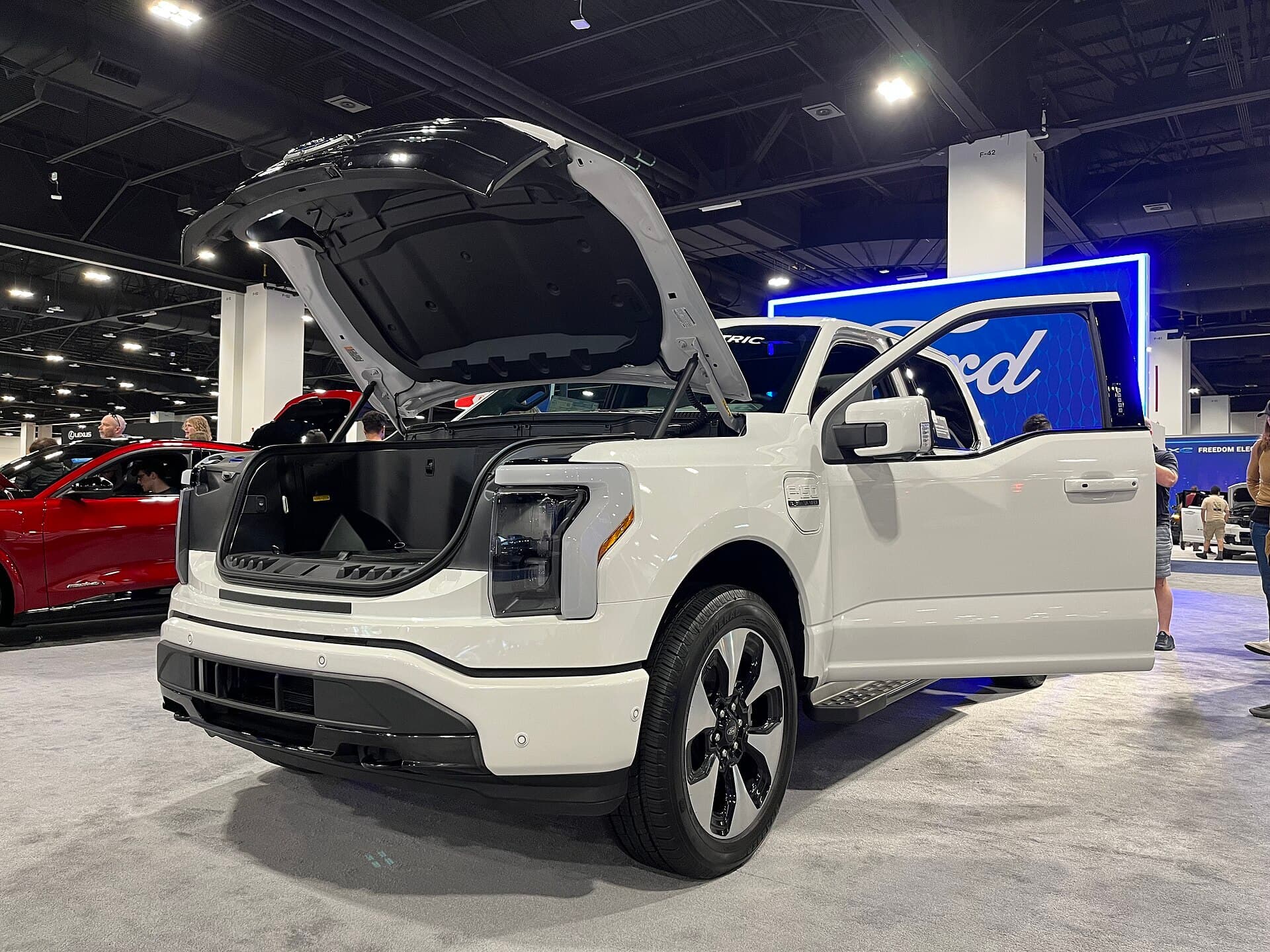
A year after the United States switched off its federal electric-car tax credit, American EV sales are running about 40 per cent below where they were. In the third quarter of 2026 buyers took home 262,649 EVs, 39.5 per cent fewer than a year earlier (opens in a new tab), according to Cox Automotive. We think that is the most honest market test the EV has had: take the subsidy away and you find out what people wanted to buy.
The answer, on the US numbers, is that most of them wanted something with a petrol engine in it. Some wanted it with a battery helping out. A smaller group wanted a battery and nothing else, and they kept buying. That is worth thinking about in Australia, where battery EVs reached nearly a quarter of new sales in October.
- US$7,500
- Federal credit, gone for cars acquired after 30 Sept 2025
- -39.5%
- US EV sales, Q3 2026 vs Q3 2025
- 6.4%
- EV share of US new-vehicle sales, Q3 2026
- 23.1%
- Battery EV share of Australian new sales, October 2026
What America switched off, and when
The credit was not small. The US Internal Revenue Service says buyers could get a credit of up to US$7,500 under section 30D (opens in a new tab), and that it "is not available for vehicles acquired after Sept. 30, 2025". The change came in the law commonly known as the One, Big, Beautiful Bill, Public Law 119-21.
What happened next was predictable. Cox Automotive describes the third quarter of 2025 as the best quarter ever for EV sales in the United States (opens in a new tab), driven by buyers rushing in before the incentive expired. Then the floor dropped. A year later, sales have recovered a little from the low point, up 6.1 per cent on the second quarter of 2026, but they are nowhere near the old peak.
Who kept buying, and who didn't
The detail in Cox's report is more interesting than the headline. EVs made up about 6.4 per cent of US new-vehicle sales in the third quarter, up from 5.8 per cent in the second. But counting hybrids and plug-in hybrids too, nearly 25 per cent of new sales were electrified (opens in a new tab). In other words, the hybrid is doing most of the heavy lifting.
The brands tell the same story:
- Tesla was down 20 per cent year on year but still sold more than half of all US EVs.
- Rivian grew 46 per cent.
- Toyota and Lexus EV sales rose nearly fivefold, from a small base.
- Nearly every other carmaker posted lower EV volumes than a year earlier.
Cox also notes that petrol prices sitting well above US$4 a gallon were likely helping EVs in the quarter. So even the recovery has a cause outside the car itself.
Our reading is simple. The buyers who wanted an EV for its own sake, the Tesla and Rivian crowd, are still there. The buyers who were persuaded by US$7,500 of public money have, in our view, mostly gone back to what they would have bought anyway: a hybrid, a petrol SUV or a pickup.
The carmakers are writing off billions
The car companies read the same numbers and acted on them.
General Motors went first. In October 2025 it disclosed a US$1.6 billion charge (opens in a new tab), made up of a US$1.2 billion impairment on EV capacity and US$400 million in contract cancellation and settlement costs. Its filing pointed to the end of consumer tax incentives and less strict emissions rules as reasons it expects EV adoption to slow, and it warned the review of its EV capacity was ongoing.
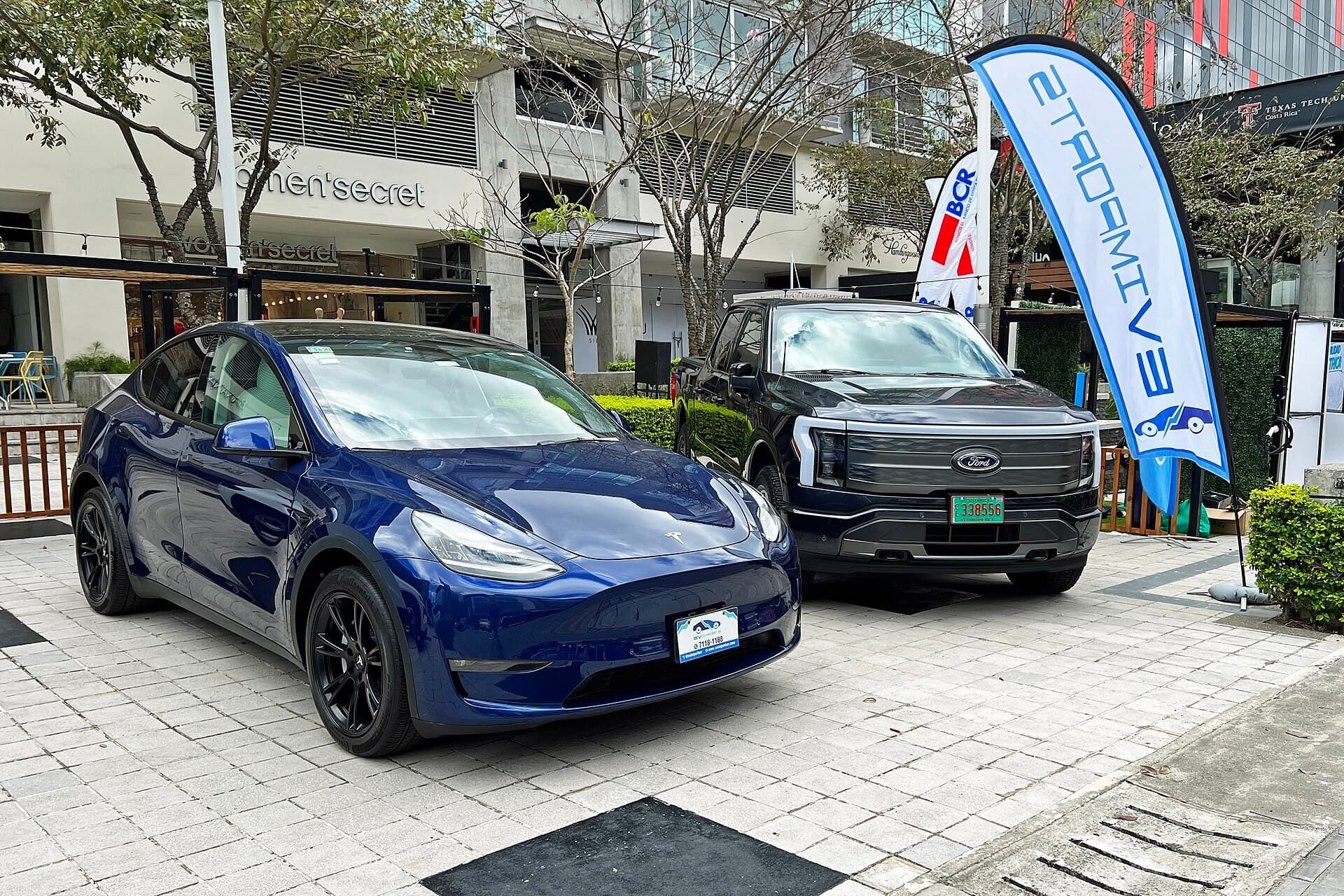
Ford went further. On 15 December 2025 it announced it would take a US$19.5 billion hit (opens in a new tab) to reshape its EV plans, including an US$8.5 billion write-down of EV assets. Production of the fully electric F-150 Lightning is ending. Its replacement is an "extended range electric vehicle" with a petrol generator that recharges the battery, for a claimed range of over 700 miles. Ford also cancelled its next-generation electric truck, known as T3, and a next-generation electric commercial van, while keeping a mid-sized electric pickup planned for 2027.
We find the Lightning decision telling. Ford built an electric version of its full-size pickup, and the company's own answer, once the subsidy and the tougher rules were gone, was to put an engine back in it.
When the subsidy stops, you find out what buyers actually want.
Australia is running a different experiment
Australia's big federal lever is a tax break rather than a cash credit. The fringe benefits tax exemption makes eligible electric cars much cheaper to run through a novated lease, which our explainer on EVs and fringe benefits tax (opens in a new tab) covers in detail, including the discount announced to replace it from 2027. The New Vehicle Efficiency Standard also pushes carmakers to sell low-emission models, and our piece on the Coalition's pledge to scrap the NVES (opens in a new tab) explains what that rule does.
The October 2026 sales figures show where that leaves us. CarExpert's analysis of VFACTS and EV Council data has battery EVs at 24,845 sales, or 23.1 per cent of the market (opens in a new tab), behind diesel on 23.9 per cent. Hybrids took 17.1 per cent and plug-in hybrids 10.9 per cent. Year to date, battery EVs sit at 19.3 per cent and petrol still leads.
That is a much higher EV share than America's 6.4 per cent. Some of the difference is cheap Chinese cars and Tesla's local volumes. But in our view a meaningful part of it is policy, and the US has just shown how fast policy-driven demand can move when the policy changes.
We could not find public data showing how many Australian EV buyers used a novated lease, or how many would have bought an EV without the tax break. Treat any confident claim either way with care, including ours.
The world view
America is an outlier among big markets, not the whole picture. The International Energy Agency's count of global electric car sales passed 20 million in 2025, which we reported on in August (opens in a new tab), with China carrying most of that volume. Europe, meanwhile, has moved its 2035 target from a 100 per cent to a 90 per cent CO2 cut (opens in a new tab), leaving room for engines after all.
So the US is not proof that the EV is finished. It is proof that the pace of the switch depends heavily on governments, and that when a government steps back, buyers do not keep marching in the direction they were being pushed.
What it means if you're buying or selling
- Buying a new EV on a novated lease. Do the sums on the whole lease term, and read the FBT explainer above. If the rules change, the running cost of your lease can change with them.
- Buying a used EV. In our view policy shifts and new-car price cuts move used prices too, so buy on today's price, not on a hoped-for resale.
- Buying a hybrid. The American market's swing to hybrids is a vote of confidence in a car that saves fuel without asking you to change how you refuel. We think that's a reasonable middle road.
- Selling a petrol or diesel car. Diesel was the biggest single powertrain in Australia's October figures. Demand for a good conventional car is not going away.
You can buy, sell & show cars on MotorLoop, and it's free.
Our take
We are not cheering anyone's losses. Billions written off is real money, and real jobs sit behind it. But we think the past year in America has settled an argument. Strip out the US$7,500 and EV sales fell by about two-fifths, while hybrids carried the electrified share. The people who love their EVs kept buying them. Most of the rest went back to cars with engines.
Our view is that a car should win buyers on what it does for them: price, range, refuelling, running costs, how long it lasts and what it is worth at the end. Subsidies can hide a weakness on any of those for a while. They can't hide it forever. Australia is still paying its own subsidy through the tax system, and it should watch America closely before deciding how much of its EV share is demand and how much is the discount.
Header photo: Corqe (opens in a new tab) via Wikimedia Commons, CC0 (opens in a new tab).
Related
- Electric cars and fringe benefits tax, explained (opens in a new tab)
- Coalition vows to scrap the NVES. What repeal would and wouldn't change for car buyers (opens in a new tab)
- Europe backs away from its 2035 engine ban. What it means for petrol and hybrid buyers here (opens in a new tab)
- China now builds more than a third of Australia's new cars. Who fixes them in 2036? (opens in a new tab)