Australians bought 102,924 new vehicles in September, and for the first time it is fair to say the market's centre of gravity has moved to China. According to the FCAI's September 2026 VFACTS release (opens in a new tab), China was the source of 35.5% of the month's new vehicles, ahead of Japan on 22.5%, Thailand on 17.3% and South Korea on 9.6%. That is roughly 36,500 cars and SUVs in a single month.
The same release shows how fast the brand list has changed. BYD was the second-biggest brand in September with 8,191 sales, and GWM, MG, Geely and Chery all sit inside the top ten. The BYD Sealion 7, Chery Tiggo 4 Pro, GWM Haval Jolion, Geely EX5 and MG ZS are all in the top ten models. Battery-electric cars took 24.2% of the month, up from 11.3% a year earlier, while petrol sales fell 36.2% and diesel 18.4%.
Most of the coverage this week will be about the powertrain split. We want to ask a quieter question, the one that matters to the person who buys one of these cars second-hand in 2033: who will be here to fix it?
- 35.5%
- of September's new cars came from China
- 24.2%
- battery-electric share in September
- 5 of 10
- top-ten brands from Chinese makers
In Australia
Australian law already has an answer on paper. Section 58 of the Australian Consumer Law gives a guarantee that the manufacturer will take reasonable action to make sure repair facilities and parts are reasonably available. Hobart Community Legal Service's plain-English summary (opens in a new tab) puts it simply, and also notes that enforcing it is not straightforward. "Reasonable" is not a number of years, and a manufacturer can limit the guarantee by telling buyers in writing, before the sale, that parts won't be available after a stated period.
We have seen what a brand exit looks like here, and it was not a Chinese brand. When General Motors retired Holden, its 17 February 2020 announcement (opens in a new tab) promised to "provide servicing and spare parts for at least 10 years". That is the benchmark promise from a company with almost a century of history in this country, and it is a promise with an end date.
Chinese brands have done this dance before too. Chery first arrived in 2011 through an independent distributor, left in 2015, and came back in 2023 (opens in a new tab) as a much bigger operation. It is fair to say the comeback is far stronger than the first attempt. It is also fair to say an owner of a 2013 Chery spent eight years with no brand in the country.
None of this says the new cars are poorly made, and the September figures say buyers clearly like them. Our point is narrower: a car's useful life here is long, and the brand's presence needs to last at least as long as the car does.
The world view
Australia is not being singled out. The China Association of Automobile Manufacturers reported that China exported 7.098 million vehicles in 2025, up 21.1% on the year before (opens in a new tab), out of 34.4 million sold in total. A domestic market that size, with that much export push behind it, means brands will compete hard on price in every open market, Australia included. That is good for the buyer at the showroom. Whether every one of those brands will still be supporting its cars in each market in ten years is a separate question, and nobody can answer it yet.
Another perspective: the UK
Britain is running a few steps ahead of us. Industry figures from the SMMT, reported by Automotive Logistics in August (opens in a new tab), put Chinese-owned brands at 19.59% of UK registrations for the first seven months of 2026, up from 11.79% a year earlier, and above 22% in June alone. Across Western Europe, the same report cites Chinese brands at 10.7% of new cars in the second quarter of 2026.
The UK story is useful because it shows this isn't a quirk of Australian buyers. It is a global shift, and the parts-and-repair question will be asked in every one of those markets at roughly the same time.
Our take
We think the September numbers are a good moment to slow down, not to panic. Here is our view.
A car is a ten-to-twenty-year object; a brand's local office is a business decision. A cheap, well-equipped new car is a good deal for the first owner. The second and third owners inherit whatever parts network is left. Holden's own promise was ten years, and that was a household name.
Complexity makes the gap bigger. A naturally aspirated petrol car from a long-established maker shares filters, sensors, bearings and know-how with half the cars on the road, and an independent mechanic can usually source something that fits. A heavily software-integrated car with a brand-specific screen, controller or battery module has fewer places to turn when the maker's local arm is gone. We've written before about what happens when the computer fails, and about why Australia's repair information scheme only goes so far.
The fair counter-argument. These brands are now mostly factory-owned operations rather than small import deals, they are selling in big numbers, and volume is what keeps a parts warehouse stocked. Holden's exit came after its sales collapsed; a brand selling thousands of cars a month has every reason to stay. That is a real point, and it may well prove right for most of them. It still won't be true for all of them.
Ask the dealer, in writing, how long the maker commits to supplying parts in Australia, and whether you are being given any written notice that limits parts availability. Ask what a replacement headlight, mirror and infotainment screen cost today. A clear answer is a good sign. A vague one tells you something too.
If you are buying used, look at how long the brand has been in Australia, how many dealers sell its parts near you, and whether independent workshops will touch it. A genuine, OEM or aftermarket parts market forming around a model is one of the better signs it will be kept on the road.
We're not telling anyone not to buy these cars. We're saying the cheapest car at the showroom and the cheapest car to own in year twelve are not always the same car, and September's numbers mean a lot more Australians are about to find out which is which.
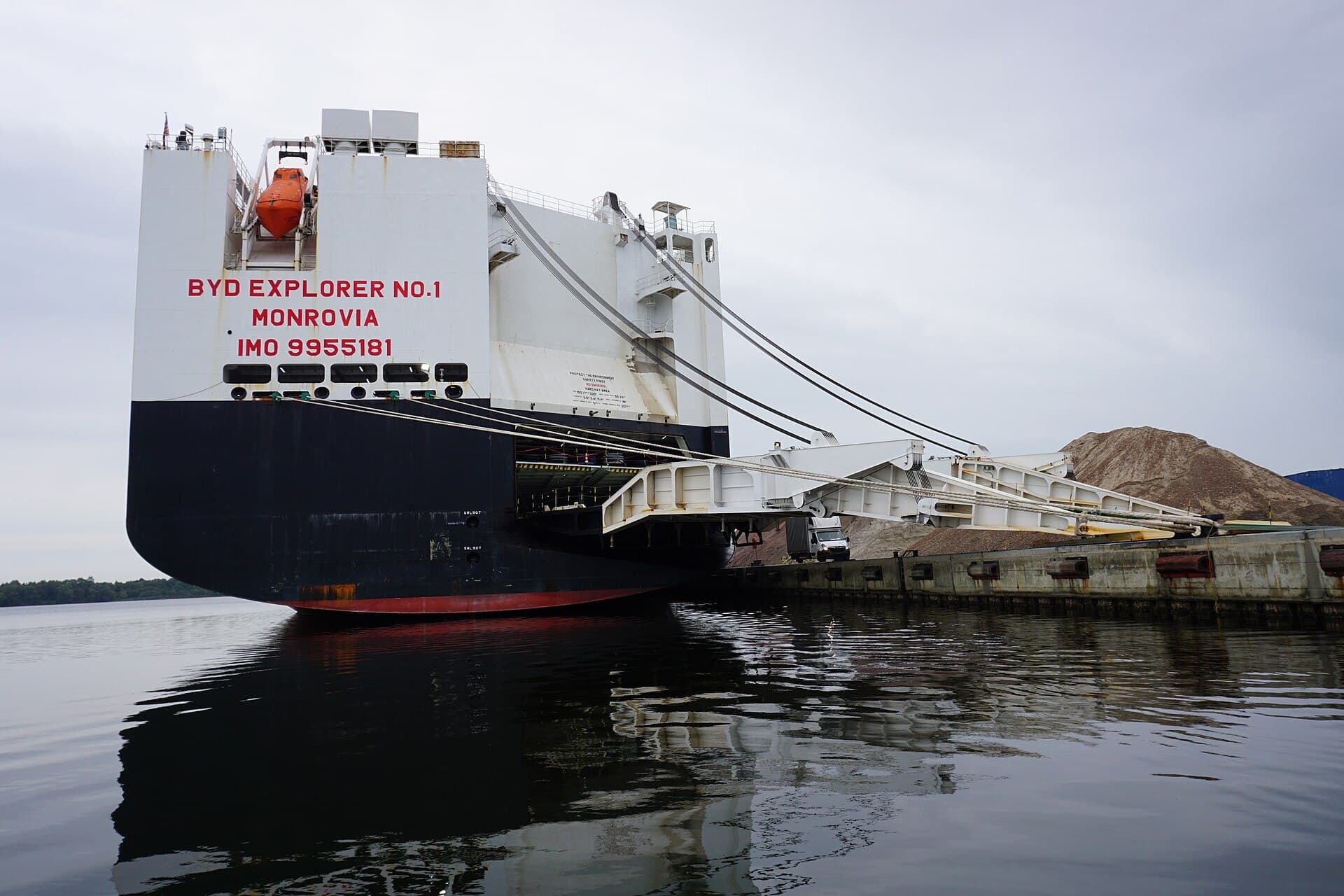
Photo: "BYD EXPLORER NO.1 in Wilhelmshaven" by Ein Dahmer, via Wikimedia Commons (opens in a new tab), licensed CC BY-SA 4.0 (opens in a new tab).
Related
Related reading
- Geely in Australia: how the newcomer cracked the top 10
Geely reached 20,000 Australian deliveries and its first VFACTS top-10 brand position within 17 months of launching — powered by the EX5 electric SUV, rapid dealer growth and sharp pricing.
- Did old cars really last longer? What the registration data shows
US registration data puts 9.16% of 1977-2003 passenger cars still registered at 20 years, and German roadside figures show same-age breakdown rates roughly halving since 2015 - plus the counter-evidence.
- Australia's repair information scheme, three years on
Australia's repair information scheme has run since July 2022, and Treasury's 2026 review found the barrier facing independent workshops now sits largely outside what the law regulates.