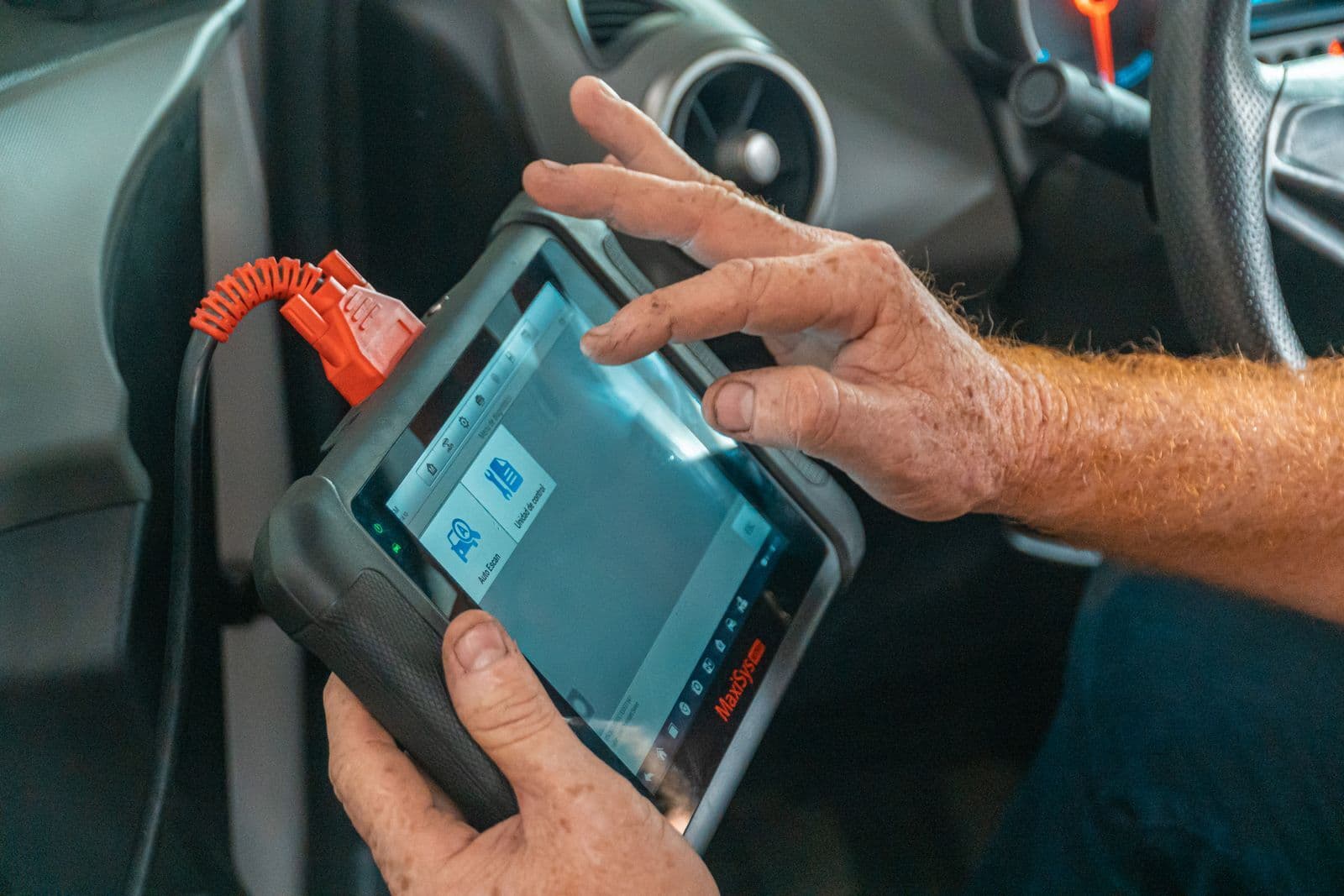
A car can now fail without anything breaking. US regulator records describe safety recalls where the defective component is a piece of software, where the worn-out part is a flash memory chip that reached the end of its write life, and where a full traction battery still leaves a car without drive. The same records show the reverse too: some of these faults are now repaired overnight, at no cost, with no workshop visit at all.
- Applies to
- Vehicles with networked and by-wire control modules
- Evidence
- US NHTSA recall campaigns and complaint records
- Australian rule
- Repair-information scheme, from 1 July 2022, vehicles built 2002 onwards
- Not established
- Module counts, code volume, ADAS repair cost
- Before you assume
- US campaigns are not Australian campaigns - check the local register
A defect can be a line of code
In NHTSA campaign 22V324000, Hyundai reported a software error in the Shifter Control Unit of the Ioniq 5 that may disengage the parking mechanism and allow the vehicle to roll away. The regulator's own classification of the defective component reads "PARKING BRAKE:ELECTRICAL:CONTROL MODULE:SOFTWARE", and the remedy recorded is that dealers "will update the Shifter Control Unit software, free of charge" (NHTSA recall records (opens in a new tab)). Nothing wore out: the record classifies the defective component as software, and the recorded fix is a reflash. The failure mode exists at all because the function is by-wire: a car with a mechanical park linkage has a physical constraint on the park pawl, and the by-wire car has a specification instead.
That is the pattern this series keeps finding. Margin was removed and a specification put in its place, and the specification is usually correct - until the case it did not anticipate arrives.
A software remedy is not automatically a durable one, either. The Ford Focus with the 2.0L GDI or 2.0L GTDI engine has been through three US recalls for the same canister purge valve defect, which NHTSA says can cause "an engine stall while driving, without warning and without the ability to restart the vehicle". Campaign 18V735000 covered 2012-2018 Focus with a powertrain control module reprogram plus replacement of the valve and, where needed, the carbon canister, fuel tank and fuel delivery module. Campaign 19V515000 followed for a narrower group - 2012 and 2017 Focus and 2013-2014 Focus ST - because those cars "did not have the Powertrain Control Module (PCM) updated as intended" under the earlier recall. Campaign 26V369000 then covered cars "previously repaired incorrectly under recall number 18V735", with another PCM software update (NHTSA recall records (opens in a new tab)). Worth noting for a used buyer: two of those three remedies include hardware, so an unremedied car may need more than a reflash.
Flash memory has a write life
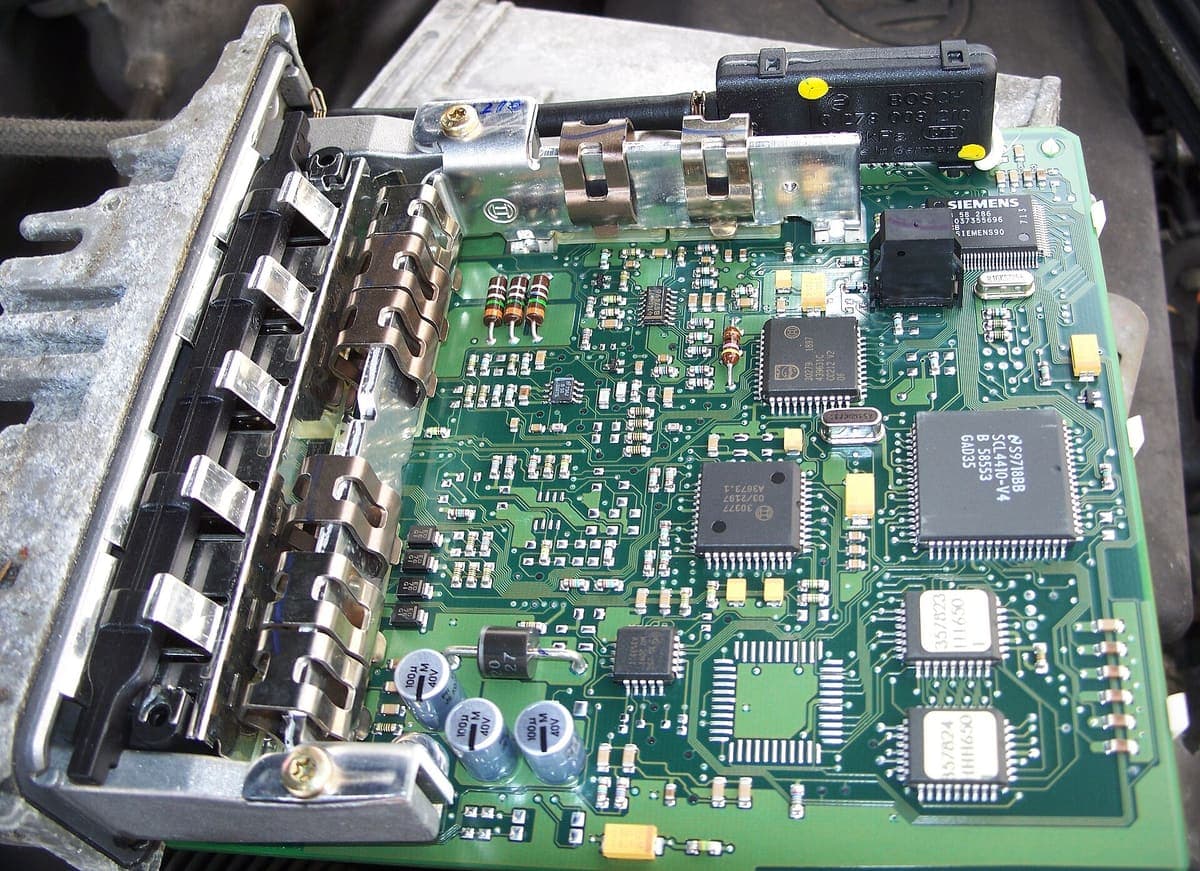
The clearest example of specified engineering meeting its limit is a storage chip. In NHTSA campaign 21V035000, Tesla recalled certain 2012-2018 Model S and 2016-2018 Model X vehicles built with the NVIDIA Tegra 3 processor and an 8GB eMMC NAND flash device, because that memory "may reach lifetime wear". The consequences NHTSA lists are the interesting part: loss of the rearview camera display, of defrost and defog control settings, and of exterior turn signal lighting. The remedy is free replacement of the media control unit daughterboard with an enhanced eMMC controller, from 29 March 2021 (NHTSA recall records (opens in a new tab)).
Three things are worth pulling out. First, this is a wear-out mode - it accumulates with writes, which means with time and use, so it surfaces late rather than early. Second, three unrelated functions were lost together because they route through one unit rather than being separately wired: consolidation is efficient right up to the moment it is not. Third, the boundary matters. NHTSA's record names those model years and that hardware generation. It does not say anything about later hardware, and neither should anyone else.
Owner complaints filed with NHTSA's Office of Defects Investigation about the centre display in older Model S vehicles were concentrated in 2020, while the regulator was investigating the issue. That database records no odometer reading, so it cannot show whether a given failure fell inside or outside warranty, and the recall that followed was carried out at no cost to owners regardless (NHTSA complaints database (opens in a new tab)). Complaint counts are unverified owner reports with no denominator. They show a mode exists. They do not give a failure rate for any model, and anyone quoting them as one is inventing arithmetic.
The dependency you cannot see
An electric car can have a full traction battery and stop anyway. NHTSA campaign 24V204000 (March 2024), expanded and replaced by campaign 24V868000 (owner letters mailed 20 December 2024), records that the Integrated Charging Control Unit "may become damaged and stop charging the 12-volt battery, which can result in a loss of drive power", and that "a loss of drive power increases the risk of a crash". The later campaign covers 2022-2024 Ioniq 5, 2023-2025 Ioniq 6 and Genesis models including the GV60; the remedy is that dealers "will inspect and replace the ICCU and its fuse, as necessary" and will "update the ICCU software" (NHTSA recall records (opens in a new tab)). The high-voltage pack is not what keeps the control electronics alive. A small 12-volt system is, and everything else waits on it.
Treating a completed earlier recall as settled: NHTSA states that vehicles already repaired under campaign 24V204000 "will need to have the new remedy completed" under 24V868000.
Two Kia campaigns show a related shift. In campaign 21V137000, covering certain 2017-2021 Sportage and Cadenza, NHTSA records that an electrical circuit in the Hydraulic Electronic Control Unit may short-circuit and cause a fire in the engine compartment; owners were advised to park outside and away from structures until repaired, and the remedy is that dealers "will replace certain fuses in the electrical junction box", with a HECU software update for cars with an electronic parking brake. In campaign 22V703000, debris and moisture accumulating on a tow hitch harness module circuit board may cause a short resulting in fire "while parked or driving" (NHTSA recall records (opens in a new tab)). Advice to park a car outdoors is advice about a car that is switched off. That is the newer part.
What the internet says that the record does not
Several of the most repeated claims about car electronics could not be traced to a primary source in our research, and we are not going to print them.
- "A modern car has 100-plus computers and over 100 million lines of code." We could not reach any primary technical or regulatory document stating a module count or a code volume. The figures in circulation trace to motoring press and vendor material.
- "ADAS calibration adds $X to every panel repair." Plausible and widely repeated, but we reached no primary figure. Thatcham Research's detailed output sits behind a login and the insurance claim-severity bulletins were not reachable, so no dollar figure belongs in this article.
- "Manufacturers lock independent repairers out with secure gateways." We could not verify any specific named manufacturer gateway system at a manufacturer document or regulator record. The generic mechanism is on the record: in the US Copyright Office's Ninth Triennial Proceeding, the trade body MEMA described the measures at issue as "passwords, so-called security dongles, challenge-response mechanisms, encryption, and disabled access ports on the circuitry itself", and the Register of Copyrights found that "technological measures applied to computer programs within vehicles and vessels have, or are likely to have, an adverse effect on noninfringing uses" (Register's Recommendation, October 2024 (opens in a new tab)). That finding is US copyright law and does not apply in Australia.
- "Parts pairing stops a good used module being fitted." Well documented in consumer electronics. We found no primary automotive source establishing it for cars.
- "There is a legal minimum period for spare parts availability." We could not find an automotive equivalent in the rules we searched.
The counter-evidence: the same architecture also fixes itself
The strongest fact against this article's thesis is that some of these defects are now remedied free, over the air, with no workshop visit and no parts - an outcome unavailable to any pre-electronic car. NHTSA records Tesla campaigns 23V838000 (Autosteer controls), 24V051000 (warning-light font size) and 24V376000 (seat belt warning system) as remedied by over-the-air software update (NHTSA recall records (opens in a new tab)). The architecture that makes a software defect possible also collapses the cost of curing it. Even the Kia fire recall above was remedied with fuses and a software update rather than a new module, which is a cheaper fix than the hardware-only era offered.
The electronics also earn their place in measured crash outcomes. The Insurance Institute for Highway Safety, citing peer-reviewed research, reports that forward collision warning with automatic braking cuts rear-end crashes roughly in half and that warning alone reduces them 27% (Cicchino, 2017), that pedestrian automatic emergency braking cuts pedestrian crashes 27% (Cicchino, 2022) and that blind spot detection reduces lane-change crashes 14% (Cicchino, 2018) (IIHS advanced driver assistance (opens in a new tab)).
And in Europe, access to repair information is a legal entitlement rather than a favour. Article 61 of Regulation (EU) 2018/858 requires "unrestricted, standardised and non-discriminatory access to vehicle OBD information, diagnostic and other equipment, tools" as a condition of type approval, and obliges manufacturers to "provide a standardised, secure and remote facility to enable independent repairers to complete operations that involve access to the vehicle security system" (Article 61 (opens in a new tab)). Article 63 requires fees to be "reasonable and proportionate" and requires access to be sold hourly, daily, monthly and yearly, so a one-off job does not require an annual subscription (Article 63 (opens in a new tab)). The security tier is a credential with a defined path - approvals under the SERMI scheme are "valid for a period of 60 months, unless revoked due to misuse" (SERMI scheme (opens in a new tab)) - not an exclusion.
Where that leaves an Australian buyer
Australia has its own mandatory scheme. The Motor Vehicle Service and Repair Information Sharing Scheme was legislated in June 2021 and commenced 1 July 2022, applies to passenger and light goods vehicles manufactured from 2002 onwards, and requires data providers to share diagnostic, service and repair information with independent repairers on fair and reasonable commercial terms, with a maximum penalty of $10 million for a body corporate (Productivity Commission, Right to Repair, Report No. 97 (opens in a new tab)). Three limits matter. Spare parts are excluded outright, so the scheme improves the ability to diagnose a fault, not to obtain the part. A subset classified as safety and security information - which the Commission records as including hydrogen, electric and hybrid powertrain information - is released only to persons determined to be fit and proper. And trade secrets, GPS data and most automated driving systems sit outside it.
The Commission also found that vehicle repair "is becoming more complex as vehicles become increasingly computerised and differentiated", and that this "often means that specialist diagnostic and repair tools are needed by both authorised and independent repairers to conduct repairs, and this equipment can be costly" - adding that while this "may not affect the difficulty of repair for authorised repairers", there is concern it causes issues for independent repairers who may be unable to access the necessary repair inputs. On the balance of the market it was blunt in the other direction as well: manufacturers' safety-and-security justifications for restricting third-party repair "can be overstated for many products and types of repair", there is "no evidence of a systemic competition problem across all repair markets", and further policy change would be "premature". Motor vehicle repair remains Australia's largest repair industry - roughly 40,000 businesses in 2020 and over 134,000 people employed.
One practical rule before you act on any of this: every recall campaign quoted above is a US regulator record. Australian recall scope, model years and remedies are administered separately, so check the Australian register before assuming a particular car is affected.