Australia's first right to repair law turned three in July 2025, and the Commonwealth's review of it landed in February 2026. The finding is not the one either side of the argument was expecting. The information a workshop needs is now cheap and legally guaranteed, and the thing that actually stops a generalist finishing the job on a late-model car sits outside what the law regulates.
- Applies to
- Passenger and light goods vehicles built from 1 January 2002
- In force since
- 1 July 2022, Part IVE of the Competition and Consumer Act 2010
- Who can buy
- Australian repair businesses and registered training organisations
- Top-10 brand price
- $28.62 a day on average at 30 July 2025
- Evidence
- Treasury review, February 2026
What the scheme actually guarantees
Since 1 July 2022, Part IVE has required any "data provider" that supplies motor vehicle service and repair information to any repairer to offer the same information to every Australian repairer, and to relevant registered training organisations, at a price not exceeding its fair market value (ACCC, Guidance for data providers, June 2025 (opens in a new tab)). It is a strong obligation on paper: section 57CD requires supply even where doing so would infringe copyright or breach a confidentiality or contractual obligation, with compensation payable to third-party copyright holders, and the maximum civil penalty for breaching the main obligation is $10 million for a body corporate and $500,000 for an individual (opens in a new tab).
The prices that resulted are modest for mainstream brands. At 30 July 2025 the ten most-registered passenger brands, roughly 75 per cent of registered vehicles, averaged $28.62 per day, $322.39 per month and $2,792.48 per year (opens in a new tab).
| Brand | Day | Month | Year |
|---|---|---|---|
| Mazda | $19.95 | $199 | $1,999 |
| Toyota | $21.00 | $220 | $2,200 |
| Subaru | $35.00 | $249 | $1,949 |
| Mitsubishi | $35.00 | $490 | $5,106 |
| Ford | $33.77 | $499.92 | $4,153.77 |
Those are Treasury's figures at 30 July 2025 (opens in a new tab); Ford's offer is made in US dollars and was converted at 0.65, so it moves with the exchange rate. Across all manufacturers at 30 June 2025 the average daily price was about $45 with a median of $30, and Treasury records prestige and low-volume brands such as Aston Martin, Ferrari and Maserati often exceeding $100 per day (opens in a new tab). Benchmarked against US prices, Australian daily access averaged $14.92 below the US equivalent, about 66 per cent of the US price (opens in a new tab), while monthly access ran about 10 per cent higher and annual about 15 per cent higher.
It is not a consumer right to repair
This is the most common misreading, and it is worth being blunt about. Eligibility is drafted around an "Australian repairer" - a person carrying on, or actively seeking to carry on, a business of diagnosing, servicing, repairing, modifying or dismantling scheme vehicles - so a private owner or hobbyist falls outside the scheme entirely (opens in a new tab). A data provider may choose to sell to consumers, but is under no obligation to.
Nor is the information free. The obligation is a cap at fair market value; what must be published free of charge on the internet is the offer itself (opens in a new tab), which is what makes the market observable. Coverage is narrower than most people assume too: scheme vehicles are passenger and light goods vehicles other than omnibuses, built on or after 1 January 2002, which excludes two and three-wheeled vehicles, farm, construction and heavy vehicles, motor homes and buses (opens in a new tab).
And large categories of what a modern repair actually needs were carved out by statute. Section 57BD(2) excludes trade secrets, intellectual property other than copyright material, source code, telematics data generated and transmitted by the vehicle while being driven, GPS data and automated driving system information; electronic and hard-copy logbooks and physical parts sit outside the scheme as well (opens in a new tab).
The lock moved from the manual to the tool
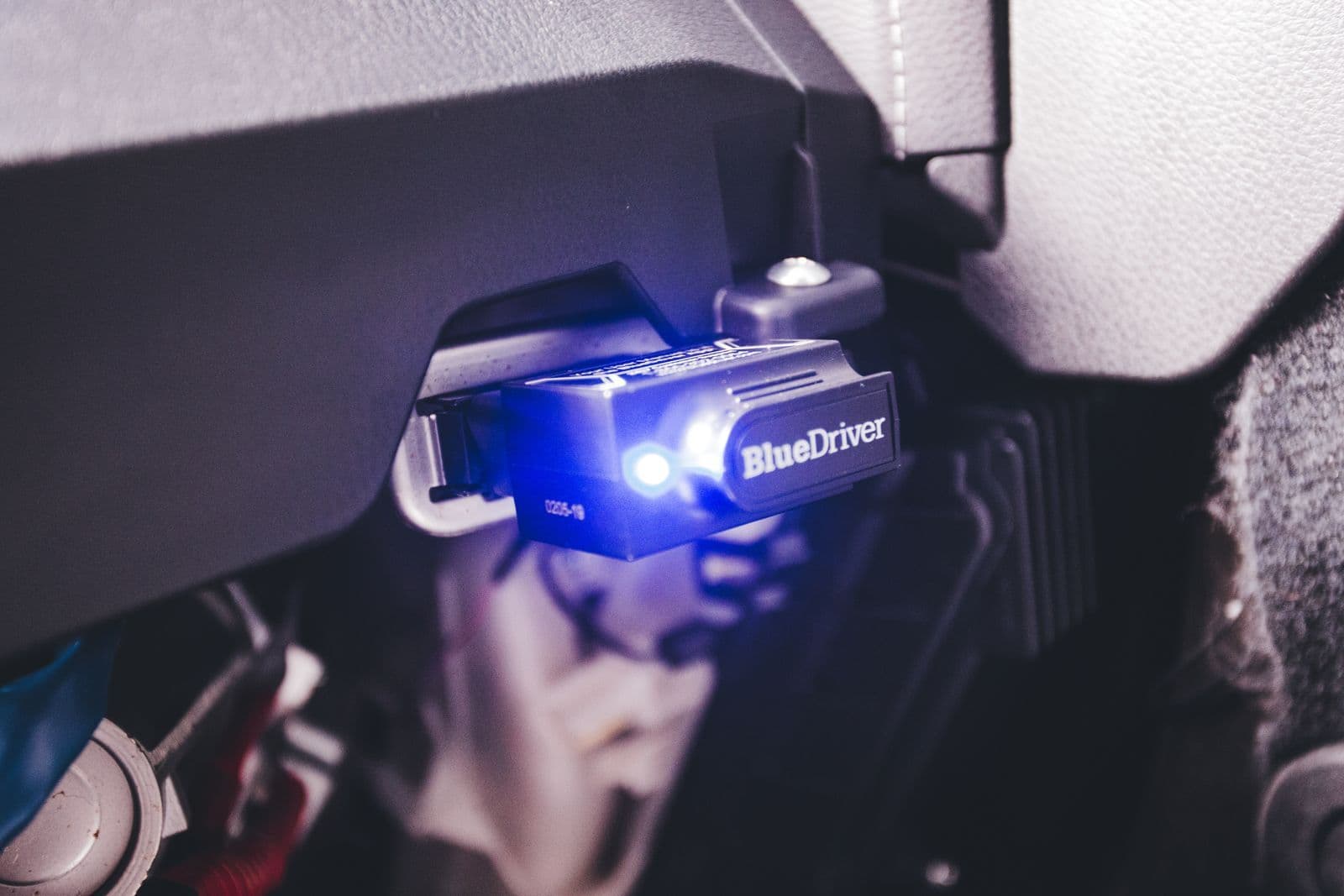
Scheme information includes diagnostic and reprogramming software but not diagnostic hardware (opens in a new tab). Where a manufacturer's software is written for its own vehicle communication interface, price-capped software is unusable without an uncapped physical device - and the ACCC records that certain data providers have claimed their software works only with proprietary hardware "which can cost in excess of $10,000" (opens in a new tab). That is a regulator-reported claim rather than a surveyed price, but it is the order of magnitude the review worked with. One Australian repairer told Treasury: "We are charged $45 every time we use the scan tool to diagnose a problem." (opens in a new tab)
The cost compounds by brand, not by job. Treasury estimated the marginal cost of adding service coverage for one of the top ten brands may exceed $7,000 for initial information access alone (opens in a new tab), before any required hardware or diagnostic software, and the AAAA reported 62 per cent of surveyed workshops identifying tool acquisition and subscription fees as cost prohibitive (opens in a new tab). A one-brand specialist amortises that across the cars it already sees. An all-makes workshop multiplies it by every badge that rolls in.
Security gateways are the newer version of the same shift. They are now standard in many modern vehicles, which Treasury attributes to manufacturers aligning vehicle design with the cybersecurity requirements of UNECE Regulation 155. Submissions to the review argued the gateways are increasing reliance on manufacturer-specific hardware, with one stakeholder expecting the share of ADAS recalibrations achievable with non-proprietary tools to fall significantly over time - though the FCAI disputed that framing, and Treasury made no finding on the point and declined to mandate that manufacturers supply hardware (opens in a new tab). Treasury also declined to mandate SAE J2534 compatibility, on the reasoning that the industry is moving to Diagnostics over Internet Protocol and a mandate would lock in a superseded interface. The ACCC's guidance states that a data provider must not price hardware so as to make scheme information unreasonably inaccessible (opens in a new tab), and Treasury's review records one public-facing enforcement outcome in three years (opens in a new tab), so what that requirement means in practice has not been tested in court.
Friction shows up in the day-to-day too. Among the 82 per cent of repairer respondents to Treasury's 2025 survey who reported problems accessing information (n=250, a self-selecting sample Treasury says may carry bias), the most-cited issues were information being incomplete or unavailable (66 per cent), difficulty navigating manufacturer portals (63 per cent), cost being too high (61 per cent) and delays (57 per cent) (opens in a new tab). Treasury's own reading is that the regulated price of scheme information "was not typically a key concern raised by stakeholders" (opens in a new tab), with the pressure coming instead from proprietary hardware and multiplied subscriptions.
In Treasury's 2025 repairer survey (n=250, self-selecting), 13 per cent of respondents said they frequently or very frequently send a customer's vehicle to a dealer because they cannot access the information (opens in a new tab), so a late-model job that starts at a generalist and finishes at a dealership can be diagnosed and paid for twice.
The biggest drag is an Australian rule, not a manufacturer
Rule 5 of the scheme Rules (opens in a new tab) defines "safety information" as information relating to a vehicle's hydrogen system, high voltage system, electric propulsion system, or any other system connected to them. Providers must separate it "to the extent reasonably practicable" and gate it behind completed training. Treasury records that the safety-information restriction has no counterpart in the overseas schemes its review examined (opens in a new tab).
The problem is mechanical. Submissions to the review record that manufacturers commonly publish one global portal and a single manual covering the petrol, hybrid and electric variants of a model (opens in a new tab). Where separation is judged not reasonably practicable, the gate falls across the whole package - and the ACCC records at least one repairer denied safety information for an internal combustion vehicle because the hybrid and ICE manuals for that model were combined (opens in a new tab), and data aggregators removing information from multi-brand products to achieve compliance. Of roughly 30,000 independent repairers, the ACCC puts about 7,000 to 8,000 as trained to work on EVs and about 800 as registered and vetted to access safety information (opens in a new tab).
The incident record the restriction rests on is small in absolute terms. EV FireSafe, funded by the Australian Department of Defence to research EV battery fires, has verified 511 electric vehicle battery fires globally between 2010 and 2024 (opens in a new tab). Treasury calls resolving the safety-information problem the single greatest opportunity to uplift productivity under the scheme (opens in a new tab), and the ACCC recommends removing the safety restriction while keeping the security one.
The strongest evidence against this reading
The primary record is not a story of failure, and it would be dishonest to write it as one. Treasury's Finding 1 is that the scheme is broadly realising its legislated objectives and has contributed to increased productivity and competition (opens in a new tab). The repair sector grew rather than shrank across the decade: business numbers rose about 20 per cent from 41,500 in 2014 to 50,000 in 2024, employment expanded by roughly 31,000 positions, and independent workshops still account for about 60 per cent of service and repair activity (opens in a new tab). The Productivity Commission's 2021 inquiry found no clear evidence of widespread market power in motor vehicle repair (opens in a new tab) on concentration, entry and exit, or margins.
Repairers using the scheme report a 40 per cent reduction in vehicles turned away, with the improvement larger among less technologically advanced workshops (opens in a new tab). Treasury's econometric work associates the scheme with a "6.7 per cent expansion in industry turnover, equivalent to $2.4 billion in 2024" (opens in a new tab), though Treasury cautions the scheme began as COVID-19 travel restrictions eased and that it could not identify which firms actually used it, so part of the effect may be pent-up demand. A separate model found no statistically significant effect on repair prices, but Treasury notes that test has low statistical power on 12 quarters of post-scheme data and "precludes any definitive conclusions" (opens in a new tab) about long-term price effects. That is not evidence the scheme failed to lower prices; it is evidence the question is still open.
Formal conflict is close to absent: one mediation request has been lodged since commencement (opens in a new tab), against 3,546 requests for assistance to the scheme adviser in 2023 to 2024. And the scale of uptake cannot honestly be called thin, because it cannot be measured - the ACCC states there is no reliable data on how many workshops operate in Australia, so "it is not clear what proportion of the independent repair sector has used the scheme" (opens in a new tab).
What has been enforced, and what is only proposed
Enforcement has been quiet. Honda Australia paid a penalty of $18,780 under ACCC infringement notice 2425/01 (opens in a new tab) for an alleged breach of section 57CA(3); the ACCC's register records the notice as paid on 12 September 2024, the ACCC announced it on 16 September 2024, and described it as the first ACCC enforcement action for an alleged contravention of the scheme. The allegation was that from 1 July 2022 to 6 May 2024 Honda offered its i-HDS diagnostic software only by yearly subscription, without the cheaper daily or monthly access the scheme generally requires. Payment of a penalty specified in an infringement notice is not an admission of a contravention, and only the Federal Court can find one.
Treasury's review records 17 referrals from the scheme adviser in the scheme's first three years with one public-facing outcome (opens in a new tab), and that no penalty has ever been imposed for breaching the supply timeframes. Part of the reason is structural: the main obligation and the fair market value cap are not infringement notice provisions (opens in a new tab), so the ACCC can only pursue them by litigating a complex economic question with no domestic or overseas precedent. Both the ACCC and Treasury recommend extending infringement notices to both.
The government accepted the review's direction on 6 February 2026 and committed to consult on mandated access to electronic logbooks, expanded access for tool makers and data aggregators, and improved access to higher-risk repair information (opens in a new tab). None of it is law. The Rules made on 25 October 2021 remain unamended (opens in a new tab), and no amending Bill to Part IVE had been introduced. If you are buying a car today on the strength of what the scheme might cover next year, you are buying a consultation paper.
The pattern is the one this series keeps finding. The margin that used to exist was generic: a manual, a multimeter and a pass-through cable got most of the way into most cars. That margin was traded for specification - a portal, a subscription, a vetted identity, a gateway that authenticates, a tool that talks one brand's language. The law rebuilt the cheapest of those pieces and left the expensive ones standing.