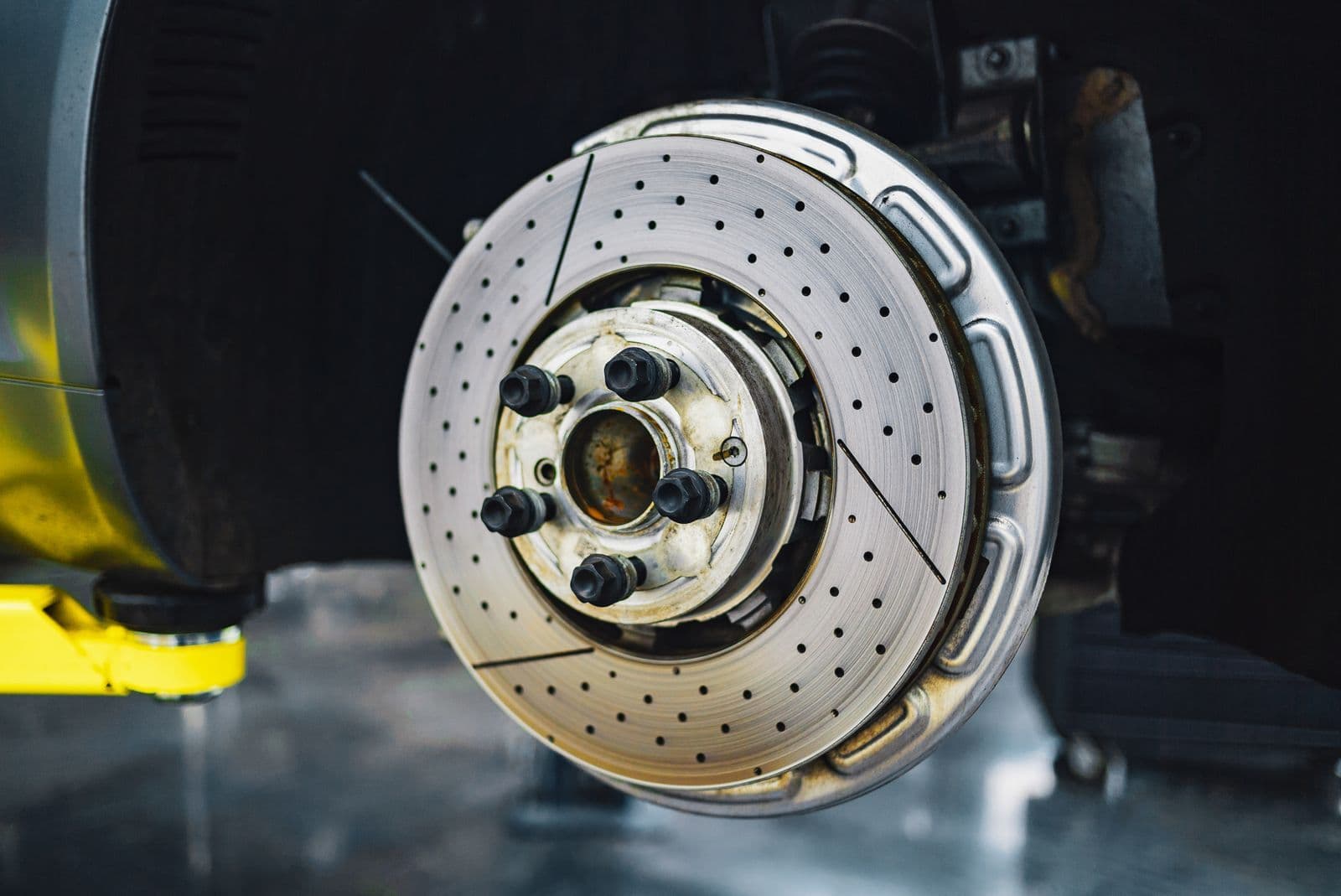
Most cars have three prices for the same part: the dealer's "genuine" box, the identical part from its original supplier under the supplier's own brand, and an independent aftermarket copy. The genuine option is usually the most expensive, the OEM-supplier version typically saves a useful margin, and quality aftermarket parts are commonly quoted at anywhere from somewhat less to around half the genuine price. The brand of car moves the gap more than the state you live in does.
Before you argue about price, ask which tier you are being quoted. The question is not really "is it genuine?" — it is "who made it, and is it fit for purpose?" The box a part arrives in can be worth hundreds of dollars.
The three words, sorted out
The vocabulary confuses people because "OEM" gets used for two different things. Sorted properly:
- Genuine parts come from the vehicle maker, in the maker's branded packaging, sold through its dealers. They carry the maker's warranty and the highest price tag.
- OEM-supplier parts are made by the same component company that supplied the factory line, sold under the supplier's own brand. The Australian Automotive Aftermarket Association describes this tier plainly: same part, same factory, different box. (AAAA Choice of Repairer (opens in a new tab))
- Independent aftermarket parts are made by other companies to fit and function the same way. Quality ranges from excellent — some designs improve on the original — to poor, and a small online subset is outright counterfeit.(RAC WA (opens in a new tab))
Reconditioned and used parts sit outside these three tiers entirely, and both can be sensible where nothing new exists — RAC notes reconditioned parts usually carry a warranty while used parts often do not.
The legal position in Australia is simpler than dealership folklore suggests. The ACCC's guidance, as summarised by the AAAA, turns on whether a part is fit and appropriate for the purpose, not on who made it: an interchangeable non-genuine part of equivalent quality fitted by a qualified workshop does not void a new-car warranty, and aftermarket parts carry the same consumer guarantees under Australian Consumer Law as boxed-genuine ones do.
Where the price gap comes from
Three costs ride on the genuine box:
- Brand overhead — the maker prices the part through its own distribution, packaging and dealer margin.
- Warranty backing and accountability — genuine parts are guaranteed by the vehicle maker itself, which is worth something on a late-model car with a complex electronics suite.
- Positioning — for prestige brands especially, parts pricing is set against the value of the car, not just the cost of making the part.
None of those change what the metal does once bolted on. That is why the supplier-branded tier exists at all, and why workshops lean on it: the same factory made both.
One caution cuts the other way. Counterfeit parts are marketed online directly to consumers and can be dangerous in use, so an implausibly cheap "genuine" listing from an overseas marketplace is not a bargain tier — it is a fourth category entirely, and the worst one.
What the gap looks like in dollars
Published comparisons converge on a consistent shape:
- Independent Australian workshop commentary puts quality aftermarket parts at anywhere up to about half the genuine price, with the spread varying by brand and part. (Prestige & Performance (opens in a new tab))
- For volume Toyotas, one parts retailer quotes typical aftermarket savings of 30–60% against genuine on service items and sensors, using oxygen sensors as its worked example. (AusAutoStore (opens in a new tab))
- On European cars the supplier-brand route is where the money hides: one Melbourne workshop recounts a Volkswagen alternator quoted near $1,200 genuine and just under $700 as the identical Bosch unit. (Australian Mechanic (opens in a new tab))
Treat all three as illustrations rather than quotes — prices move with model, year and supplier. The honest summary: on a common Japanese hatch the savings are real but modest in dollar terms; on German and luxury vehicles the gap between tiers routinely reaches into hundreds or thousands of dollars per repair.
And remember the other half of the invoice. Panel labour in Australia generally runs about $80–$180 an hour depending on location and specialisation, and recalibrating an ADAS camera or radar after a structural repair adds roughly $150–$500 per system. (National Cover (opens in a new tab)) A $400 saving on a headlight assembly matters less than choosing the right hour rate — which is where the state-by-state picture below comes in.
Brand by brand: from a Corolla to a Ferrari
Toyota, Mazda, Hyundai, Kia, Mitsubishi
Volume Asian brands have the deepest independent aftermarket in the country, so competition does the work: filters, pads, sensors and suspension components exist in every tier. Aftermarket savings on a HiLux or Corolla are commonly quoted in the 30–60% range for service parts. The genuine premium still earns its place early in the car's life — a dealer-fitted genuine part during warranty removes any argument — but on a ten-year-old Corolla the case for paying it part by part is thin.
Ford and the dual-cab utes
Ranger and HiLux-class utes carry commercial loads, so owners shop on durability rather than badge. The huge Australian ute aftermarket means suspension, braking and towing hardware come from strong local specialists, often engineered beyond stock for touring and towing use. Here "aftermarket" is not a compromise tier at all — for many components it is the upgrade path.
Volkswagen, Skoda and the mainstream Europeans
This is where understanding the supplier tier pays for the article. VW Group cars are built from Bosch electrics, Valeo and Hella lighting, Mahle filtration and similar household-name components. Buying those names in their own boxes is buying the OE part minus the showroom markup, and availability through independent parts interpreters is excellent. The alternator anecdote above is the pattern, not the exception.
BMW, Mercedes-Benz, Audi
German prestige shows the widest genuine-to-alternative spread in ordinary ownership. The same supplier families sit behind the three-pointed star and the roundel — Lemförder suspension joints, Sachs and Bilstein dampers, Brembo brake hardware, ZF transmissions, Mahle filters — and independent Euro-specialist workshops quote them daily. Genuine parts remain worth considering for anything tied to vehicle identity or electronics security, but a full suspension refresh done on supplier-brand parts commonly lands at a fraction of the dealer quote. This is also the segment where the "genuine only or the warranty dies" myth is pushed hardest, and where the ACL position above matters most.
Porsche
Modern Porsches behave like other prestige marques — expensive genuine, capable OE suppliers beneath — with two Porsche-specific twists. First, performance packaging means some parts are simply costly however they are boxed; American retail examples include carbon body panels listed around $29,000 and brake lining sets above $1,300. Second, Porsche Classic operates one of the most remarkable parts programmes in the industry: a portfolio the company counts at more than 80,000 genuine parts, including hand-manufactured body panels remade on original tooling for air-cooled 911s, and over 6,500 parts available exclusively for the 993 generation.(Porsche Classic (opens in a new tab); Project Gold, Porsche Newsroom (opens in a new tab)) For a classic 911 owner the genuine programme is not the expensive option — it is frequently the only option, and specialist retailers list classic LED headlamps at roughly €2,000 each.(Rose Passion (opens in a new tab))
Ferrari, Lamborghini, Bentley, Rolls-Royce
At the exotics the tiers collapse. Production volumes are too low for an independent aftermarket to amortise tooling, so body panels, lamps, interior trim and most electronics are genuine-only, priced against cars whose values start well past $300,000. What substitutes exist come from specialist suppliers, reconditioners and salvage — and provenance becomes part of the part: the marques themselves run certification and restoration programmes because originality is money. A non-genuine fastener in a documented Ferrari is not a saving; it is a deduction at sale time. Owners of these cars budget for parts the way they budget for fuel — as a running cost of the asset, not a shopping decision.
Does your state change anything?
The catalogue price of a part does not change at the border. A headlight costs the distributor the same in Perth as in Sydney. Four things do vary:
- Labour rates. Metro workshops in Sydney, Melbourne and Brisbane sit at the upper end of the national $80–$180 panel range; regional shops often charge less, though freight and parts waiting time can offset it.
- Insurer networks and parts policy. Preferred-repairer networks negotiate rates, and what parts may be fitted — genuine, supplier-brand or aftermarket — comes down to your policy wording. Check your product disclosure statement rather than assuming.
- Written-off vehicle checks. A repairable write-off must pass the state's written-off vehicle inspection before it can be re-registered, so parts choices on a repaired car can face scrutiny at the inspection, not just at purchase.
- Who regulates the transaction. Same national law, eight front doors.
Per state and territory, the consumer regulator you would deal with on a parts dispute:
- New South Wales — NSW Fair Trading. Sydney metro labour sits at the top of the national range.
- Victoria — Consumer Affairs Victoria. Melbourne labour likewise skews high; the state's large wrecking and parts-recycling sector makes used genuine parts unusually findable.
- Queensland — Office of Fair Trading. Regional and remote freight adds real time and cost to parts orders north of the south-east corner.
- Western Australia — Consumer Protection (Department of Energy, Mines, Industry Regulation and Safety). Distance pricing is the story: parts travel further, and regional workshops pass the wait on.
- South Australia — Consumer and Business Services. Adelaide rates sit below the eastern metros for most work.
- Tasmania — Consumer, Building and Occupational Services. Small market, thinner dealer coverage, more reliance on ordered-in parts.
- Australian Capital Territory — Access Canberra. Effectively Sydney-tier labour with Canberra overheads.
- Northern Territory — NT Consumer Affairs. The smallest parts market in the country; expect freight and lead times to dominate the decision.
The practical takeaway is the same everywhere: get itemised quotes showing the parts line separately from labour, ask which tier each part is, and compare like with like.
The global picture
Why does the identical part carry different price tags in different countries? Regulation and logistics, mostly.
- Europe. The EU's motor vehicle block exemption regulation deliberately prevents car makers from restricting parts suppliers from selling to independents or from putting their own branding on the components they supply, and separate rules guarantee independent repairers access to technical repair information.(EUR-Lex (opens in a new tab); European Commission (opens in a new tab)) That legal architecture is exactly why the supplier-brand tier is so mature for European marques — and why UK motor-factor chains discount OE-equivalent parts so aggressively.
- United States. The world's largest aftermarket benefits from enormous domestic volume, dense distribution and warranty law that protects the use of non-original parts. For many components the US shelf price embarrasses Australian pricing — though shipping, fitting and warranty differences narrow the real-world gap.
- Japan. Domestic-market Toyotas, Hondas and Nissans enjoy deep, cheap home-market parts supply, which is one reason imported Japanese vehicles hold their running costs down so well here.
- Australia. Every new vehicle sold here is imported, the aftermarket is a multibillion-dollar import-fed market drawing chiefly from China, the United States, Japan, Thailand, Germany and Korea, and parts with at least 51% US content enter tariff-free under the free trade agreement.(Trade.gov, Australia — Automotive Parts (opens in a new tab)) Two structural realities push prices up regardless: right-hand-drive variants mean unique lamps, panels and glass with smaller shared volumes, and freight onto an island adds cost at every tier. Grey-import models sit at the sharp end — fewer distributors, longer waits, thinner aftermarket support. If you own one, our guide to importing and exporting cars covers the supply chain you bought into.
How to pay the right price
- Ask for the quote line-itemised: part description, brand, tier, unit price, hours, rate.
- Ask directly: "Is there an OEM-supplier option for this part?" On European cars especially, that one question is routinely worth hundreds.
- Match warranties, not just prices — a reputable supplier-brand or aftermarket part carries its own warranty, and consumer guarantees apply to it exactly as to a genuine one.
- Be suspicious in both directions: a genuine part listed far below the dealer network price online may be counterfeit, and a quote that bundles parts and labour into one number is hiding which half is inflated.
- On insurance repairs, read your policy's parts wording before the accident, not after.
- Keep receipts. A folder of quality-part invoices is quiet evidence of care — and it follows the car.
What this means if you're selling on MotorLoop
Buyers read maintenance history the way insurers read claims files: consistency and paperwork beat promises. When you list your car free (opens in a new tab) on MotorLoop, upload the receipts alongside the logbook — a service history that shows named-brand parts and dated invoices answers the "how was it maintained?" question before it is asked, and it photographs well next to your listing. If you are weighing the sale itself, our comparison of the ways to sell walks through what private buyers actually check.