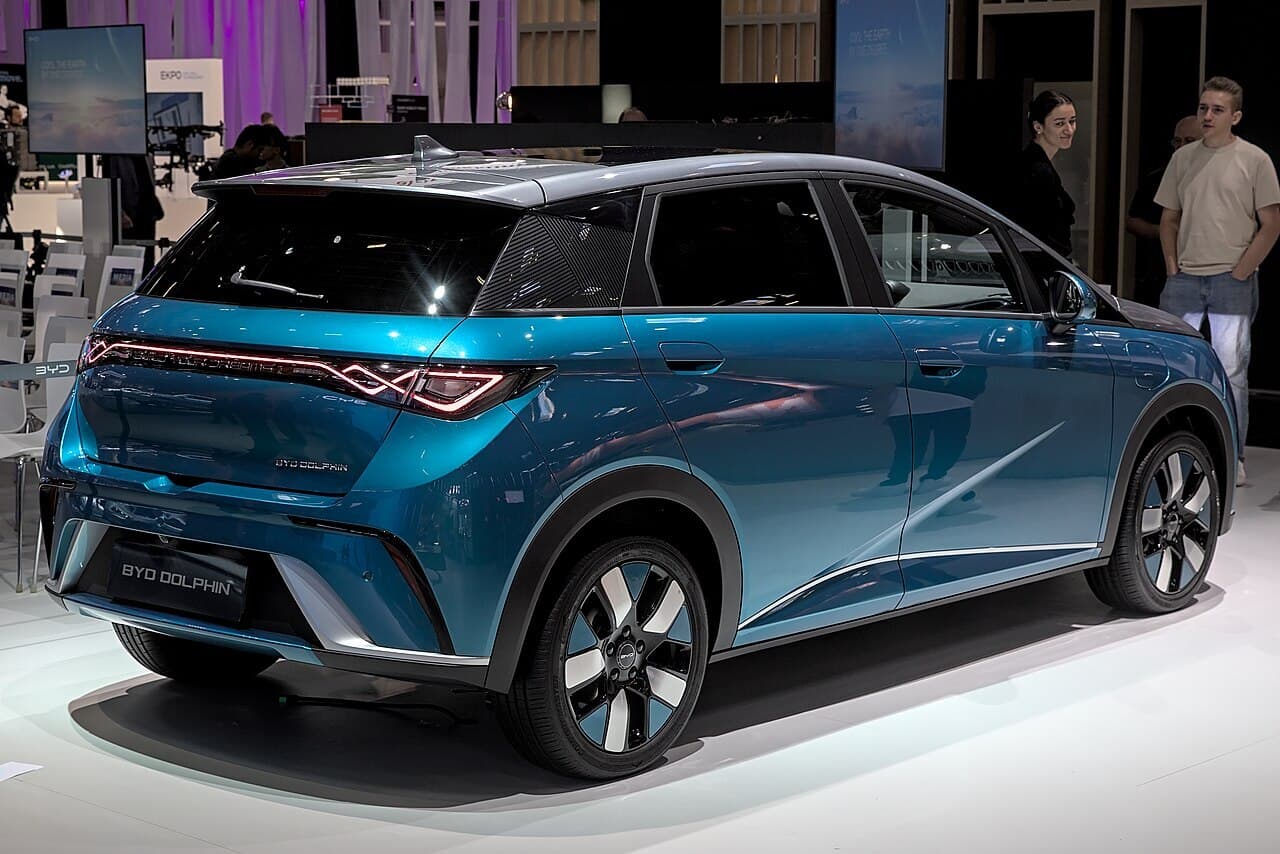
China's home car market is shrinking, its factories can build far more cars than its own buyers want, and the surplus is being shipped abroad at a record pace. In October 2026 Chinese passenger-car retail sales fell 27.1 per cent year on year while electrified exports rose 144.7 per cent (opens in a new tab), according to the China Passenger Car Association. That is, in our view, a big part of why a new BYD now costs $19,990 drive-away in Australia. We think the price is real, and so are the questions you should ask before you take it.
China's car market, October 2026
- Passenger car retail sales (CPCA)
- 1.643 million, down 27.1% year on year
- Electrified share of retail
- 67.5%, a record
- Electrified passenger car exports (CPCA)
- 582,000, up 144.7%
- Electrified exports, Jan to Oct (CAAM)
- 4.612 million, up 129%
- Estimated factory capacity vs home demand
- 55.5 million vs about 23 million a year
Australia: some of the cheapest new cars are now Chinese
Start at home. In October, BYD was Australia's second-biggest car brand with 10,025 sales, up 153.2 per cent (opens in a new tab), according to CarExpert's VFACTS analysis. MG (4,676), GWM (4,417), Geely (4,365) and Chery (4,317) were all in the top 10 as well. The same analysis lists China as the country of origin for 41,671 of the month's 107,493 new vehicles, including Tesla and Polestar. By our calculation that's close to four in ten.
The prices explain a lot. BYD cut its Atto 1 electric hatch to $19,990 drive-away in September (opens in a new tab), level with the petrol MG 3 as the cheapest new car on sale, and launched the Atto 2 plug-in hybrid from $24,990 before on-road costs. We have already looked at what this share of the market means for repairs a decade from now (opens in a new tab) and at how Geely cracked the top 10 (opens in a new tab). This piece is about the price itself: where it comes from, and whether it lasts.
China, done properly: too many factories, too few buyers
The root cause is capacity. Automotive World, reporting on Beijing's latest intervention, says Chinese factories can produce 55.5 million vehicles a year against domestic demand of about 23 million (opens in a new tab), leaving utilisation near 50 per cent. In our view a factory running at half speed still has to pay its workers and its loans, so carmakers discount to keep the lines moving.
The damage at home is measurable. The same report cites research by Li Yanwei of the China Automobile Dealers Association putting the industry's lost revenue at CN¥471 billion over 2023 to 2025, as average vehicle prices fell 11 per cent, from CN¥217,000 to CN¥194,000. Sector profits fell 18 per cent in the first quarter of 2026, and average margins thinned to 3.2 per cent.
Now demand is slipping too. The CPCA's October figures show electrified retail sales of 1.109 million, down 13.7 per cent, the tenth straight month of year-on-year decline (opens in a new tab). The association blamed tighter subsidy rules that "dampened first-time purchases among consumers without cars". The China Association of Automobile Manufacturers, which counts factory sales including exports, describes "strong supply and weak demand" (opens in a new tab) and low profitability, with domestic electrified sales down 10.3 per cent for the first ten months while exports more than doubled.
Beijing is trying to stop the discounting
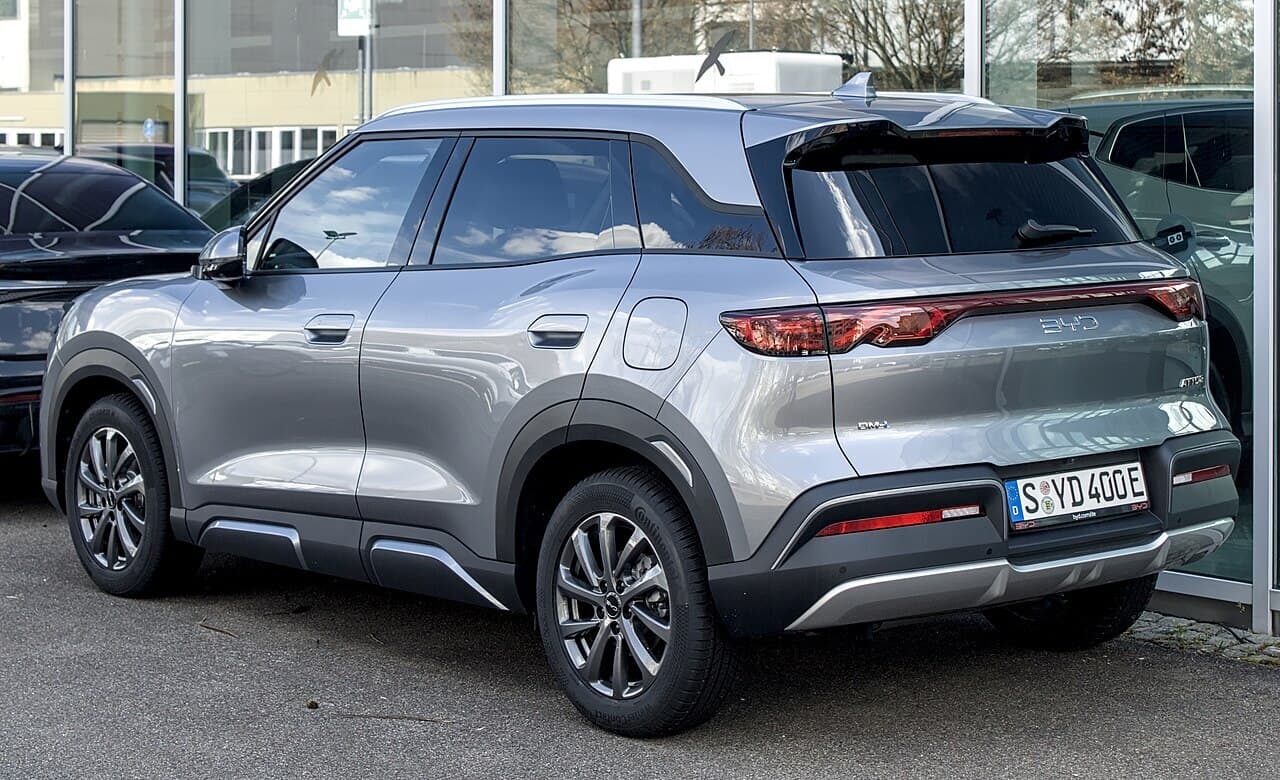
The Chinese government has noticed. In February 2026, explicit rules banning sales below the cost of production came in, and on 11 June the Ministry of Industry and Information Technology and the State Administration for Market Regulation jointly summoned automakers over suspected "irrational competition" (opens in a new tab), telling them to obey pricing law and rules against below-cost dumping. Automotive World counts at least five interventions since 2025, and notes the discounting continued each time.
In September, new guidelines turned to overseas markets, saying Chinese carmakers abroad "must not disrupt the order of market competition to obtain an improper competitive advantage" (opens in a new tab). BYD's Atto 1 cut in Australia landed the same month. BYD Australia's chief operating officer, Stephen Collins, told CarExpert: "We run finance campaigns like everybody does," and that it had "nothing to do with price wars or anything".
We take him at his word on intent. But in our view the pressure underneath is obvious from China's own figures. When a home market shrinks this fast and factories are half idle, the cars have to go somewhere, and Australia, an open market with no local carmaking industry of its own, is an obvious place to send them.
A car is cheap on the day you buy it. Whether it was good value is decided on the day you sell it.
The world view
Australia is one destination among many. The CAAM's monthly report shows electrified exports of 606,000 in October alone (opens in a new tab), up about 140 per cent, and 4.612 million for the first ten months. Those cars are being sold somewhere, and in our view every new market they land in becomes a new price fight, with local brands and used-car values caught in the middle.
What it means if you're buying or selling
Cheap is fine. We would rather Australians paid less for a car than more. But a low sticker price is the start of the sum, not the end of it. Before you buy:
- Ask about parts. How long does the importer stock body panels, lights and screens, and how long do they take to arrive? Our 2036 repair piece (opens in a new tab) has the full checklist.
- Ask about support. Who honours the warranty if the importer changes, and how many service centres are near you, not just in the capital city?
- Ask about resale. Steven Bragg of Pitcher Partners told CarExpert a discount "is a direct hit to your resale value" (opens in a new tab). If you buy at full price and the maker cuts it six months later, you wear that.
- Buy the deal, not the hope. Assume the price might fall again. If the car is good value at today's price on its own merits, fine. If it only makes sense because you expect it to hold its value, think again.
Selling a Japanese or Korean car? The pressure runs your way too. When a brand-new hatch costs $19,990 drive-away, a five-year-old small car at a similar price has a harder argument to make. Present it well, show the service history and price it against new as well as used.
You can buy, sell & show cars on MotorLoop, and it's free.
Our take
We think China's price war is good for Australian buyers on the day of purchase and a risk for some of them after that. On China's own industry data, the cars are cheap because there are too many factories, too few domestic buyers and a government that has warned against below-cost selling several times without stopping it.
That doesn't make a Chinese car a bad buy, and we are not saying it does. But a car is a ten-year relationship, not a one-day transaction. Ask who will fix it, who will stand behind it and what it will be worth when you're done. If the answers are good, enjoy the bargain. If nobody can answer them, the price was the only thing on offer.
Header photo: Alexander-93 (opens in a new tab) via Wikimedia Commons, CC BY-SA 4.0 (opens in a new tab).
Related
- China now builds more than a third of Australia's new cars. Who fixes them in 2036? (opens in a new tab)
- Geely in Australia: how the newcomer cracked the top 10 (opens in a new tab)
- When an EV maker disappears, how green is the car left behind? (opens in a new tab)
- Australia is short of mechanics. What it costs owners, and what Germany does differently (opens in a new tab)