Opinion · John Maya
Australian buyers should ask an uncomfortable question before choosing their next electric car: if the company disappears, who keeps the car working?
Our concern is bigger than a warranty. It is whether the parts, diagnostic tools and software needed to repair the vehicle will remain available after the business behind it has gone.
A car should have a useful life beyond its manufacturer's next funding round. We think that belongs in the environmental discussion just as much as what comes out of the exhaust.
More choice does not guarantee lasting support
The scale of the electric-car market is substantial. The IEA reports more than 20 million electric cars sold globally in 2025 (opens in a new tab), accounting for a quarter of new-car sales. Those figures include battery-electric cars and plug-in hybrids.
Those sales figures do not tell us which companies will survive, or how well their vehicles will be supported in ten years. We would not pretend to predict the next bankruptcy.
But the risk of an owner being left behind is already more than hypothetical.
Fisker shows what can disappear
Fisker and its affiliates filed for Chapter 11 bankruptcy protection in June 2024. In January 2025, the US National Highway Traffic Safety Administration closed an investigation into alleged unintended emergency braking in the Fisker Ocean after receiving insufficient information to fully evaluate the alleged defect. Its report recorded that the employees dealing with investigators had been dismissed. Closure was expressly not a finding that a safety defect did not exist. These details are documented in NHTSA investigation PE24013 (opens in a new tab).
That is a sobering example of what happens when the organisation behind a complicated vehicle falls apart.
The Fisker Owners Association's own timeline (opens in a new tab) describes diagnostic-tool access being shut off following bankruptcy, and the loss of cloud-dependent services in April 2025. It also records the other half of the story: independent parts suppliers, replacement keys, software work and a repair for a recurring centre-screen fault.
So it would be wrong to claim that bankruptcy made those cars universally useless overnight, or that nobody could repair them.
The defensible concern is more specific: support can disappear abruptly, leaving owners and independent specialists to rebuild arrangements that should have been dependable in the first place.
We admire that ingenuity. We do not think buyers should have to rely on it.
A car should have a useful life beyond its manufacturer's next funding round.
The spare part is only part of the repair
A replacement component is little comfort if the workshop cannot make it communicate with the car.
Australia's ACCC explicitly includes software updates used to connect replacement parts, and codes for computerised systems, in its explanation of the Motor Vehicle Information Scheme (opens in a new tab). Eligible independent repairers can purchase covered service and repair information; hobbyists do not receive the same access under the scheme.
This is not exclusively an EV problem. In September 2026, the ACCC reported that Mazda, Kia and BYD had improved access to repair information (opens in a new tab) following investigations into equipment costs and access arrangements.
Our concern is the combination: a vehicle-specific part, restricted diagnostic access and a manufacturer that no longer provides support. In that situation, mechanical skill alone may not be enough.
A right to obtain information is valuable. It should not be mistaken for a guarantee that a replacement component, functioning server or affordable repair will remain available indefinitely.
How environmentally friendly is premature retirement?
The environmental argument needs honesty.
The IEA's lifecycle analysis (opens in a new tab) finds that a medium-sized battery-electric car produces roughly half the emissions of an equivalent combustion car on a global-average basis. It includes production and use, rather than looking solely at the tailpipe. That evidence does not support a blanket claim that EVs are worse for the climate.
But we think those benefits make durability more important, not less.
If an otherwise serviceable car is retired because a proprietary module cannot be obtained or programmed, useful machinery has been lost. The environmental consequences would depend on how early it was retired, what replaced it and what could be recovered. We cannot put a universal carbon figure on that scenario.
We can ask why preventing it is not a stronger condition of selling the car.
Recycling matters, but it is not an excuse to design disposable ownership. The same IEA report (opens in a new tab) identifies a continuing need to expand battery collection and recycling. Keeping a safe vehicle useful should sit alongside that effort.
What we want manufacturers to promise
Our view is that long-term support should be a concrete product commitment:
- A stated period for parts and software support.
- Affordable diagnostic and programming access for independent repairers.
- Clear disclosure of which functions depend on external servers.
- A funded plan for support if the manufacturer or local distributor exits.
- Arrangements that let a successor maintain essential systems.
For buyers, we would ask for those answers in writing. Then ask an independent workshop whether it can actually diagnose and repair the model today.
We have already asked who will fix Australia's newer arrivals in 2036. The environmental question goes further: what happens to the car if the answer is nobody?
More choice is welcome. A vehicle that remains repairable after its maker disappears would be a much more convincing green promise.
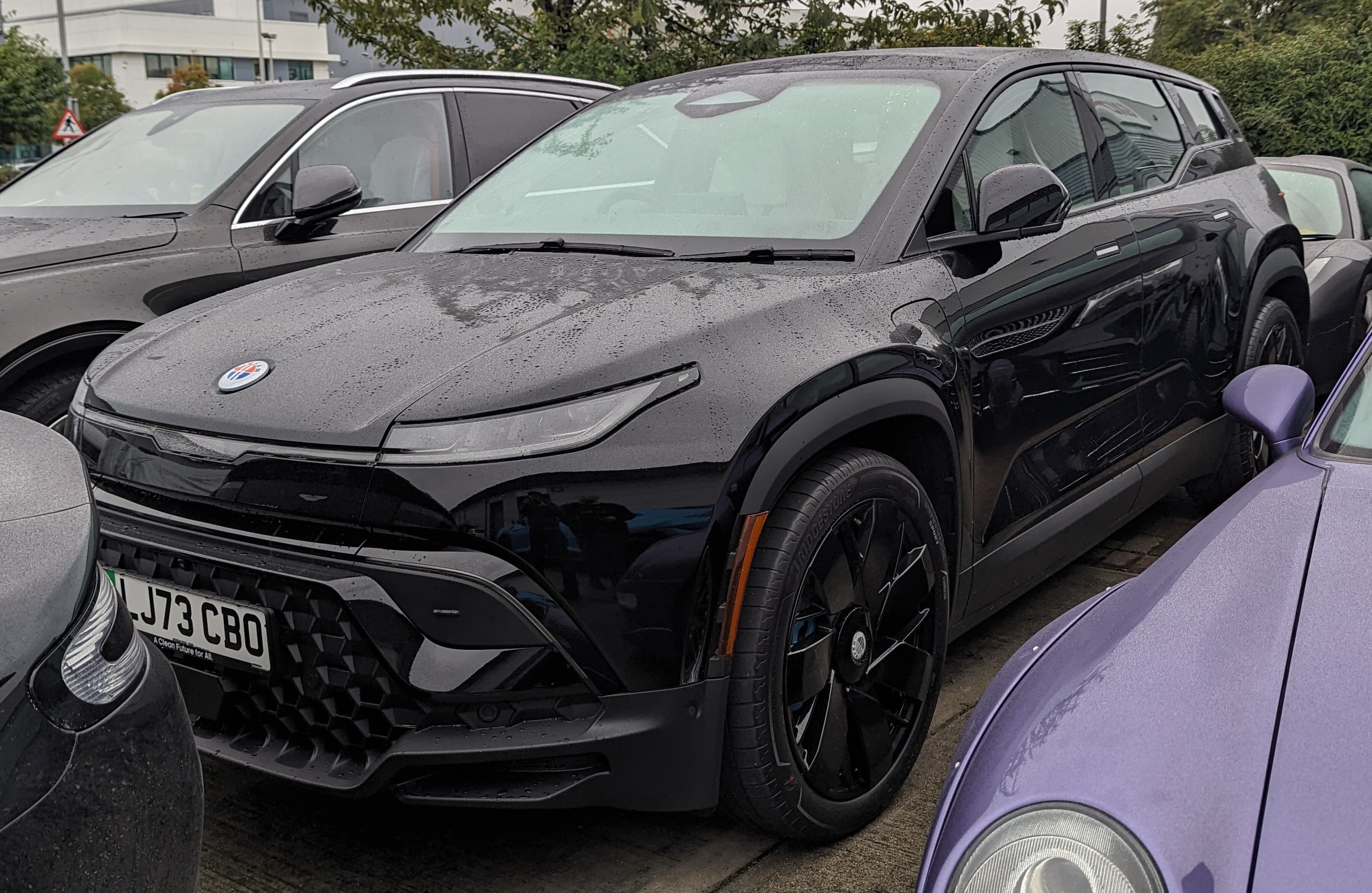
Header photograph: 2023 Fisker Ocean (opens in a new tab) by Calreyn88, via Wikimedia Commons, licensed CC BY-SA 4.0 (opens in a new tab). The photograph may be cropped for page and card layouts; the photograph and its crops remain under that licence. It illustrates the model, not a documented breakdown or abandoned vehicle.
FAQs
Will my EV stop working if its manufacturer goes bust?
Not automatically. Losing connected services is different from losing the ability to drive or charge. The Fisker Owners Association's timeline (opens in a new tab) records lost cloud services and diagnostic access, but also independent parts suppliers and repair solutions. Ask a specialist about your exact model's dependencies rather than assuming either complete failure or uninterrupted support.
In Australia, can I still claim against the dealer if the manufacturer closes?
For covered faults, claim against the selling business: its duties are separate from the manufacturer's warranty. The ACCC says sellers must address consumer-guarantee claims (opens in a new tab), not simply refer buyers elsewhere. Closure alone does not establish a refund entitlement. Claims solely about parts availability have a specific exception, discussed below. Seller insolvency is a separate difficulty.
Can I demand a refund for a faulty EV, even after its warranty expires?
Potentially. Consumer guarantees can outlast written warranties. A covered major failure generally gives a refund-or-replacement choice; minor faults normally allow repair first. Inability to use the car normally, without an easy fix within a reasonable time, can qualify as major. Check the ACCC tests (opens in a new tab), not just the warranty date.
Does Australian law guarantee spare parts for ten years?
There is no universal ten-year promise in the ACCC guidance. It describes a manufacturer or importer obligation to provide parts and repair facilities for a reasonable period, with an exception where limited availability was disclosed at purchase. For a claim specifically about those facilities or parts, the seller can direct you to the manufacturer. Read the ACCC's repairs and spare-parts guidance (opens in a new tab). Do not confuse that specific guarantee with a separate claim that the car itself is faulty.
What if the dealer or company responsible for my warranty is insolvent too?
Find the administrator through ASIC's published notices and ask how to lodge your claim. Check whether trading, warranty support or liabilities are being taken over; a buyer of the business does not necessarily accept its old liabilities. Consumers owed money are usually unsecured creditors and may recover little or nothing. The ACCC's insolvency guidance (opens in a new tab) explains these limits. A legal entitlement does not guarantee that funds or parts exist to fulfil it.
What if I paid a deposit and the car has not arrived?
Contact the administrator and ask your payment provider promptly whether a payment reversal is available. Chargeback eligibility and deadlines matter; it is not a guaranteed refund. If the business has stopped trading, ask how to register as a creditor. These are the steps identified in the ACCC's guidance for customers of insolvent businesses (opens in a new tab).
Do I have the same protection if I buy a used EV privately?
No. Most consumer guarantees do not apply to a genuine one-off private sale. Guarantees concerning title, undisturbed possession and hidden debts still apply, according to the ACCC's private-sale guidance (opens in a new tab). Before buying, we recommend checking whether any remaining warranty transfers, whether a workshop can support the car, and whether important services still operate. Do not assume dealer-sale protections apply to a private transaction.
Does Australia's right-to-repair scheme guarantee someone can fix my EV?
No. The Motor Vehicle Information Scheme (opens in a new tab) gives eligible repairers access to covered repair information, including relevant software and codes, at a fair market price. It does not give hobbyists the same access. Information access should not be treated as proof that a particular replacement part or affordable repair exists. Our suggestion is to ask a workshop to confirm its actual diagnostic and programming capability before authorising work or buying the car.
What evidence should I keep, and where can I get help in Australia?
Keep contracts, advertised promises, service records, fault reports and correspondence. Explain the fault and requested remedy to the seller in writing. Contact your state or territory consumer agency if unresolved; seek advice about tribunal options. The ACCC accepts reports but does not resolve individual disputes (opens in a new tab). Contact the administrator for insolvency claims.
What protection do EV buyers have in the UK?
For a purchase from a trader, statutory faulty-goods rights exist separately from a manufacturer's warranty. The UK government's guidance (opens in a new tab) explains repair, replacement and refund duties, including rights that can remain after a warranty expires. Its Consumer Rights Act overview (opens in a new tab) also directs buyers to Citizens Advice. Start with the contractual seller and get case-specific help: a manufacturer collapsing does not, by itself, determine whether that seller owes a remedy or can pay it.
How does the European Union protect buyers?
EU rules generally provide a minimum two-year legal guarantee against the seller for goods that are faulty or not as advertised, separate from a commercial warranty. Second-hand purchases from professional sellers are covered too, although some countries permit an agreed shorter period of at least one year. National rules can provide more protection. The EU's official guarantee guide (opens in a new tab) explains repair, replacement and, in qualifying circumstances, price reduction or refund. This is not a promise of lifetime support; check the country of purchase and the legal entity responsible.
What should an owner in the United States do?
Check the written warranty or service contract and identify who must perform it. The FTC warns that coverage and responsibility depend on the agreement (opens in a new tab), including situations where a dealer or contract administrator goes out of business. USAGov directs warranty complaints to the relevant state attorney general and vehicle safety complaints to NHTSA (opens in a new tab). NHTSA's Fisker investigation report (opens in a new tab) notes that bankruptcy does not erase federal recall duties. That duty is not proof that a particular repair is available or funded; seek state-specific advice and check the bankruptcy process where relevant.