Somewhere in Australia right now, a perfectly good eight-year-old hatchback is being traded in so its owner can drive home in a new 2.7-tonne electrified ute, feeling a warm glow about the planet. The planet, the bank balance and the neighbours may not see it the same way.
This is an opinion piece. Our argument is simple: for a lot of people, the lowest-emission, lowest-cost car is one that has already been built — and almost every gadget that makes a new car feel new can be added to an old one for a few hundred dollars.
The carbon was spent the day it was built
Every new car arrives with an emissions bill already paid: mining, smelting, stamping, painting, shipping. For an electric car the bill is bigger, because of the battery. The International Council on Clean Transportation (ICCT) estimates battery-electric production emissions run roughly 40% above a comparable petrol car, reported by The Fifth Estate (opens in a new tab).
How long it takes to pay that back depends heavily on who you ask and how dirty the grid is:
- The ICCT figure suggests the battery's extra emissions are offset after about 17,000 km — a year or two of driving.
- An analysis using Volvo's lifecycle data, reported by Pitcher Partners (opens in a new tab), puts the break-even on Australia's grid mix at about 146,000 km, dropping to about 49,000 km on renewable charging.
- A University of Wollongong and University of Auckland study found EVs still came out ahead in both countries, but that the size of the benefit depends on the grid — and Australia's is still largely coal (The Illawarra Flame (opens in a new tab)).
Here is the part the brochure skips. Those comparisons are new EV versus new petrol car. A used car that already exists has no new manufacturing bill at all. Keeping it on the road for longer, and driving it less, is a climate choice too — just not one with a launch event.
If you drive a lot, charge from rooftop solar and keep cars for a decade, a modest EV can make strong sense. Our point is narrower: buying the biggest, newest thing on the forecourt is not automatically the green option, and size matters. A heavier vehicle takes more material and more energy to move, whatever powers it.
The money: depreciation is the biggest running cost nobody budgets for
New cars lose a large share of their value in the first few years. On a cheap car that's annoying; on a $60,000-plus vehicle it is the largest cost of ownership for many buyers.
For scale, CarExpert lists the BYD Shark 6 plug-in hybrid ute from $62,900 before on-road costs in 2026, with a kerb weight of around 2.7 tonnes (CarExpert (opens in a new tab)). It's a capable vehicle. It's also a lot of money, and a lot of metal, for the school run.
An illustrative comparison (not a quote)
- New electrified ute
- ~$63,000 + on-roads
- Tidy used hatch or small SUV
- ~$15,000
- Retrofit features (below)
- ~$1,500–$2,500
- Left in your pocket up front
- ~$45,000
Those are round numbers to show the shape of the decision, not prices for any particular car — check real listings and real quotes. But even if you put the difference in an offset account instead of financing it, the gap compounds over years. That's before insurance, which generally scales with the value of what you're insuring.
The features you actually miss — and what they cost to add
Most of what makes a new car feel new is screen, camera and convenience tech. Nearly all of it bolts on.
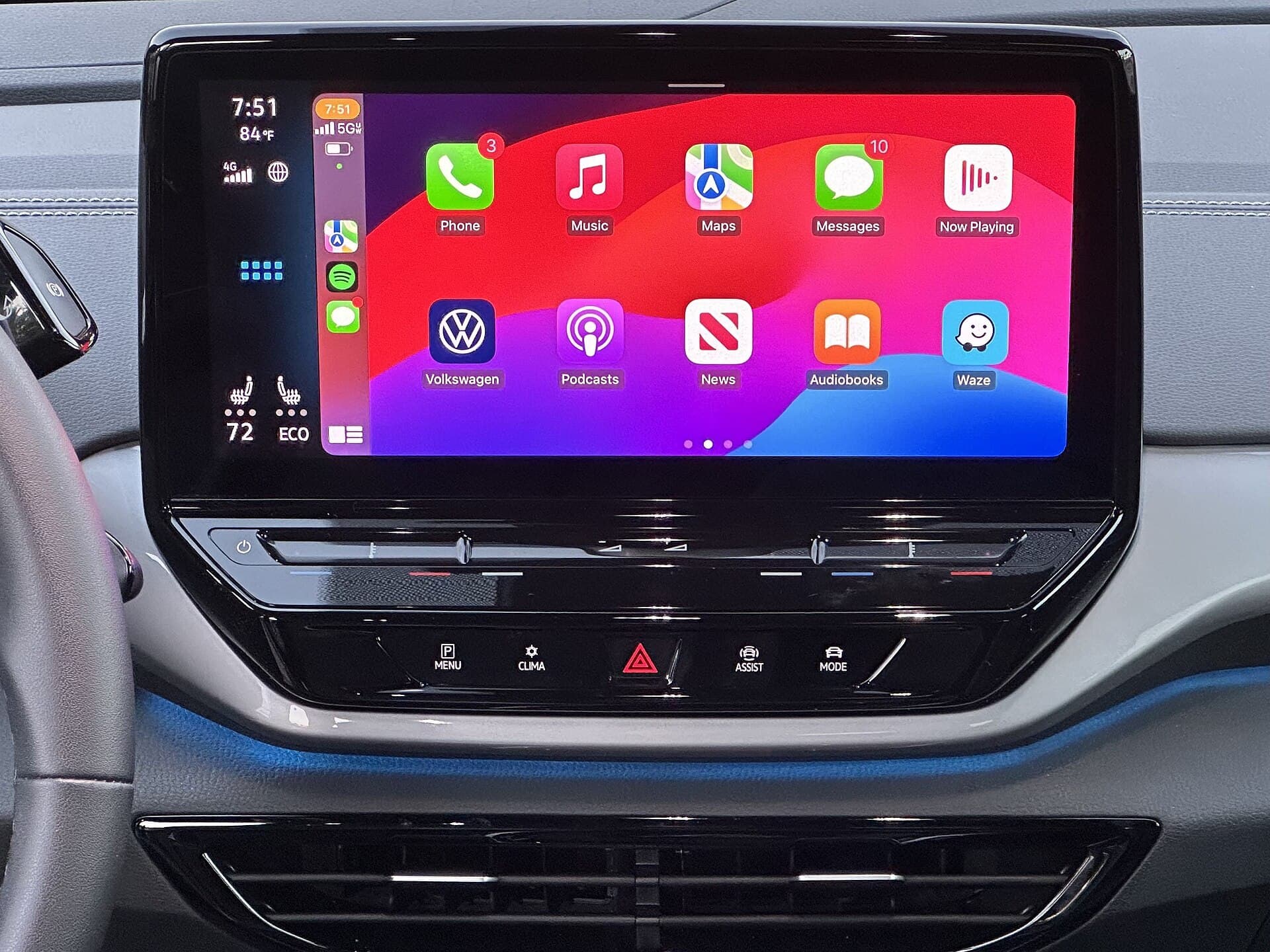
- Apple CarPlay / Android Auto. A double-DIN head unit fitted by a car-audio shop typically runs from a few hundred dollars to around $1,000, depending on the car's wiring harness and steering-wheel controls. One owner on the Toyota Owners Club Australia forum was quoted about $720 fitted for a Sony unit (forum post (opens in a new tab)). Portable dash-mounted CarPlay screens cost less and need no installation (Tynan (opens in a new tab)).
- Reversing camera. Often bundled with a new head unit, or fitted alongside one.
- Parking sensors. Aftermarket kits are inexpensive; professional fitting keeps them neat and aligned.
- Dashcam. Front, or front and rear. Useful evidence if something goes wrong.
- Tyre pressure monitoring. Valve-cap or internal sensor kits feeding a small display.
- Wireless phone charging, USB-C ports, keyless entry. Small, cheap and very noticeable every day.
- Blind-spot warning. Aftermarket radar kits exist; quality varies, so have them fitted by someone who will stand behind the job.
Ask for a written quote that names every part — the dash kit, harness, steering-wheel control interface and camera integration — so the price doesn't grow once the dash is apart.
Some popular upgrades aren't road-legal in every state. Plug-in LED bulbs fitted into headlights designed for halogen bulbs are a common example. Before you modify lights, suspension, wheels or tint, check your state road authority's rules — an illegal modification can fail an inspection and can give an insurer grounds to refuse a claim. Tell your insurer about any modification.
What you can't bolt on — so don't buy too old
Here is the honest limit of this argument. Structural safety — airbags, crash structures, electronic stability control and autonomous emergency braking — can't realistically be retrofitted. A screen won't make an old car safer in a crash.
So the sweet spot is a car new enough to have the safety basics built in, and old enough that someone else has paid for the steepest depreciation. Look up the model's crash rating on ANCAP (opens in a new tab) or howsafeisyourcar.com.au (opens in a new tab), check the year it was tested, and get a pre-purchase inspection.
But what about the friends?
A new car will get you a few compliments in the work car park. So will a ten-year-old hatch with wireless CarPlay, a dashcam and $45,000 still in the bank. Only one of those will buy a round of drinks.
The short version
- The greenest kilometre is often the one driven in a car that already exists.
- Bigger and newer isn't automatically cleaner — it depends on the grid, the distance and the weight.
- A few hundred to a couple of thousand dollars buys most of the tech that makes new cars feel new.
- Safety systems can't be added later, so buy new enough to have them.
Related reading
- Electric cars aren't as green as the brochure says
The carbon spent building the battery, the coal behind the plug, the cobalt mines and the batteries nobody recycles. What the electric car brochure leaves out.
- The Grid Problem Isn't National. It's Your Street.
My argument: the EV rollout is running ahead of the wires in the ground. The national average hides the street-level problem — and Australia skipped the efficiency step entirely.
- EV battery health: how it affects range and price, and how to test it
What EV battery health means for driving range and a used electric car's price — the maths, the tests available in Australia, and what to ask for.
FAQs
Is a used petrol car really better for the environment than a new EV?
It depends on how far you drive, how long you keep the car and how your electricity is generated. Studies disagree on how long a new EV takes to pay back its manufacturing emissions on Australia's grid, with estimates ranging from roughly 17,000 km to around 146,000 km. Keeping an existing car on the road avoids building a new one at all, which is why it can be competitive for people who drive modest distances.
How much does it cost to add Apple CarPlay to an older car?
A fitted aftermarket head unit commonly costs from a few hundred dollars to around $1,000, depending on the car's wiring harness, dash kit and whether you keep steering-wheel controls. Portable dash-mounted CarPlay screens are cheaper and need no installation. Get a written quote that lists every part.
Which features can't be added to an older car?
Airbags, crash structures, electronic stability control and autonomous emergency braking can't realistically be retrofitted. Check the car's safety rating with ANCAP before buying, and don't let a long list of add-on gadgets distract from crash protection.
Do I need to tell my insurer about aftermarket accessories?
Yes — tell your insurer about any modification or accessory. Undisclosed modifications can affect a claim, and some modifications are not road-legal in every state, so check your state road authority's rules first.