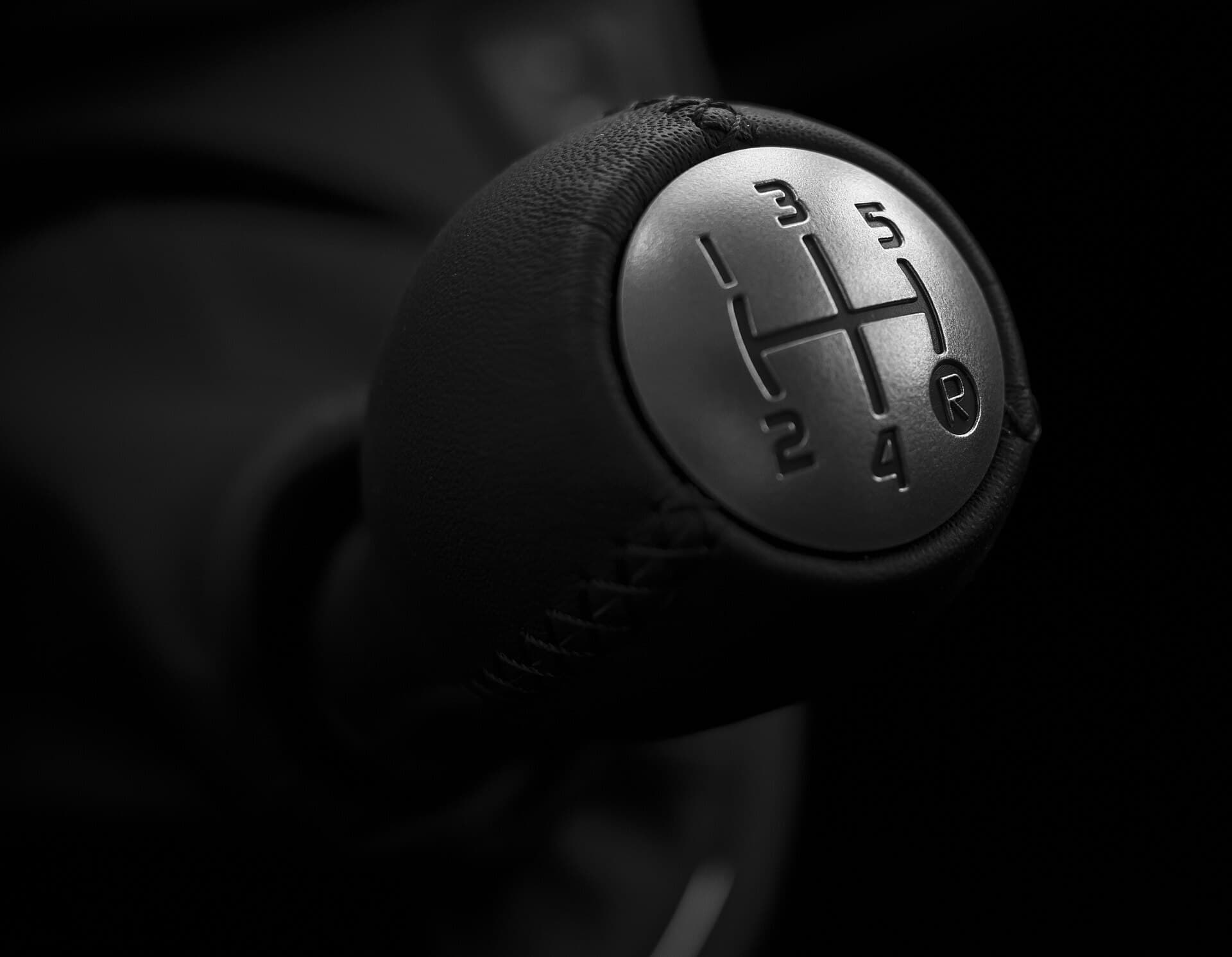
Australians have quietly stopped buying manual cars. By the latest detailed count we could find, three pedals were in fewer than one in twenty new vehicles sold here, and in passenger cars and SUVs the share was under two per cent. Mainstream brands have dropped the option model by model, and most new drivers now sit their test in an automatic.
At the same time, the cars enthusiasts actually save up for are going the other way. Porsche sells a 911 here that comes only with a six-speed manual. Toyota added a manual to the GR Supra after launch. In the United States, where the manual is close to extinct in the mainstream, around half or more of the buyers of some sports cars still choose the stick.
That split matters if you're buying or selling. The manual is turning from the cheap option into the enthusiast's option, and the used market is where most Australians will find one from here on.
At a glance
- Manual share, all new vehicles (2022)
- About 4.7%, per data reported by Drive
- Manual share, passenger cars and SUVs (2022)
- Under 1.8%
- Victorian driving tests in a manual
- About 7% over 12 months to October 2023
- US manual share of production
- Below 1% since model year 2021, per EPA data
- US 911 manual take rate (MY2025)
- 83% where offered, per Porsche via Motor1
The numbers: how far the manual has fallen
The most detailed recent breakdown we could find comes from 2022 sales data. According to Drive (opens in a new tab), manuals made up less than 1.8 per cent of new passenger cars and SUVs sold that year, or 4.7 per cent once utes and vans were included. The same report put manuals at 13.5 per cent of new light commercials, 3.9 per cent of passenger cars and just 1.1 per cent of SUVs. The one bright spot was the under-$80,000 sports car segment, where 31.8 per cent of buyers took a manual.
Drive also reported that in 2022, for the first time, electric passenger cars and SUVs outsold manual ones (opens in a new tab): 33,357 to 14,287. GoAuto, reporting Mini's decision to stop selling manuals here in early 2023, said automatics were favoured by 95 per cent of new-vehicle buyers (opens in a new tab) and closer to 99 per cent of SUV buyers. Manuals were only 6.1 per cent of Mini's own Australian sales the year before.
We could not find a 2024 or 2025 manual-share figure published by the FCAI or in VFACTS releases we could open, so we have not quoted one. If the trend since 2022 has held, the current number will be lower, not higher, but that is our inference rather than a measurement.
The decline starts before the showroom. According to VicRoads figures reported by The Courier (opens in a new tab) in October 2023, 14,659 of 215,973 Victorian driving tests over the previous 12 months were done in a manual, about 7 per cent. In New South Wales, the Bendigo Advertiser reported (opens in a new tab) that the manual share of tests fell from 19.9 per cent in 2014 to 11.1 per cent in 2022.
What you can still buy new with a manual
The list is shorter every year, and it's now mostly sports cars, hot hatches, a few small cars and work vehicles. Lifestyle site Man of Many's January 2026 roundup (opens in a new tab) of sports cars still sold new here with a manual includes:
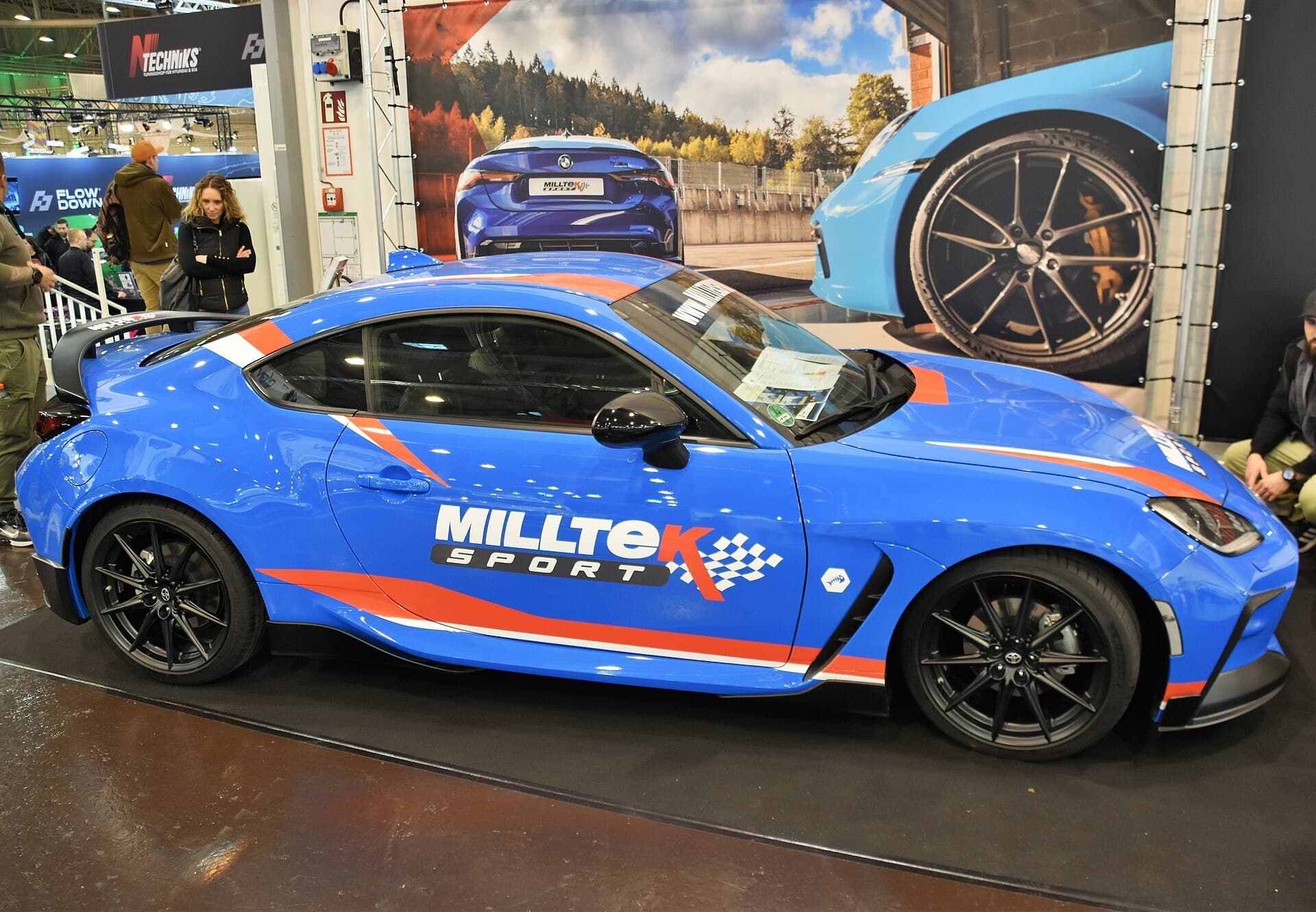
- Toyota GR86 and Subaru BRZ, twins from $43,240 and $43,790 before on-roads.
- Toyota GR Yaris and GR Corolla, from $55,490 and $67,990.
- Mazda MX-5, from $38,280. Mazda Australia's own MX-5 page (opens in a new tab) describes its "swift, light and superb six-speed manual".
- Ford Mustang, which the roundup calls the only manual V8 on sale and the top-selling sports car of 2025, with 4,052 sales.
- Hyundai i30 N and i20 N. Hyundai Australia's i30 N page (opens in a new tab) separates its "DCT variants" from the rest of the range, and the i20 N is manual only.
- Honda Civic Type R, which is sold only as a manual.
- Nissan Z, Subaru WRX, the BMW M2, M3 and M4, and the Lotus Emira.
- Porsche 911 Carrera T and 911 GT3.
Below the sports cars, CarExpert's list of the cheapest new manuals (opens in a new tab) from November 2024 included the Kia Picanto, Suzuki Ignis, Swift Hybrid and Jimny, Mitsubishi ASX, Mazda 2, Hyundai Venue, Suzuki Vitara and Swift Sport, and a manual Toyota HiLux. Ranges change often, so treat both lists as a starting point and confirm a specific model and grade with the brand or a dealer.
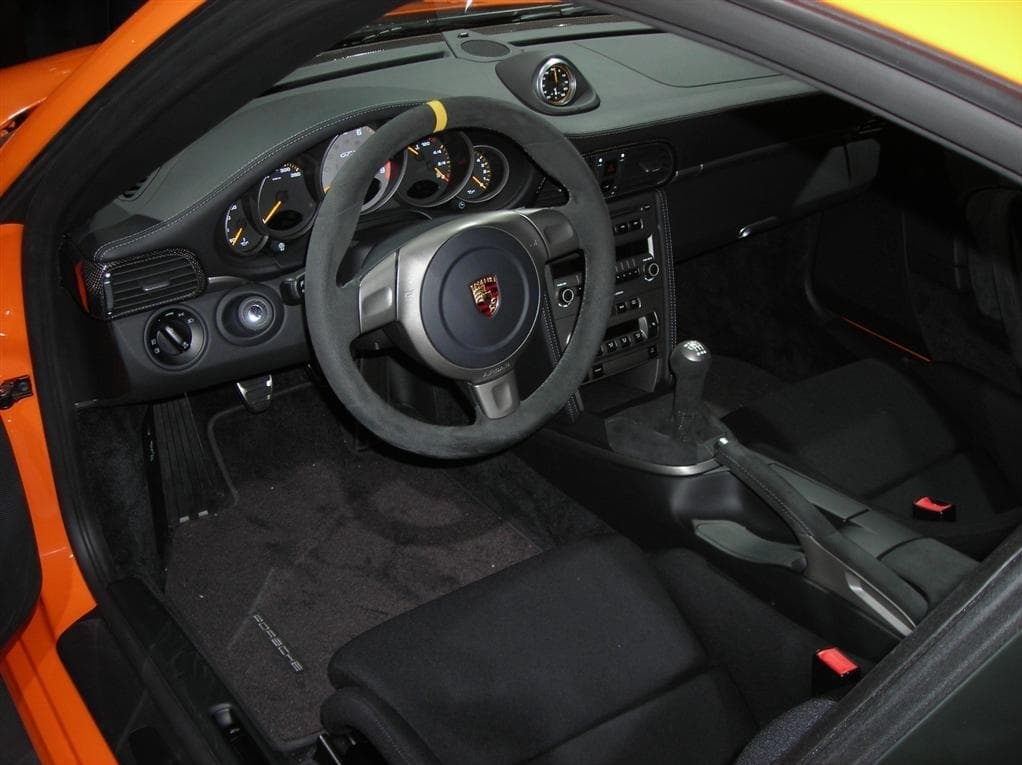
The Porsche is the telling one. The 992.2-generation 911 Carrera T arrived with a six-speed manual as its only gearbox (opens in a new tab), at $306,800 before on-roads for the coupe, according to CarExpert. The PDK automatic is not offered on it at all. With the petrol 718 Boxster and Cayman now out of production, as we covered in our piece on the next electric 718 (opens in a new tab), the Carrera T is the entry point to a new manual Porsche.
Toyota made the same bet from the other direction. In April 2022, Toyota Australia confirmed (opens in a new tab) a GR Supra with "a newly developed manual transmission", pitched at purists who had asked for one in a car first sold as an automatic.
Why the manual is going
Buyers stopped asking for it. When manufacturers explain dropping a manual, they usually point at demand. In 2023, 4X4 Australia's Fraser Stronach wrote that Ford cited a lack of buyer demand (opens in a new tab) for leaving the manual out of the new Ranger in Australia, though one is sold elsewhere, and that Toyota gave the same reason for dropping it from the Prado. Mini blamed changing tastes, stock shortages and manufacturing hold-ups, according to GoAuto.
Fewer people can drive one. In Victoria, a probationary driver who passes their test in an automatic is restricted to automatics while on their Ps (opens in a new tab), according to VicRoads, and must pass a test in a manual to lift that condition early. In NSW, a P1 driver who passes in an automatic is limited to automatics until they move to a P2 or unrestricted licence, unless they pass a manual test, according to the Bendigo Advertiser (opens in a new tab). NSW's own licence conditions page (opens in a new tab) defines the "A" condition as driving only a vehicle with an automatic transmission. Rules differ between states, so check yours. A generation that learnt in automatics is not going to ask for three pedals at the dealership.
Electrified cars don't need one. Battery-electric cars drive through a fixed reduction gear rather than a gearbox you shift, and most hybrids use their own automatic arrangements. As more of the new-car mix electrifies, there are simply fewer cars that could take a clutch pedal.
Emissions rules raise the stakes. Australia's New Vehicle Efficiency Standard (opens in a new tab) commenced on 1 January 2025 and sets each manufacturer an average CO2 target for the new cars it supplies, lowering over time. We found no manufacturer saying the NVES made it drop a manual, and we won't claim it did. Our analysis is narrower: when every model has to earn its place against a falling fleet target, a low-volume variant that needs its own testing and certification is an easy one to cut.
Automatics got good. Even Porsche's GT boss Andreas Preuninger, a manual fan, accepts the PDK is the quicker gearbox on track, according to Motor1 (opens in a new tab). Interestingly, he also argued the manual car uses less fuel and produces fewer emissions than the PDK. We'd treat that as one engineer's view about Porsche's own cars, not a general rule.
Why enthusiasts are paying for it
Here the story flips. In sports cars, the manual has become a reason to buy, and in some cases a reason to pay more.
Porsche is the clearest sign. Preuninger told Motor1 it was "always super important to have a manual" and that he expects at least one manual 911 to continue. The same report said 46 per cent of US 911 GT3 buyers and 75 per cent of GT3 Touring buyers chose the manual. That's with the faster gearbox sitting right there on the options list.
Collector values tell a similar story at the top end. Hagerty's analysis of manual premiums among modern exotics (opens in a new tab) found its price guide assigning a 120 per cent premium to a three-pedal Ferrari 612 and 50 per cent to a manual Lamborghini Gallardo, and described a manual Ferrari 599 GTB selling for US$880,000 at auction while an automatic sold for US$192,500. Those are rare cars where manuals were built in tiny numbers, so they don't tell you what a manual Corolla is worth. They do tell you which way the market leans when a manual becomes scarce.
Our view: the journey, not the lap time
This is opinion, and it's the house view. Some people want to get from A to B, and an automatic does that brilliantly. Others enjoy the journey from A to B, and for them the manual is the most direct link between driver and machine that's still on sale. Your left foot and your hand decide when the engine speaks. A clean heel-and-toe downshift into a corner is a small skill, practised and earned, and nobody can do it for you.
We've argued before that the faster car isn't the one you remember (opens in a new tab), and that synthetic gearshifts in fast EVs concede the drama of real machinery was worth something. A manual needs no simulation. Ferrari's new manual that is really a computer you shift (opens in a new tab) makes the same point from the expensive end: buyers want the ritual badly enough that a maker will fake it.
The fair counterpoint
We don't want to romanticise it. In stop-start traffic, a clutch is work, and for drivers with a sore knee or hip it can be a genuine barrier. Many people find an automatic simply easier, and less effort behind the wheel can mean more attention on the road, which is our reasoning rather than a study we can point to. On track, a modern dual-clutch is quicker, as Porsche's own GT boss concedes. If your weekly drive is the M1 at 8am, an automatic is the sensible choice and there's nothing to apologise for.
The international view: the United States
America is where the manual has gone furthest in both directions at once, which makes it the best preview of where Australia is heading.
In the mainstream, the manual is nearly gone. Reporting on the US Environmental Protection Agency's 2024 Automotive Trends Report, The Autopian (opens in a new tab) quoted the EPA finding that manual transmissions "sank below 1% of total production in model year 2021, and have remained there ever since". In 1980, just under 35 per cent of new US vehicles had one. A J.D. Power figure reported at the time put 2023 manual sales at 1.7 per cent, but that was a partial-year number, and the EPA's production data is the more complete series.
In enthusiast cars, the opposite. Motor1 asks carmakers each year what share of buyers choose the manual. For the 2023 model year (opens in a new tab) it reported about 48 per cent for the GR86, 43 per cent for the GR Supra, about 60 per cent for the MX-5, 79 per cent for the BRZ and about 40 per cent for Porsche's 718 and 911 where a manual was offered. A January 2026 summary of Motor1's 2025 figures (opens in a new tab) by Automotive Addicts listed 52 per cent for the GR86, 56 per cent for the GR Supra, 71 per cent for the GR Corolla, about 70 per cent for the MX-5, 90 per cent for the BRZ and 83 per cent for the 911 where available.
- <1%
- US manual share of production since MY2021 (EPA)
- 83%
- US 911 buyers choosing a manual where offered (MY2025)
- 90%
- US Subaru BRZ manual take rate (MY2025)
Put those two sets of numbers together and the US market looks like this: the manual has vanished from family cars and SUVs and survives as a deliberate choice in sports cars, where it is often the majority choice. Carmakers have noticed. Toyota added a manual Supra after launch, and the take rates above suggest it read the market correctly.
What Australia can learn
First, the American data shows the manual doesn't need a mass market to survive. It needs a small, loyal one in the right cars. Australia's 2022 figure of 31.8 per cent manual take-up in sports cars under $80,000 says we have that buyer too.
Second, it shows choice matters. When a sports car is offered both ways, a large share of American buyers pick the stick. Our view is that local distributors should keep offering the manual on enthusiast models even when the national manual share is tiny, because the overall share is the wrong number to judge it by.
Third, licensing is a quiet threat that the US doesn't have in the same form. If most young Australians hold, or start with, an automatic-only condition, the next generation of enthusiasts has a hurdle before they ever sit in a GR86. We think driving schools and car clubs could do more to keep manual lessons affordable and visible.
What it means if you're buying or selling
If you're buying a used manual, the transmission deserves its own inspection. Parts retailer Superspares lists the classic signs of a worn clutch (opens in a new tab) as slipping under acceleration, difficulty changing gears, a burning smell, and a pedal that engages higher than usual. On a test drive, try a gentle third-gear pull from low revs: if the revs rise and the car doesn't, the clutch is slipping. Listen for grinding going into second and third, which can point to tired synchromesh, and for rattles at idle that change when you press the clutch, which can point to the flywheel.
Budget for a clutch. Superspares puts a full clutch replacement in Australia at roughly $800 to $2,000 or more, with parts usually $200 to $800, labour around $100 to $180 an hour and most jobs taking four to eight hours. It notes that a flywheel can add significantly to the bill. Some performance and diesel manuals use a dual-mass flywheel, a two-piece flywheel that damps vibration, so ask for an itemised quote that says whether the flywheel is included and what type it is.
Check service history and modifications. A record of gearbox oil changes is a good sign on a car that has seen track days. Be wary of aggressive aftermarket clutches on a road car unless you know what you're getting, and check that the car's history matches how it has been used.
Check your own licence. If you or a young driver in the family is on an automatic-only condition, buying a manual is not a plan until that condition is lifted. Check your state transport authority's rules before you buy.
If you're selling a manual sports car, say so clearly in the headline of your ad, and lead with the gearbox and clutch history. The buyers looking for your car are filtering for "manual", and clutch condition is the obvious first question. We have no Australian valuation data showing what premium, if any, a manual adds on a mainstream model, so price against comparable manual listings, not against automatics. On MotorLoop you can buy, sell & show cars, and it's free.
If you've only ever driven automatics and want to try a manual, a few lessons with a driving school that still has a manual car, or a friend with a full licence and an empty car park, is the cheapest way in. If you hold an automatic-only P licence, check your state's rules before getting behind the wheel of one.
Our take
We think the manual gearbox is not dying so much as moving house. It's leaving the family car, where it was only ever there because it was cheaper, and settling in the sports car, where it's there because people want it. That's a smaller home, but a happier one.
It fits the wider view we hold here: simple, involving machinery that the owner controls is worth keeping. A manual is mechanical, understandable and fixable by any decent workshop. It asks something of the driver and gives something back. Porsche selling a Carrera T with no automatic at all, and Toyota adding a manual to the Supra after launch, tells us that the people building the best driver's cars agree.
The risk is that the pipeline dries up: fewer manuals sold, fewer people licensed to drive them, fewer people asking. The fix is not regulation. It's buyers choosing the manual where it's offered, clubs and schools keeping the skill alive, and distributors resisting the urge to cut a variant just because its national share looks small. If you're one of the people who enjoys the journey, there has rarely been a better time to learn, or to buy one while you still can.
Header photo: Petar Milošević (opens in a new tab) via Wikimedia Commons, CC BY-SA 4.0 (opens in a new tab).
Related
- Ferrari's new manual is a computer you shift. It proves the clutch pedal still matters (opens in a new tab)
- The Psychology of the EV vs the Naturally Aspirated Car: Why the Faster One Isn't the One You Remember (opens in a new tab)
- Porsche's next Boxster and Cayman go electric. The petrol 718 now lives on the used market (opens in a new tab)
- Supercar depreciation: the heroes and the craters (opens in a new tab)