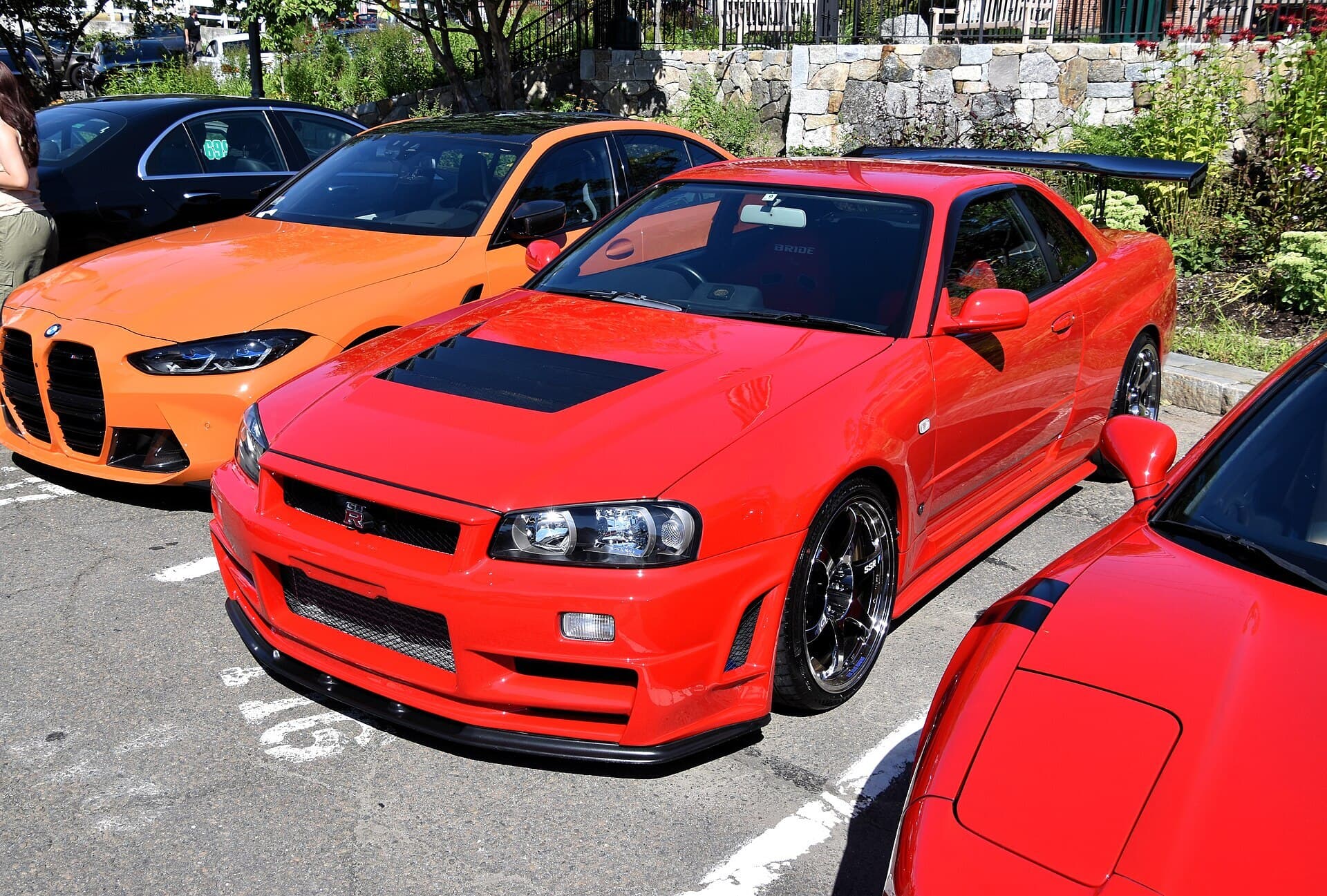
Month by month, more late-1990s Japanese performance cars turn 25, and in the United States that birthday is a very big deal. The US safety regulator's import ban does not apply to motor vehicles that are at least 25 years old, based on the month and year of manufacture (opens in a new tab). The R34 Nissan Skyline GT-R made its debut in January 1999 (opens in a new tab), so as this goes live, R34s built up to October 2001 have crossed that line, and the last ones, built in 2002, cross it month by month through 2027.
Here is the part that is easy to get wrong. Australia did freeze its classic-import line at 1989, but that was in 2005, and it is no longer the rule. When the Road Vehicle Standards laws arrived on 1 July 2021 (opens in a new tab), the older-vehicle test became a rolling one: a car must have been originally built (or significantly modified) more than 25 years ago (opens in a new tab) to qualify.
So the same Japanese cars now come of age in both countries at roughly the same moment. For Australian buyers, that means competing with American collectors for the same Japanese stock. For sellers, it means a global market. And for owners of modified cars, both systems care about what was changed, and when.
At a glance
- US safety rule
- Exempt at 25 years, by month and year of manufacture
- US emissions rule
- 21 years since production year, in original unmodified condition
- Australia since 1 July 2021
- Older-vehicle pathway: built or last significantly modified 25+ years before applying
- Australia 2005 to 2021
- Fixed line: manufactured before 1 January 1989
- R34 Skyline GT-R
- Debuted January 1999; available until 2002
How America's 25-year rule works
In the federal regulations, 49 CFR 591.5(i) (opens in a new tab) lets an importer declare that "the vehicle is 25 or more years old". The National Highway Traffic Safety Administration's own guidance says such a car can be lawfully imported without regard to whether it complies with US motor vehicle safety standards (opens in a new tab), and is entered under Box 1 of the HS-7 declaration given to Customs at the border.
The clock starts at the build date, not the model year. NHTSA says the 25-year period runs from the date of the vehicle's manufacture (opens in a new tab), shown on the maker's label. Without a label, it suggests an invoice showing when the car was first sold, a registration document showing it was registered at least 25 years ago, or a statement from a recognised vehicle historical society.
Emissions are a separate test, run by the Environmental Protection Agency. Its overview says a vehicle is excluded from US emission rules if it has been 21 years or more since its original production year and it is in its original unmodified condition (opens in a new tab). A car with a replacement engine does not qualify unless the engine is an equivalent or newer EPA-certified one. For a 1999 to 2002 car, the 21-year mark has already passed, so the 25-year safety rule is the binding date.
A younger car can be declared eligible through a registered importer, usually because it is substantially similar to a US-certified vehicle of the same model year (opens in a new tab). Without such a twin, its safety features must be shown to comply on destructive test information or other evidence NHTSA accepts. For a car never certified for US sale, like the R34, we expect few private buyers to clear that bar, which is why the birthday matters so much there.
Australia: from a rolling 15, to a frozen 1989, to a rolling 25
1992 to 2005: fifteen years
Australia has had a rolling rule before. From 1992, the regulations required the Minister to approve the import of a non-standard vehicle if the vehicle is 15 or more years old (opens in a new tab), on the basis that older vehicles were generally imported for restoration and club use.
2005 to 2021: the 1989 line
The government then said there had been "considerable growth" in these vehicles reaching the market and that it was concerned they do not meet current emissions performance and safety requirements (opens in a new tab). The 2005 amendment removed the 15-year standard and replaced it with a fixed date: vehicles manufactured before 1 January 1989. The instrument was registered on 12 May 2005 (opens in a new tab) and commenced the day after.
Cars built from 1989 onward were pushed to the Specialist and Enthusiast Vehicle Scheme (SEVS) and the Registered Automotive Workshop Scheme (RAWS), which the government said would provide a greater level of assurance of compliance (opens in a new tab) with safety and emissions standards. So a Japanese performance car built after 1988 could not use an age exemption at all; it had to go through a workshop that modified and certified it.
- 4,561
- Decisions on pre-1989 historic vehicles, 2015-16
- 7,608
- Decisions on used vehicles via RAWs, 2015-16
- 30 business days
- Legislated decision time for a concessional RAV entry approval today
The 2015-16 counts come from the explanatory memorandum to the Road Vehicle Standards Bill 2018 (opens in a new tab), which also flagged heavily modified or replica vehicles claiming to be manufactured before 1989. The 30-day figure is from the department's guide to concessional RAV entry approvals (opens in a new tab).
Since 1 July 2021: the older-vehicle pathway
The Road Vehicle Standards Act 2018 replaced the Motor Vehicle Standards Act 1989 on 1 July 2021 (opens in a new tab), with a transitional period that ran to 30 June 2023. The concessional pathway now exists, in the department's words, to give motoring enthusiasts access to a greater range of classic and collectible vehicles that are 25 years or older (opens in a new tab).
The test is set out in section 36 of the Road Vehicle Standards Rules 2019. According to the department's guidance note (opens in a new tab), the vehicle must be a passenger car, forward-control or off-road passenger vehicle, light goods vehicle, moped or motorcycle, and must have a "relevant build date" at least 25 years before the application is submitted. The relevant build date is the later of when assembly was first completed and when the last significant modification was made.
That second half matters for Japanese performance cars, many of which have been modified. The guidance note lists non-factory turbocharger or supercharger additions and upgrades, non-standard engines, engine changes that significantly increase output, full body kits and right-hand drive conversions as likely significant; springs, shock absorbers and internal engine or gearbox work as likely not.
The month counts here too. The department says that if the build month cannot be shown, the application defaults to December (opens in a new tab). The same guide says the pathway is not intended for vehicles needing significant restoration to become roadworthy, or for new replicas of old vehicles.
Applications go through ROVER, the department's portal, and verifying your identity there takes 100 points of identification and can take a couple of weeks (opens in a new tab). The resulting concessional RAV entry approval is also taken to be an import approval (opens in a new tab) and puts the car on the Register of Approved Vehicles (RAV).
Your vehicle must have been originally built (or significantly modified) more than 25 years ago to qualify.
SEVS still covers the younger cars
For anything under 25, the specialist and enthusiast route remains. A model or variant can go on the SEVs Register if it was not made available new in Australia (with some exceptions), was first made available overseas at least three months earlier, and meets one of six criteria, including high performance with specifications significantly superior to mainstream vehicles in Australia (opens in a new tab), rarity, and left-hand drive models with no right-hand drive version.
A listing is just the start. The car then needs an approved Model Report, the work must be done by a registered automotive workshop (opens in a new tab), and an independent authorised vehicle verifier must check it before it goes on the RAV. The department also notes that most vehicles 25 years and older do not need to be on the SEVs Register (opens in a new tab) because they can use the older-vehicle criterion instead.
The cars coming of age: the R34 and the class of 2002
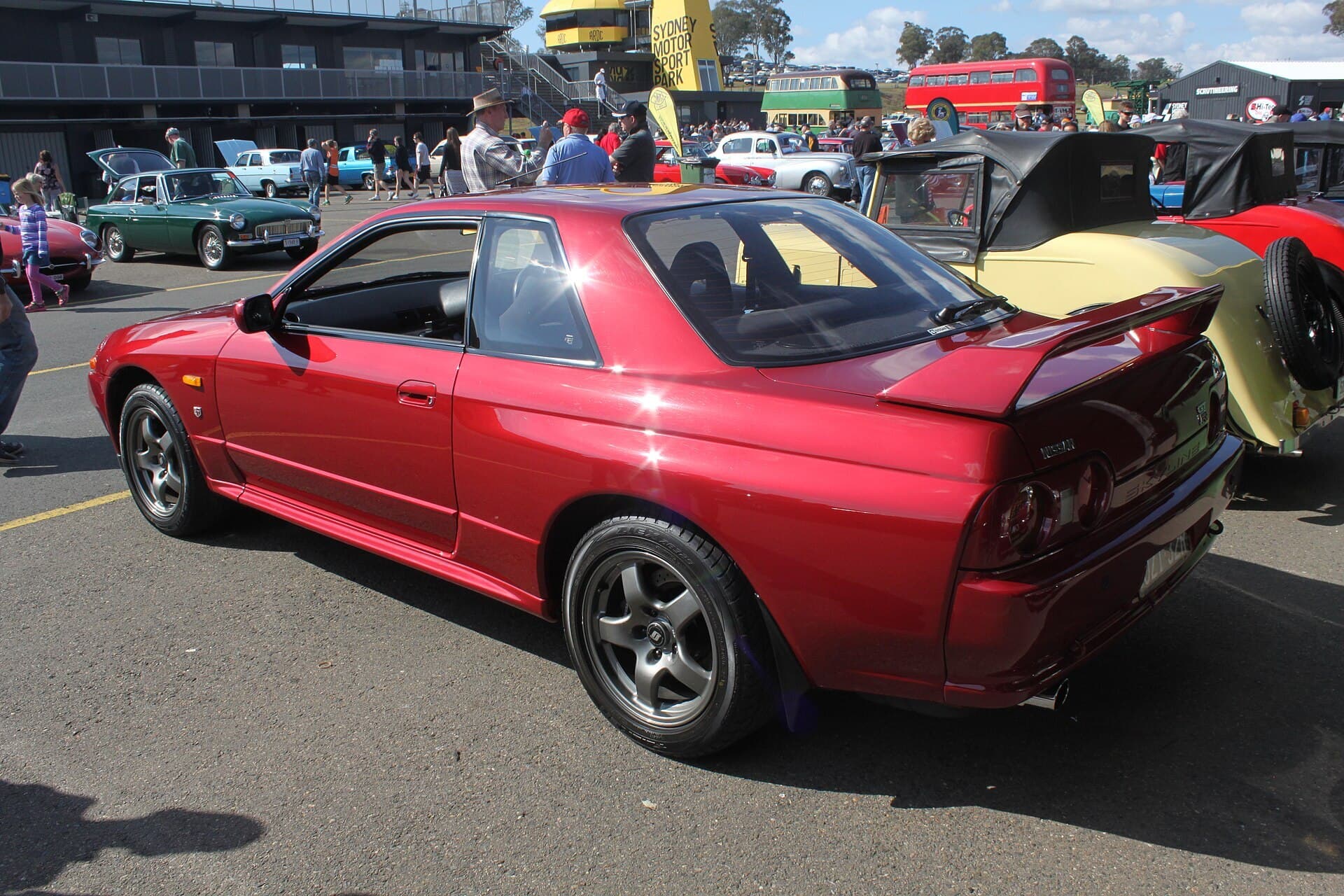
Nissan's newsroom describes the R34 Skyline GT-R as introduced in 1999 and available until 2002 (opens in a new tab), keeping the RB26DETT engine of the R32 and R33 but with a shorter wheelbase and a more streamlined body. Nissan's heritage pages say the V-spec II was added in 2000 (opens in a new tab), and that the V-spec II Nür and M-spec Nür were manufactured in 2002 (opens in a new tab). Under the US month-and-year rule, that puts the Nür cars on the 2027 calendar.
The US market has been pricing these birthdays in for years. In November 2023, Hagerty put a top-flight early R34 at about US$240,000 (opens in a new tab), said the gap between a great early 1999 car and an equivalent 2000 or 2001 car could be as much as US$100,000, and said you would be hard-pressed to find a sorted R34 anywhere for less than US$100,000. It cited the GT-R Registry's figure of 11,578 R34s made.
The record so far is a 10-kilometre 2002 V-spec II Nür that, according to Hagerty, sold through Japanese auction house BH Auction in July 2021 for nearly £400,000, or US$549,000 including fees (opens in a new tab), with Hagerty noting strong competition from buyers in Japan, America and Europe. It is worth adding Hagerty's own caution from 2023: values of cars it tracks shot up in 2021 and 2022, but have since leveled out (opens in a new tab).
The R34 is not alone. In March 2026, Hagerty UK published a list of cars turning 24 that year, explicitly to get ahead of US demand, calling late V-spec II and M-spec R34s already hot property (opens in a new tab) and naming the Mazda RX-7 Spirit R, Honda Accord Euro R and Toyota Caldina GT-Four among the others.
What the US clock does to Australian prices
We could not find a public index of Australian prices for these cars, so what follows is our expectation, labelled as such.
Hagerty describes the GT-R market as a global one (opens in a new tab), with an immense following in Asia and Australia. We expect three things to follow from both countries now rolling on a 25-year clock.
- Competition at the source. An Australian importing a 2001 R34 from Japan under the older-vehicle pathway is now eligible in about the same month as an American. We expect that to keep Japanese auction prices for clean, original cars firm, whichever country the buyer is in.
- Support for Australian prices. The NHTSA exemption turns on age, not on whether the car meets US standards (opens in a new tab), so an Australian-registered R34 is, in principle, as importable into the US as a Japanese one once it turns 25. We expect that export option to put a floor under well-documented local cars.
- A discount for modified cars. Both systems penalise changes, in different ways: the EPA wants original unmodified condition, and Australia restarts the clock on significant modifications. We expect modified cars to trade at a growing discount to original ones.
One question we could not resolve: whether a registered workshop's compliance work on an Australian SEVS car counts as a modification for the EPA's original-condition test. We found no EPA guidance on it, and the EPA encourages importers to contact its Imports Hotline (opens in a new tab). Ask before you ship.
Another perspective: United States
What the US did
The American system is a hard age line with very little process. For a 25-year-old car, the importer declares it on Box 1 of the HS-7 at the border (opens in a new tab) and files an EPA declaration claiming the exclusion, as code E on Form 3520-1 (opens in a new tab). Under 25, a car with no US-certified twin needs test evidence that its safety features comply (opens in a new tab).
What happened
Demand gathered around the birthdays. Hagerty notes the R32 GT-R was considered a legitimately affordable car at the beginning of its import eligibility in 2014 (opens in a new tab), while the R34 arrived already expensive. It also describes Americans buying cars in Japan a year or more ahead of eligibility and storing them there, and an importer who saw R32 values rise when the R33 became eligible, as buyers moved to the cheaper, more plentiful car.
What Australia can learn
The biggest lesson has already been taken: Australia replaced its frozen line with a rolling one in 2021. The comparison is now about the details.
| Feature | Australia | United States |
|---|---|---|
| Age test | Build or last significant modification 25+ years before applying | 25 years from month and year of manufacture |
| Paperwork | Department approval through ROVER before import | Declared at entry on the HS-7 and EPA Form 3520-1 |
| Modifications | Significant ones restart the clock | EPA wants original unmodified condition |
| Younger enthusiast cars | SEVS, RAWs and Model Reports | Registered importer route; hard without a US twin |
Australia's caution has a fair basis. The 2005 change was made because of safety and emissions concerns (opens in a new tab), and the 2018 explanatory memorandum documented replicas and heavily modified cars (opens in a new tab) using the old scheme. The significant-modification test is a direct answer to that. Australia also offers something the US system makes very hard: a legal route for a 10-year-old Japanese performance car through SEVS, at a cost, if its model is on the register.
Where we think the US model has something to teach is certainty. For the safety rule, an American can look at a build plate and know the date a car becomes eligible. An Australian with a modified car has to work through a list of modifications that are "likely" or "likely not" significant, assessed case by case. Published examples of decided cases would help owners before they spend money.
What it means if you're buying or selling
Buying an imported performance car that's already here
- Check the RAV. The department says "all vehicles must be entered on the RAV" (opens in a new tab) before they can be presented for state or territory registration. Ask for the import approval and RAV details.
- Older imports may carry a compliance plate instead. Cars that came through RAWs under the old law were plated, and the transition rules allowed plated vehicles to be supplied until 30 June 2023 (opens in a new tab). Ask for the paperwork either way.
- Registration is a state decision. A concessional RAV entry approval doesn't guarantee you can get the vehicle registered (opens in a new tab); check with your registration authority first.
- Get an independent inspection and an agreed-value insurance quote that discloses every modification before you pay.
- Parts: Nissan announced in 2018 that R33 and R34 parts would go on sale in Japan through the NISMO Heritage Parts program (opens in a new tab). Ask a specialist what is actually obtainable here.
Importing one yourself
- Choose the pathway first. Over 25 and unmodified, the older-vehicle criterion; under 25, SEVS plus a registered workshop and an approved Model Report.
- Approval before shipping. The department says an approval is needed before you import (opens in a new tab), so start the ROVER account early.
- Asbestos. Importing asbestos is prohibited, and the department warns that gaskets, brake pads, seals and clutch linings in vehicles not built for Australia are high-risk parts (opens in a new tab). If you cannot give Border Force adequate assurance, you pay for the delays and testing.
- Gather build-date evidence: the department lists the original sales document, a deregistration certificate in some countries, or a photo of the VIN, chassis number or compliance plate (opens in a new tab).
Our importing and exporting guide (opens in a new tab) walks through duty, GST and state registration.
Selling a JDM car
- Document the build date. An American buyer will need what NHTSA asks for: the manufacturer's label, a first-sale invoice or a registration record (opens in a new tab).
- List every modification with dates. Both an American buyer (for the EPA) and an Australian one (for registration and insurance) will ask.
- Exporting means a declaration. The Border Force says you need an export declaration unless an exemption applies (opens in a new tab), and you must keep the documents for five years.
- Price against the world, not the suburb. Check overseas auction results before accepting a local offer, then decide whether you want the car to stay here.
Our take
This is our view. The rolling 25-year line is the right idea, and Australia was right to adopt it in 2021. A fixed date eventually becomes a wall, and the 1989 line was shutting out the cars a generation of enthusiasts grew up wanting. Simple, durable, owner-controlled machines from the 1980s and 1990s are the next classics, and the law should let them in.
The R34 is not simple by 1960s standards. It has ATTESA all-wheel drive and HICAS four-wheel steering (opens in a new tab). But it has no over-the-air updates, no subscription features and no remote switch that can disable a fleet. A good workshop can keep one running, and Nissan's NISMO Heritage Parts program has been remaking parts, in Japan at least. That is the kind of car worth bringing in and keeping.
We understand why the significant-modification rule exists; the replica problem was real. But a period turbo upgrade done in 2005 is part of a car's history, not a fraud on the scheme, and the test treats both the same until the clock runs out.
And a caution for anyone chasing the US birthday: as Hagerty found, these values can level out. Buy the car because you want to drive it, and join a club. If an American buyer comes knocking later, that's a bonus, not a business plan.
Header photo: Charles from Port Chester, New York (opens in a new tab) via Wikimedia Commons, CC BY 2.0 (opens in a new tab).
Related
- Importing and Exporting Cars in Australia: The Complete Guide (opens in a new tab)
- Buying a car never registered in Australia: pros, cons and what to check (opens in a new tab)
- Japanese exotics: NSX, LFA, GT-R and the art of the attainable supercar (opens in a new tab)
- Why Australian cars are different: right-hand drive and our own design rules (opens in a new tab)