The European supercar sells mystique — racing bloodlines, hand-built scarcity, theatre as product. Japan's three great assaults on the category sold something else entirely: the proposition that engineering discipline could beat mystique at its own game, and that a supercar didn't have to punish you to thrill you. The NSX, the LFA and the GT-R each made that argument a different way, each rattled the establishment, and each has become a collector story of its own — with Australia, thanks to right-hand drive and a deep JDM culture, one of the best places on Earth to live with them.
Japan's supercars attacked the category's assumptions: that exotic must mean fragile, that drama requires discomfort, and that the badge matters more than the engineering. The establishment adjusted its cars accordingly.
NSX: the everyday supercar, invented
When Honda launched the NSX in 1990, the shock wasn't its pace — it was its manners. Here was a mid-engined, all-aluminium supercar (its aluminium monocoque was pioneering for a production car) with Honda reliability, visibility you could park by, a V6 that screamed to eight thousand revs and then started every morning. Development lore includes input from Formula One great Ayrton Senna, then driving for Honda-powered McLaren — the story is well documented, though its extent has grown in the retelling. The NSX's effect on the establishment is widely acknowledged: Ferrari's mid-engined cars got dramatically more usable in the years that followed, and the idea that a supercar could be a daily proposition — later perfected by Porsche's 911 lineage from the other direction — traces straight back to it. Australian-delivered NSXs were rare and are prized; values for clean, original cars have climbed firmly out of bargain territory.
LFA: the money-loses masterpiece
The Lexus LFA of 2010–2012 is the purest thing in this article: a decade in development, around 500 built, a bespoke 4.8-litre V10 co-developed with Yamaha that revved so fast Lexus fitted a digital tachometer because an analogue needle reportedly couldn't keep up, and a soundtrack routinely ranked among the greatest ever put in a road car. Widely reported to have lost money on every example, it was a technology-and-credibility statement rather than a business — carbon-fibre construction the company built its own looms to produce. The market took a decade to agree, then did so emphatically: LFA values have multiplied, the textbook hero-car arc — scarcity, story, end-of-line purity (no successor has come).
GT-R: Godzilla, twice
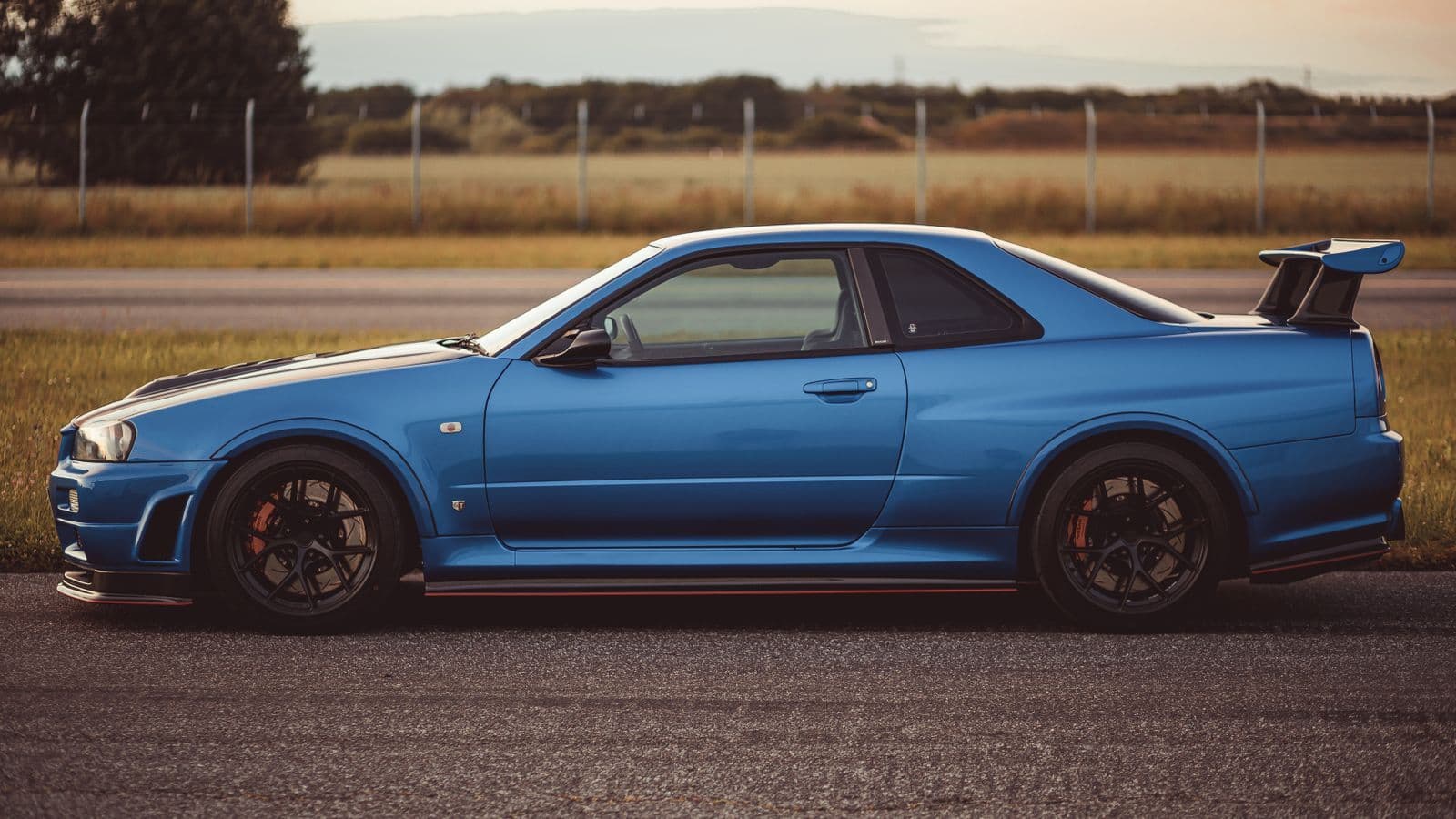
The GT-R story runs in two acts, and the first is partly an Australian story: the R32 Skyline GT-R arrived in the early 1990s with twin-turbo six, all-wheel drive and computer-controlled everything, dominated Australian touring car racing — winning Bathurst in 1991 and again amid the chaos of 1992 — and collected the "Godzilla" nickname from the Australian motoring press that the world then adopted. Act two, the R35 GT-R of 2007, industrialised the formula: supercar-humbling pace at a fraction of supercar price, the ultimate giant-killer, kept in production with updates for a remarkable run. The collector market has re-priced act one aggressively — clean R32–R34 cars, once cheap thrills, now trade as blue-chip JDM classics, with the US 25-year import rule frequently credited for pulling stock (and prices) upward globally.
Why Australia is the right place for them
Right-hand drive means Japanese performance royalty arrives steering-wheel-correct; decades of grey imports built deep specialist knowledge in every capital; and the JDM scene gives these cars a community European exotics rarely match here. The practical notes are the standing ones: import provenance matters (compliance history and odometer verification on older imports — the import guide covers the machinery), originality now drives value on the collector cars, and modified examples — common in this world — need the scrutiny our modified cars guide describes.
What this means if you're buying or selling on MotorLoop
JDM buyers are provenance detectives: auction sheets, compliance history, originality and honest modification lists sell these cars. Sellers, document all of it; buyers, the golden era is still attainable in places — browse used cars and hunt patiently. Listing is free, and a keeper belongs on a showcase page.
Related
- Buying your first exotic car in Australia: the realistic path
- Supercar depreciation: the heroes and the craters
- Modified cars: what's legal, what needs certifying, and what it does to resale
- Importing and exporting cars in Australia: the complete guide
FAQs
Why is the Nissan GT-R called Godzilla?
The nickname was coined by the Australian motoring press for the R32 Skyline GT-R, which arrived in the early 1990s and crushed local touring car racing — including Bathurst wins in 1991 and 1992 — a Japanese monster laying waste to the established order. The name followed the badge worldwide and stuck to every GT-R since.
Why are LFA values so high when it was slow to sell new?
Because everything that made it commercially awkward makes it collectible: around 500 built, a bespoke Yamaha-co-developed V10 with one of the most celebrated engine sounds ever recorded, carbon construction Lexus built its own looms for, and no successor. Scarcity, story and end-of-line purity are the classic appreciation recipe.
Was the original NSX really developed with Ayrton Senna?
Senna provided development feedback — the story is well documented, most famously regarding chassis rigidity — while the car was engineered by Honda's own team. His involvement was real but has grown in the retelling; the NSX's revolution, everyday usability in a mid-engined supercar, was Honda's own thesis.