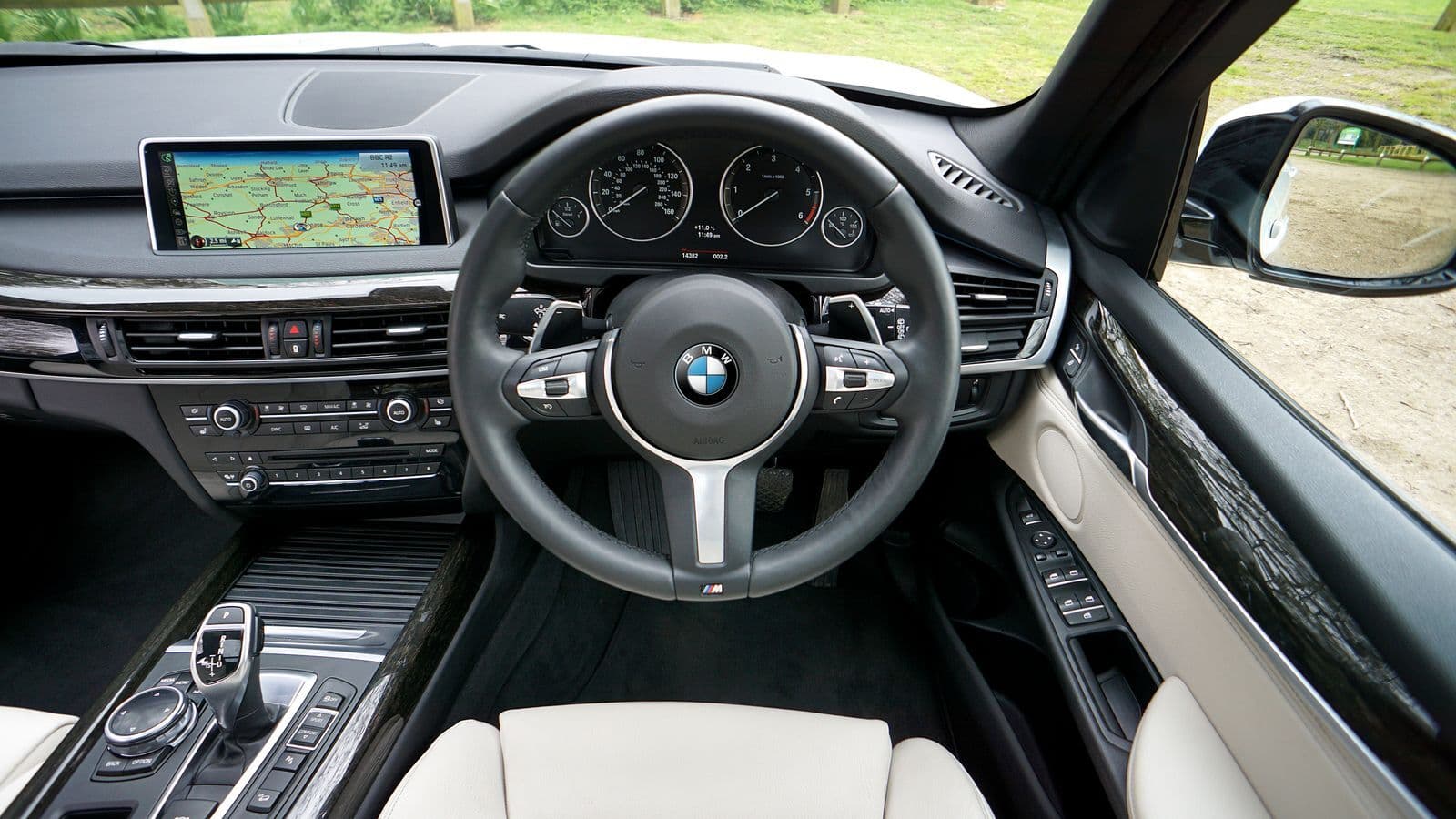
Australian-market cars differ for two stacked reasons: we drive on the left in right-hand-drive vehicles, and every car supplied new here must clear the Australian Design Rules — national standards covering safety, anti-theft and emissions. Manufacturers therefore select, equip and sometimes re-engineer cars specifically for Australia, which is why specifications rarely match UK or US versions exactly.
We drive on the left, so our cars are right-hand drive
Australia is a left-hand traffic country: traffic keeps to the left side of the road, and in such countries cars usually carry the steering wheel on the right — right-hand drive, or RHD (Wikipedia: Left- and right-hand traffic (opens in a new tab)). That one habit of the road shapes the whole vehicle, because everything from the driver's sightlines to the pedals is arranged around sitting on the side nearest the centre line.
We share this arrangement with a fair slice of the world. Around 75 countries and territories keep left — home to roughly a third of the world's population — including the United Kingdom, Japan, New Zealand, India, Indonesia, Thailand, Malaysia, Singapore and South Africa. Many were part of the British Empire; others, notably Japan and Indonesia, arrived at left-side driving entirely on their own (Wikipedia (opens in a new tab)).
For buyers, the practical consequence is simple: a right-hand-drive market cannot just take delivery of the left-hand-drive version sold in America or continental Europe. Manufacturers build separate RHD variants for markets like ours, and those variants come with their own equipment decisions — not merely a steering wheel moved across the cabin.
The ADRs: Australia's own design rulebook
The deeper reason sits above the kerb. The Australian Design Rules (ADRs) are national standards for vehicle safety, anti-theft and emissions. They are generally performance-based and cover issues such as occupant protection, structures, lighting, noise, engine exhaust emissions, braking and a range of miscellaneous items (Department of Infrastructure, Transport, Regional Development, Communications, Sport and the Arts (opens in a new tab)).
Compliance lives inside a Commonwealth framework. Under the Road Vehicle Standards Act 2018 (RVSA), which replaced the Motor Vehicle Standards Act 1989 on 1 July 2021, road vehicles must meet the Act's requirements and be approved before they can be provided to the Australian market for the first time (Department of Infrastructure (opens in a new tab)). Registration then loops back into that system at state level: a vehicle generally needs an entry on the government's Register of Approved Vehicles to be eligible for registration (Service Tasmania (opens in a new tab)).
Read those two paragraphs together and the point lands: meeting the ADRs is not decoration a manufacturer adds out of goodwill. It is bound up with the approval a car must pass before it can be supplied here at all.
From compliance plates to the RAV
If you have owned older Australian cars, you may remember the small metal identification plate — the compliance plate — riveted somewhere in the engine bay or door opening. Under the current system that physical plate has largely been retired: the RAV replaced the need for physical compliance (ID) plates to be fitted to vehicles (Service Tasmania (opens in a new tab)).
The Register of Approved Vehicles (RAV) is an online, publicly searchable database of vehicles that have met the requirements of the RVSA and been approved for provision to the Australian market (Department of Infrastructure (opens in a new tab)). Two pathways feed it: type approval for volume supply, and concessional RAV entry approval for individual vehicles (Department of Infrastructure (opens in a new tab)).
For a used-car buyer the RAV is quietly useful. You can search it using the vehicle's permanently marked Vehicle Identification Number, which is usually found at the base of the windscreen (visible from outside the car) or on the door post or foot well (ROVER: RAV Public Search (opens in a new tab)). An entry tells you the car went through formal approval to be supplied in Australia rather than arriving by some other route.
Before you commit to a used import, or anything with an unusual history, run the VIN through the RAV public search (opens in a new tab). It takes about a minute and shows whether the vehicle was formally approved for the Australian market.
Why the same model is not always the same car
Put the two pieces together — right-hand drive plus our own performance-based standards — and you have the mechanism behind spec differences. Because the ADRs reach into lighting, braking, occupant protection and exhaust emissions, a manufacturer supplying Australia works through approvals against those standards before vehicles reach this market (Department of Infrastructure (opens in a new tab)). Satisfying one country's rules does not automatically satisfy another's, so makers commonly homologate separate variants region by region.
The knock-on effects appear in exactly the places buyers notice. Feature availability can differ, because equipment bundles are chosen market by market. Trim levels and option packages may not map one-to-one onto overseas brochures. Engines or gearboxes sold overseas may never be delivered here. We are deliberately naming no examples, because availability shifts year to year — the honest habit is to treat every overseas review, price guide or spec sheet as describing a slightly different car until you have checked what the Australian-delivered version actually carries.
None of this makes one market's version better than another's. It makes them different: built under different rules, for different buyers, with different paperwork behind them.
Grey imports: same badge, different path
Not every car in Australia went through a factory's local program. Importing a road vehicle requires government approval before it ships, and private imports generally arrive through a handful of pathways — including specialist and enthusiast vehicles under the SEVS scheme, complied locally through a Registered Automotive Workshop, and vehicles more than 25 years old (Department of Infrastructure (opens in a new tab)). People relocating to Australia who have owned and used their car overseas can often bring it under personal-import arrangements (our complete importing guide (opens in a new tab)).
A grey import can be a wonderful thing; sometimes it is the only way a particular model ever reaches our roads. But its compliance paperwork, history trail and occasionally its specifications differ from a locally delivered equivalent, which matters at service, inspection and resale time. Our step-by-step guide to importing and exporting cars in Australia (opens in a new tab) walks through approvals, costs and registration state by state.
Specs, prices and the comparison trap
This is why comparing an Australian listing against a UK or US one misleads so reliably. Britain shares our side of the road, so its cars are right-hand drive too, yet UK-delivered equipment and pricing still differ from ours because each market runs its own approval and tax settings. American listings add left-hand drive into the mix, so controls, lighting and panels differ outright. Safety expectations have also moved enormously across eras — a decades-old design that photographs charmingly sits a long way behind a current car on protection, something we unpack in the safety gap between a 1990s car and a current one (opens in a new tab).
Two habits keep you honest while researching. First, filter your reading towards Australian-delivered examples wherever possible — owner forums and local listings describe the car you can actually buy. Second, price-check against local stock rather than converted foreign prices, because equipment differences alone can justify a gap.
Buying used with confidence
If you are shopping rather than speculating, three habits cover most of this ground cheaply. Look the VIN up on the RAV (opens in a new tab) to confirm Australian approval. Inspect against a proper used car inspection checklist (opens in a new tab) instead of first impressions. And if the process feels daunting, our plain-language walkthrough of how to buy a used car (opens in a new tab) carries you from search to handover. Browsing listings on MotorLoop is free, so comparing what local cars actually offer costs you nothing but time.