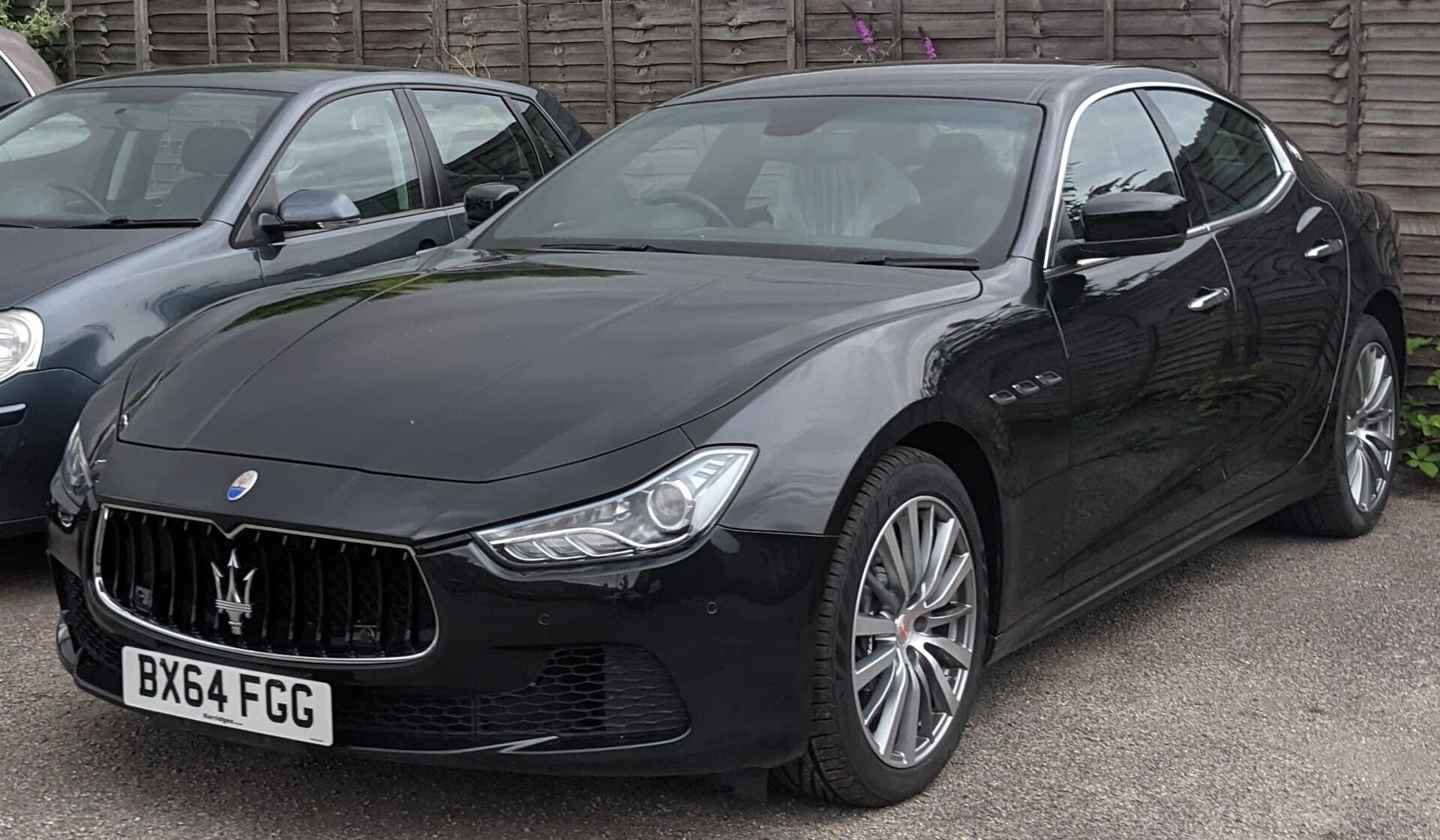
In May 2014 Maserati launched the Ghibli in Australia, and the Ghibli S was priced from $169,900 before on-road costs (opens in a new tab), according to GoAuto. On 28 October 2026, a 2014 Ghibli S with 90,871 km on the clock was advertised on Autotrader (opens in a new tab) in Brighton East, Victoria, for $34,889. That page carried 15 Maseratis under $40,000 the day we looked, Ghiblis, Levantes and a Quattroporte among them.
That is a beautiful Italian V6 sedan for the money of a nearly-new small hatchback. It is also roughly four-fifths of the original sticker gone in 12 years. The same pattern turns up with big Mercedes-Benz sedans and with Bentleys, and it is not random bad luck. It comes from how these cars are priced, built, serviced and sold.
This matters whether you're the person tempted by a cheap used luxury car or the person trying to sell one. Here is what the numbers say, why it happens, and how to come out ahead.
At a glance
- 2014 Ghibli S, new
- From $169,900 plus on-roads (GoAuto, May 2014)
- 2014 Ghibli S, used
- $34,889 asking, 90,871 km (Autotrader, 28 Oct 2026)
- US average five-year loss
- 41.8% (iSeeCars, 2026)
- BMW 7 Series five-year loss
- 61.6% (iSeeCars, 2026)
- Porsche 911 five-year loss
- 11.1% (iSeeCars, 2026)
The numbers: how fast the expensive cars fall
Australia doesn't have a free, public league table of depreciation by model on the scale the Americans do, so the best large dataset comes from the United States. The used-car site iSeeCars analysed more than 950,000 five-year-old cars (opens in a new tab) sold between March 2025 and February 2026. The average car had lost 41.8 per cent of its new price. The Land Rover Range Rover had lost 61.7 per cent, the BMW 7 Series 61.6 per cent and the Audi A8 L 57.6 per cent. At the other end, the Porsche 718 Cayman had lost 9.6 per cent and the Porsche 911 11.1 per cent, with Toyota's Tacoma, Tundra, RAV4 and Corolla all near the top for holding value.
Maserati wasn't in that year's top 25, but it was a regular in earlier editions. In the 2025 study, Motor1 reported (opens in a new tab) that the Ghibli had lost 64.7 per cent over five years, or US$70,874 on average. iSeeCars' own model comparison puts the Ghibli's five-year loss at 63.1 per cent against 52.8 per cent for a Mercedes-Benz C-Class (opens in a new tab).
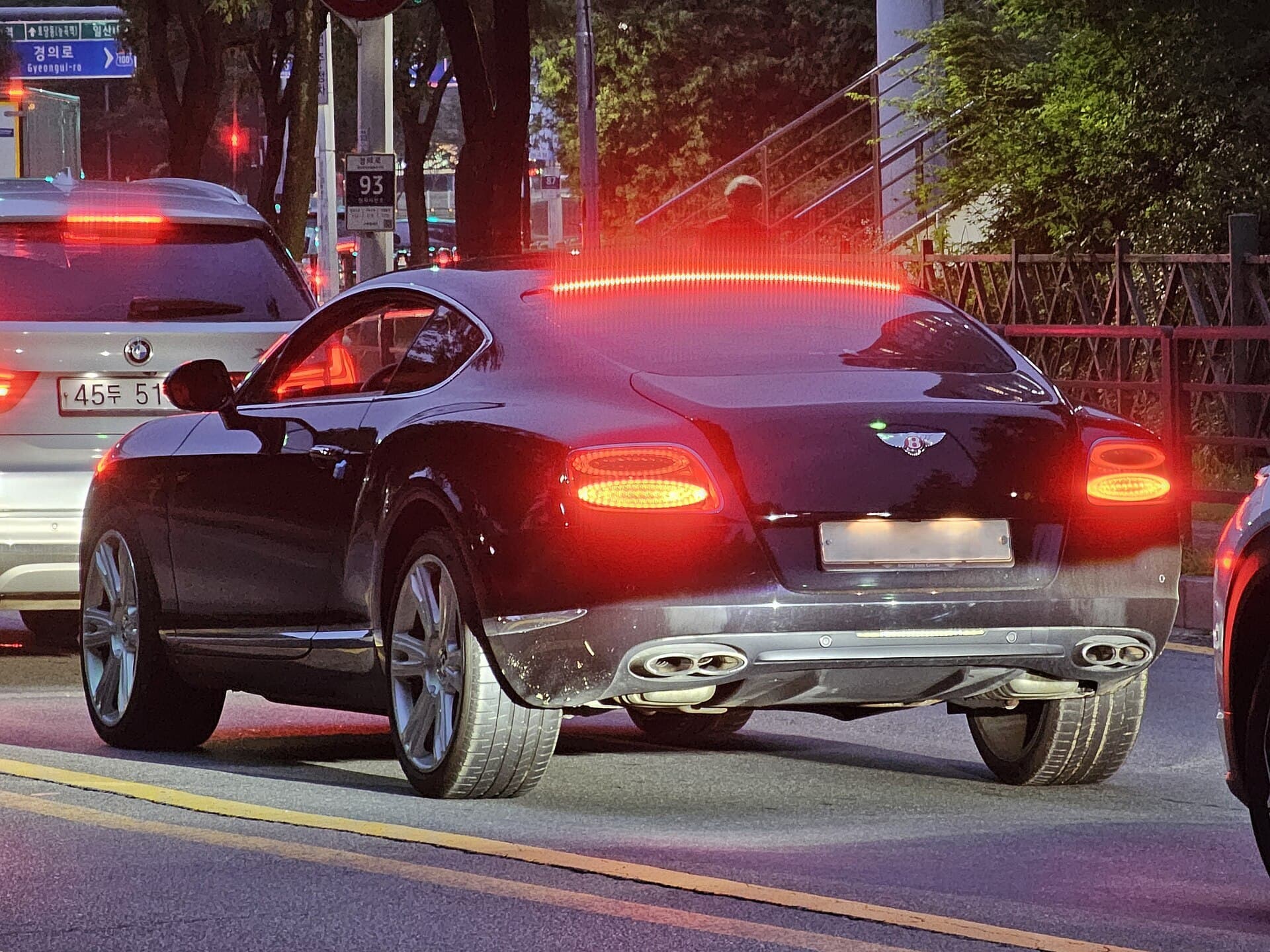
The flagships keep falling after year five. iSeeCars estimates a Mercedes-Benz S-Class loses 55.3 per cent in five years and 78.9 per cent in ten (opens in a new tab), almost exactly the average for large luxury cars. For a Bentley Flying Spur it estimates 46.0 per cent at five years and 76.3 per cent at ten (opens in a new tab). The Bentley actually holds up reasonably for its first five years. The second five are where it gets cheap.
- 41.8%
- Average five-year loss, US (iSeeCars)
- 61.6%
- BMW 7 Series, five years
- 78.9%
- Mercedes S-Class, ten years
- 11.1%
- Porsche 911, five years
What the Australian listings show
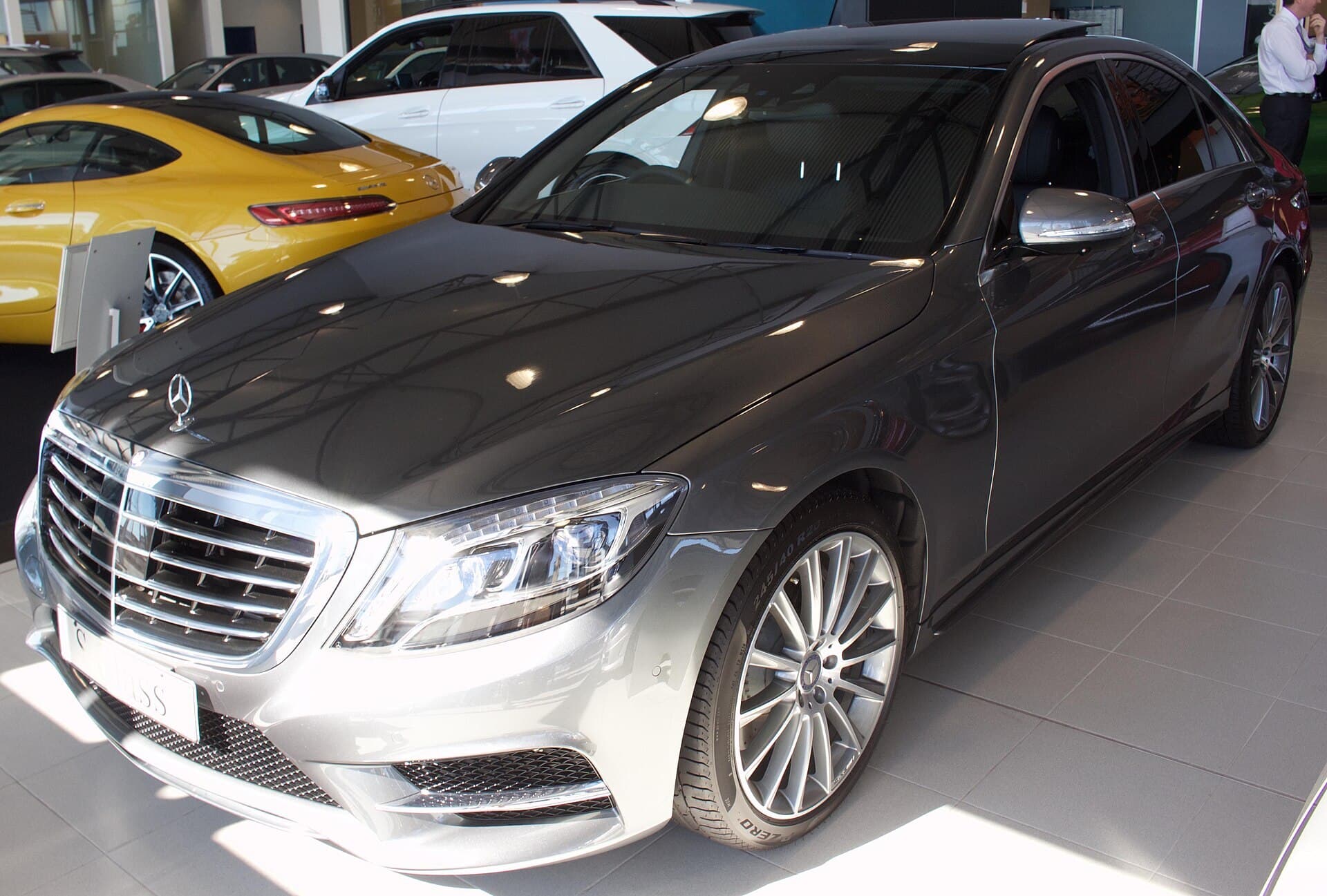
Local asking prices tell the same story. The Mercedes-Benz W222 S-Class range arrived here in November 2013 from $215,000 for the S350 BlueTec (opens in a new tab), according to carsales. On 28 October 2026, Autotrader listed (opens in a new tab) a 2016 S350 d L with 138,298 km for $37,990 excluding government charges, and a 2018 S350 d with 166,854 km for $40,676 drive-away. We could not find the 2016 S350 d L's own list price, so treat the launch figure as a guide to what this class of car cost new, not an exact like-for-like.
The Bentley page on the same site (opens in a new tab) showed a 2011 Continental Flying Spur with 114,540 km at $69,950, a 2015 Flying Spur V8 with 142,792 km at $94,990, and a 2014 Continental GT V8 with 53,765 km at $149,888. Those are asking prices on one day, not sale prices, and a car with full history and low kilometres will sit well above the cheapest.
Why luxury cars lose value so fast
None of this means the cars are bad. Several forces stack up, and they stack up hardest on expensive cars.
The first owner paid for things the second owner won't
A new luxury car's price includes things that don't carry over. In Australia that starts with tax: luxury car tax is 33 per cent (opens in a new tab) of the value above the threshold, which for 2026-27 is $91,661 for fuel-efficient cars and $80,809 for everything else. It also includes the options list, the showroom experience and simply being first. iSeeCars' executive analyst Karl Brauer, explaining why luxury models dominate the worst-depreciation list, said the used market discounts the qualities new-car buyers pay for: "The used car market simply doesn't put the same value on those traits."
The used car market simply doesn't put the same value on those traits.
The warranty ends, and the risk lands on you
A new car's warranty soaks up the cost of anything that goes wrong. When it ends, the next owner carries that risk, and buyers price it in. The 2015 Ghibli came with a three-year, unlimited-kilometre warranty (opens in a new tab), as did the 2015 Bentley Flying Spur (opens in a new tab), according to CarExpert. Mercedes-Benz Australia moved to five years and unlimited kilometres for cars sold from April 2020 (opens in a new tab), which helps newer cars, but a 2016 S-Class has long since left its factory cover.
Complexity, and what it costs to keep it working
This is where our opinion comes in, so we'll separate it from the data. The data first. JD Power's 2026 US Vehicle Dependability Study (opens in a new tab), which surveyed 33,268 original owners of 2023 model-year cars after three years, recorded an industry average of 204 problems per 100 vehicles, the highest since the study was redesigned in 2022. Premium vehicles averaged 217, worse than the industry as a whole, and infotainment was the most complained-about category at 56.7 problems per 100 vehicles. Not every premium brand did badly: Lexus topped the study at 151 and Porsche placed third among premium brands at 182, while Land Rover scored 274 (opens in a new tab), according to SlashGear.
Running costs follow. CarEdge, a US car-buying service, estimates 10-year maintenance and repair costs by brand. Its luxury ranking (opens in a new tab) puts Lexus at US$7,110, Mercedes-Benz at US$12,942, BMW at US$16,021, Land Rover at US$18,072 and Bentley at US$36,400. Its mainstream ranking (opens in a new tab) puts Toyota at US$5,470 and Maserati at US$15,121. These are American estimates, and Australian labour and parts prices will differ, but the gap between brands is the point.
Our view on why: a large luxury car carries a lot more to go wrong. Air suspension, multiple control modules, adaptive lights, soft-close doors, massaging seats, and big screens all add hardware and software that a simpler car doesn't have. Much of it needs dealer or specialist tools to diagnose. None of that is a defect; it is the design brief. But each item is a future bill, and a used buyer knows it.
Volume pushes supply
Depreciation is also supply and demand. When a luxury brand chases volume, more of its cars eventually reach a used market with only so many buyers who can afford to run one.
Maserati is the clearest case. When the Ghibli launched here in 2014, GoAuto reported Maserati's plan to grow from 15,400 global sales to 75,000 by 2018 (opens in a new tab), and to lift Australian and New Zealand sales from 134 to about 1,500 by 2016. The cars sold. Later, demand did not hold. Stellantis figures reported by Motor1 (opens in a new tab) show Maserati delivered 11,300 cars in 2024, down 57 per cent from 26,600 in 2023. Automotive World, citing Stellantis' annual report, put 2025 at about 7,900 (opens in a new tab). In Australia, CarExpert lists the Ghibli as discontinued, with 18 new sales in 2024 and seven in 2025 (opens in a new tab). A shrinking brand with a large back catalogue of cars on the road is a recipe for soft used values, and buyers worry about future dealer support.
Mercedes-Benz, to its credit, has said it wants the opposite. In May 2022 it told investors it would direct more than 75 per cent of its investment to its most profitable segments and grow the share of top-end models by around 60 per cent by 2026 (opens in a new tab), trimming entry-level variants. Chief executive Ola Källenius said the luxury segment was now "the core of our strategy." Porsche, which reported fewer deliveries and higher operating profit (opens in a new tab) in the first half of this year, calls its approach value over volume. Its cars sit at the top of the hold-value tables.
The other side of the argument
It would be unfair to call cheap used luxury cars a trap. First, the new buyer usually knows what they're paying for: the newest technology, the warranty, the specification they chose, and the experience of being first. Some are bought through businesses or on leases, where the depreciation is a running cost someone has planned for.
Second, the steep fall is exactly what makes these cars a bargain for an informed second or third owner. A well-maintained S-Class or Bentley with full history can deliver comfort, safety and engineering that few new cars at the same price can match. RedBook's own data has shown luxury badges aren't automatically losers either: in its August 2021 three-year retained-value figures for cars under $100,000, the Land Rover Defender topped the list at 79 to 82 per cent and the Mercedes-Benz GLC made the top 10 (opens in a new tab), alongside the Toyota LandCruiser at 77 to 80 per cent. That was a supply-starved pandemic market, and RedBook's Ross Booth said at the time he expected depreciation to return to previous levels once new-car supply recovered, but it shows the badge alone doesn't decide the curve.
How the United States shows it, and what Australia can learn
The US is worth looking at closely because it measures depreciation in public. iSeeCars publishes model-by-model five-year losses from close to a million transactions a year, and sites such as CarEdge publish brand-level running-cost estimates. JD Power publishes its dependability survey every year. A shopper in the US can see, before buying, that a Range Rover has historically lost about three-fifths of its value in five years and a 911 about a tenth.
The US tables also show the pattern is consistent rather than a one-year blip. Maserati models featured in the 2025 edition (opens in a new tab) of the worst-depreciation list, and large British and German luxury cars dominate the 2026 edition (opens in a new tab), while Porsche sports cars, the Corvette and Toyotas cluster at the top. A brand's place on those tables is, in effect, a public price on its reputation for durability and running costs.
What Australia can learn is mostly about information. Australian buyers can get a valuation for an individual car from RedBook or Glass's, and asking prices are public, but we could not find a free, regularly published Australian ranking of five-year depreciation by model on the American scale. We think a public, independent table built from Australian transactions would help buyers price risk properly and would put pressure on brands whose cars fall fastest. Until that exists, Australians should read the US tables as a guide to direction, not exact numbers, because local pricing, the luxury car tax, warranties and dealer networks are different here.
One more lesson comes from Britain, briefly. In 2025, according to the industry body SMMT, fleet buyers registered 59.1 per cent of new cars and private buyers only 38.6 per cent (opens in a new tab). When most new cars are bought by companies on fixed replacement cycles, used values become a function of when the fleets let go. Australia's executive-car market is smaller, but the same mechanism applies to ex-lease and ex-company luxury cars here.
What it means if you're buying or selling
If you're buying a cheap luxury car
- Budget for the car you're buying, not the price you're paying. A $35,000 Ghibli is not a $35,000 running cost. Set aside a repair fund before you buy. The CarEdge figures above suggest a big gap between brands, so price a few common jobs (suspension, brakes, tyres in the right size) with a specialist before you commit.
- Get a pre-purchase inspection from a marque specialist, not a general check. A specialist knows the model's weak points, has the diagnostic software and can read the fault history. Our used car inspection checklist (opens in a new tab) covers the basics.
- Insist on service history. Stamped books or dealer records matter more on these cars than on a Corolla, because skipped services on complex engines and transmissions get expensive.
- Read extended warranty fine print. The ACCC notes that extended warranties are optional and may give no more than your consumer guarantee rights (opens in a new tab), and some exclude parts, cap claims or require a nominated repairer. Check what's excluded before you pay for one.
- Run a PPSR check. A PPSR search (opens in a new tab) tells you if money is owing or if the car is recorded as stolen or written off. Ex-lease and ex-company cars are common in this end of the market.
- Get an insurance quote first. Premiums on prestige cars can be high, and a quote takes five minutes.
- Check for open recalls with the dealer or the federal recalls site before you hand over money.
If you're selling one
- Sell with paperwork. Full service history, inspection reports and a clean PPSR result are what separate a good luxury car from the cheap ones in the classifieds.
- Think about timing. The steepest drop tends to come before and around the end of factory warranty. If you plan to sell, doing it while cover remains can be a selling point.
- Price against the market, not the original sticker. Check current asking prices for the same model and kilometres, and get a RedBook or Glass's valuation. The recent spring used-car market update (opens in a new tab) is a useful guide to conditions.
Before you buy a cheap luxury car, write down the purchase price plus one year's likely running and repair costs. If that total still makes sense, you're buying with your eyes open.
MotorLoop lets you buy, sell & show cars, and it's free.
Our take
This is our view. Luxury cars are not falling in value because they are fragile. They fall because they are expensive to buy, complex to keep, and sold in larger numbers than the used market wants at their old prices.
We think "volume over quality" describes part of the industry well. When a brand chases sales targets with more models and more technology in each, it creates more cars that will need costly attention in their second decade, and more of them on the used market at once. Maserati's plan for 75,000 cars a year and its later collapse to about 7,900 is a hard lesson in what happens to residual values when that bet fails. The JD Power figures, with premium cars reporting more problems than average and infotainment leading the complaints, fit that picture, though they measure owner-reported problems, not long-term durability.
We'd also say the solution isn't to avoid these cars. It's to buy them knowing what you're getting into. For an enthusiast with a specialist mechanic and a repair budget, a 10-year-old S-Class or Bentley can be a genuinely wonderful thing to drive for less than a new hatchback. For anyone who needs cheap, predictable transport, simpler cars that hold their value, like a Toyota or a Porsche sports car, tell their own story in the tables.
Header photo: Calreyn88 (opens in a new tab) via Wikimedia Commons, CC BY-SA 4.0 (opens in a new tab).
Related
- What it really costs to run a supercar in Australia (opens in a new tab)
- Luxury car tax thresholds rise for 2026-27 (opens in a new tab)
- Used car market, spring 2026: buyers still have room, but stock is tightening (opens in a new tab)
- PPSR check: what a vehicle history search tells you before you buy (opens in a new tab)