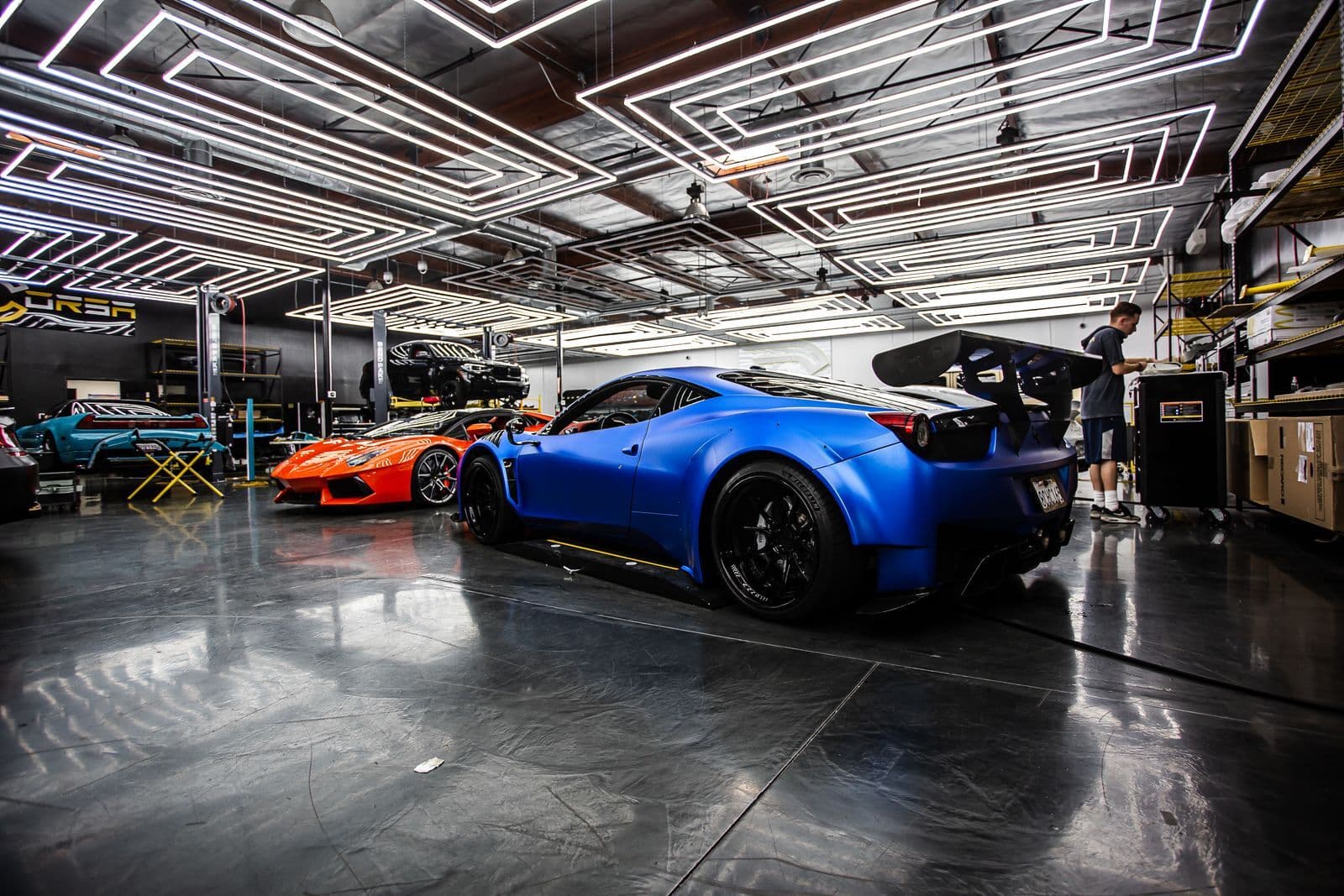
"The cheapest Ferrari is the most expensive one" is the oldest joke in exotic ownership, and like most durable jokes it's a compressed truth: with supercars, the purchase price is the entry fee, and the running costs are the membership dues — charged whether or not you actually drive the thing. Nobody can quote you a universal number, and this article deliberately won't invent one. What it can do is map the cost structure, because the structure is consistent across marques even when the invoices differ wildly — and knowing the structure is what separates owners who budgeted from owners who got ambushed.
Supercars cost money by the year, not the kilometre. A garaged car that never turns a wheel still consumes services, insurance, registration and rubber — time, not distance, drives the meter.
Servicing: the calendar is the odometer
Exotic service schedules run on time as much as distance — annual minor services regardless of kilometres, and periodic majors that are the category's defining expense. The classic example is the cam-belt service on certain older mid-engined cars, which on some models requires partially removing the engine and is priced accordingly; modern cars swapped belts for chains but added their own majors (gearbox services, hybrid-system checks). Three structural rules: majors are dated, so a car "just due" for one is quoting you its price gap; specialist labour rates reflect genuine scarcity of marque expertise, and the good workshops in each capital have waiting lists; and skipped services cost more than they save, because the used market prices history gaps as forecasts.
Consumables at another scale
Everything a supercar touches the road with is priced to match its performance. Tyres in low-profile, high-speed-rated sizes cost multiples of family-car rubber and wear faster, especially the rears on powerful rear-drive cars — and enthusiastic use shortens their life dramatically. Brakes escalate further: cars fitted with carbon-ceramic discs enjoy long street life, but replacement discs, when they're eventually needed or are damaged, are famously among the most expensive consumables in motoring. Add premium fuel (98-octane, usually non-negotiable), fluids in racing specifications, and batteries that die from under-use rather than age — a trickle charger is the cheapest insurance in the exotic world.
Insurance and registration, the Australian angle
Mainstream insurers often decline or clumsily price genuine exotics, pushing owners to enthusiast specialists with agreed value and limited-use pricing — the mechanics are the same ones our classic insurance guide explains, and this series returns to supercar-specific insurance in depth soon. Registration is the quieter line: full rego on a rarely-driven car is pure overhead, which is why eligible older exotics increasingly wear club plates or concessional registration — dramatic savings in exchange for usage limits. The compulsory injury cover inside rego, and what it doesn't touch, works exactly as our insurance FAQ hub describes for any car.
The costs nobody budgets
Storage, if your garage situation doesn't suit a low, wide, precious car (secure storage in capital cities is its own market). Transport, because some owners truck cars to distant services or events rather than add highway kilometres. Detailing and paint protection at exotic standards. Depreciation — still the biggest single cost on most models, for all that it's invisible until sale day. And the contingency line: low-volume cars surprise, parts cross oceans, and a four-figure buffer per year is the difference between a story and a crisis.
Making it survivable
The structure suggests its own strategies. Buy the best-documented car, not the cheapest — deferred maintenance is the most expensive discount in motoring. Get the pre-purchase inspection and treat its findings as year-one budget. Join the marque club before you buy: collective knowledge about which specialists to trust is worth the membership alone. Time big purchases to the service schedule — buying a car with a fresh major is buying someone else's invoice. And drive it: cars that sit develop the expensive problems, and the whole point of the dues is the driving.
What this means if you're selling on MotorLoop
Running-cost fear is the biggest brake on exotic buyers — so a listing that removes it sells: name the specialist who services the car, list the recent invoices, state when the next major falls. That transparency is worth real money. Listing is free, and buyers doing exactly this homework browse used cars here daily.
Related
- Buying your first exotic car in Australia: the realistic path
- Supercar depreciation: the heroes and the craters
- Club plates and concession registration: drive your classic for less
- Insuring a classic: agreed value, laid-up cover and the questions to ask
FAQs
How much does it cost to service a supercar in Australia?
There's no honest universal figure — it varies enormously by marque, model and what's due — but the structure is consistent: annual time-based minor services regardless of kilometres, plus periodic major services that constitute the category's defining bills. Always establish where a specific car sits in its service cycle before buying.
Do supercars cost money even if you barely drive them?
Yes — that's the defining feature of the category's economics. Services are scheduled by time, insurance and registration accrue by the year, tyres age out as well as wear out, and batteries suffer from sitting. A supercar's meter runs on the calendar, not the odometer.
How do owners reduce supercar running costs?
Buy documented cars with fresh major services, use marque specialists via club recommendations, put rarely-driven eligible cars on concessional registration, insure at agreed value with limited-use pricing, keep the battery on a maintainer — and drive the car regularly, because disuse creates the expensive failures.