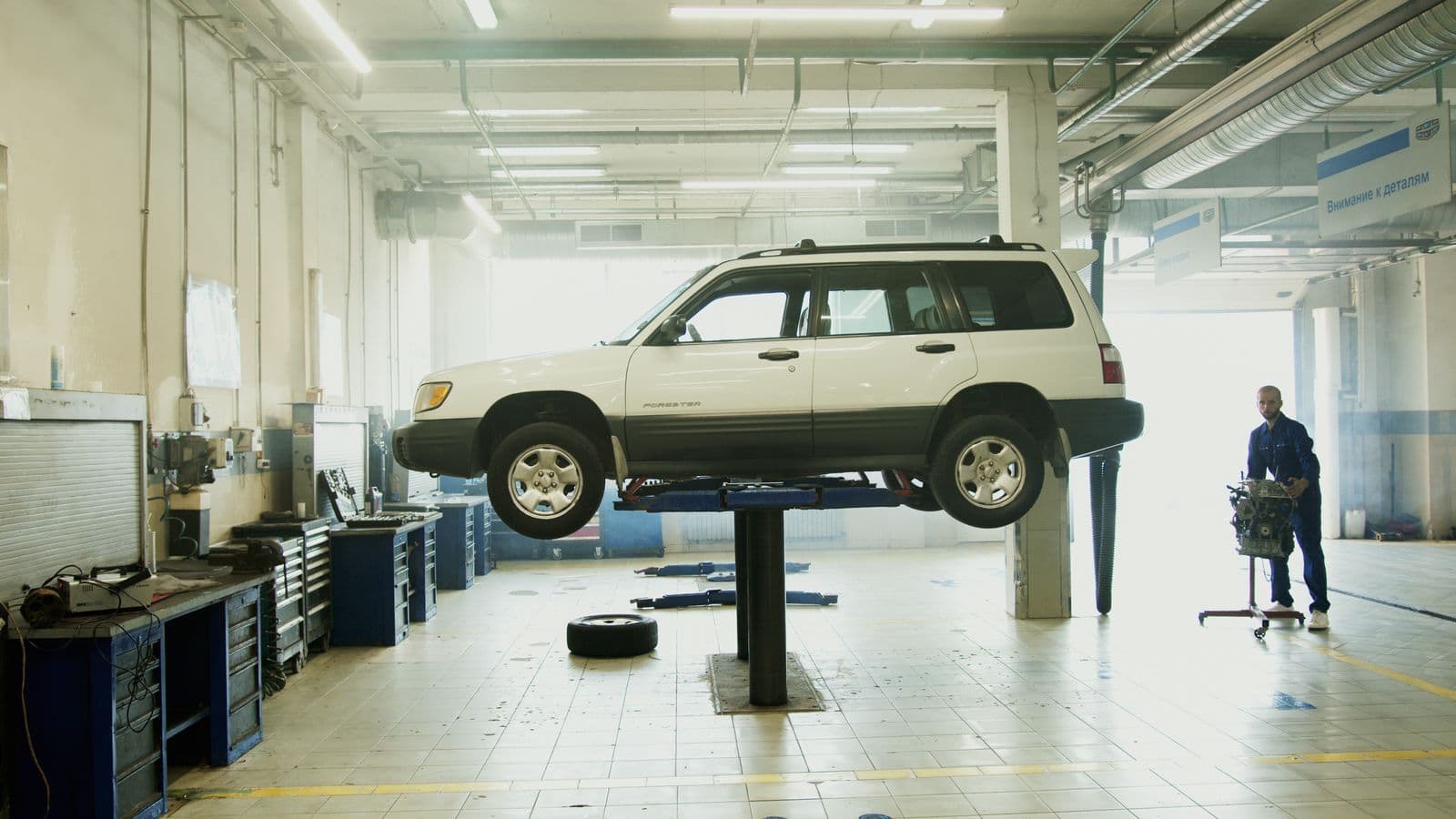
A car recall obliges a vehicle supplier to fix a safety defect or standards non-compliance — usually through the dealer network. Since 1 July 2021, Australian road-vehicle recalls run under the Road Vehicle Standards Act, and notices are published on the government's Vehicle Recalls register. Checking any car takes minutes.
In October 2024 the department warned about a scam involving people impersonating dealership staff and offering to collect vehicles for "outstanding recalls". Genuine recall work is arranged by you with the brand or its dealers — treat anyone who cold-calls and wants to take your car away with suspicion.
What a recall actually is
Under the Road Vehicle Standards legislation, road vehicles and approved components supplied to the Australian market must comply with national standards, and where they don't comply — or there is an issue with safety — suppliers should undertake a recall to fix the issue or remove the item from the market as soon as possible (vehiclerecalls.gov.au (opens in a new tab)). Most recalls are voluntary: the company acts on its own initiative because it has identified a problem. A recall becomes compulsory when the responsible Commonwealth Minister issues a compulsory recall notice to a supplier who appears not to have taken satisfactory action to prevent injury or rectify non-compliance (vehiclerecalls.gov.au (opens in a new tab)).
The net is drawn wide. You are treated as a "supplier" if you manufacture, import, distribute, retail, supply or resupply road vehicles or approved components into Australia by sale, exchange, lease, hire or hire purchase — so grey imports and independent importers can carry recall obligations too (vehiclerecalls.gov.au (opens in a new tab)). The department, for its part, administers the legislation, works with the supplier throughout the process and monitors each recall through to completion; it can also compel information using disclosure notices where it reasonably believes a person holds evidence about unsafe vehicles, and refusing one — or providing false or misleading information — carries consequences up to significant financial penalties, criminal prosecution and imprisonment (vehiclerecalls.gov.au (opens in a new tab)).
The system changed on 1 July 2021
Recalls used to be administered under the Motor Vehicle Standards Act 1989. On 1 July 2021 that was replaced by the Road Vehicle Standards Act 2018, and responsibility for road-vehicle recalls moved from the ACCC to the federal infrastructure department, with new recall notices published from that day on the Vehicle Recalls website rather than the ACCC Product Safety site (productsafety.gov.au (opens in a new tab)). Suppliers must now submit recalls through the department's ROVER system within two days of taking action (productsafety.gov.au (opens in a new tab)), notify the department formally within two days of taking voluntary recall action on vehicles supplied in Australia, and then prepare both a recall strategy and a communication strategy for reaching affected owners as quickly and effectively as possible, with progress reports through to completion (vehiclerecalls.gov.au (opens in a new tab)).
The ACCC hasn't disappeared from the picture entirely: it still handles recalls of vehicle-related consumer goods that fall outside the road-vehicle regime — think child restraints, quad bikes and caravan appliances — along with the compulsory Takata airbag recall it continues to administer (productsafety.gov.au (opens in a new tab)).
How recalls are announced — and how you hear about them
Recall notices are published on the Vehicle Recalls website; the department drafts them from the supplier's notification and asks the supplier to review before publication, and each notice sets out what affected owners should do and who to contact with questions (vehiclerecalls.gov.au (opens in a new tab)). Notices land steadily rather than in bursts — in the fortnight to late August 2026 alone the register listed fresh recalls covering vehicles including a Ford Ranger (2025–26), a Toyota Camry hybrid (2024–26) and various Mercedes-Benz models (2018–26) (vehiclerecalls.gov.au (opens in a new tab)). Beyond the register, manufacturers are expected to reach owners directly where they can: consumer guidance notes that suppliers may contact you about a recall using the email address, phone number or mailing address they hold for you (productsafety.gov.au (opens in a new tab)).
If you'd rather not rely on a letter arriving, the department offers free email updates for vehicle and component recalls (vehiclerecalls.gov.au (opens in a new tab)), and there is a plain-English owner's guide to the recall process among its published factsheets (vehiclerecalls.gov.au (opens in a new tab)).
How to check a specific car for recalls
For road vehicles, the official lookup is vehiclerecalls.gov.au (opens in a new tab) — the register covers cars, motor bikes, caravans and motorhomes, trailers, trucks and buses, plus approved road-vehicle components, and you can browse by category or use the site search against make and model names (vehiclerecalls.gov.au (opens in a new tab)). One honest limitation: the national register search works on keywords rather than offering a single government-run VIN lookup, so the practical routine is to search the make and model, read the affected build ranges on any matching notice, and — if anything looks close — confirm against your own 17-character VIN with the brand or a dealer.
Manufacturer tools fill that gap for many brands. When Australia's biggest compulsory recall — defective Takata airbags — was ordered in 2018, suppliers were required to publish VIN search tools on their websites so consumers could check whether their specific car was affected, alongside direct contact of affected consumers (productsafety.gov.au (opens in a new tab)); many brands have kept similar VIN checkers running since. For anything vehicle-related that isn't a road vehicle under this regime — accessories and other consumer goods — the searchable database is the ACCC's product-safety recalls site instead (productsafety.gov.au (opens in a new tab)).
Buying used: fold the recall check into the inspection
A recall history is rarely a deal-breaker, but an open recall is something you want to know about before money changes hands. Before you inspect, run the make, model and year through the Vehicle Recalls register (vehiclerecalls.gov.au (opens in a new tab)); at inspection, ask whether outstanding recall work has been carried out and keep the seller's answer honest by noting that fixes generally remain available well after the announcement — in the Takata case, suppliers carried an ongoing obligation until the recall reached completion, and people who had never got around to it were told to contact their manufacturer for a replacement even years later (productsafety.gov.au (opens in a new tab)). If the seller has service history, recall work usually appears in it; if not, the brand can check what's outstanding against the VIN.
The breadth of that "supplier" definition is useful here too. Because businesses that retail or resupply road vehicles count as suppliers alongside manufacturers and importers, a franchised dealer sits inside the recall system as well — which gives you a clear party to ask pointed questions and to book any outstanding work through after you take ownership (vehiclerecalls.gov.au (opens in a new tab)).
One thing we deliberately won't tell you: what a private seller is legally required to disclose about open recalls. We could not verify a single national rule covering private sales during research for this piece, so rather than guess, our advice is simpler — ask directly, verify with the brand, and make the answer part of your price negotiation. A recall check also complements the other pre-purchase checks worth doing: our buyer's guide covers the PPSR search for finance, write-off and stolen status, plus inspections and scam-spotting (motorloop.com.au (opens in a new tab)).
If your car is named in a recall notice
Read the notice before anything else — it will state the risk and the action to take, and for consumer products the standing advice is to stop using the item and contact the supplier without delay (productsafety.gov.au (opens in a new tab)). With vehicles, that means booking with the brand or an authorised dealer, quoting the notice or your VIN — and from there the department keeps a watching brief, monitoring progress through to completion rather than closing the file the day the notice goes up (vehiclerecalls.gov.au (opens in a new tab)).
On cost, be precise about what the rules actually say. The RVS framework leaves the choice of remedy to the supplier (vehiclerecalls.gov.au (opens in a new tab)) — though in practice recall repairs are arranged through dealers at no charge to the owner, and in the Takata compulsory recall replacements were explicitly required at no cost to the consumer, including towing or loan cars in certain circumstances (productsafety.gov.au (opens in a new tab)). Treat the wording of your particular notice as the source of truth for what you're entitled to. And if a supplier ever tries to charge you for a safety recall repair, or you spot a recalled product being sold, the ACCC wants to hear about it via its unsafe-product reporting channel (productsafety.gov.au (opens in a new tab)).
Checking before you buy on MotorLoop
Listings on MotorLoop carry the details you need for a quick recall sweep — make, model year and often the registration plate — so add the Vehicle Recalls register to your inspection shortlist alongside a PPSR search and a mechanical check. Recalls surface regularly across all brands, as our July 2026 wrap of 33 published vehicle recalls shows (motorloop.com.au (opens in a new tab)); ten minutes with the register and the seller's answers tells you whether the car you're eyeing has an open item, whether it's serious, and how quickly a dealer can close it out after you take ownership.
Related
- 33 vehicle recalls published in July — and how to check a used car (motorloop.com.au (opens in a new tab))
- The Australian used car buyer's guide: PPSR, roadworthies, inspections and avoiding scams (motorloop.com.au (opens in a new tab))