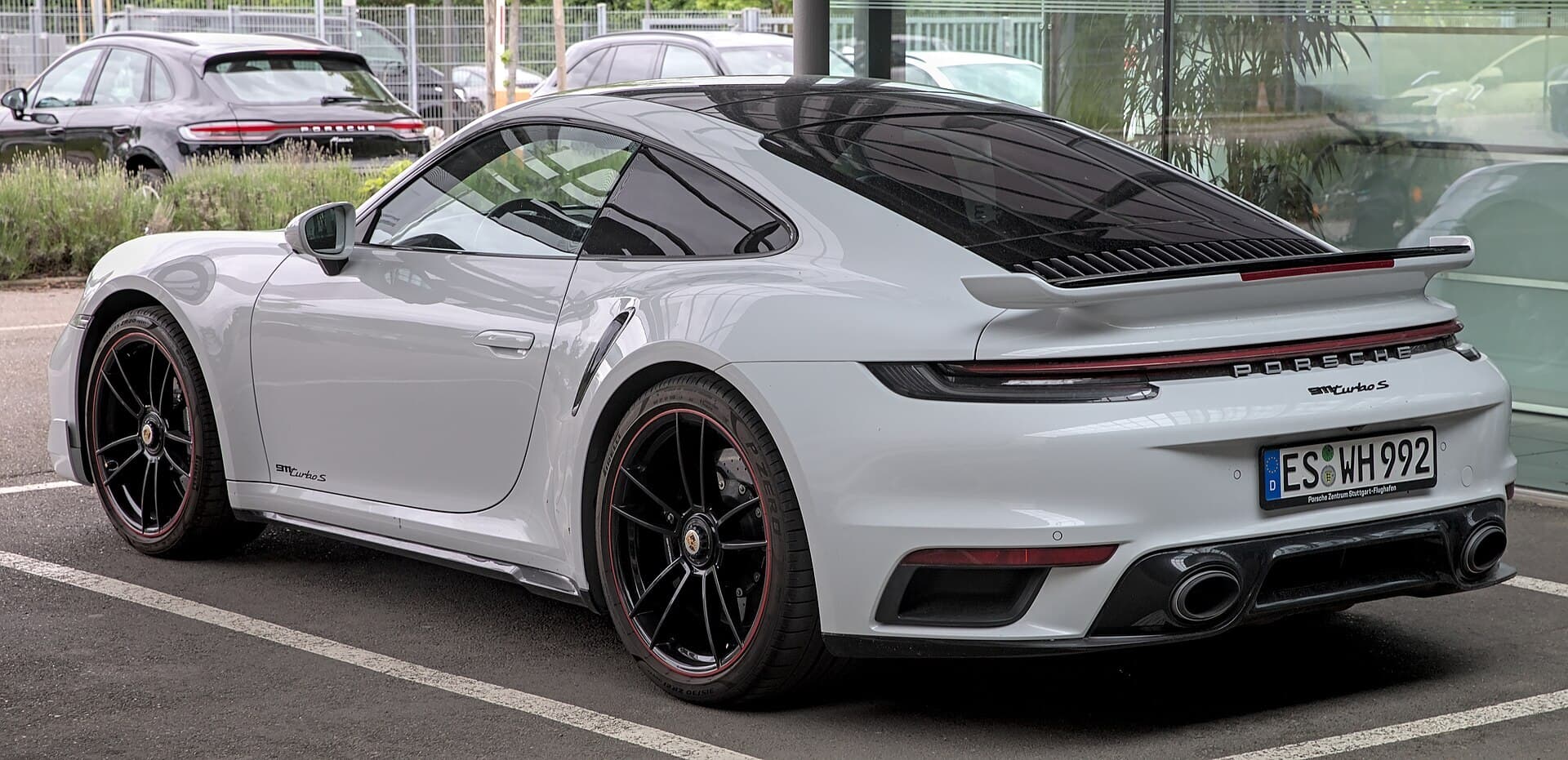
Porsche delivered 16 per cent fewer cars worldwide in the first nine months of 2026, but it sold 12 per cent more 911s. In Australia the gap is starker: by the end of October, buyers here had taken 930 new 911s (opens in a new tab), already more than in any full calendar year on record. We think the reason is simple, and you only find it from the driver's seat. People who haven't been in a proper sports car don't know what they're missing.
The numbers say the most expensive, most focused Porsches are the ones people want. The rest of this piece is about why, and how an Australian can get into one without spending new-911 money.
- 930
- New 911s sold in Australia, Jan to Oct 2026
- +12%
- Global 911 deliveries, first nine months of 2026
- -16%
- Porsche's total global deliveries, same period
The Australian numbers
CarExpert's VFACTS-based database shows the 911's yearly Australian sales running at a few hundred cars for most of the past 30 years. The figure was 724 in 2025, 783 in 2024 and 558 in 2023 (opens in a new tab). The 2026 year-to-date figure, from the October dataset, is 930, up 59 per cent on the same period last year. With two months still to count, 2026 is already the 911's biggest year here.
That's happening while Porsche as a whole goes the other way. Australian sales across the brand fell 27 per cent to 5,133 in 2025 (opens in a new tab), according to CarExpert's report of the VFACTS figures. Buyers are walking past the SUVs and the electric cars and lining up for the rear-engined two-door.
What Porsche reported in October
Porsche's own figures, released on 9 October (opens in a new tab), put global deliveries for January to September at 178,532, down from 212,509 a year earlier. The 911 was the standout at 42,217, up 12 per cent, and Porsche said demand for the GTS, Turbo and GT versions was strong. In the release, Becker said the high share of top derivatives "highlights the exceptional appeal of our brand".
The rest of the range told a different story. The 718 Boxster and Cayman fell 79 per cent to 3,291 because production ended in October 2025. The Taycan fell 31 per cent and the Panamera 35 per cent. The Cayenne held up at 59,586, including 7,002 of the new electric version.
Porsche's financial update for the period reported operating profit of €1.74 billion (opens in a new tab) on revenue of €25.28 billion. That fits the "value over volume" line we covered when the half-year figures came out (opens in a new tab).
Combustion stays, and the 911 stays combustion
Porsche's new chief executive, Michael Leiters, has been clear about the direction. At the company's capital markets day he told investors the company will keep combustion engines, plug-in hybrids and electric cars, with two combustion or hybrid variants to follow for every battery-electric one (opens in a new tab). He said the transition had proved "more complex" than many expected. And on the car that matters most to us: "I can assure you: the 911 will never be electric."
The same report says Porsche plans a new small SUV with combustion and hybrid power for 2028, a mid-engined platform for a model above the 911, and about 20 per cent fewer model variants. We'd read the 911 sales and that promise together. Porsche is following its buyers back towards engines.
I can assure you: the 911 will never be electric.
Why a Porsche feels the way it does
This section is opinion, and we don't pretend otherwise. A good Porsche feels different because of where the weight sits and how directly the car talks to you. In a 911 the engine hangs out behind the rear axle, which is the "wrong" answer Porsche has spent six decades refining, as our guide to the 911 as an everyday exotic (opens in a new tab) explains. The front feels light and eager, the steering tells you what the tyres are doing, and the rear digs in when you get back on the throttle out of a corner. In a Boxster or Cayman the engine sits in the middle, and the car pivots around you.
Then there's the engine. A naturally aspirated flat-six, the kind we wrote about in our piece on the 992 Cup car's last Bathurst (opens in a new tab), revs hard, sounds busy and builds to a crescendo. You feel it through the seat as much as you hear it.
None of that shows up on a spec sheet. A family SUV can match a 911's 0 to 100 km/h time now, and an electric car can beat it. But fast is not the same as felt. Plenty of people just want to get from A to B, and that's fine. The people buying 911s in record numbers are the ones who want to enjoy the trip, and we think anyone who has driven a good Porsche on an empty country road understands it immediately. If you haven't, it's hard to explain, and that's exactly the point.
Germany: the home market
Porsche's home market shows the same pattern from a different angle. Deliveries in Germany fell 7 per cent to 20,954 (opens in a new tab) in the first nine months, a smaller drop than the brand's global 16 per cent or China's 33 per cent. North America stayed the largest region at 56,088.
What stands out about Germany is that the decisions about the 911's future are being made there, in Stuttgart, by a company that tried to lead the move to electric sports cars and is now cutting management roles by 40 per cent over the medium term (opens in a new tab) while promising more combustion and hybrid models. In our view, the company that knows the 911 best has concluded that the engine is part of what it is selling.
The used route for Australians
You don't need a new 911 to find out what we're talking about. The used market is where most Australians will get their first Porsche, and the cars to look at are older 911s, Boxsters and Caymans.
- 986 Boxster (1997 to 2004) and 996 911 Carrera (1999 to 2005). The first water-cooled cars and usually the cheapest way into a Porsche. They carry the best-known risk: the intermediate shaft (IMS) bearing in the M96 flat-six, a part inside the engine that can fail without much warning. A buyer's guide compiled by CarWhere lists these cars as affected (opens in a new tab), with 2001 to 2005 single-row bearings having the worst record.
- 987.1 Boxster and Cayman (2005 to 2008) and 997.1 911. Also on the affected list, though CarWhere says the larger bearing used from about 2006 rarely fails.
- 987.2 and 997.2 (from 2009). These use a newer engine with no intermediate shaft, so the IMS question goes away. Expect to pay more for that peace of mind.
- Turbo, GT2 and GT3 versions of the 996 and 997. These use the older Mezger engine and are not affected, but they are collector money now.
CarWhere cites Hagerty's figure of about US$3,000 for a preventive bearing replacement done with a clutch, against US$20,000 to US$30,000 for an engine rebuild after a failure. Those are American prices, so treat them as a guide to the scale of the risk rather than an Australian quote.
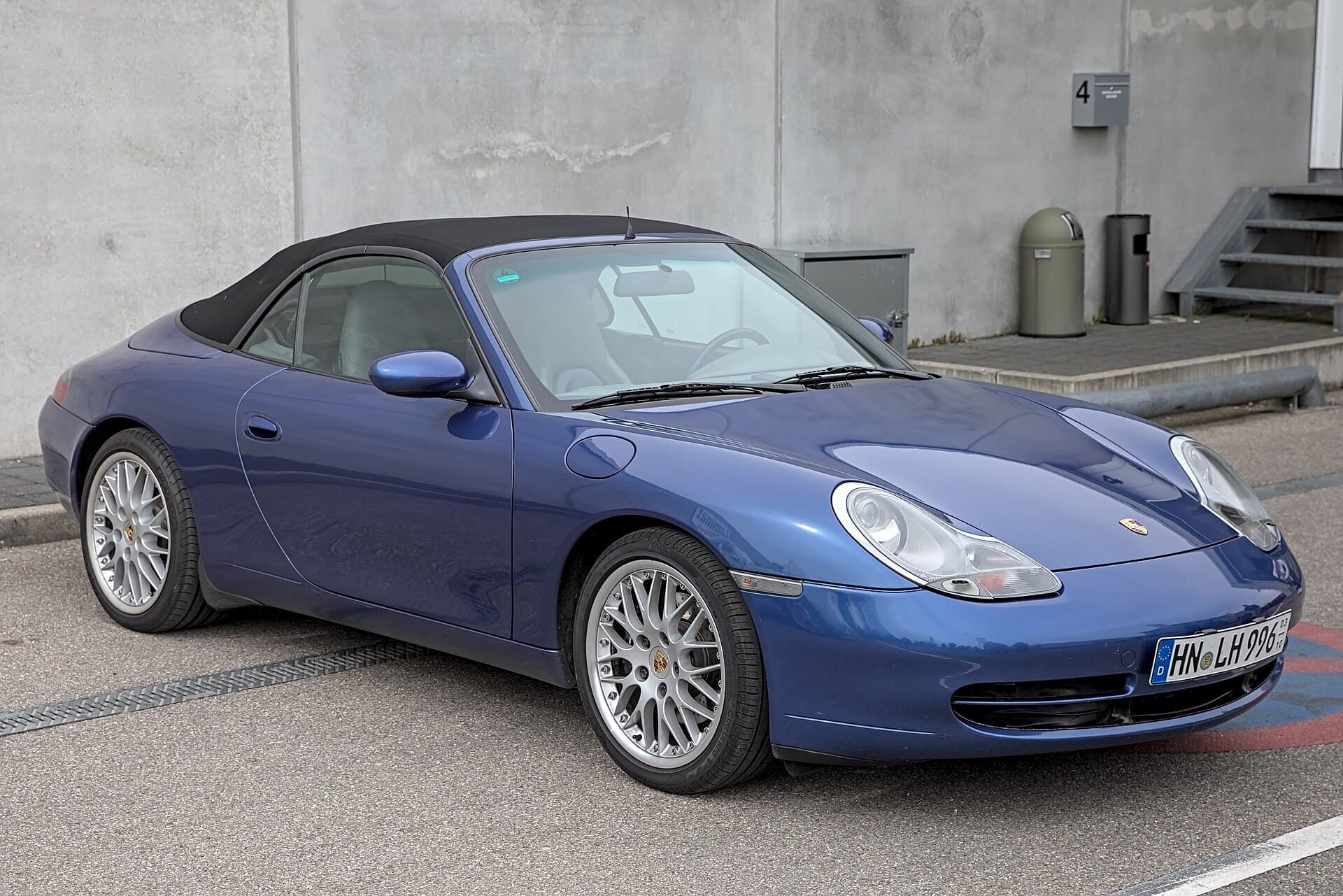
If you'd rather a mid-engined car, the petrol 718 Boxster and Cayman are now finished: Porsche has confirmed the next generation will be electric, as we covered in our piece on the 718's move to the used market (opens in a new tab). That makes the last petrol cars worth a look, and in our view the six-cylinder versions are the ones to want.
What it means if you're buying or selling
Buying new. A new 911 is a long wait and a big cheque, and the strong demand for GTS, Turbo and GT versions that Porsche reported doesn't suggest discounts. Talk to more than one dealer and ask about allocation honestly.
Buying used. Buy the best-documented car you can afford rather than the newest. Service history, a specialist inspection and proof of IMS work on the older cars matter more than colour or kilometres. Join a Porsche club before you buy: our guide to Australian car clubs (opens in a new tab) explains why, and club members know which cars and workshops to trust.
Selling. If you own a well-kept manual 911, Boxster or Cayman with paperwork, the market is with you. Photograph the service book and any IMS invoices, and say clearly what has and hasn't been done. You can buy, sell & show cars on MotorLoop, and it's free.
Our take
Porsche spent the past few years telling us the future was electric. Its buyers have answered by choosing the 911, the car that will keep an engine, in bigger numbers than ever, while sales of the electric Taycan slide. Australia has bought more new 911s in ten months of 2026 than in any full year before.
We think that's because a Porsche is one of the few cars left that is built to be felt rather than just measured. If you've never driven one, find a way to: a friend's car, a club day, a sensible used 987. Some people want to get from A to B. A Porsche is for the people who want the bit in between, and we're firmly in that camp.
Header photo: Alexander Migl (opens in a new tab) via Wikimedia Commons, CC BY-SA 4.0 (opens in a new tab).
Related
- The Porsche 911: the everyday exotic (opens in a new tab)
- Porsche's next Boxster and Cayman go electric. The petrol 718 now lives on the used market (opens in a new tab)
- Porsche's 992 Cup car runs its last Bathurst this weekend. The flat-six is the point (opens in a new tab)
- The manual gearbox is vanishing from showrooms, and becoming the option enthusiasts pay for (opens in a new tab)