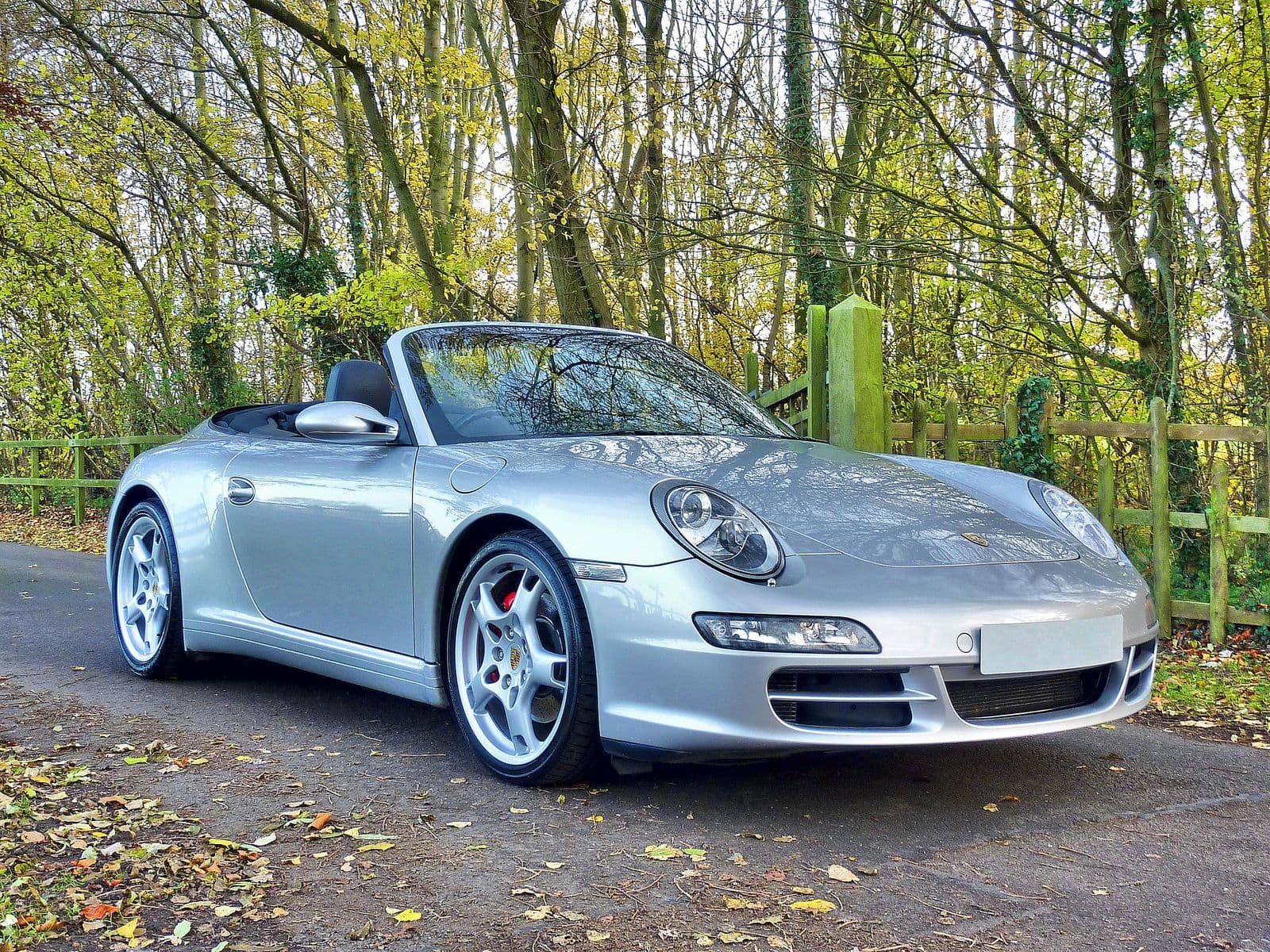
The Porsche 911 is the awkward case in every supercar taxonomy — which is precisely why it belongs in this series. It has four seats (allegedly), a usable boot, glass you can see out of, and generations of owners who genuinely daily-drive it. By the definitions this series opened with, much of the range is a sports car, not a supercar. And yet its top variants humble supercars on any circuit, its silhouette is among the most recognisable objects in industrial design, and its used market behaves like a blue-chip exotic's. The 911 earned its own category: the everyday exotic.
The 911's engine has hung out behind the rear axle — the "wrong" place — since 1963. Sixty years of refusing to fix the mistake, and instead perfecting it, built the most complete performance car lineage on Earth.
The wrong answer, perfected
Launched in 1963 (badged 901 until Peugeot objected to the middle zero), the 911 inherited its rear-engine layout from the Beetle-derived 356. Physics said the layout was a liability — a pendulum hung behind the rear axle — and early cars' lift-off behaviour built the reputation that spawned a thousand hedge jokes. Porsche's response defines the company: rather than move the engine, it spent six decades domesticating the pendulum — wider tracks, wheelbase stretches, suspension science, and eventually electronics — until the "flaw" became the signature: traction out of corners that mid-engined rivals envy, and a handling character no other layout produces.
Air-cooled to water-cooled: the great divide
The family tree splits at 1998, when the 996 generation swapped air-cooled flat-sixes for water-cooled ones. The air-cooled cars — through the beloved 993 — became the collector totems, with values that surged spectacularly during the 2010s (the depreciation piece uses them as its textbook case). The early water-cooled cars, long the affordable door into ownership, have their own well-documented engine caveats on certain variants — the kind of model-specific knowledge that makes a marque-specialist inspection non-negotiable, per the first-exotic playbook.
Reading the ladder
The bewildering variant alphabet resolves into three intents. Carrera grades are the sports cars — the daily-drivable core. Turbo models are the everyday supercars: colossal, all-weather, all-wheel-drive speed with no track pretensions required. GT cars — GT3, GT3 RS, GT2 lineages — are the motorsport department's road cars, the variants that outrun genuine supercars and whose limited allocations have made them the modern collector phenomenon: recent-generation GT cars have routinely traded above list, manual and special-series examples especially, a live demonstration of the hero patterns the depreciation piece catalogued. (No guarantees, as ever — markets that rise on allocation scarcity can cool with it.)
Why it matters to this series
The 911 is the control experiment of the exotic world. It proves drama and usability aren't opposites; its resale behaviour gives every other marque's buyers a benchmark; and it's the single most common answer to "what's a realistic first step into serious performance ownership in Australia" — specialist support is deep in every capital, parts supply is genuinely industrial, and the cars tolerate actual use. The catch is that none of this is a secret: the market prices 911 durability and desirability fully, and the bargain 911 is largely a myth. You pay for the everyday part of the everyday exotic.
What this means if you're buying or selling on MotorLoop
911 buyers are the most literate in the market — they know the variant codes, the service intervals and the option codes that matter. Sellers: state generation, variant and gearbox in the listing title's first line, and document the history completely. Buyers: the ladder means there's a 911 shape for almost every budget — browse used cars and be patient for the right spec. Listing is free, and a cherished one that isn't for sale belongs on a showcase page.
Related
- Supercar, hypercar, exotic: what the labels actually mean
- Buying your first exotic car in Australia: the realistic path
- Supercar depreciation: the heroes and the craters
FAQs
Is a Porsche 911 a supercar?
Most of the range is better described as a sports car — usable, practical, daily-drivable — while the Turbo and GT variants deliver genuine supercar performance. That straddle is the model's whole identity: it's the exotic-adjacent car you can actually live with, which no strict label captures.
Why does the 911 keep its engine in the back?
History, then identity, then engineering pride. The layout arrived from the 356 lineage in 1963, and instead of abandoning it Porsche spent decades refining it — the rear weight gives distinctive traction and character, and modern chassis engineering long ago tamed the early cars' pendulum reputation.
What's the difference between air-cooled and water-cooled 911s?
1998 is the divide: cars before it (through the 993) use air-cooled flat-sixes and have become collector totems with values to match; cars after use water-cooled engines, offer far more performance per dollar, and include specific variants with well-documented engine caveats — which is why specialist pre-purchase inspections matter on both sides of the line.