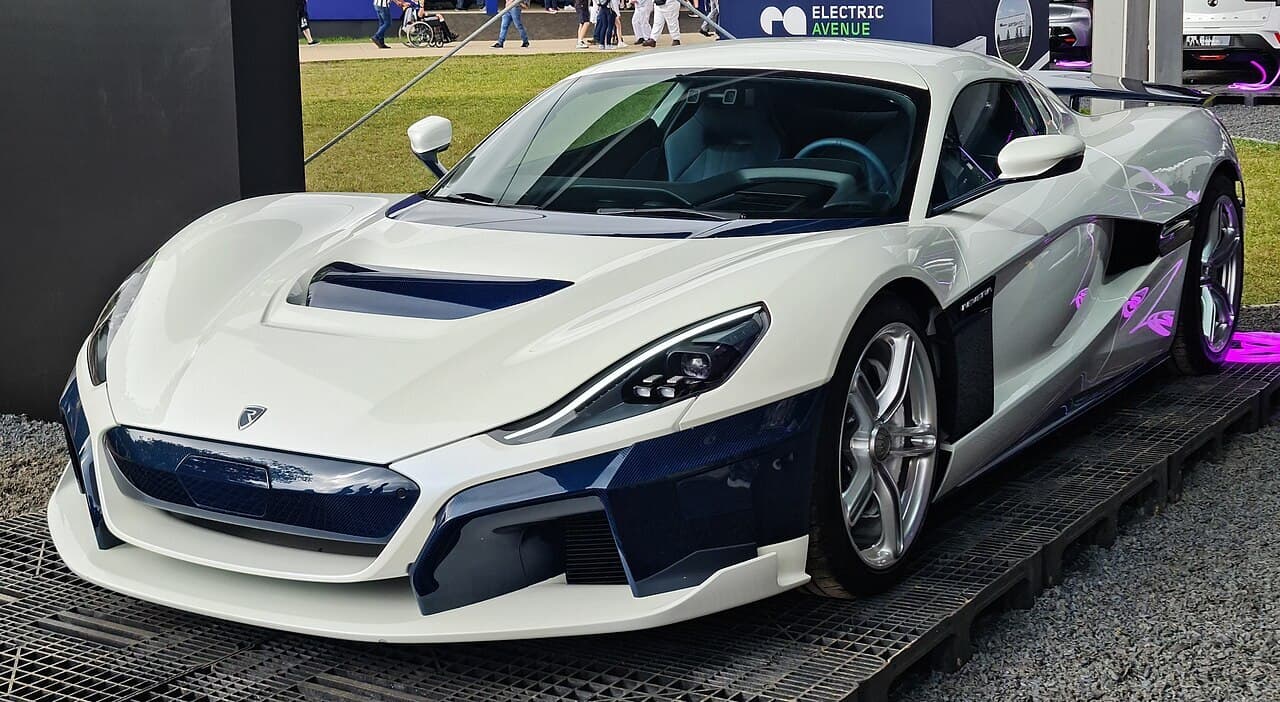
Are buyers turning up for electric sports cars and supercars? On the evidence of the last few weeks, mostly not. Rimac has stopped building its Nevera at 71 cars against a plan of 150, Lamborghini has put its electric car off indefinitely, and in Australia the Porsche Taycan has sold 70 cars in ten months while the petrol 911 has sold 930. Ferrari says its electric Luce is sold out. We think the market is telling the makers something, and it's what enthusiasts have been saying all along.
- 71
- Rimac Neveras built, against a plan of 150
- 70
- Porsche Taycans sold in Australia, January to October 2026
- 930
- Porsche 911s sold in Australia over the same months
Australia: the 911 is up, the Taycan is down
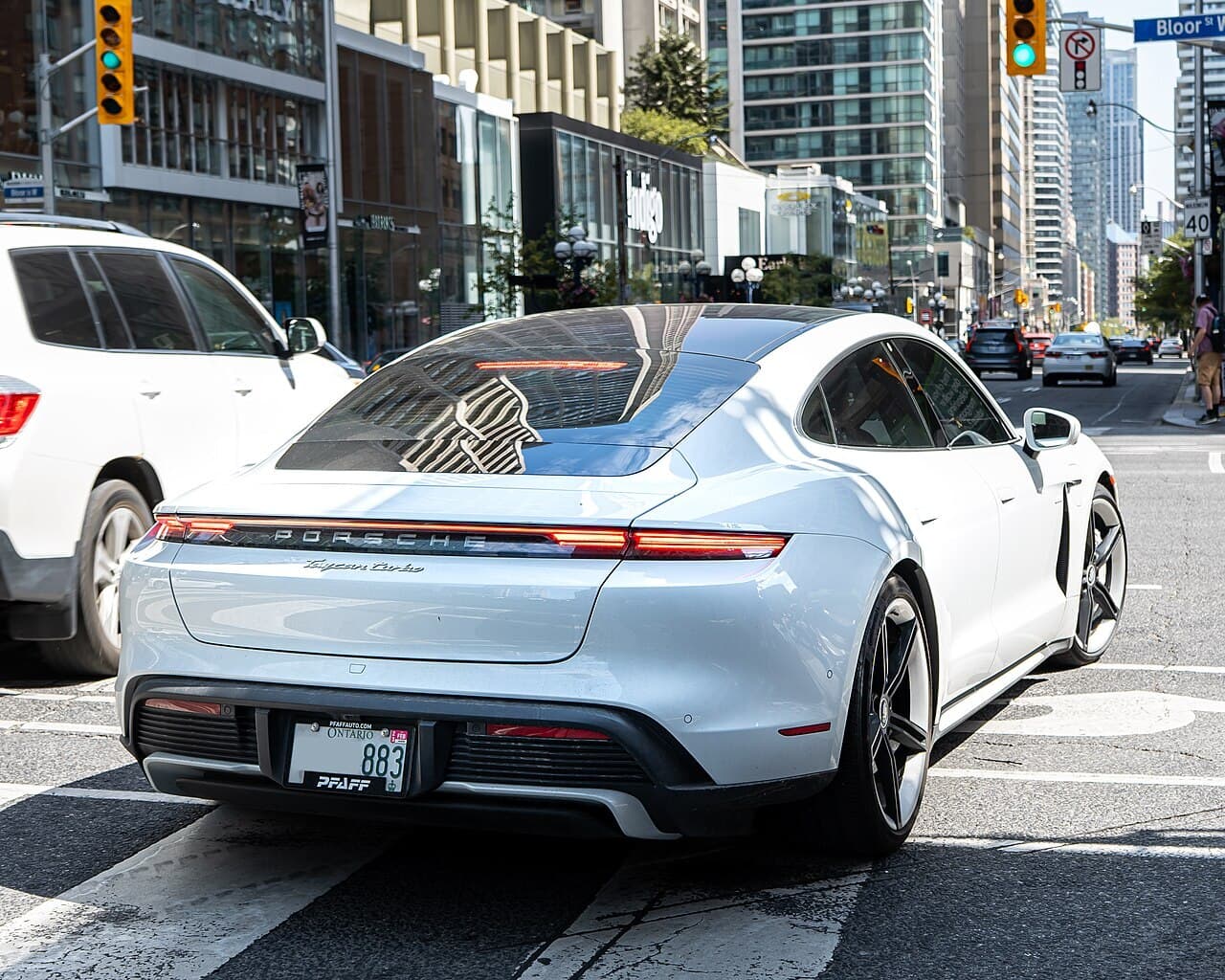
Start at home, with the one brand that sells a serious petrol sports car and a serious electric one side by side. CarExpert's VFACTS-based sales database shows the Porsche Taycan (opens in a new tab) peaked here at 535 sales in 2023, fell to 282 in 2024 and 176 in 2025, and stands at 70 for 2026 to the end of October, down 56.5 per cent on the same period last year.
The same database shows the Porsche 911 (opens in a new tab) at 930 sales to the end of October, up 59 per cent on the same period last year and already past its 2025 full-year total of 724.
These are small numbers and one brand, so we won't pretend they are a census. The Taycan is also a four-door, not a two-seat sports car. But it is the closest thing Australia has to a controlled test: same badge, same dealers, same sort of buyer, same sort of money. Given the choice, Australian Porsche buyers are walking past the electric car to the one with a flat-six in the back.
Lamborghini offers no electric car to choose here at all. It sold 272 cars in Australia in 2025 (opens in a new tab), one fewer than the year before, out of a record 10,747 worldwide, according to CarExpert.
The world view: the makers are saying it out loud
Rimac. If any company should be able to sell an electric hypercar it is the one that built the quickest. Torquecafe reported on 11 November (opens in a new tab) that founder Mate Rimac used an Instagram video to confirm the Nevera's final tally: 51 standard cars and 20 Nevera Rs, 71 in all, against an original plan of 150. "It's the most sold electric hypercar in the world," he said. "So, it did its job." The same report says no direct successor has been named.
That end was signposted. At a Financial Times conference in May 2024, Motor1 reported (opens in a new tab), Rimac said governments and car makers were "pushing stuff on us that we don't want" and that people were "a little bit repulsed by it". Motor1's summary of his argument was that buyers at the top of the market now want combustion engines and an analogue feel to set themselves apart from mainstream electric cars.
Porsche. Worldwide, Porsche's nine-month delivery figures (opens in a new tab) show the 911 up 12 per cent to 42,217 cars while the Taycan fell 31 per cent to 8,699. Sales chief Matthias Becker said customers "are deliberately choosing the exclusive and most emotionally engaging versions of our sports cars". The electric Macan is the fair counter-example: 23,029 delivered, close to half of all Macans. That's an SUV people use as transport, and it supports our point more than it hurts it. Electric power sells where the journey is a chore, and struggles where the journey is the reason.
Lotus. The British maker once planned to sell nothing but battery cars from 2028. electrive reported in May (opens in a new tab) that its Focus 2030 plan now targets a 60:40 split of plug-in hybrids to battery cars, has no new battery models announced, and includes a V8 hybrid supercar for 2028.
One country: Italy, where three makers gave three answers
Italy is the place to look, because its three best-known performance brands have each faced the question and answered differently.
Maserati cancelled. In March 2025 it dropped the electric MC20 Folgore before launch. Its statement, as CarExpert reported it (opens in a new tab), said the project "was stopped due to the current forecast for insufficient demand in the super sports car market" for a battery electric vehicle.
Lamborghini postponed. In February this year chief executive Stephan Winkelmann told CarExpert the brand's fourth model, due in 2029, will be a plug-in hybrid, not the electric car first shown as the Lanzador concept. The reason he gave: "we are ready to do so, but the market is not." He added a line we couldn't put better ourselves: "We are not selling mobility – you don't buy a Lamborghini because you have to go from A to B every day."
Ferrari went ahead, and says it is working. This is the evidence that cuts against us, so here it is straight. Presenting third-quarter results on 3 November, chief executive Benedetto Vigna said of the electric Luce: "Everything we plan to sell next year is already fully allocated," Reuters reported (opens in a new tab). First deliveries are due at the end of this year, and Ferrari is aiming for 20 per cent of its range to be fully electric by 2030.
Our answer is about scale and shape. Vigna declined to give a 2027 sales target. For 2026, CarExpert reported in August (opens in a new tab), citing the Financial Times, the target was just under 500 cars for a company that delivered 15,451 in 2025, or about 3 per cent of output. And the Luce is a five-seat, 2,260 kg car, the brand's first five-seater. Ferrari has shown it can allocate a few hundred electric family Ferraris to its client list. That is a real achievement. It is not the same as buyers choosing electric power for a two-seat sports car, and nobody has been asked to yet.
We are not selling mobility. You don't buy a Lamborghini because you have to go from A to B every day.
Why we think this keeps happening
This is our view, not a measurement. An electric motor solves the problem of speed completely. The Nevera is as quick as a road car needs to be, and then some. But speed was never the whole product. A sports car is bought for the noise building behind your shoulders, a gearchange you timed yourself, and the sense that a machine is working with you. We've argued before that fast is not the same as felt (opens in a new tab), and that Ferrari building a simulated manual (opens in a new tab) is a concession that the mechanical drama was worth something.
There's a second reason, and it's about money as much as feeling. People who spend this much on a car often keep it for decades. A V12 or a flat-six can be rebuilt by a specialist in 30 years. We are less sure anyone will be supplying battery modules and control software for a 2026 hypercar in 2056, and we suspect buyers have made the same calculation.
None of that is a sneer at electric cars as transport. Some people want to get from A to B, and an electric SUV does that quietly and well. Others enjoy the trip. The sales figures suggest the makers confused the two groups, and are now being corrected by their own customers.
What it means if you're buying or selling
Buying a new performance car. Combustion and hybrid choices are not about to vanish. Lamborghini says it plans four plug-in hybrid models by the end of the decade and no electric car "in the foreseeable future". If you were rushing to buy a petrol sports car before it was banned from the showroom, the makers have just given you more time.
Buying a used electric performance car. Falling demand usually means softer used prices, and that can make a used Taycan look like a lot of car for the money. Go in with open eyes. Ask what battery warranty is left and whether it transfers, get the battery's state of health in writing, and price in the chance that the next buyer will be as cautious as you are.
Ordering a Luce. Ferrari Australasia has confirmed orders and allocations for Australia and New Zealand, with customer cars planned for the fourth quarter of 2027, per CarExpert's August report, which put the car at €550,000, about A$898,000 at the time. Whether an early electric Ferrari holds its value like a V12 one is, in our view, an open question that nobody can answer until the cars change hands.
Selling a petrol sports car. You hold what this market wants. A naturally aspirated engine, a manual gearbox and a full service history are worth spelling out in the first line of the ad, as we found when we looked at why manuals now command a premium (opens in a new tab). You can buy, sell & show cars on MotorLoop, and it's free.
Our take
We think the story of 2026 is that the people who buy cars for pleasure were asked whether they wanted them electric, and most said no thanks. Rimac built the quickest car in the world and found 71 homes for it. Maserati cancelled, Lamborghini postponed, Lotus reversed and Porsche's own customers moved to the 911.
Ferrari is the exception worth watching, and we'll hold ourselves to the same rule we apply to everyone else: when Luces are on the road and trading hands, those miles will count and we'll report them. Until then a few hundred allocated cars a year doesn't overturn the pattern.
The makers who listened have kept their engines. We think they're right. Sound, gears and mechanical feel are not nostalgia. They are the product.
Header photo: MrWalkr (opens in a new tab) via Wikimedia Commons, CC BY-SA 4.0 (opens in a new tab).
Related
- Ferrari's new manual is a computer you shift. It proves the clutch pedal still matters (opens in a new tab)
- Porsche's next Boxster and Cayman go electric. The petrol 718 now lives on the used market (opens in a new tab)
- The manual gearbox is vanishing from showrooms, and becoming the option enthusiasts pay for (opens in a new tab)
- The Porsche 918 Spyder: the car that made the Tesla Roadster look like a science project (opens in a new tab)