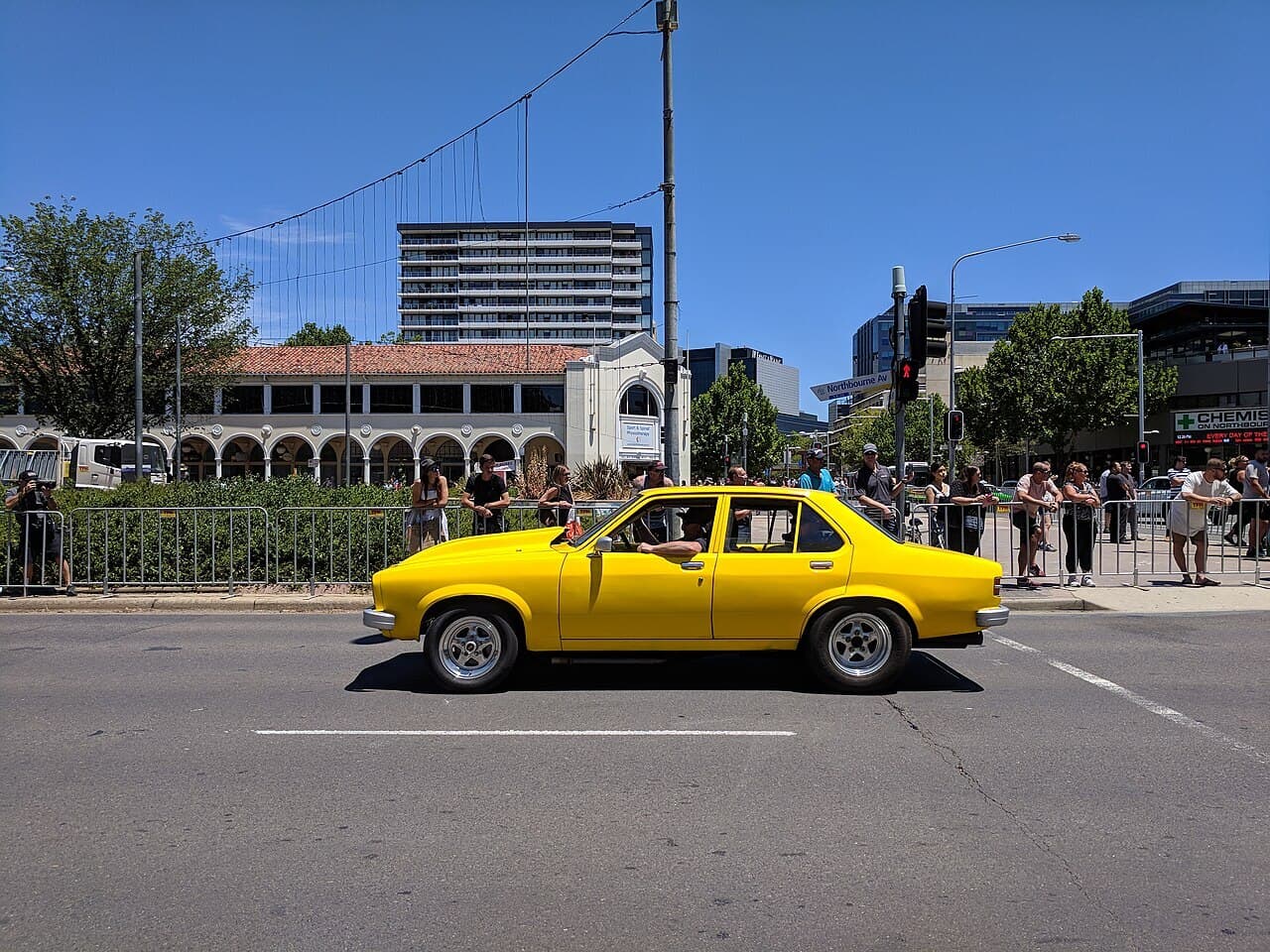
Summernats 39 opens in Canberra on Thursday 7 January 2027 and runs to Sunday 10 January, the ACT Government confirms (opens in a new tab), with The Veronicas and Birds of Tokyo headlining the music. Every year the burnouts get the headlines and the complaints. We think that misses the point. Summernats is where thousands of Australians show what they can build with their own hands, and that's a skill set worth protecting while the rules around noise and modified cars tighten.
Street Machine Summernats 39
- Dates
- 7 to 10 January 2027
- Venue
- Exhibition Park in Canberra (EPIC)
- Summernats 38 entrants
- About 3,000 vehicles
- Summernats 38 crowd expected
- About 130,000 people
- Visitors from outside the ACT
- About 80 per cent
What Summernats is, in numbers
For anyone who hasn't been: Summernats is a four-day festival of modified cars at Exhibition Park, on Canberra's northern edge. Our event listing for Summernats 39 (opens in a new tab) covers the show cars, the burnout competition and the Pro Burnout Series grand final.
It is big. When Summernats 38 opened in January 2026, Region Canberra reported (opens in a new tab) about 3,000 vehicle entrants and an expected crowd of about 130,000 people, with around 80 per cent of festival-goers coming from outside the Territory. The ACT Government's own announcement for this year's event says Summernats "brings major economic benefits to the ACT each year".
Think about what that means. A city that's best known for public servants hands its showgrounds to tens of thousands of people who spent the year rebuilding a car. It's one of the largest car-culture gatherings in the country, and most of the people in it are amateurs.
- 3,000
- Vehicle entrants at Summernats 38
- 130,000
- Expected crowd, January 2026
- 80%
- Festival-goers from outside the ACT
The burnout is the loud part, not the whole part
The burnout pad is what people picture. A car sits on a concrete pad, the driver holds the brakes and spins the rear tyres until they smoke and, in the competitions, blow. It's loud, it's wasteful of rubber and it's not for everyone.
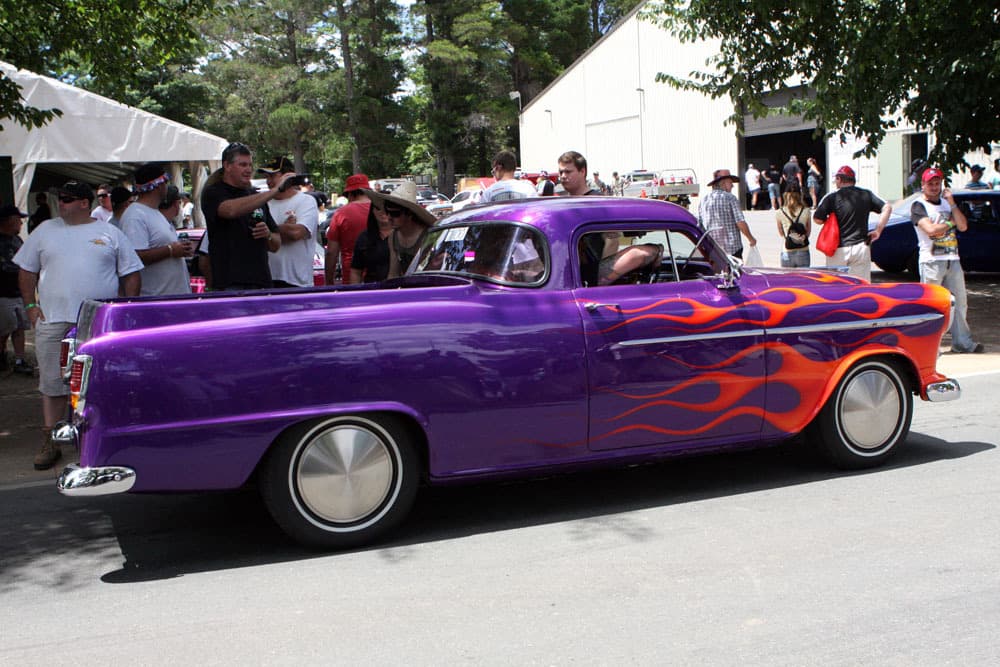
But walk away from the pad and Summernats is mostly a show. Rows of cars are parked under lights with their bonnets up and their owners sitting beside them, ready to explain every weld. A 1957 Holden FE that has been stripped back to bare metal, rebuilt and painted in a shed is not an act of vandalism. It's a restoration.
The skills it keeps alive
Here's our view, and it's the reason we care about Summernats. The skills on display there are the same skills Australia is short of. Welding and fabrication. Engine building and tuning. Panel beating and paint. Wiring a car from scratch. Diagnosing a problem by ear. Most of these people learned them by doing, in a garage, often from an older relative or a mate at a club.
A modern car increasingly hides its mechanicals behind software and sealed modules. A street machine does the opposite. It's an engine, a gearbox, a diff and a set of wires that one person can understand, take apart and put back together. That is the kind of car we keep arguing for: simple, repairable and owned by the person who drives it. We've written about Australia's shortage of mechanics (opens in a new tab), and we think events like Summernats are one of the places the next generation picks up the bug.
How it sits with tightening rules
None of this happens outside the law, and it shouldn't. Summernats works because the competition happens on a controlled pad inside a venue, not on the street. Region reported that ACT Government vehicle inspectors would be at the EPIC entrance for Summernats 38, and that police had seized four vehicles in the lead-up, compared with five the year before. Hoon driving on public roads is the thing that gives the whole culture a bad name, and we have no sympathy for it.
The bigger pressure on modified cars is noise. Across the border in New South Wales, the EPA sets stationary noise limits (opens in a new tab) of 90 decibels for cars built after 1982 and 96 dB(A) for cars built in or before 1982. Newer cars certified to the ADR 83/00 standard must stay within 5 dB(A) of the level set when they were certified. The EPA says excessive noise usually comes from loud replacement exhausts, altered or removed baffles, or missing mufflers. It also says temporary devices, such as adjustable valves, loose baffles or steel wool, are not allowed, while baffles that are welded or riveted in are permitted.
We think those rules are reasonable for a car on a suburban street at night. Our worry is the direction of travel. As testing gets tighter and enforcement gets more automated, it becomes harder for an ordinary owner to build and register a modified car legally, and easier to treat every loud car as a hoon car. There's a difference between a properly engineered street machine with a compliant exhaust and a car doing doughnuts at 2 am, and the rules should keep making that distinction.
If you modify an exhaust, keep it compliant. In NSW the EPA says temporary devices such as adjustable valves and loose baffles are not allowed. A car that fails a noise test can mean a fine and a defect notice, and a modified car that isn't engineered or registered properly can be a problem for insurance.
The world view: Las Vegas and the SEMA Show
Australia isn't the only place where modified cars draw a crowd. In the United States, the aftermarket's big annual gathering is the SEMA Show, held in Las Vegas. The Specialty Equipment Market Association reported (opens in a new tab) that the 2026 show, which ran from 3 to 6 November at the Las Vegas Convention Center, had its floor nearly sold out months before opening, with about 1.1 million square feet indoors and some 1 million square feet outdoors.
SEMA is different from Summernats in one important way. It's a trade show: the people there sell parts, tools and services to the businesses that build modified cars. Summernats is a festival for the people who build them.
Put the two side by side and the lesson, in our view, is that modifying cars is not a fringe hobby. In America it supports an industry big enough to fill one of the world's largest convention centres. In Australia it fills Canberra's showgrounds for four days every January. Both rely on the same thing: people who want to change, fix and improve their own machines rather than accept what a factory hands them.
| Feature | Summernats (Australia) | SEMA Show (United States) |
|---|---|---|
| What it is | Festival for builders and fans | Trade show for the aftermarket industry |
| Where | Exhibition Park, Canberra | Las Vegas Convention Center |
| When | 7 to 10 January 2027 | 3 to 6 November 2026 |
| Scale | About 3,000 entrants at Summernats 38 | About 1.1m sq ft indoors, nearly sold out |
What it means if you're buying or selling
Buying a modified car. Ask for the engineering paperwork. A modified car that has been properly certified is worth more and is easier to register and insure. Check the exhaust is compliant, look for quality welding and wiring, and get a pre-purchase inspection from someone who knows modified cars.
Buying a project. If Summernats inspires you to start a build, our view is that a simple, rear-drive car from the 1960s to the 1990s is the easiest way in. Parts are widely available, clubs can help, and you can learn on it.
Selling. Document the build: receipts, photos of the work, engineering certificates and dyno sheets if you have them. Buyers of modified cars pay for evidence. You can buy, sell & show cars on MotorLoop, and it's free.
Our take
We think Summernats is worth defending. Yes, it's loud, and some of the people around it behave badly on public roads. That's a policing problem, and it should be policed. But inside the gates, Summernats is tens of thousands of Australians celebrating cars they built and understand.
The world is moving towards cars that owners can't fix, can't modify and sometimes can't even switch features on without a subscription. Street machines are the opposite of that, and the skills behind them are the skills we'll need to keep older cars on the road for decades. Some people want to get from A to B. The Summernats crowd wants to build the car that does it. We're glad they do.
Header photo: Nick-D (opens in a new tab) via Wikimedia Commons, CC BY-SA 3.0 (opens in a new tab).
Related
- Street Machine Summernats 39 2027: Canberra (opens in a new tab)
- Australian car culture is alive, and a club is the way in (opens in a new tab)
- Shepparton Springnats 2026: Victoria (opens in a new tab)
- Gold Coast 500: a city closes its streets to V8 race cars, and nearly 200,000 people turn up (opens in a new tab)