This weekend, bidding closes on the collection of the late Peter Briggs, the West Australian mining businessman who co-founded the York Motor Museum. Donington Auctions opened the timed online sale on 6 October and closes it progressively over 17 and 18 October (opens in a new tab), with lots offered in Perth and at its Melbourne headquarters. Among them is a 1919 Australian Six, one of the earliest cars built in this country.
It matters to Australian enthusiasts for two reasons. A slice of local motoring history is changing hands. And it is a useful reminder, in a week when the market data from overseas is gloomy, of which cars actually make it to 100.
The sale
- What
- The Collection of the Late Peter Briggs
- Who
- Donington Auctions, timed online, lots in Perth and Melbourne
- Opened
- 6 October 2026
- Closes
- Progressively over 17–18 October 2026
- Headline lot
- 1919 Australian Six tourer
In Australia
Briggs owned more than 200 cars in his lifetime and took awards for his show cars at Pebble Beach, Villa d'Este and New Delhi (opens in a new tab), according to the auction house. He founded the York Motor Museum in Western Australia's Avon Valley with James Harwood in 1979 and sold it to a local community organisation in 2017. The York cars in this sale stayed in family ownership, and Donington says some had been on display for 40 years. "For Peter, every one of these cars and motorcycles had a story, and he loved telling people about them," his widow Robin Briggs said in the release.
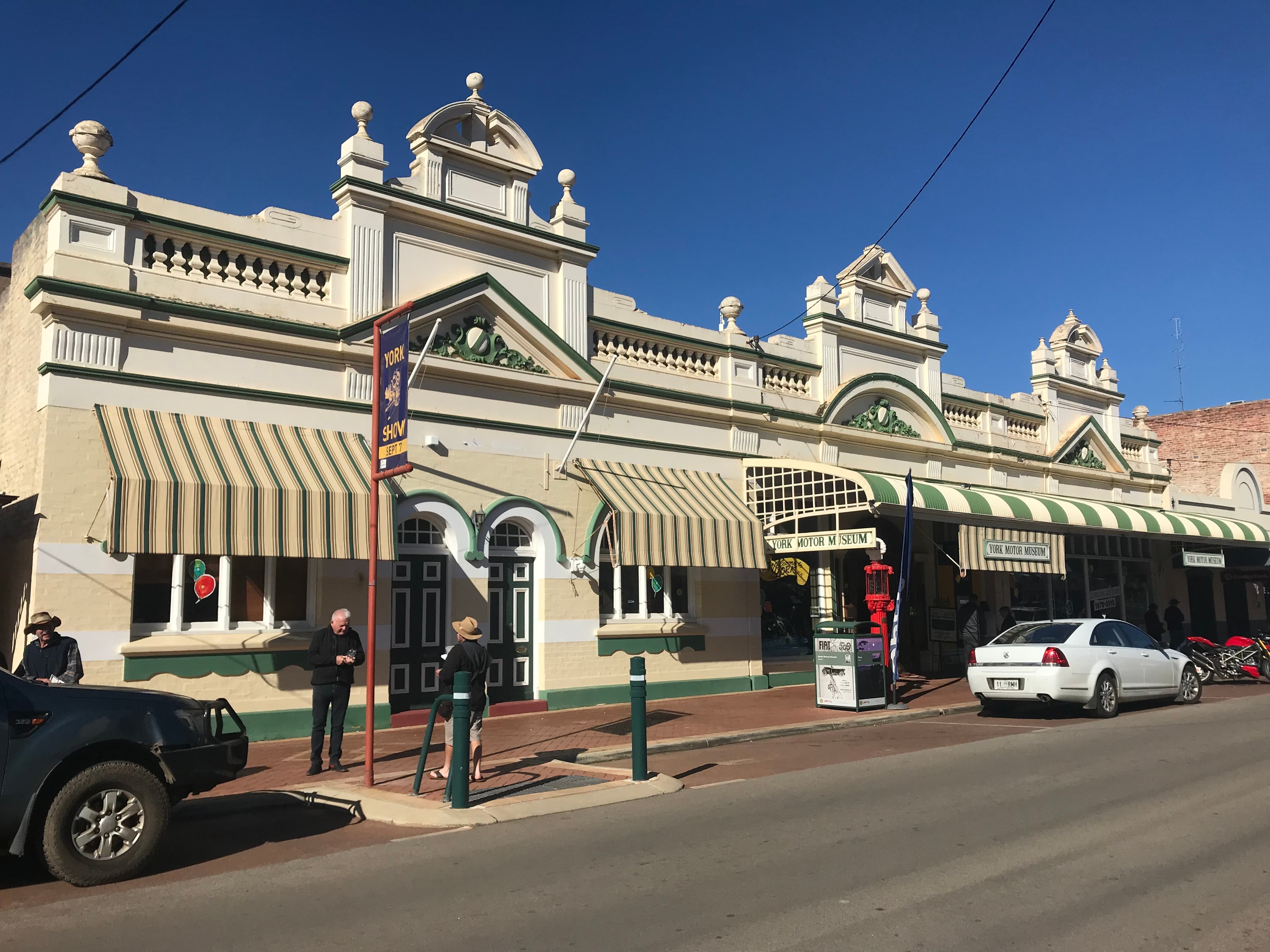
The catalogue reads like a short history of the motor car. Donington's featured lots (opens in a new tab) include a c1902 Clement first owned by the Governor of Victoria, a 1903 Oldsmobile Curved Dash runabout, a 1909 Holsman Highwheeler, a 1913 Peugeot Bébé (the first car Ettore Bugatti designed), a 1950 Jaguar XK120 roadster, a 1966 Mustang convertible, a 1946 Volkswagen Beetle described as among the oldest post-war examples, the c1959 Charlie West speedcar, and motorcycles including a c1913 water-cooled Lewis, one of the first motorcycles made in Australia.
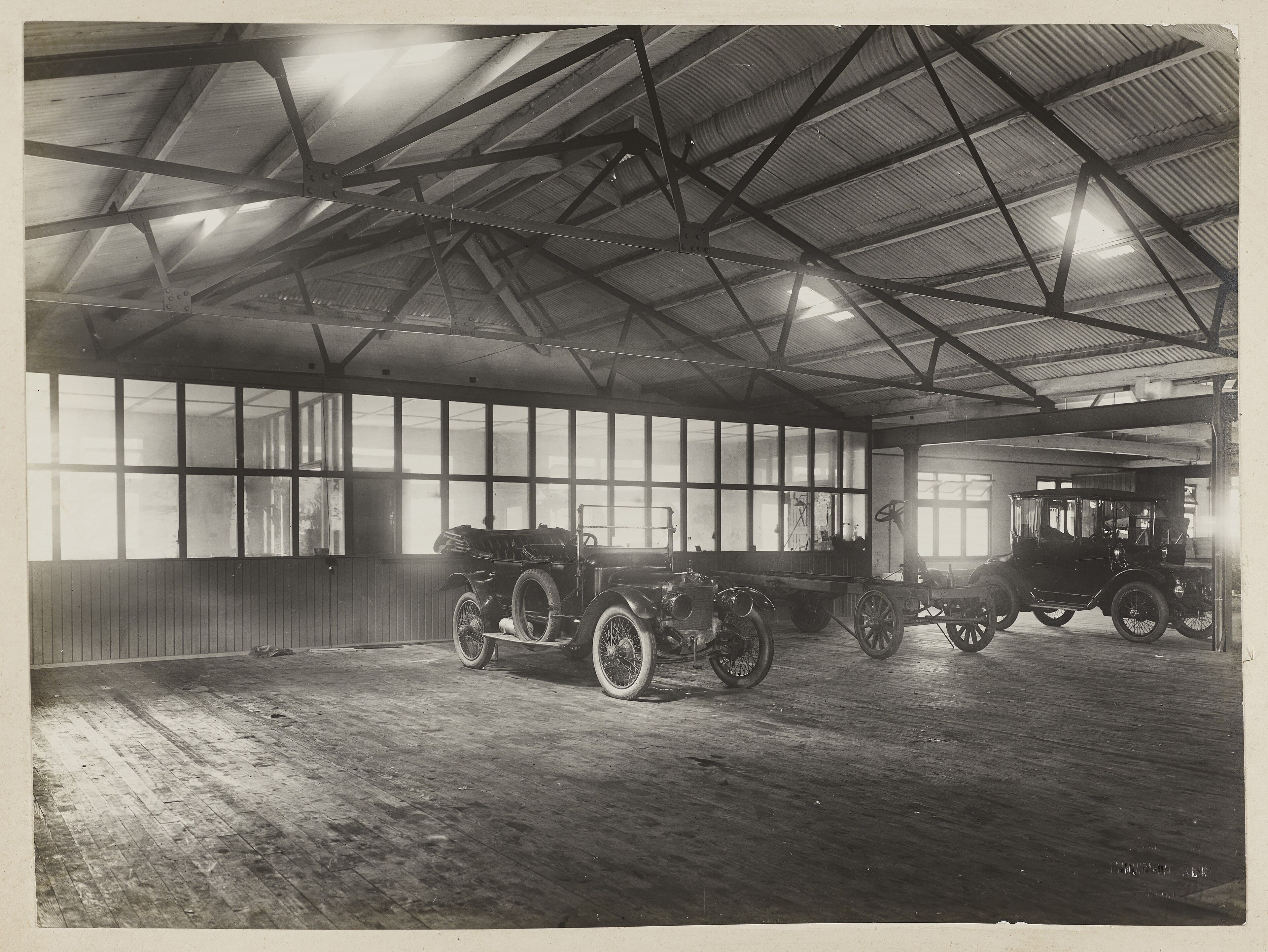
The Australian Six is the local hero. It was built in Sydney from 1919 to 1925, first at Rushcutters Bay and then at Ashfield, mostly around imported Rutenber straight-six engines, and about 500 were made before high local construction costs closed the company (opens in a new tab). Surviving examples are held by the Powerhouse Museum in Sydney, the National Museum in Canberra, the Birdwood museum in South Australia and, until now, York. That is a car which has outlived the firm that built it by a century.
It is a busy month for the hobby. Burns & Co ran its Muscle, Classics & Motoring auction over 5–7 October in Melbourne, with a 1969 HT Monaro GTS 308 and a 1974 HQ Monaro GTS 308 offered without reserve (opens in a new tab), and Pickles' National Classic Cars online auction runs from 23 to 27 October (opens in a new tab) with a 1971 Monaro and a 1976 Datsun 260Z among its highlights.
And it is a big hobby. The Australian Motor Heritage Foundation's 2024 survey of more than 6,000 owners through more than 800 clubs estimated about 970,000 historic vehicles in Australia, 4.4 per cent of a 21-million-vehicle fleet, with owners spending about $9.9 billion a year and the sector supporting almost 79,000 jobs (opens in a new tab). If you own one of them, our guide to club plates and concessional registration (opens in a new tab) covers how each state keeps the running cost down.
- 970,000
- historic vehicles in Australia (AMHF, 2024)
- $9.9bn
- spent on them by owners each year
- 79,000
- jobs the sector supports
- c.500
- Australian Sixes built, 1919–25
The world view
The widely followed market numbers come from the US collector-car insurer Hagerty, and they are soft. In its March 2026 report, Hagerty's Market Rating sat at 59.01, inside what it calls "flat market" territory where it had been for nearly a year, while its Market Index fell for a third straight month to 171.04, the lowest in more than four years and 17 per cent below its December 2022 high (opens in a new tab). The median auction sale price dropped to its lowest value to date, and Hagerty said private sales, where it reckons most of the trade actually happens, had also been struggling.
The split underneath is the interesting part. In Hagerty's quarterly price-guide indexes, the index tracking collectible cars from the 1980s and 1990s rose 3 per cent while its indexes of 1950s American cars and classic German cars each fell 3 per cent, and even the Blue Chip (down 2 per cent) and Ferrari (down 1 per cent) indexes lost ground (opens in a new tab). Hagerty's own reading: "As Generation X and millennial enthusiasts become a bigger share of buyers, the cars they are drawn to have become the most vibrant parts of the market." It also flagged signals that younger and newer collectors may be putting off a purchase, which could weigh on newer classics.
These are US figures, but the same cars trade here, and Australia has no comparable public index. Treat them as the weather, not the forecast.
Another perspective: Britain
Britain counts its historic vehicles more carefully than most. The Federation of British Historic Vehicle Clubs' 2025 National Historic Vehicle Survey, drawn from more than 19,900 responses, put the sector's contribution at £7.3 billion a year, supporting 34,500 jobs across 2,700 specialist businesses, with 1,934,178 historic vehicles registered with the DVLA (opens in a new tab). The number the federation chose to lead with, though, was an age: the average owner is 66.
The average owner is now in their sixties, and we urgently need to inspire and train the next generation.
Our take
We think the softness at the pre-war and 1950s end of the market is a buyer story, not a car story. A 1903 Oldsmobile is still with us because every part of it can be understood with a spanner and remade by a competent machinist. A 1919 Australian Six, assembled in Sydney around an American engine, has outlived its maker by a hundred years. Nothing on it waits for a server to authorise the ignition.
That is the contrast we keep coming back to. Our view, stated as opinion: a 2026 car whose functions are tied to software, sealed modules and a manufacturer's cloud will struggle to be anybody's concours entry in 2126. Not because the steel will rust, modern cars rust less than the ones you remember, but because the modules, the screens and the servers won't be there, and in some cases neither will the company. We wrote about what happens to a car when its maker disappears (opens in a new tab) last week; the Briggs catalogue is the long-run version of the same question, answered the other way.
In fairness, the evidence that cuts against our gloom is right there in Hagerty's numbers. Younger buyers are moving the market toward 1980s and 1990s cars: the last broadly analogue generation, with electronics simple enough to diagnose and replace. The next classics exist, and a good many of them are naturally aspirated sports cars you can still buy for sensible money. Britain's warning about owner age cuts both ways too. The cars will be fine. The question is who learns to look after them.
So if the Briggs sale tempts you, or the Pickles one later this month: buy the simple one, learn to fix it, and join a club (opens in a new tab). And if you have never driven a car where the mechanism is the point, borrow a friend's before the people who remember how they work are all in their seventies.
Related
- Australian car culture is alive, and a club is the way in (opens in a new tab)
- Club plates and concession registration: drive your classic for less (opens in a new tab)
- Porsche's 992 Cup car runs its last Bathurst this weekend. The flat-six is the point (opens in a new tab)
- China now builds more than a third of Australia's new cars. Who fixes them in 2036? (opens in a new tab)
Related reading
- Australian car culture is alive, and a club is the way in
From Porsche and Mustang clubs to vintage rallies, Australia's car clubs are thriving. Why joining one beats a holiday, and how to find yours.
- Club plates and concession registration: drive your classic for less
Club plates and concessional registration let you run a classic at a fraction of full-rego cost. How each state's scheme works — ages, logbooks, day limits and who qualifies.
- Porsche's 992 Cup car runs its last Bathurst this weekend. The flat-six is the point
Carrera Cup is at Mount Panorama for the 992 GT3 Cup car's final Bathurst before the 992.2 arrives. We think its naturally aspirated flat-six is the reason to watch.
- China now builds more than a third of Australia's new cars. Who fixes them in 2036?
September's sales show China supplied 35.5% of Australia's new cars. We look at what that means for parts and repairs a decade from now, and what to ask before you buy.
Header photo: an Australian Six in the Municipal Council of Sydney's motor garage, Darlinghurst, 10 March 1922, by Milton Kent. Public domain, via Wikimedia Commons.