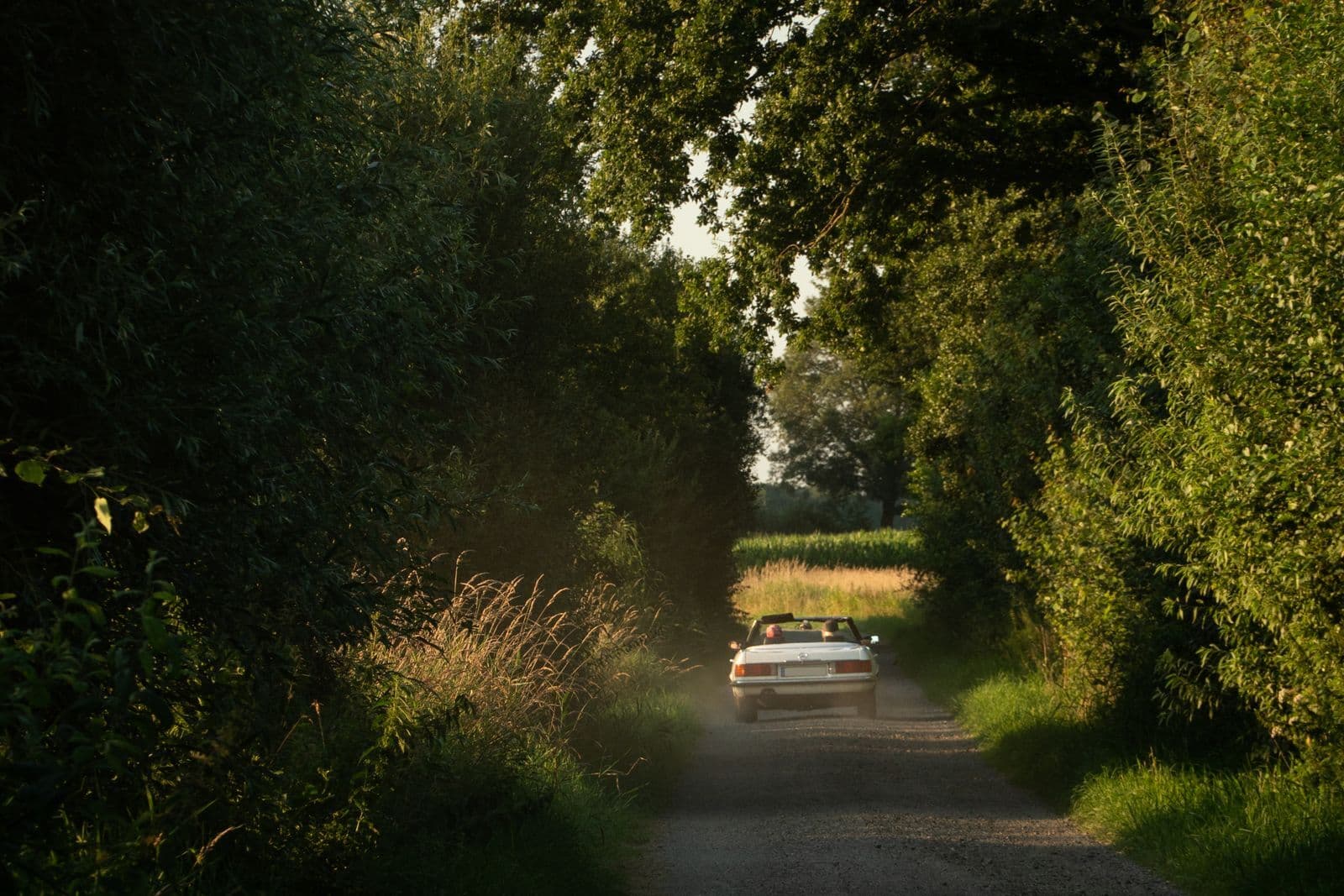
Conditional registration — better known by its nickname, club plates — trades cheaper registration for limited use of a historic vehicle. Each state and territory runs its own version, so the details move around: an age threshold of roughly 25 to 30 years, membership of an approved car club, a logbook or a capped number of driving days, and restrictions on everyday trips such as commuting. This guide explains what the schemes have in common and how the version in your state or territory works, with links to the authority that administers it.
What conditional registration actually is
Conditional (or concessional) registration is a formal category of registration for vehicles that don't earn their keep on the road. In New South Wales, Service NSW (opens in a new tab) describes it as registration you apply for when you want to drive a historic vehicle to events organised by historic vehicle clubs or community organisations — the "condition" being that the car is used only in those approved ways. South Australia's scheme is framed the same way: sa.gov.au (opens in a new tab) says its Conditional Registration Scheme "offers reduced vehicle registration fees in exchange for limited road access each year".
The trade is deliberate. A 1960s sedan that leaves the garage six weekends a year doesn't wear out the road network the way a daily commuter does, so governments price its registration accordingly — and in exchange, they attach conditions about how, when and why it can be driven.
Who these schemes suit
Conditional registration suits an owner whose classic is a hobby, not transport. If you drive your historic vehicle regularly, NSW suggests standard registration instead (Service NSW (opens in a new tab) makes that point directly). You're a good fit if:
- your car meets the age and originality rules of your state's scheme;
- you're willing to join and stay a member of a recognised or approved car club — a requirement across these schemes, from the recognised historic vehicle clubs in NSW (opens in a new tab) to the CEO-approved clubs behind Western Australia's concessions (DoT WA (opens in a new tab));
- your driving fits the permitted uses — club runs, rallies, shows, servicing trips;
- you'll keep records; most schemes require a logbook, several before each journey.
If any of that sounds restrictive, remember what you get back: reduced fees or exemptions, and a car that stays legally on the road rather than languishing unregistered in the shed.
What the schemes have in common
The names differ but the skeleton is remarkably consistent across the country:
- An age threshold. Most states want a vehicle at least 25 to 30 years old. NSW sets 30 years (Service NSW (opens in a new tab)); Victoria requires more than 25 years for classic and historic vehicles (VicRoads (opens in a new tab)); Queensland's historic vehicles must be at least 30 years old (qld.gov.au (opens in a new tab)).
- Club membership. Every scheme ties eligibility to membership of a recognised or approved club, which signs declarations and, in some states, issues the logbook itself.
- A logbook or capped days. Victoria caps use at 45 or 90 driving days per year with mandatory logbook entries (VicRoads (opens in a new tab)); SA allows up to 90 days per registration year (sa.gov.au (opens in a new tab)); Tasmania's Class A special interest registration allows 104 days (Transport Services (opens in a new tab)). Queensland instead lists permitted purposes rather than a day count in its conditions of use (opens in a new tab).
- Usage restrictions. Commuting, running to the shops and using the car for hire or reward are excluded in each scheme described here. Queensland names them explicitly — general purposes like commuting "to and from the registered operator's place of employment" and shop runs are off-limits (qld.gov.au (opens in a new tab)), and the NT bans travel to work and commercial use outright (nt.gov.au (opens in a new tab)).
- Inspections and declarations. Expect a safety check and a form signed by a club official as part of applying.
State by state
New South Wales
NSW runs its Historic Vehicle Scheme as conditional registration, applied for through Service NSW. The vehicle must be 30 years or older, as close to original condition as possible (safety features such as seatbelts and turn indicators, or period accessories, are allowed), and officially declared safe to drive. You must be a member of a recognised historic vehicle club and hold the appropriate driver licence. Use covers club and community events recorded in the club's Day Book, short journeys for servicing or inspection, longer trips if you notify the club and the details are recorded — plus an allocated 60 days of annual general use if you carry a historic vehicle log book (Service NSW (opens in a new tab)).
Victoria
Victoria's Club Permit, issued by VicRoads, is the model many others copied. Classic and historic vehicles made after 31 December 1930 but more than 25 years old qualify, along with replicas, street rods and certain other categories; eligibility runs from the calendar month after the build date. You choose a 45-day or 90-day permit, valid anywhere in Australia, and record every day the vehicle travels more than 100 metres from its garage address in a club logbook. Membership of an approved club is required — and if you switch clubs, no gap longer than 14 days is allowed between memberships (VicRoads — Get a club permit (opens in a new tab); VicRoads — Car club permits (opens in a new tab)).
Queensland
Queensland's Special Interest Vehicle Concession Scheme is administered by the Department of Transport and Main Roads. Historic vehicles must be motor vehicles at least 30 years old (including motorcycles and tractors); heavy buses qualify from 25 years, and street rods need a body and frame built before 1949. Rather than a fixed day allowance, the conditions of use (opens in a new tab) list what the car may be used for: incorporated club rallies and events (including endorsed impromptu events), permitted processions, charitable or educational displays, family ceremonial occasions such as weddings without payment, reasonable travel for repairs, and road testing within a 30 km radius of where the vehicle is garaged or being repaired. Check with the scheme guide (opens in a new tab) for the full conditions before relying on any single trip type.
South Australia
SA's Conditional Registration Scheme covers historic, left-hand drive, street rod and individually constructed vehicles, under the Registrar of Motor Vehicles within the Department for Infrastructure and Transport. A historic vehicle is one where 25 years or more have elapsed since 1 January of its year of manufacture. Conditions: the owner must be a financial member of a recognised motor vehicle club, journey details go into a club-issued logbook before each trip and the book rides in the car, the vehicle cannot be driven for fee, hire or reward, and it can be driven on the road for up to 90 days during any one-year period of registration (sa.gov.au (opens in a new tab)).
Western Australia
WA runs two distinct concessions through the Department of Transport. The Concessions for Classics scheme opened to rolling 30-year eligibility on 1 January 2025 — vehicles at least 30 years old in the calendar year the discount begins, or street rods — and delivers a 75% exemption from the vehicle licence fee plus a reduced rate on motor injury insurance, with use capped at 90 days per calendar year (DoT WA (opens in a new tab)). Separately, the veteran/vintage/post vintage/invitational concession grants a 100% exemption from vehicle licence fee and duty for original, unmodified vehicles: veteran (manufactured prior to and including 1918), vintage (1919–1930), post vintage (1931–1949) and invitation (after 1 January 1950 but no less than 25 years old), owned by financial members of an approved car club (DoT WA (opens in a new tab)).
Tasmania
Transport Services offers two paths. Vintage & Street Rod (Club Event) registration suits cars manufactured 30 years before application (or period-correct replicas): you can drive to, from and within club events freely, plus a maximum of 30 days outside club events per 12-month period, on distinctive 'VC' or 'ROD' plates, with lower MAIB premiums and exemptions from motor tax and duty (Transport Tasmania (opens in a new tab)). Special Interest (Class A) registration allows 104 days of use over a 12-month period for vehicles at least 30 years old, with a twist: the registered operator must maintain registration of at least one non-conditionally registered vehicle in their own name throughout (Transport Tasmania (opens in a new tab)).
Australian Capital Territory
The ACT's Veteran, Vintage and Historic (VVH) concessional scheme operates under a Conditional Registration Scheme managed jointly by Access Canberra and the Council of ACT Motor Clubs. Eligible categories: veteran (before 1 January 1919), vintage (1919–1930 inclusive), historic (manufactured from 1 January 1931 and now 30 years or older), and modified historic vehicles in any category. VVH vehicles may be driven no more than 60 days per year, in addition to club days, with a logbook entry completed at the start of each day's use and carried in the car. There's also a duty exemption for vehicles registered after restoration that haven't been registered in the previous two years (Access Canberra (opens in a new tab)).
Northern Territory
The NT's Club Registration Scheme, run through Motor Vehicle Registry offices, offers reduced registration and compulsory third party insurance to keep historic vehicles operational. Eligible classes: factory-produced classic vehicles at least 30 years old, certified street rods, and individually constructed vehicles. Conditions are strict and plainly stated — no driving to work, no commercial enterprise, a logbook of all road travel carried in the vehicle at all times, and road use only as part of an approved road event or under the maintenance and test-driving conditions (nt.gov.au — apply (opens in a new tab); nt.gov.au — conditions (opens in a new tab)).
The logbook is the part owners underestimate. Victoria requires an entry whenever the car moves more than 100 metres from its garage address, and a journey crossing midnight needs an entry for each day (VicRoads (opens in a new tab)); Tasmania wants the entry written before the journey starts (Transport Tasmania (opens in a new tab)). Treat the book as part of starting the car, not paperwork for afterwards.
How to apply
Details vary, but the path looks similar everywhere:
- Find your club. Eligibility hinges on membership of a recognised or approved club, so join one covering your marque or era first.
- Confirm the vehicle qualifies. Check your state's age rule, originality expectations and any modification limits against the authority page above.
- Get the inspection and declaration done. Clubs sign eligibility declarations — NSW's Historic Vehicle Declaration needs a club official's signature (Service NSW (opens in a new tab)) — and inspections range from club scrutineering to a formal roadworthy.
- Lodge and pay. Applications generally go in person to the authority's service centres with proof of identity and proof you own the vehicle.
- Renew carefully. Several schemes re-check membership at renewal — Tasmania, for instance, wants fresh proof each time you renew Club Event registration (Transport Tasmania (opens in a new tab)).
Common ways people lose their concession
- Using the car outside its conditions — the school run or a commute breaks nearly every scheme's rules, and Queensland's guide names commuting and shop runs as prohibited general use (qld.gov.au (opens in a new tab)).
- Letting club membership lapse. Victoria gives you at most 14 days between club memberships (VicRoads (opens in a new tab)); other states require continuous financial membership.
- Assuming registration transfers. Tasmania's special interest registration is explicitly not transferable — a new owner must cancel, return plates and reapply (Transport Tasmania (opens in a new tab)). Ask before you buy or sell a car already on concession plates.
- Forgetting the insurance angle. Some specialist insurers price cover around club plates and limited use — Shannons lists club plate cover among its enthusiast products (shannons.com.au (opens in a new tab)). Our companion guide to insuring a classic explains how that works.
Ready to hunt for the project car itself? Browse the used cars (opens in a new tab) listed on MotorLoop, run our used car inspection checklist (opens in a new tab) before you shake hands, and read how to buy a used car (opens in a new tab) end to end. When it's time to move something on, listing your own car is free.