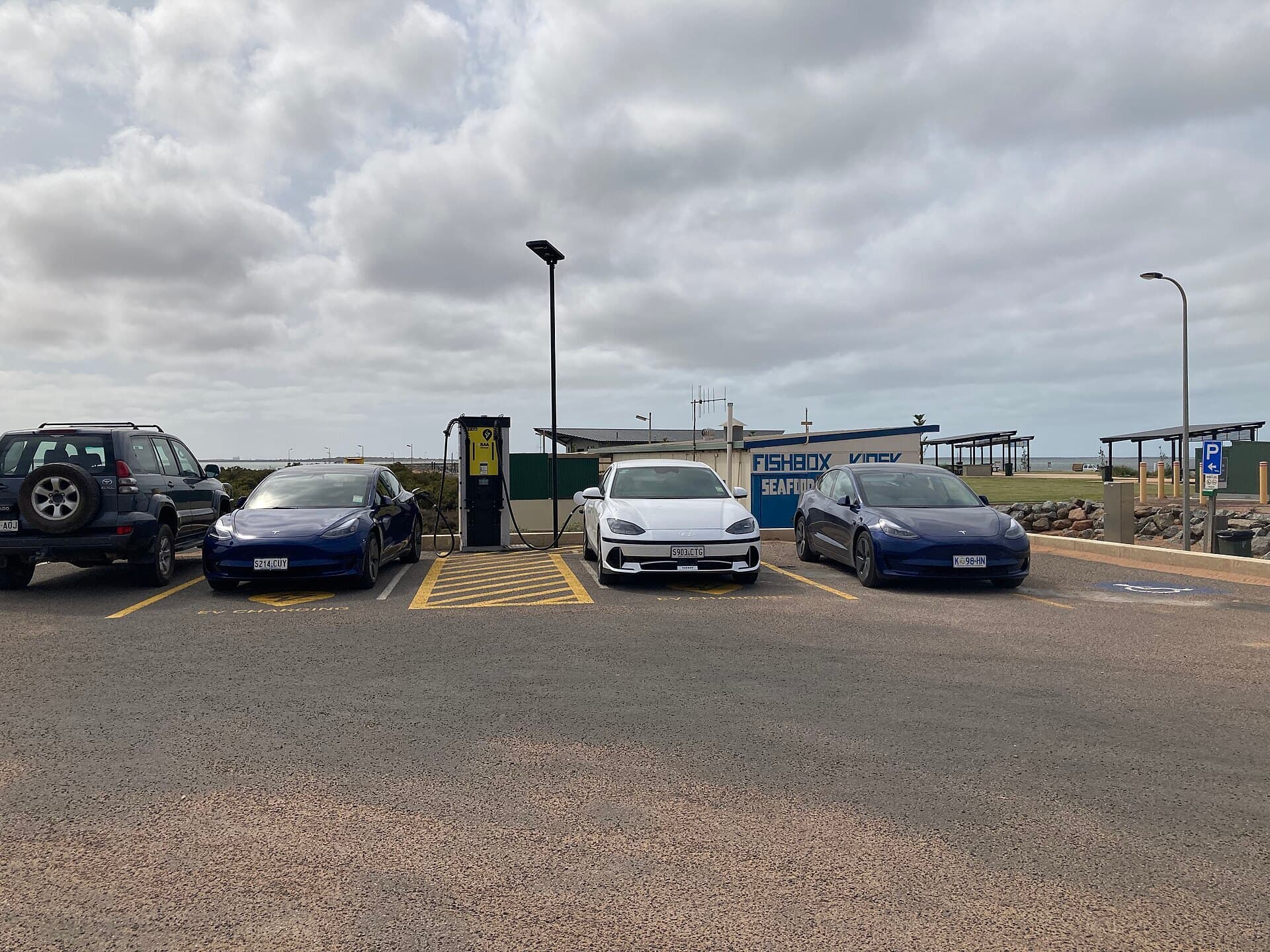
Is a used electric car a bargain or a trap? On the Australian numbers we could find, it is a bargain for the second owner and a trap for the first. Auction data reported last year put popular EVs at 50 to 58 per cent of their new price after two years, against 85 to 88 per cent for a Toyota RAV4 or HiLux. The battery, the part everyone worries about, is testing better than the price suggests. The catch is that nobody has data yet on how these cars fare at 12 or 15 years old.
The latest hook is Pickles' quarterly auction report, released on 8 October. As zecar reported (opens in a new tab), the auction house sold more than 1,580 used EVs in the 12 months to September 2026, more than double the year before, and says the volume of ex-novated-lease cars coming through was 157 per cent higher in the September quarter than in the March quarter. More supply is on the way. That shapes everything below.
- 50-58%
- Value kept after two years by four popular EVs (Pickles data, 2025)
- 85-88%
- Value kept by a RAV4 or HiLux over the same period
- 96%
- Average battery health across 2,500+ EVs tested by Pickles
How fast they fall
The clearest Australian comparison we found comes from Pickles auction data reported by The Nightly in September 2025 (opens in a new tab). Two years after purchase:
- Tesla Model 3: 54 per cent of its value retained, average used price $35,284
- Tesla Model Y: 58 per cent, $40,332
- BYD Atto 3: 54 per cent, $27,273
- MG4: 50 per cent, $23,195
- Toyota RAV4: 88 per cent, $40,018
- Toyota HiLux: 85 per cent, $46,838
- Ford Ranger: 76 per cent, $51,100
Pickles' Brendon Green told the paper: "EVs aren't holding the value that the ICE cars are at the moment." (ICE means internal combustion engine.) Those figures are a year old and they are auction prices, so treat them as the shape of the market rather than a price guide for your car.
Part of that fall is not about the cars at all. When a maker cuts the price of a new one, every used one is worth less the next morning. And many of these cars were bought with a tax concession, so the first owner's real cost was lower than the sticker.
2026: the fuel shock gave used EVs a lift, briefly
This year the picture got more complicated. Used EV sales rose 54.6 per cent in the first half of 2026 while the total used market fell 6.6 per cent, the NRMA reported (opens in a new tab) from Australian Automotive Dealer Association and AutoGrab data. Used EVs that took more than 60 days to sell in January were selling in under 40 by June.
Prices jumped and then came back. The same NRMA report gives Pickles' average used EV sale price as $35,500 in January, $41,500 in April, $35,500 in May and $31,500 in June, with the cars sold in May and June carrying about 51,000 km against about 29,000 km earlier in the year. The Datium index of used EV values that Pickles publishes went from 104 per cent in February to 122 per cent in May and back to 107 per cent in September, according to zecar.
Our reading is that the fuel crisis sent buyers looking for anything cheap to run, prices spiked, and then supply caught up. Pickles' Chris Shaw said of the ex-lease cars arriving now: "The volumes coming through now are really just the beginning." An earlier Pickles forecast, reported by Fleet Auto News (opens in a new tab), was for up to 15,000 ex-lease EVs a year entering the used market by late 2026. October's record new EV sales, which we covered in our read of the sales figures (opens in a new tab), are the used cars of 2029 and 2030.
More sellers, same pool of buyers. In our view that points to softer used EV prices ahead, not firmer ones.
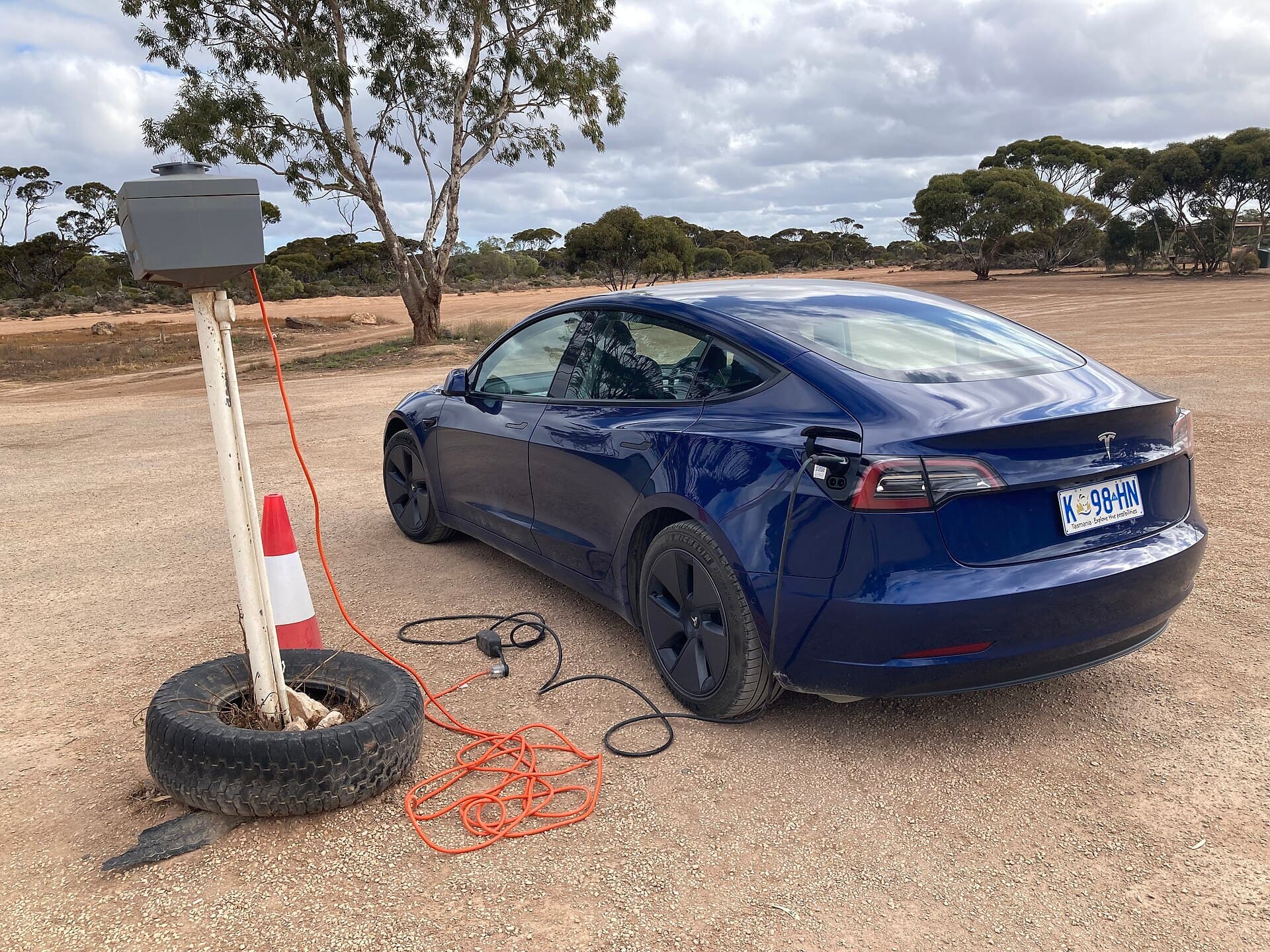
The battery: better than feared, so far
Here is the evidence that cuts against the sceptic's case, and we'll state it straight. Pickles has tested more than 2,500 battery electric vehicles and found an average battery state of health of 96 per cent, zecar reported. State of health is the share of the battery's original capacity that is left. Cars more than five years old averaged 93 per cent, and cars with more than 120,000 km averaged 89 per cent.
Buyers pay for that certainty. Cars sold with a Pickles battery health certificate averaged a 6 per cent price uplift over similar cars without one, and drew more bidders, Fleet Auto News reported. And NRMA research cited in the zecar report found 82 per cent of consumers want a way to test battery health when buying a used EV.
So the battery is not the black box it was three years ago. We'd add two cautions, and they are our opinion. First, the average car in that data is young: Pickles says the typical used EV it sold was about 3.1 years old with about 44,000 km on it. Australia has very little real-world data on mainstream EVs at 12 or 15 years, the age at which a petrol Corolla is still somebody's daily driver. Second, a healthy battery is one part. The screens, control modules and software that run the car are the parts we worry about, because in ten years' time they need to be available at a sensible price. We set out that case in what a replacement battery really costs (opens in a new tab).
One figure in the Pickles report made us pause: it estimates an ageing EV's battery could itself be worth about $6,000 to $10,000 or more. A car whose most valuable part is worth more out of the car than in it is a car with a different end of life from a petrol one.
The world view, and Britain's price swing
Britain is a few years ahead of Australia on used EVs and shows how violent the swings can be. Autotrader UK's retail price index for July 2026 (opens in a new tab) put the average used EV asking price at £24,946, up 3.3 per cent on a like-for-like basis, which it called the strongest annual EV price growth it had recorded. Three-to-five-year-old EVs were up 10.2 per cent, and used EVs were selling in 25 days, five days quicker than petrol cars. Autotrader put it down to higher petrol prices, better affordability and growing buyer confidence, and described it as a reversal of the deflation that weighed on used EVs through 2024 and into late 2025.
Read the same release closely and the other side is there too. Individual models were still falling hard year on year: the BMW i5 by 28.8 per cent, the MG5 by 28.7 per cent and the BYD Sealion 7 by 20.7 per cent.
| Feature | Australia | United Kingdom |
|---|---|---|
| Used EV demand in 2026 | Sales up 54.6% in the first half | Demand up 13.9% year on year in July |
| Price direction | Spiked to May, eased by September (Datium index 122% to 107%) | Up 3.3% year on year in July after a long decline |
| What drove it | Fuel prices and running costs | Petrol prices, affordability, confidence |
The British lesson, as we see it, is that used EV values move with fuel prices and new-car pricing far more than used petrol cars do. A market that can rise 10 per cent in a year for one age band while single models drop by a quarter is a market where timing matters more than it should.
What it means if you're buying or selling
Buying. If you want an EV, we think a two-to-four-year-old one is the smart way in. Someone else has paid for the steepest part of the fall. Before you hand over money:
- Get a battery state-of-health report, in writing, from a test rather than the dashboard guess. Our guide to how long an EV battery really lasts (opens in a new tab) explains what to ask for.
- Check how much of the battery warranty is left and whether it transfers to you.
- Confirm the previous owner's app account has been removed from the car.
- Price it against what a new one costs today, not what the seller paid.
- Work through our used EV checklist (opens in a new tab).
Selling. You are competing with a growing stream of ex-lease cars sold at auction. Three things help. Pay for a battery health certificate and put it in the ad, because the Pickles data says certified cars sell for more. Include the charging cables and service records. And price against current listings, because the number you paid is not the buyer's problem. You can buy, sell & show cars on MotorLoop, and it's free.
Buying new. Go in with open eyes. If the car loses 45 per cent in two years, that loss is a running cost, and it can be bigger than the fuel you saved.
A dashboard range figure is not a battery health test. Ask for a state-of-health report from a diagnostic test, and walk away from a seller who won't provide one.
Our take
On the evidence, a used EV is a fair buy at the right price. The batteries tested so far are holding up better than we expected, and we'll say so. The depreciation that hurts the first owner is the second owner's discount.
Our doubt is about the long run. The data covers young cars, and the supply of used EVs is about to grow sharply while the tax break that fed it narrows. We think that keeps prices under pressure. And we still don't believe a 2023 EV will be on the road in 2043 the way a 2003 Corolla is today, because the parts that fail last on an old car are simple ones, and there aren't many simple parts in an EV.
So buy one used, with a battery report, for what it is worth now. Don't buy one new expecting it to be worth much later. And if you own a tidy petrol car that keeps 85 per cent of its value, we'd think twice before trading it in.
Header photo: Chuq (opens in a new tab) via Wikimedia Commons, CC BY-SA 4.0 (opens in a new tab).
Related
- Used car market, spring 2026: buyers still have room, but stock is tightening (opens in a new tab)
- EV battery life, warranties and what a replacement really costs (opens in a new tab)
- Buying a used electric car: the checklist (opens in a new tab)
- Why a $170,000 Maserati is a $35,000 used car 12 years later (opens in a new tab)