Ten years ago this month, a blue Falcon XR6 sedan rolled off Ford's Broadmeadows line in Melbourne's north, and that was the end of Ford building cars in Australia. Just Cars reported (opens in a new tab) that the last vehicle off the line on 7 October 2016 was "a Kinetic (blue) XR6 sedan", and that the Broadmeadows and Geelong closures meant 600 job losses. Within a year Toyota and Holden had followed, and Australia stopped being a country that builds its own cars.
A decade on, those last Falcons, Commodores, Territorys and Camrys are now simply used cars. A handful of them have become serious collectables, with one Holden ute selling for more than a million dollars. Most have gone the other way, and are now some of the cheapest, simplest and best-supported family cars you can buy. Both halves of that story matter if you're buying or selling one.
The end of local manufacturing
- Ford
- Last Falcon built at Broadmeadows, 7 October 2016
- Toyota
- Altona plant closed 3 October 2017
- Holden
- Elizabeth plant closed 20 October 2017
- Last car
- A VFII Commodore SS-V Redline manual sedan
- Holden parts pledge
- Servicing and parts for at least 10 years from 2020
How the end came, one plant at a time
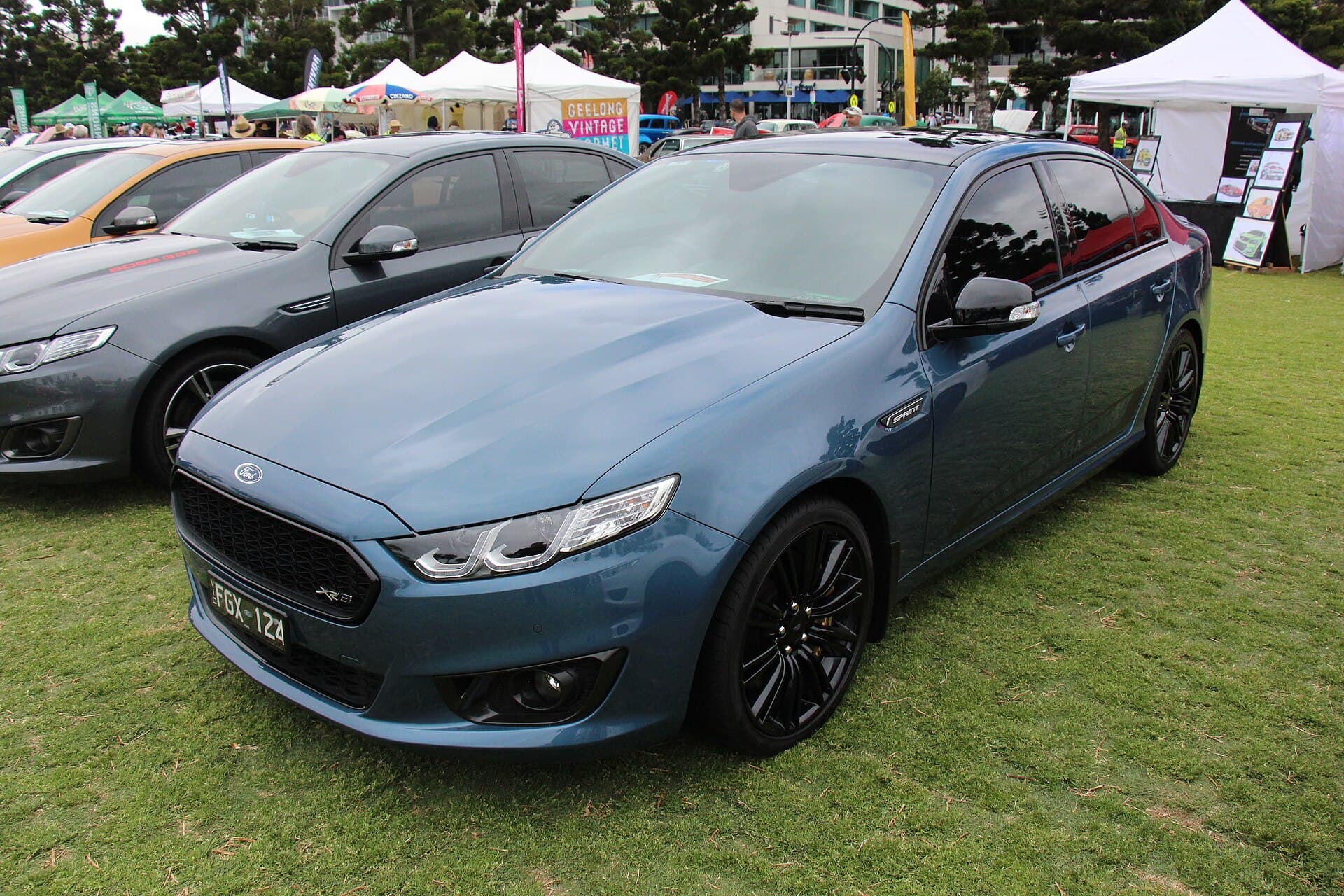
Ford went first. Its last day at Broadmeadows closed out decades of Falcon production, and the run-out specials had been arriving all year. In February 2016 Ford announced the Falcon Sprint, limited to 1,400 cars (opens in a new tab): 750 XR8 and 500 XR6 Turbo Sprints for Australia, plus 150 for New Zealand. The XR8 Sprint's supercharged 5.0-litre V8 made 345kW and 575Nm, with an overboost function lifting that to 400kW and 650Nm, and it was priced from $59,990 with a manual gearbox. WhichCar's coverage of the final day says the last two saleable vehicles were a Territory and a Falcon (opens in a new tab), so the locally built Territory SUV ended alongside its sedan sibling.
Toyota was next. Its Altona plant in Melbourne's west closed on 3 October 2017. According to GoAuto (opens in a new tab), "precisely 3,451,115 Toyota vehicles were built in Australia" over 54 years, and 1,324,991 Australian-built Toyotas were exported between 1996 and 2017, with the Middle East the biggest buyer. The Aurion V6 had already ended production in late August, leaving the seventh-generation Camry as the final model, to be replaced by an imported Camry. GoAuto reported 2,600 employees leaving the company.
Holden closed the book seventeen days later. The Elizabeth plant in Adelaide's north, which Holden had run since 1963, shut on 20 October 2017. Just Cars reported (opens in a new tab) that the final car was a VFII Commodore SS-V Redline manual sedan, that the closure cost 955 direct jobs, and that Holden's timeline counted 7,687,675 Holden-badged vehicles. The Wikipedia entry on the plant (opens in a new tab) records it as the last large-scale car factory in Australia to close, after Mitsubishi in 2008, Ford in 2016 and Toyota earlier in 2017.
Holden is the icon it is today only because of these passionate people.
So this month marks ten years since the end began, and October 2027 will mark ten years since the last Commodore left Elizabeth.
What the last ones are worth now
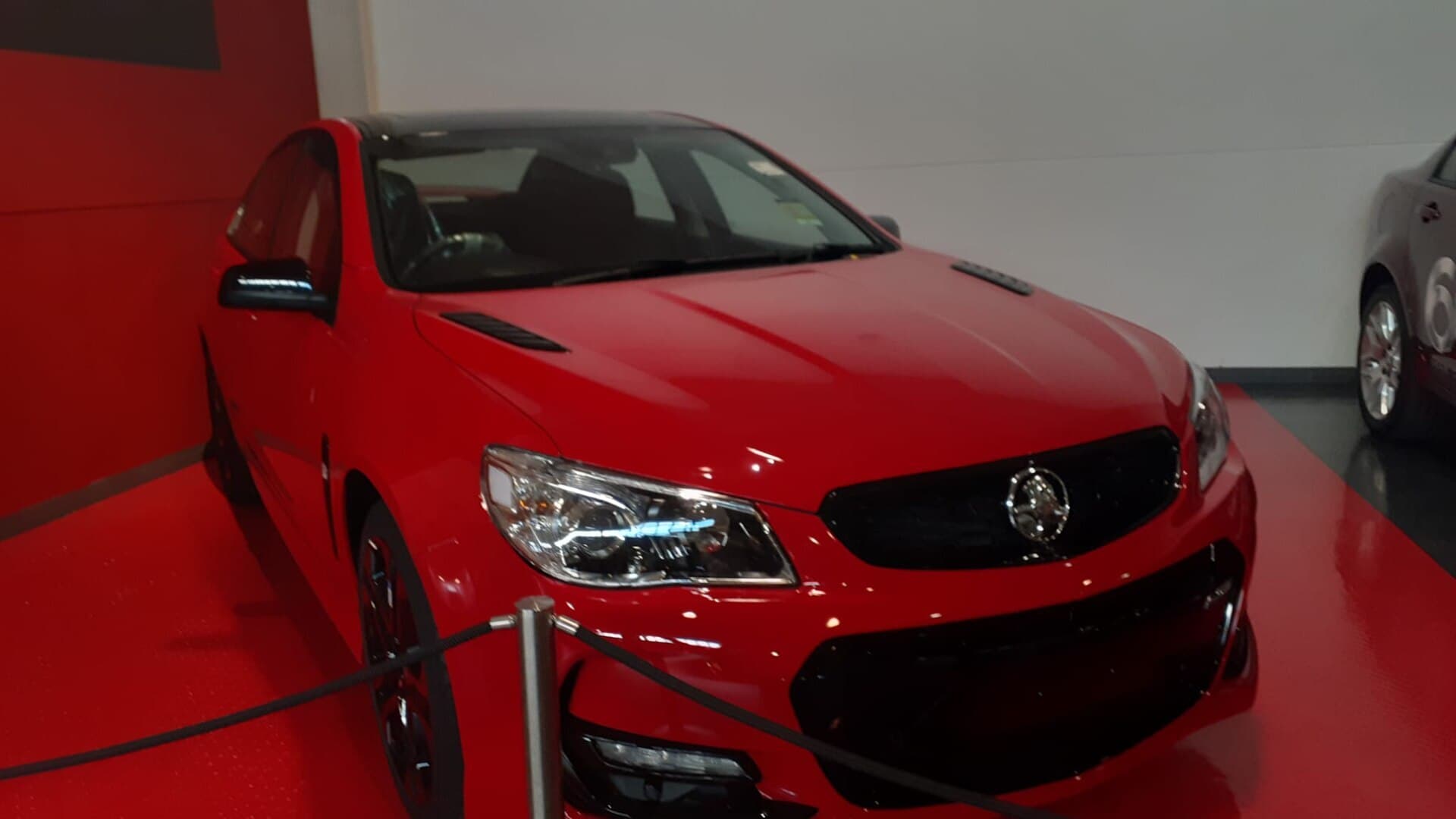
The headline numbers belong to the limited editions, and the one at the top is the HSV GTSR W1. HSV ordered Commodores from Elizabeth before it closed to build the W1, and Wikipedia's plant history notes 300 sedans were ordered for the conversion. When number 36 of 300 crossed the block at Lloyds in late 2017, it sold for a hammer price of $250,000 (opens in a new tab), or $269,000 with fees, which the report described as more than $100,000 above the original retail price.
The W1 Maloo utes are another league. In September 2021 a yellow W1 Maloo sold at Lloyds for $1,150,000 (opens in a new tab), alongside a W1 sedan at $750,000. Then in December 2025, build number 001 of four W1 Maloos, a never-registered car with 26km on the odometer, sold for $1.2 million through Lloyds after private negotiation, according to The Southern Wire (opens in a new tab), which called it the most expensive Holden ever sold. Retro Rides' report on the same sale (opens in a new tab) notes that the on-the-day bid of $1,110,000 was not accepted and the deal was done privately on Christmas Eve.
On the Ford side, the obvious collectable is the FPV GT F, the final FPV model. Ford built 500 individually numbered GT F sedans for Australia (opens in a new tab), with a 351kW supercharged 5.0-litre V8 and a list price of $77,990 before on-road costs. Even when new, the significant ones went for far more: in an August 2014 charity auction on eBay, car 001 sold for $157,600 and car 500 for $236,100 (opens in a new tab), with the proceeds going to the National Breast Cancer Foundation.
The Sprints are a quieter story. This July, Melbourne auction house Burns and Co offered build 500 of the 500 XR6 Sprints made for Australia (opens in a new tab), a never-registered car showing 40km, bought new by a Ford dealer at a charity auction for $122,000. Torque Cafe's preview gave no estimate and we could not find a published result, nor a dated 2026 auction result for an XR8 Sprint. We would rather say that than guess.
- $1.2m
- W1 Maloo build 001, Lloyds, December 2025
- $250,000
- W1 sedan 36 of 300, Lloyds hammer price, 2017
- $236,100
- FPV GT F car 500, charity auction, 2014
The other half: cheap, simple and everywhere
For every numbered W1 there are thousands of Evokes, SV6s, XR6s, Territorys and Camrys that were bought as tools and driven as tools. Ten years on, they are cheap. Using Glass's Information Services data for the lowest-priced variant of each model year, as published on CarsGuide's price pages and read on 28 October 2026:
- Holden Commodore: a 2017 model starts from $10,890 (opens in a new tab), with the top of the 2017 range at $55,000.
- Ford Falcon: a 2014 model starts from $6,710 (opens in a new tab), and a 2010 from $3,300.
- Ford Territory: a 2016 model ranges from $8,800 to $16,830 (opens in a new tab).
- Toyota Aurion: a 2017 model ranges from $12,100 to $19,360 (opens in a new tab).
Those are guide figures for the cheapest variant, not what a particular car will fetch, but the spread tells the story. A last-of-the-line performance special can be worth more than it cost new. The family sedan built beside it on the same line is worth a fraction of its new price.
We think that makes the ordinary ones some of the best-value used cars in the country, and we say that as people who like simple, repairable machinery. A naturally aspirated Falcon six or a Commodore V6 is a known quantity, the parts are on the shelf, and almost any suburban mechanic has worked on one. Motoring writer Ewan Kennedy put it plainly in a 2016 used-car review (opens in a new tab): "Most spare parts for the Falcons covered here are readily available", prices for parts and repairs "are pretty reasonable", and the cars "seem to last forever if driven and serviced correctly". That is his view, not a reliability survey, but it matches what we hear from owners.
Will the parts last another ten years?
For Holden, there is a written commitment. When GM announced on 17 February 2020 that the Holden brand would be retired, GoAuto reported (opens in a new tab) that warranties and servicing offers would be honoured and that Holden would provide "servicing and spare parts for at least 10 years". In December 2021, GMSV managing director Marc Ebolo told CarsGuide (opens in a new tab) that the company intended to support the servicing and parts of "all the 1.6 million Holden vehicles on the road".
For Ford, we could not find an equivalent public statement on Falcon and Territory parts after 2016. The Falcon's strength is its sheer numbers and a deep aftermarket rather than a dated promise. That's a fair distinction to keep in mind: the Holden pledge has a horizon, and the Falcon relies on the market.
What replaced them
The local factories didn't lose to imported sedans so much as to a change in what Australians wanted. In 2016, the year the Falcon ended, the FCAI reported a record 1,178,133 new vehicle sales (opens in a new tab), and for the first time a light commercial vehicle topped the annual chart: the Toyota HiLux on 42,104. SUVs were already 37.4 per cent of the market. FCAI chief executive Tony Weber said the shift "is in SUVs and light commercial vehicles, particularly dual cab utilities". The Commodore was still seventh that year with 25,860 sales, one place behind the Camry, according to Finder's list of 2016's best sellers (opens in a new tab).
Fast forward to September 2026. According to CarSauce's analysis of VFACTS and Electric Vehicle Council data (opens in a new tab), the month's top ten was led by the Ford Ranger, Toyota RAV4, Tesla Model Y and HiLux, and included the BYD Sealion 7, Chery Tiggo 4 Pro, GWM Haval Jolion and Geely EX5. SUVs made up 65,116 of the month's 102,924 sales, and China supplied 35.5 per cent of new vehicles, the largest source country. There is no large sedan in that top ten at all.
| Feature | 2016 | September 2026 |
|---|---|---|
| Top seller | Toyota HiLux (full year) | Ford Ranger (month) |
| Large locally built sedan in top ten | Commodore and Camry | none |
| SUV share | 37.4% of the year | About 63% of the month |
| Largest source country | Not reported in FCAI release | China, 35.5% |
We have written before about what China supplying more than a third of our new cars means for repairs a decade from now (opens in a new tab). The Falcon and Commodore are the test case for that question running in the other direction: cars whose makers stopped building them here ten years ago, and which are still easy to keep going.
The view from Britain: MG Rover and Longbridge
Australia isn't the first country to watch a national car industry fold, and Britain offers a useful parallel. MG Rover went into administration on 8 April 2005, after a proposed alliance with SAIC collapsed. The MG Rover Group history (opens in a new tab) records more than 6,000 workers losing their jobs at Longbridge in Birmingham, with up to 25,000 more reported in the supply chain. BMW had sold the business to the Phoenix Consortium for a nominal £10 in 2000, and in July 2005 Nanjing Automobile bought the main remaining assets. Most of the Longbridge factory was later demolished.
What happened next is the part worth studying. Parts supply survived the maker. XPart, which had bought the MG Rover parts business in 2004, kept the cars on the road. In 2009, four years after the collapse, just-auto reported (opens in a new tab) that XPart was buying parts made from the original UK tooling, which had been moved to Nanjing, had bought more than 250,000 parts from the Chinese maker since 2007, supported a network of more than 250 specialists, and was serving about a million vehicle owners.
The owners organised too. The Rover 75 and MG ZT Owners Club Limited was incorporated on 16 November 2006 (opens in a new tab), barely eighteen months after the factory stopped, and Companies House still lists it as active today.
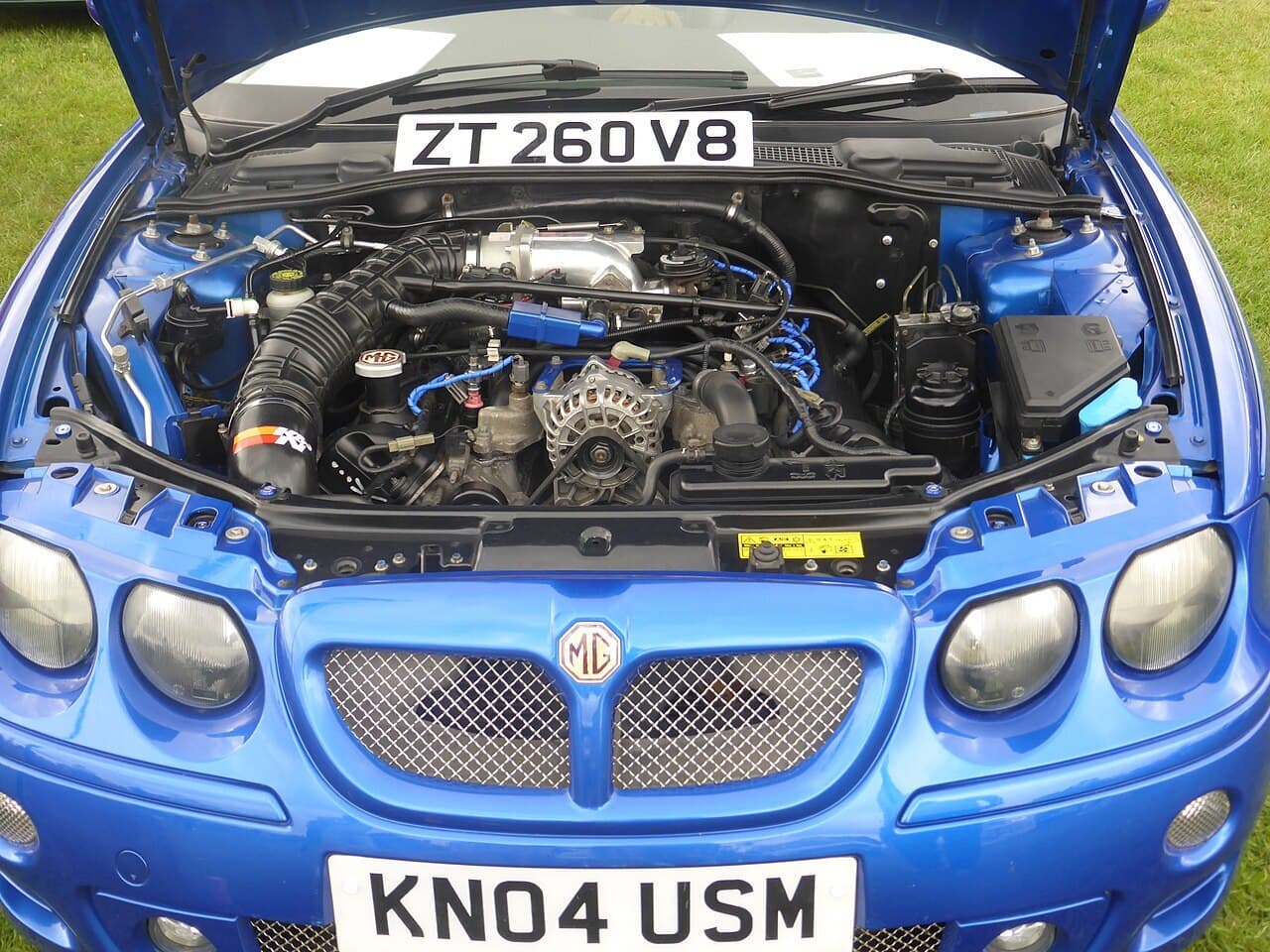
And just as here, a small number of models broke away from the pack. The MG ZT 260, launched around October 2003, swapped the front-wheel-drive layout for a rear-driven Ford 4.6-litre V8 (opens in a new tab), and it is the one enthusiasts chase. Auctioneer H&H's catalogue records a 2006 ZT-T 260 estate with 28,000 miles selling for £12,000 (opens in a new tab) including premium in February 2025, while a 2003 ZT 260 at Mathewsons in November 2025 sold for £4,200 (opens in a new tab), under its £5,000 to £6,000 estimate. Condition and mileage, in other words, are doing most of the work. The ordinary Rover 75 diesels and four-cylinder MGs, meanwhile, are bargain transport.
What Australia can learn
Three things stand out to us. First, an orphaned car's life is decided by its parts network, not its badge, and Britain kept the Rovers running through a specialist supplier working with whoever held the tooling. Second, clubs formed quickly and stayed, and they became where the knowledge lives. Third, collectability concentrated in a few low-volume, enthusiast-spec models in top condition, while everything else became cheap, honest transport. Australia is following the same pattern, and the Holden parts pledge gives Commodore owners a horizon to plan around.
What it means if you're buying or selling
Buying a keeper. Decide early whether you want a collectable or a car. If it's a collectable, pay for the things that made the W1, GT F and Sprints valuable: low build numbers, numbered build plates and documentation that proves them, original paint and parts, low kilometres and a clear history. A car that has been modified, repainted or had its original panels replaced is a different proposition, however good it looks. Keep every receipt and the original paperwork.
Buying a cheap daily. The bread-and-butter Falcons and Commodores are a strong buy if you want simple, repairable transport. Get a pre-purchase inspection, look hard at service history, and be cautious with ex-fleet, police or taxi cars, which can look tidy and still have hard lives behind them. Expect the fuel bill of a large six or V8, which is the trade for that simplicity.
Check the car on the PPSR for money owing and write-off history, confirm the VIN and engine numbers match the paperwork, and for a limited edition, ask for the build documentation and confirm the build number with the relevant owners' club or register.
Selling one. The market for a numbered limited edition is the specialist auction houses that have sold them, Lloyds and Burns and Co among them, plus online auction platforms. A daily-driver Commodore or Falcon sells through ordinary classifieds. In both cases, be honest about condition, modifications and history, because enthusiast buyers check, and a disclosed problem costs you far less than a discovered one. MotorLoop is one place to buy, sell & show them, and it's free.
If you own one and want to keep it going for another ten years, our view is that a car club is the way in (opens in a new tab). That's where the parts knowledge and the next buyer usually are.
Our take
We think the end of Australian manufacturing has left the country with an unusual asset: a large fleet of simple, rear-drive, home-designed cars that are cheap to buy, easy to fix and backed by parts on the shelf. In a new-car market drifting towards complex, software-dependent SUVs from makers who may not be here in ten years, a well-kept Falcon or Commodore is a deliberately low-tech choice, and we think a sensible one.
The collector market is a separate thing, and it rewards rarity, originality and paperwork rather than nostalgia alone. A seven-figure W1 Maloo tells you about four utes, not about the Evoke in your driveway. Buy the special ones for love and keep them original; buy the ordinary ones to use, and use them.
Britain's experience suggests these cars will outlive the factories by decades, as long as owners keep the parts trade and the clubs alive. Ten years in, that's the job ahead for Australian owners too.
Header photo: Sicnag (opens in a new tab) via Wikimedia Commons, CC BY 2.0 (opens in a new tab).
Related
- Australia's own supercars: Bolwell, Giocattolo and the Brabham BT62 (opens in a new tab)
- A 1919 Australian Six goes under the hammer this week. The cars that make it to 100 are the simple ones (opens in a new tab)
- China now builds more than a third of Australia's new cars. Who fixes them in 2036? (opens in a new tab)
- Australian car culture is alive, and a club is the way in (opens in a new tab)