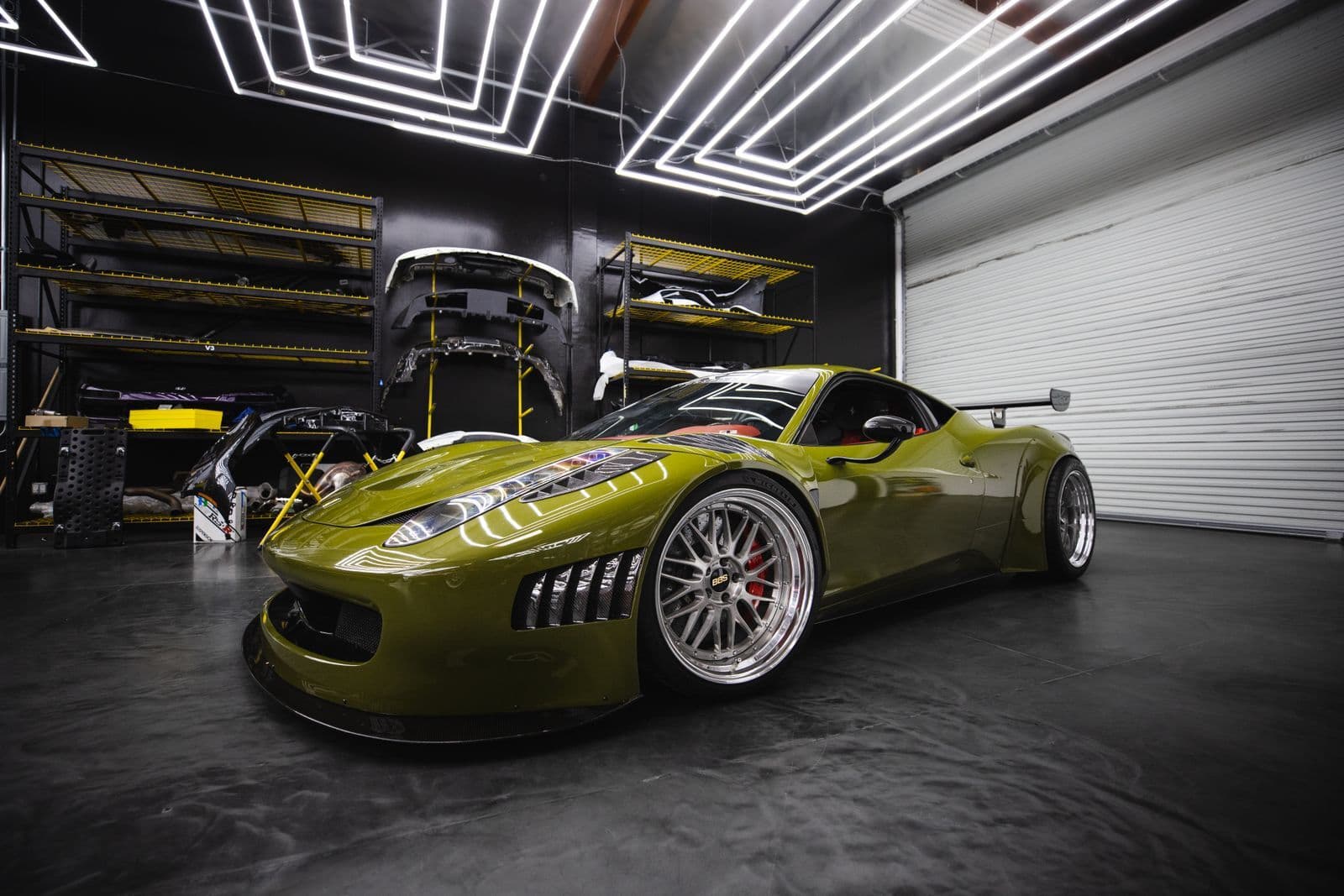
Ask the world to name an Australian performance car and you'll get a Falcon or a Commodore — muscle, not supercars. But scattered through our automotive history is a braver, stranger lineage: genuine attempts to build world-class exotic machinery here, against a small market, punishing compliance economics and the tyranny of distance from the supercar industry's supply chains. Some produced brilliant cars; most produced heartbreak; one carries the most famous surname in Australian motorsport. These are the local exotics — and the honest reasons the deck is stacked against them.
Every Australian supercar project has fought the same three enemies: a tiny home market, compliance costs that don't shrink for small builders, and buyers who could import an established badge for similar money. The cars that exist at all are minor miracles.
Bolwell: the fibreglass pioneers
Melbourne's Bolwell brothers built Australia's most successful indigenous sports car story. Through the 1960s and 70s their fibreglass-bodied cars — culminating in the Nagari, a shapely V8-powered coupe (and roadster) using Ford running gear — offered genuine performance in a strikingly styled package, with hundreds built across the company's run before tightening design rules and economics ended volume production in the mid-1970s. The company survived in composites engineering, and the Nagari name was even revived decades later for a limited modern sports car. Surviving original Nagaris are prized classics today, with an active club scene — and they occasionally surface for sale, wearing club-plate registration more often than not.
Giocattolo: the brilliant heartbreak
The Giocattolo is Australia's great what-if. In the late 1980s, a Queensland outfit led by Paul Halstead took the Alfa Romeo Sprint, threw away the front-drive mechanicals and mid-mounted a Holden 5.0-litre V8 (the Walkinshaw-era engine) with Kevlar and fibreglass panels — creating a genuinely quick, exotic-handling machine assembled with obsessive quality. The name is Italian for "toy". The economics were the tragedy: hand-building costs, a launch price that bought established European metal, and the era's economic headwinds killed the company after roughly 15 cars (figures cited vary slightly). Survivors are treasured, tightly held, and a fixture of Australian car-culture lore — a local preview of the great supercar-flop pattern this series examines in a coming instalment. Almost every rule about why building exotics is brutally hard is written in Giocattolo's ledger.
HSV GTSR W1: the muscle-car summit
Purists can argue whether 2017's HSV GTSR W1 is a supercar, but its credentials demand the mention: the farewell statement of Australian performance manufacturing, packing the supercharged LS9 V8 (around 474 kW) into the last locally-built Commodore platform with motorsport-grade suspension — a limited run that sold out instantly and has traded far above its list price since, behaving exactly like the end-of-line heroes this series has described. It's the closest the mainstream industry came to an Australian exotic before the factories closed.
Brabham BT62: the surname returns
The most serious recent claim is Adelaide's Brabham BT62, launched in 2018 under David Brabham — son of triple world champion Sir Jack — as a limited-run, track-focused machine: a bespoke naturally-aspirated 5.4-litre V8 quoted at over 520 kW, extreme aerodynamics, and a price in genuine hypercar territory, with a road-compliance conversion offered in some markets. Production was always intended to be tiny, and the company's subsequent journey has been quieter than its launch — but the BT62 stands as proof that world-standard supercar engineering can be done here, even if the structural economics haven't softened. Worth an honourable mention alongside it: a string of smaller Australian projects — the Joss supercar most famously — that reached prototypes and crowdfunding but never production, casualties of the same arithmetic.
What this means if you're buying or selling on MotorLoop
Australian exotics trade on rarity and story more than any imported car — provenance, build number and documented history are everything, and the buyer pool, while small, is devoted. If you own a piece of this history, a free showcase listing is exactly where it belongs between sales — and if you're hunting, patience and saved searches beat luck: browse used cars and set the alert.
Related
- Why supercars cost so much more in Australia
- Supercar depreciation: the heroes and the craters
- Club plates and concession registration: drive your classic for less
- Showcase your car online: share the car without the hard sell
FAQs
Has Australia ever built a supercar?
Several genuine attempts: Bolwell's V8 fibreglass coupes in the 1960s–70s, the mid-engined Holden-V8 Giocattolo of the late 1980s, and most seriously the Adelaide-built Brabham BT62 of 2018 — a limited-run track machine with hypercar-level performance and price. HSV's 2017 GTSR W1 deserves the muscle-car-summit mention alongside them.
What was the Giocattolo?
A late-1980s Queensland-built exotic: an Alfa Romeo Sprint body over a mid-mounted 5.0-litre Holden V8, hand-assembled with Kevlar panels. Brilliant to drive by period accounts, it was killed by hand-building economics after roughly 15 cars, making survivors among the rarest and most storied Australian cars in existence.
Why doesn't Australia have a supercar industry?
The same stack that makes imported exotics expensive works against local builders: a small home market, compliance costs that don't scale down, distance from specialist supply chains, and buyers who can import an established badge for similar money. Projects like the Joss showed the engineering talent exists; the arithmetic is the enemy.