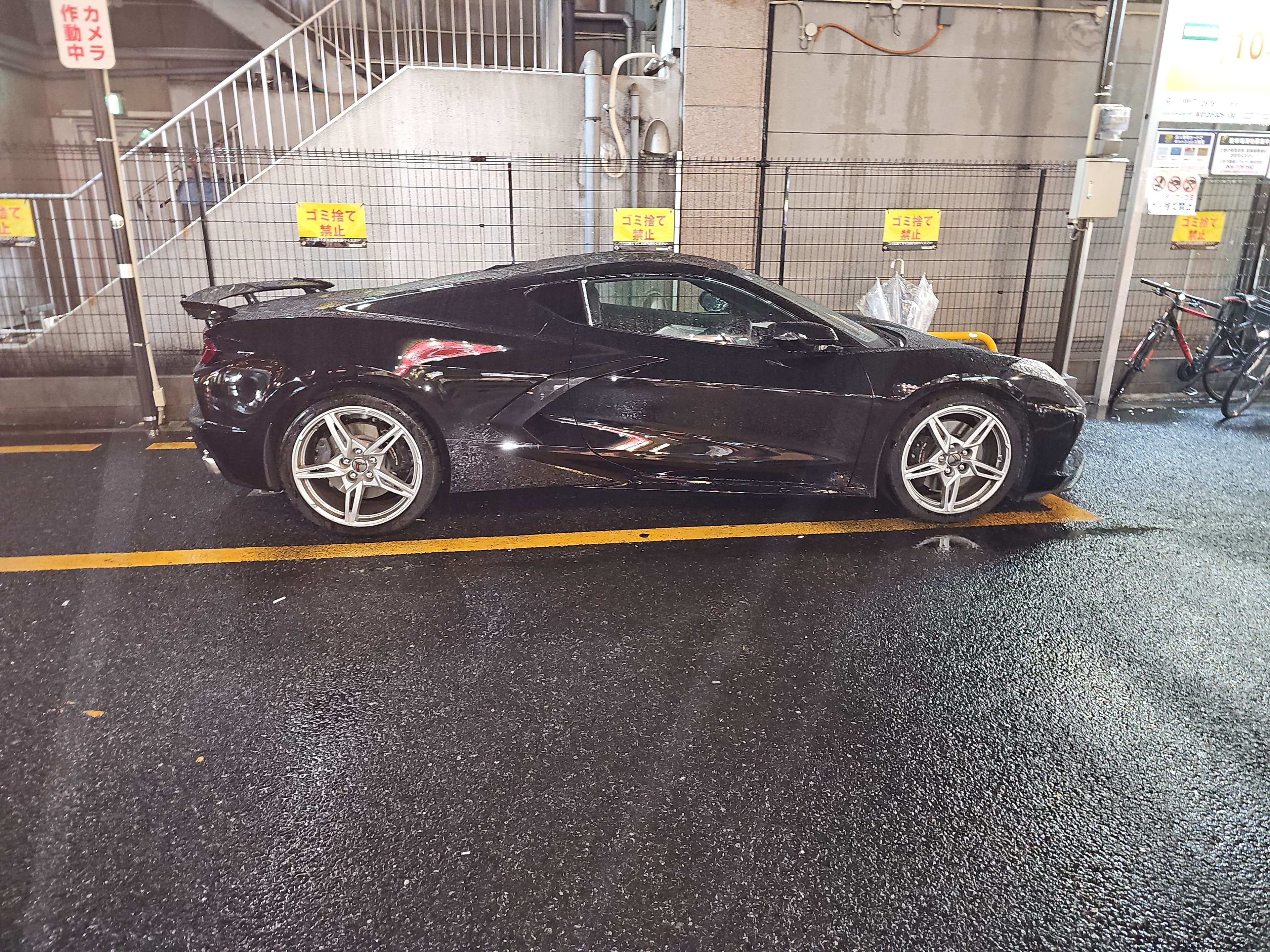
An opinion on the sound, spectacle, and welcoming possibilities of car culture in Osaka and Tokyo.
The image of Japan that stays with me during the day is often compact and orderly: little cars fitting into little spaces, streets where every centimeter seems to matter, and people moving through routines that keep the city working. Then the night brings a different impression. The commuter rush thins, people head home, and somewhere an engine announces a car before the car comes into view. In Osaka and Tokyo, that sound can feel like another part of the city beginning its evening.
This is the contrast I find fascinating. The place associated with restraint also has a car culture that can be vibrant, theatrical, and loud. There is an irony in hearing a spectacular sports car interrupt an otherwise quieter stretch of road. A vehicle that seems determined to be noticed moves through a setting where many everyday vehicles seem designed to fit neatly and get on with their jobs. Both belong to Japan, and the contrast makes each more interesting.
My impression is that when a conspicuous sports car appears, hearing it can be part of seeing it. The engine note draws attention, and the visual details reward that attention: paint, wheels, bodywork, lights, and the way the whole vehicle presents itself. Some owners clearly enjoy having their cars appreciated. I do not think it is necessary to pretend otherwise. A machine built or maintained with that much visible intention is often meant to be noticed.
This is an opinion about the scene’s appeal, not a claim that every sports car is loud or every owner seeks an audience. Quiet performance cars and private enthusiasts belong to the culture too. What I want to describe is the side that catches the ear and the eye after dark: the cars that seem to bring their own atmosphere with them, and the people whose enthusiasm turns those cars into a social experience.
You can hear the change before you see it
Night changes the way a city presents sound. When the surrounding activity eases in a particular street, an engine can become easier to distinguish. The note rises, approaches, and fades. A moment later, there is the car itself, perhaps reflecting the shop lights or the glow of an overhead road. It creates a brief interruption in the ordinary evening, and for someone interested in cars that interruption can be irresistible.
I like that anticipation. A photograph gives the shape immediately. Sound asks you to wait for the shape. You hear something distinctive and turn toward it, wondering what is coming. The vehicle arrives as an event lasting only a few seconds, yet those seconds can tell you more about its personality than a stationary advertisement. The car has a presence in motion, and the sound becomes part of how that presence is remembered.
The phrase “when everyone goes home” is how I describe the feeling, rather than a literal account of an empty city. Tokyo and Osaka continue working, traveling, eating, and entertaining late into the night. There are residents, staff, deliveries, taxis, and people returning from evenings out. The sports cars appear within that continuing life. They are more noticeable in the intervals where the surroundings give them room to stand out.
To me, the appealing irony is that a culture associated with everyday consideration can also accommodate such expressive machines. A polished coupe with a forceful exhaust note does not disappear politely into the visual background. It makes a statement. The statement can be exciting for an enthusiast and tiring for someone trying to sleep. Both reactions are understandable, and acknowledging the second does not erase the first.
The best version of the scene understands the setting. There are places and times where a car’s appearance can be shared without forcing its performance on everyone nearby. I admire confidence that does not need constant revving to prove itself. A distinctive machine can hold attention while parked, and a considerate drive can still let a passenger appreciate its character. Noise is part of my impression, but it need not be the whole ambition.
Tokyo gives the scene a dramatic backdrop
Tokyo lends itself to the imagination of the night drive. Roads, bridges, lights, and the scale of the city create a setting in which an interesting car can look especially striking. I understand why so much car imagery uses this atmosphere. A vehicle appears beneath the lights and suddenly seems connected to a much larger story of movement, engineering, and urban life.
The routes marketed by Tokyo car-experience operators show how this setting becomes part of a visitor’s evening. Tokyo JDM Tours describes a self-drive itinerary linking central Tokyo, Rainbow Bridge, the Bayshore route, and Daikoku Parking Area. The route is an advertised experience, rather than a guarantee of what any particular night will contain. Its appeal is the combination of an interesting vehicle and recognizable surroundings. Tokyo JDM Tours’ Daikoku and city drive (opens in a new tab)
That combination matters to me. A car meet on its own offers a chance to look closely and talk. A drive offers movement and sound. The surrounding city supplies a setting that gives both experiences a particular mood. Together, they can turn a few hours into something that feels distinct from an ordinary sightseeing trip. The city is being experienced through an enthusiasm, and the enthusiasm changes what the visitor notices.
Daikoku also needs its proper geographical context. It is associated with Tokyo-area car outings, but it is in Yokohama rather than central Tokyo. I think that distinction is worth keeping clear, especially for visitors planning their movements. A name frequently attached to “Tokyo car culture” can still require a trip beyond the city center. The regional scene does not fit neatly inside the boundaries suggested by travel headlines. Daikoku Parking Area’s operator (opens in a new tab)
Kaidō Club advertises passenger outings to Daikoku and explicitly says that meets and particular cars cannot be guaranteed; if the parking area closes, it adjusts the route. I appreciate that honesty because it describes a living scene. Owners decide whether to come out. Weather matters. Access can change. A gathering is not a permanent exhibition waiting exactly as a photograph showed it. Kaidō Club’s tour information (opens in a new tab)
Osaka has its own evening to offer
I want Osaka included in the conversation because the appeal of Japanese car culture should not be compressed into one Tokyo-area image. Osaka offers another setting for the same basic fascination: an evening city, distinctive vehicles, and people finding one another through a shared interest. The sound of a sports car after the daytime rush can feel just as striking there, with the surrounding streets giving the moment their own character.
I would avoid assigning every Osaka enthusiast a personality simply because of the city. There are different groups, different tastes, and different ways of enjoying cars. What attracts me is the possibility of encountering a local scene rather than a copy of the capital’s. A visitor gains more by approaching it with curiosity than by expecting everyone to perform a familiar movie image of Japan.
An Osaka meetup tour offered by ZtunedJDM lists the Hanshin Expressway Loop Route, Higashi Osaka Parking Area, and America-mura among its itinerary. The booking listing provides a concrete example of an organized way into the local car scene. It should be read as an operator’s advertised route, with current details checked before booking, rather than a promise that a particular lineup of vehicles will be present. ZtunedJDM’s Osaka meetup tour (opens in a new tab)
The chance to move through different settings is part of the attraction. One stop may offer time to look at vehicles. Another part of the outing may be about the city seen from the road. Conversation with someone who knows the local scene can add context that photographs alone do not provide. What looks like a collection of cars may also be a network of friendships, workshops, shared knowledge, and recurring habits.
For me, Osaka and Tokyo are best understood as two invitations to pay attention. Listen to what passes. Look at how a car is presented. Notice the setting in which people gather. Then let the evening be specific to the place and the people in front of you. The pleasure of car culture becomes richer when it remains an encounter rather than a checklist of famous names.
These cars occupy a different scale
The visual contrast with Japan’s everyday compact vehicles is one of the strongest parts of my impression. Many of the conspicuous sports cars belong to familiar international proportions: coupes, performance sedans, grand tourers, and supercars of the sort people recognize in Western markets too. By “Western sized,” I mean that familiar larger footprint compared with a little kei vehicle. I do not mean that the car must have been designed or manufactured in the West.
Japanese performance cars are central to that picture. A Skyline, GT-R, Supra, or RX-7 can have a presence that feels entirely different from an upright everyday runabout. Their appeal is not simply that they take up more room. Their shapes, associations, engineering, and individual presentation attract attention. A well-chosen set of details can make a familiar model feel unmistakably personal.
There are smaller sports cars as well, which is another reason the phrase needs care. A compact roadster can be an enthusiast’s pride and joy. A car does not have to be wide, heavy, or expensive to inspire a community. The vehicles that stand out in my night-time image are often larger than the tiny cars associated with daily practical life, but that impression should not become an entrance requirement for the culture.
What matters more than size is intention. A car can look carefully considered in the relationship between its body, wheels, paint, and stance. Another can be striking through preservation, retaining the details that made the original model appealing. There is room for dramatic modification and for restraint. Both can communicate the owner’s attention, and both can make a person stop for a closer look.
The care is as impressive as the spectacle
My admiration is not reserved for the loudest car. Often it is the care that makes a vehicle memorable. A clean finish, thoughtful presentation, and details that work together suggest time and attention. An owner may have spent hours deciding what to keep, what to change, and how the car should feel. Even without knowing every technical detail, a visitor can appreciate that the result matters to the person standing beside it.
I am especially drawn to a car that looks as though it has been understood rather than merely decorated. Its details have a relationship with one another. The wheels suit the body. The colors make sense. The interior seems considered. A modified car can be dramatic and still feel coherent, while an original car can be understated and still communicate pride. The pleasure lies in looking long enough to recognize the decisions.
Appearance, however, is not a mechanical inspection. A beautiful vehicle is not automatically well maintained beneath the surface. My impression of cars being well cared for refers first to the visible attention they receive. Their actual mechanical condition would require evidence and expertise. Keeping that distinction does not reduce the admiration; it simply avoids making a polished finish prove more than it can.
There is something generous about sharing a car that has received that attention. The owner allows others to appreciate the result of private effort. A gathering becomes a place where small decisions find an audience: a particular wheel design, an unusual color, a preserved interior, or a carefully chosen component. That audience does not need to agree on everything. The shared willingness to look closely is already a form of connection.
For someone new to the scene, this is an easier starting point than pretending to know every engine code. Ask about a detail that actually interests you. Listen to the answer. An owner’s explanation can reveal a story about finding the car, learning to work on it, or deciding what it should become. The vehicle is the visible object, but the enthusiasm belongs to the person.
Attention is part of the enjoyment
I think some owners enjoy the attention their cars attract, and there is no need to turn that into an accusation. People put effort into things they love and often want to share the result. A sports car with a striking appearance naturally creates an audience. Someone looks, someone smiles, someone asks a question, and an ordinary stop becomes a social moment. That can be part of the pleasure of ownership.
The sound can help begin that moment. My instinctive phrase is: if it is a sports car, you will surely hear it. As an expression of excitement, that captures what draws me toward the louder side of the scene. As a factual rule, it needs softening. Some performance cars are quiet, some owners prefer subtlety, and some cars that sound dramatic are not sports cars at all. The more accurate observation is that a distinctive engine note can make a conspicuous performance car impossible to overlook.
I am interested in the relationship between being heard and being seen. Sound says that something is arriving. Appearance shows what it is. An owner who enjoys both can turn the vehicle into a complete presentation. The machine has a visual identity and an audible one, and the two reinforce each other. That is part of why the night-time memory can feel so vivid long after the car has passed.
At the same time, enjoying attention does not require treating public roads as a stage without limits. A gathering can offer recognition through conversation, photography, and appreciation. A car can be impressive at an ordinary speed. The skill and care that interest me are compatible with consideration for the people around it. I would rather see the owner’s confidence in how the car is presented than have a whole evening reduced to unnecessary noise.
That balance is what makes the irony appealing rather than merely disruptive. The expressive side of the culture exists alongside everyday urban life. It adds personality, but it also shares space. When enthusiasts recognize both responsibilities, the scene can remain exciting without asking everyone else to become an unwilling audience. To me, that is a more durable form of pride in a car.
The internet makes an entry point easier to find
One of the encouraging things for a visitor is that there are straightforward online ways to get involved in an organized car-culture experience. You do not necessarily need to know an owner personally or arrive with your own vehicle. Operators publish their outings, explain the available formats, and accept bookings or requests online. That makes the first step much less mysterious than the photographs of exclusive gatherings might suggest.
I would describe it this way: it can be very easy to register or book online for an organized outing, and some operators will take you for a spin as a passenger. That is different from saying every car group will accept a stranger who completes a registration form. A tour booking secures the advertised service, subject to its conditions. Membership in a private owners’ club remains a separate matter, shaped by that club’s rules and relationships.
In the Tokyo area, Kaidō Club advertises shared and private chauffeur-driven outings with car-meet and photo stops. Its information page explains that guests ride as passengers and that the team drives. This is a concrete route into the experience for someone who wants the atmosphere without taking responsibility for an unfamiliar car. The operator’s current availability and terms are the place to begin. Kaidō Club’s passenger options (opens in a new tab)
Osaka also has advertised passenger experiences. A listing from Osaka JDM Midnight Tour offers a private R34 GT-R night ride and explicitly states that customer driving is not allowed. That distinction is useful: being taken for a spin means riding in the car, while a driving experience means something else. Before paying, a visitor should understand which role the booking provides. Osaka JDM Midnight Tour’s passenger ride (opens in a new tab)
I like the social possibility these entry points create. A person who begins as a passenger may leave with a better understanding of the cars, the city, and the people who enjoy them. They may discover a model they had never considered or learn why a local gathering matters. The value of the outing is not only the ride. It can also be the first real conversation with an enthusiasm previously experienced only through a screen.
You can also bring a rental sports car
For visitors who want to drive, renting a sports car offers another way to experience the scene. This can be an appealing middle ground between owning a vehicle in Japan and watching from the pavement. You can choose a suitable car, learn its controls, and enjoy the city from behind the wheel. Where an organized outing accepts outside or rental vehicles, you may also be able to join in that car after arranging it with the organizer.
There are advertised self-drive options in the Tokyo area. Tokyo JDM Tours offers a self-drive city and Daikoku experience, with vehicles selected through its booking process. That is an example of an available format rather than an endorsement of a particular booking. Fleet availability, eligibility, costs, and the exact service should be checked directly with the provider. Tokyo JDM Tours (opens in a new tab)
In Osaka, MR.HIRO advertises sports-car rentals, providing another practical starting point for someone interested in arranging a self-drive experience. Renting a car and joining a group are still separate decisions. A rental agreement does not grant permission to participate in every event, and an organizer’s welcome does not change the conditions of the rental. Confirm both sides before assuming the two plans fit together. MR.HIRO sports-car rentals (opens in a new tab)
The important phrase is “with your own rental sports car, by arrangement.” It preserves the exciting possibility without promising automatic acceptance. A public gathering, an organized convoy, and a private club event may have very different expectations. A quick exchange with the organizer can establish whether rental cars are welcome, where participants should meet, and what kind of evening is being planned. That preparation helps the visitor arrive as a considerate participant.
The driver also needs the right documents. Japan’s National Police Agency explains the recognized routes for driving with foreign credentials, including qualifying international driving permits and certain foreign licenses accompanied by prescribed Japanese translations. The correct route depends on the license and circumstances, so a prospective renter should check the current official guidance and the rental provider’s requirements. That check belongs before booking the car. National Police Agency’s driving guidance (opens in a new tab)
Joining well begins with ordinary courtesy
The ease of an online booking does not make courtesy less important. A car gathering is a place where people share possessions that matter to them. Ask before touching a car, leaning on it, opening anything, or taking a close photograph of a person. Show interest in the vehicle without assuming the owner owes you a demonstration. Small gestures of respect make conversation easier and signal that you understand the setting.
It also helps to arrive with realistic expectations. A living car scene changes from evening to evening. There may be fewer vehicles than expected, a different mix of models, or a change of meeting place. A visitor who needs a specific car should arrange a booking that explicitly provides it rather than expect it to appear at a gathering. The uncertainty can be part of the pleasure when the evening is approached as discovery.
For a driver, the opportunity to join should come with patience. Learn the vehicle before departure, follow the organizer’s directions, and let the route unfold at a comfortable pace. The experience is already special because of the car and the setting. It does not need a contest to become memorable. The same consideration that makes compact everyday traffic work can also make an enthusiast outing enjoyable.
For a passenger, the invitation is simpler but still meaningful. You can listen, look, ask questions, and appreciate the city from a different perspective. You do not need to prove expertise to enjoy the evening. Curiosity is enough. A good conversation about a car can be more memorable than a hurried attempt to photograph every badge in the parking area.
The contrast is what I remember
What stays with me about Osaka and Tokyo is the coexistence of two automotive moods. There is the compact vehicle that belongs neatly to the home and the neighborhood. Then there is the spectacular car that makes people turn their heads after dark. One serves the routine. The other expresses an enthusiasm. A single city can have room for both, and seeing the relationship between them makes Japan’s cars more interesting to me.
The louder side has a theatrical appeal. An engine note arrives, a carefully presented car appears, and a few people look up from whatever they were doing. The owner may enjoy the recognition. The observer may enjoy the surprise. For a moment, the vehicle becomes part of the evening’s entertainment. That is the vibrant, slightly ironic quality I want to capture: expression emerging from a setting often admired for restraint.
The invitation is more accessible than it can look from outside. Online bookings can put visitors in passenger seats, and suitable rentals can give eligible drivers another route into an organized experience. Private clubs still have their own boundaries, but the wider culture offers several ways to begin. You can come as someone who simply wants to understand why these cars inspire such devotion.
My advice is to bring curiosity and let the evening reveal itself. Appreciate the sound without making noise the only measure of the car. Look beyond the spectacular silhouette to the care behind it. Enjoy the attention without assuming every owner wants the same kind of audience. In Osaka and Tokyo, the night can offer much more than a passing sports car: it can offer a glimpse of the people who make that car matter.
Explore Osaka and Tokyo through the gallery
See the Chevrolet Corvette photographed in Osaka, Japan that opens this article, then visit the Lotus photograph from Tokyo, Japan. These gallery photographs are a visual companion to the opinion, rather than proof that a particular car attends a group or offers passenger rides. You can browse MotorLoop’s car photo gallery to explore more community photographs.