
- 60.5%
- of Australia's electricity generation from fossil fuels in 2025
- 8 years
- a common high-voltage battery warranty period
- 50kW
- generator capacity in one remote charging prototype
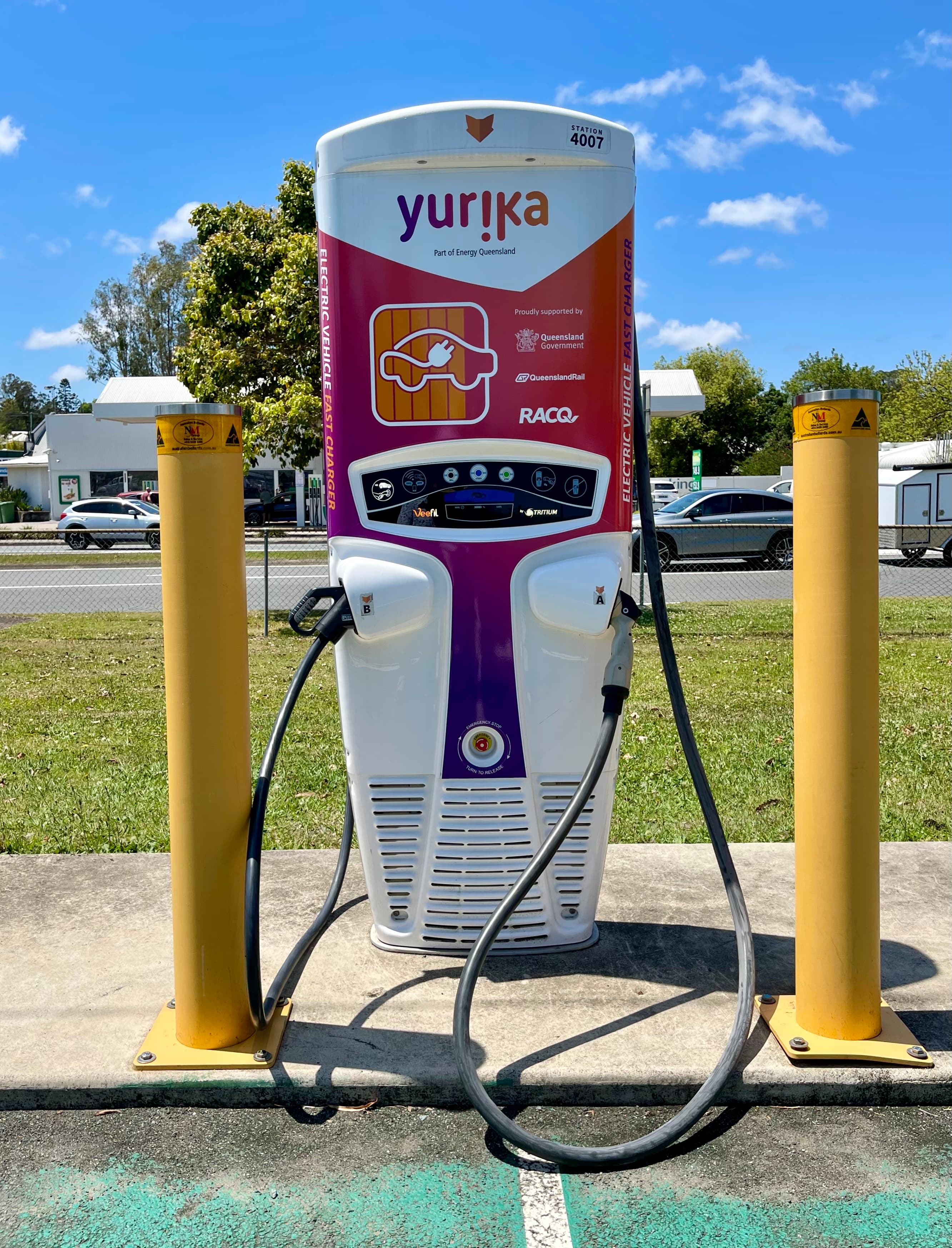
There is a particular kind of modern irony in watching an electric car pull into a charging station while a diesel generator sits behind the fence keeping the lights on and the electrons moving. The car is silent. The marketing is clean. The fuel is somewhere else, out of sight, behind a cabinet, in a truck, at a power station or inside a remote-site generator.
That image is not an internet myth invented to make electric vehicles look foolish. Australian parliamentary records describe real off-grid EV charging prototypes that combine solar panels, batteries and backup diesel generation. In a 2024 Senate estimates hearing, officials discussed the Erldunda installation on the Stuart Highway and clarified that its charging system was designed as renewable, but had a backup diesel generator because the site was remote and motorists could not be left without a charge. A later parliamentary submission described a hybrid system using 30kW of solar, an 80kW battery and a 50kW generator set to support two 50kW charging units. The Senate estimates transcript records the Erldunda discussion, and the parliamentary submission describes the hybrid charging design.
The point is not that every suburban charger is secretly a diesel pump. That would be false. The point is that the further EV infrastructure has to travel from a strong grid connection, the more the engineering story changes. A charger in a shopping-centre car park can draw from the network. A charger in the Australian outback may need solar, batteries, communications equipment, a long maintenance route and a fossil-fuel backup. In May 2026, officials told another Senate hearing that some off-site charging stations have diesel backup generation and described that as standard practice for solar-backed remote sites. They could not give senators a final count of how many stations had it. The 2026 hearing is available in the Parliament of Australia Hansard record.
That is the uncomfortable picture this article is interested in. An EV is not a magical object that creates clean energy. It is a vehicle in a large industrial system. Sometimes that system is powered by hydro, wind, solar and a well-managed grid. Sometimes it is powered by coal, gas or diesel while the sales brochure talks about freedom from fossil fuels.
The question is not whether an EV has a tailpipe. The question is what the whole ownership system is asking you to build, replace and believe.
The charger is electric. The system behind it may not be
The phrase “zero tailpipe emissions” is technically true for a battery-electric vehicle. There is no exhaust pipe emitting carbon dioxide while the car is moving. But the phrase is also carefully incomplete. The vehicle needs electricity, and electricity has to be generated, transmitted, converted, delivered and paid for.
Australia’s own energy statistics are enough to puncture the simplistic version of the sales pitch. The Australian Government’s latest electricity-generation data says that in calendar year 2025, fossil fuels supplied 60.5 per cent of Australia’s electricity generation: coal contributed 42.7 per cent, gas 16.2 per cent and oil 1.7 per cent. Renewables supplied 39.5 per cent, made up of solar, wind and hydro. The same source says the on-grid share of renewables reached 42 per cent, which is progress, but it is not the same thing as a 100 per cent renewable charging network. See the Department of Climate Change, Energy, the Environment and Water’s electricity-generation statistics.
In other words, an Australian EV is usually cleaner at the point of use than a petrol car, but the national system is not clean in the way the word is commonly understood. The electricity may be partly renewable, partly coal, partly gas, and different again depending on the state, time of day and whether the car is charged from rooftop solar or a public fast charger. The outback prototype adds another layer: the station can be substantially solar-powered and still keep a diesel generator as insurance against darkness, rain, equipment faults and an unexpectedly stranded driver.
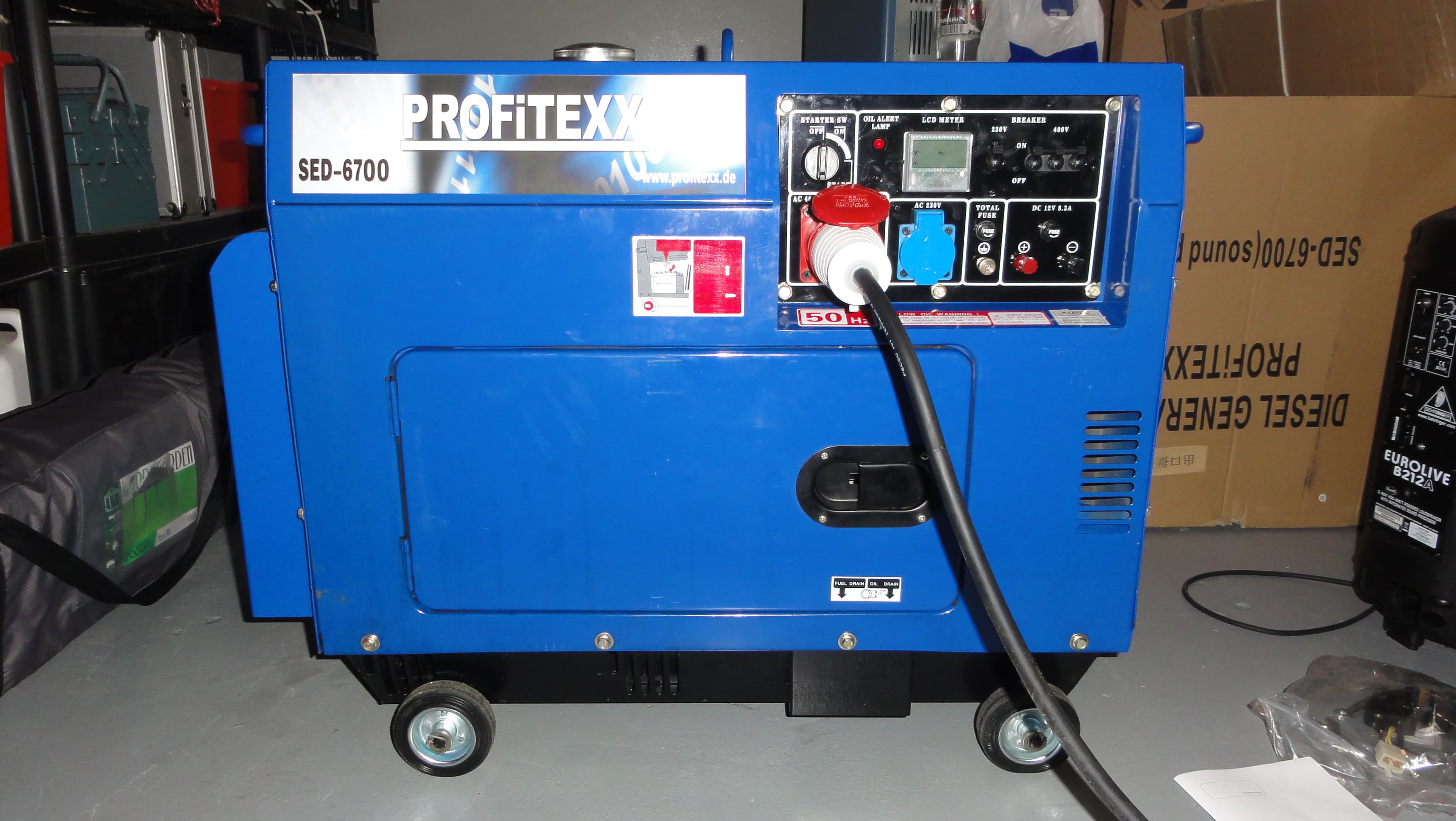
There is nothing dishonest about using a generator as backup if the alternative is abandoning a remote community or leaving a critical service unreliable. Reliability matters. A petrol station in a remote town also has tanks, pumps, tanker deliveries and backup plans. The honest observation is different: a technology sold as an escape from fossil fuels can still require fossil-fuel hardware to make its infrastructure dependable.
That distinction matters because the consumer is usually shown the final object, not the chain behind it. The advertisement shows a glossy car gliding through a city. It does not show the mine, refinery, container ship, battery factory, transmission line, substation, diesel backup, software server or disposal pathway. The clean image is a product of editing.
EVs are also a consumer identity
The electric car is sold as transport, but it is also sold as a feeling. It lets a buyer see themselves as modern, informed and morally improved. The purchase can become a statement: I am moving forward; I understand technology; I am not part of the old petrol world.
That psychological appeal is real even when the climate claim is complicated. People buy products for identity all the time. The phone in a person’s hand is communication, camera, computer, fashion accessory and social signal. The electric car works in much the same way. It is transportation, but it is also a rolling declaration that the owner belongs to the next generation of consumers.
There is nothing wrong with wanting new technology. The problem starts when the cultural story is presented as a moral command rather than a commercial proposition. “You will feel better in an EV” is a persuasive message. “You need an EV to be a good person” is a much more aggressive one. It turns an expensive purchase into a test of character and makes reasonable questions about longevity, repair and infrastructure sound like backwardness.
The buyer may not actually be trying to save the planet. They may be responding to the quiet cabin, instant torque, lower servicing requirements, tax treatment, status, novelty or the promise of never visiting a petrol station again. Those are legitimate reasons. They are consumer reasons. Calling every EV purchase a climate sacrifice can obscure the fact that the market is selling convenience, performance, software and social meaning as much as it is selling emissions reduction.
The new generation of consumer is particularly comfortable with products that are upgraded, connected and replaced. The old expectation was that a major purchase should remain useful for decades and be fixable by a competent tradesperson. The new expectation is that a product should be smooth, app-connected and supported by a manufacturer while it is commercially current. When it stops receiving updates, the user starts looking at the replacement model.
An EV fits that new expectation unusually well. It has a large battery, powerful software, screens, sensors, online services and a fast-changing charging ecosystem. That does not make every EV bad. It does make the vehicle feel more like a device platform than the mechanically legible car many Australians grew up with.
The lifecycle argument is more complicated than the slogan
A fair article has to deal with the strongest evidence on the other side. The International Energy Agency’s lifecycle work does not say that an EV has no environmental cost. Its methodology includes raw materials, battery production, the electricity used during operation and end use. The IEA’s published analysis generally finds that battery-electric cars have lower lifecycle greenhouse-gas emissions than comparable internal-combustion cars, although the size of the advantage depends on the vehicle, battery, electricity mix, manufacturing assumptions and distance driven. The IEA explains its lifecycle calculator and its assumptions here.
That evidence should not be waved away. In many use cases, especially where the EV is charged from a relatively clean grid and driven enough kilometres to spread its manufacturing footprint, an EV can produce fewer lifecycle emissions than a comparable petrol car. The fact that a remote charger has a diesel backup does not automatically make the EV worse than a petrol car over its whole life. A large efficient generator can sometimes use fuel more efficiently than a small engine, and the generator may run rarely.
But a lifecycle average is not a personal moral verdict. It is a model built from assumptions. It may compare a new EV with a new petrol car, when the real choice for a household is a new EV versus keeping the petrol car already sitting in the driveway. The existing car has already been manufactured. Its production emissions are sunk. If it is safe, reliable and repairable, extending its service life can avoid the immediate resource demand of producing another new vehicle.
This is where the “save the planet” story becomes too neat. If a perfectly serviceable petrol car is scrapped early so a new battery-electric car can be purchased for status, the environmental result depends on what happens next, not on the badge. If the petrol car is kept for years, repaired and eventually recycled, the decision looks different. If the EV is charged mostly from rooftop solar and replaces a large, inefficient SUV, it looks different again.
The honest conclusion is not that EVs never reduce emissions. The honest conclusion is that the buyer should not be bullied into confusing a lower-emissions potential with moral purity. An EV is still a manufactured product with mining, transport, energy and waste attached to it. The word “electric” moves the emissions around; it does not make the industrial system disappear.
The evidence supports saying that EVs can reduce lifecycle emissions in many conditions. It does not support saying that every EV, every charging session or every replacement decision is automatically environmentally superior. This article’s criticism is aimed at the sales narrative and the infrastructure reality, not at pretending the lifecycle research does not exist.
Why an existing petrol car can be the more durable possession
The strongest case for the existing petrol car is not that petrol engines are perfect. They are not. They have oil, coolant, belts, seals, exhaust systems, transmissions, sensors and thousands of wear points. They emit pollutants at the tailpipe and can become expensive when neglected.
The case is that the petrol car belongs to a mature repair culture. Independent workshops understand the systems. Salvage yards hold engines, gearboxes, alternators, compressors, panels and control modules. Aftermarket companies reproduce parts. Owners share manuals, diagnostic procedures and practical fixes. A vehicle can be old, imperfect and still economically worth repairing because no single battery pack or software account decides whether the whole thing is serviceable.
That is the difference between repairability and maintenance. Maintenance keeps a car healthy. Repairability keeps a car alive when something fails. A petrol car can often be kept running through a sequence of ordinary interventions: replace a radiator, rebuild a transmission, fit a used engine, repair an electrical fault, source a panel, recondition a starter motor. The car becomes a collection of replaceable problems rather than one integrated commercial product.
The automotive industry knows that access to repair information matters. Australia’s Motor Vehicle Service and Repair Information Sharing Scheme came into effect on 1 July 2022, and the ACCC says manufacturers, importers and distributors must provide repair information to repairers and registered training organisations at no more than fair market value. The scheme exists because independent repairers and consumers need information to keep vehicles operating outside the manufacturer’s own network. The ACCC’s 2025 guidance explains the scheme.
The fact that this scheme exists does not prove EVs cannot be repaired. It does show the direction of travel: cars increasingly depend on proprietary diagnostic information, electronic systems and manufacturer cooperation. An EV adds high-voltage safety procedures, battery-management data, proprietary components and software dependencies to that repair conversation.
The contrast becomes sharper when a manufacturer talks about the car as a software platform. Tesla’s Australian service material promotes fewer moving parts and remote diagnostics, alongside over-the-air software updates. That is attractive while the manufacturer keeps supporting the car. It is less comforting when a future owner asks whether the screens, connectivity, driver-assistance hardware or charging controls will still work after the commercial support cycle changes. Tesla describes its service model and over-the-air updates here.
An older petrol car can be crude, but crude is often a form of independence. It does not need a cloud account to start. It does not need a subscription to unlock a performance mode. It does not need a server to authenticate the air-conditioning system. A workshop can diagnose it with tools that are widely available. The owner has more power over the object.
The battery is the economic cliff
The battery is not automatically a failure. Modern lithium-ion packs can last a long time, and many owners will never need a full replacement during their normal ownership. But the battery is the component that makes the long-term ownership question difficult because it is large, expensive, chemically complex and tightly integrated into the vehicle’s value.
Look at the warranties rather than the advertising. Hyundai Australia’s current warranty terms cover a high-voltage battery for eight years or 160,000 kilometres, whichever occurs first, and refer to a 70 per cent state-of-health threshold. The document says Hyundai may repair, replace or provide reconditioned or remanufactured parts. Tesla’s Australian warranty page likewise lists battery and drive-unit coverage that varies by model, commonly eight years and 160,000 or 192,000 kilometres, with a minimum capacity retention condition. Hyundai’s Australian warranty terms are here, and Tesla lists its Australian coverage here.
Those warranties are valuable consumer protection. They are not promises that the car will be effortless to keep for fifty years. They are also not evidence that a battery is guaranteed to die when the warranty ends. They establish a commercial boundary: the manufacturer is making a defined promise for a defined period, and after that period the owner carries more of the risk.
At 70 per cent capacity, a battery may still be usable. But usability depends on the car’s original range, the owner’s daily route, the climate, charging access and resale expectations. A 70 per cent battery in a long-range EV can be practical. The same percentage in a smaller older model may turn a daily trip into a charging exercise. Range loss is not the only issue: cooling systems, contactors, onboard chargers, inverters, sensors, thermal management and crash-related battery damage can all affect the economics.
This is why the phone and computer comparison resonates. A five-year-old computer can still be physically sound while its operating system, battery, security support or proprietary charger has become the reason to replace it. An EV is a car, but it also contains the product logic of a computer: rapid software change, sealed assemblies, integrated boards, remote diagnostics and a manufacturer-controlled update pipeline.
The petrol car is not immune to obsolescence. Parts can disappear. Rust can win. A rare transmission can become uneconomic. A thirty-year-old car is not automatically a wise financial choice. The difference is that the petrol-car ecosystem gives an owner more ways to improvise. The EV market is still building those independent repair and reuse pathways, and the value of a used EV is more exposed to battery history and software support than many buyers have been taught to expect.
Remote charging exposes the hidden cost of convenience
The outback charging prototype is revealing precisely because it is not a suburban charger. It shows what happens when the promise of “just plug in” meets Australian distance. The parliamentary submission says an initial remote charging unit was expected to cost roughly $650,000 to $700,000. It describes a system with solar, batteries and diesel backup designed to deliver reliable charging where grid capacity is limited or absent.
That is an impressive engineering achievement. It is also an enormous amount of infrastructure to reproduce the basic convenience of a petrol bowser. The petrol system carries its energy in liquid form. A tanker can travel hundreds of kilometres and refill a tank in minutes. The EV system needs a power source, power electronics, storage, communications, a reliable payment system, maintenance and a plan for the day the weather does not cooperate.
Fast charging also creates demand spikes. A charger that can deliver 150kW or more is not merely a wall socket. Several vehicles arriving together can require a substantial connection, battery buffering or onsite generation. The more remote the site, the more expensive it becomes to build enough capacity for occasional peak demand. A diesel generator is a practical way to bridge that gap, even if it runs only when solar and batteries cannot meet the load.
This is the part of the transition that glossy advertising avoids. The consumer is encouraged to think about the car as a standalone object. The country has to think about a network. Networks cost money, require redundancy and rely on equipment that ages. Every additional layer is another place where the clean narrative meets a physical constraint.
| Feature | Existing petrol car | New EV |
|---|---|---|
| Uses an existing asset | Often | No |
| Tailpipe emissions | Yes | No |
| Depends on charging network | No | Yes |
| Long-established independent repair ecosystem | Strong | Developing |
| Large traction battery as a value-critical component | No | Yes |
| Can be backed by diesel infrastructure | Fuel is direct | Sometimes |
The comparison is not a scientific lifecycle calculation. It is a consumer-ownership comparison. It asks what the person is buying beyond the powertrain: an existing machine with a known repair culture, or a new platform that depends on an expanding energy and software network.
The 50-year question
Saying that a petrol car can be repaired for fifty years is not a laboratory guarantee. No owner can promise that a particular engine, body shell or transmission will survive indefinitely. Rust, accidents, neglected maintenance and parts scarcity can end any vehicle.
But as a statement about repair culture, the idea is sound. There are petrol cars on Australian roads that are forty or fifty years old. There are specialists who rebuild their engines, machinists who reproduce obsolete parts and enthusiasts who keep them alive because the systems are understandable. A 1970s car can be repaired without asking whether a server still recognises its VIN or whether a replacement battery is available from one manufacturer.
The equivalent fifty-year claim for a modern EV is much harder to make. The industry has not had fifty years to prove the survival of high-voltage packs, battery-management electronics, charging standards, software services and integrated vehicle computers. The best evidence we have is measured in years and warranty periods, not generations. That uncertainty is not an accusation of fraud. It is simply a reason not to treat a new EV as automatically more sustainable than the durable car a buyer already owns.
If a petrol vehicle lasts another decade because an owner replaces a clutch, radiator, suspension arm and exhaust, that is not glamorous sustainability. It is ordinary thrift. It avoids manufacturing a replacement vehicle. It keeps materials in use. It gives independent mechanics work. It lets an owner make decisions without waiting for an app or a corporate update.
The irony is that the EV conversation often treats replacement as progress. The old vehicle is framed as a problem, while the new vehicle is framed as the solution. The more useful question is: could the existing car be kept safe, reliable and useful for longer? Sometimes the answer is no. Sometimes the answer is obviously yes.
Who should still buy an EV?
An opinion piece does not need to pretend that every EV buyer is foolish. An EV can be an excellent choice for a household with home charging, predictable daily travel, access to solar, a suitable model and a plan for long-distance trips. It can be quiet, quick and cheap to service. It can make sense for fleets that return to a depot every night. It can reduce local exhaust pollution in dense streets. Those are practical benefits, not climate theatre.
The buyer should simply be honest about why they want it. If the reason is performance, say performance. If it is low routine maintenance, say maintenance. If it is to avoid petrol prices, calculate the real public-charging cost. If it is environmental concern, check the electricity source, the vehicle size, the battery warranty and how long the car will be kept. If it is identity, admit that identity is part of the purchase. There is no shame in liking new technology; there is only a problem when marketing disguises preference as proof.
Before buying, ask:
- Can the car be charged at home, or will public fast charging be the normal routine?
- What powers the local network, and what does charging cost at the times you will actually use it?
- What does the battery warranty cover, what capacity threshold applies, and what happens when the coverage ends?
- Can an independent repairer access the diagnostic information, parts and safety training needed to keep the car operating?
- Will the manufacturer still support the vehicle’s software, connectivity and charging functions when the car is ten or fifteen years old?
- Would keeping the existing petrol car for several more years avoid the production of another vehicle?
Those questions are not anti-technology. They are pro-owner. They put the buyer back in charge of the decision instead of letting a campaign decide what the buyer is supposed to feel.
The honest conclusion
An EV is not a miracle and a petrol car is not a saint. One has no tailpipe but draws on a grid that still relies heavily on fossil fuels. The other burns fuel directly but may already exist, be repairable, and remain useful for decades. A remote Australian charging network can be substantially renewable and still need diesel backup. A lifecycle study can show that many EVs have lower greenhouse emissions and still fail to answer whether replacing a perfectly serviceable existing car is the best individual decision.
That is the irony. The vehicle is marketed as a break from the old energy system, but the charging network often has to borrow the old system’s reliability. The car is marketed as sustainable, but its long-term value depends on batteries, electronics, software and a supply chain that has not yet proved it can support every vehicle for the lifespan that petrol-car owners take for granted. The buyer is told they are choosing the planet, when they may simply be choosing a newer, more fashionable and more connected product.
The practical position is straightforward: buy an EV if it fits your actual life and you understand the costs. Do not buy one because a marketing department has made you feel guilty about a petrol car that still works. If your existing car is safe, reliable and repairable, keeping it may be the most durable and financially honest choice available to you.
Image credits and evidence note
The charging-station image is “Yurika, electric vehicle charging station in Cooroy, Queensland, Australia, 2021” on Wikimedia Commons, used under its listed Creative Commons licence. The generator image is “Dieselgenerator.jpg” on Wikimedia Commons, released into the public domain. The images illustrate the article’s subject; neither is presented as a photograph of the Erldunda prototype.
FAQs
Do EV charging stations really use diesel generators?
Some do, particularly remote or off-grid charging installations and temporary or hybrid systems. Australian parliamentary records describe remote EV charging prototypes using solar, batteries and backup diesel generation. That does not mean every public charger is diesel-powered; it means backup fossil generation remains part of the reliability plan in some locations.
Are EVs actually cleaner than petrol cars?
Many lifecycle studies, including the International Energy Agency’s work, find that battery-electric cars can have lower lifetime greenhouse-gas emissions than comparable petrol cars. The result depends on manufacturing, battery size, electricity mix, vehicle use and lifespan. “Lower lifecycle emissions in many cases” is more accurate than “zero emissions everywhere”.
Can an existing petrol car really last fifty years?
Some can, if the body, structure and parts supply remain viable and owners continue maintaining them. Fifty years is not a guarantee for every car. It is a useful way to describe the depth of the established repair ecosystem around internal-combustion vehicles, compared with the limited long-term evidence available for modern EV batteries and software-dependent systems.
Is buying an EV always a bad idea?
No. An EV can suit drivers with home charging, predictable journeys, access to renewable electricity and a model with strong local support. The point is to buy it as a transport and ownership decision, not as proof that the buyer is morally superior or that a working petrol car has no remaining value.