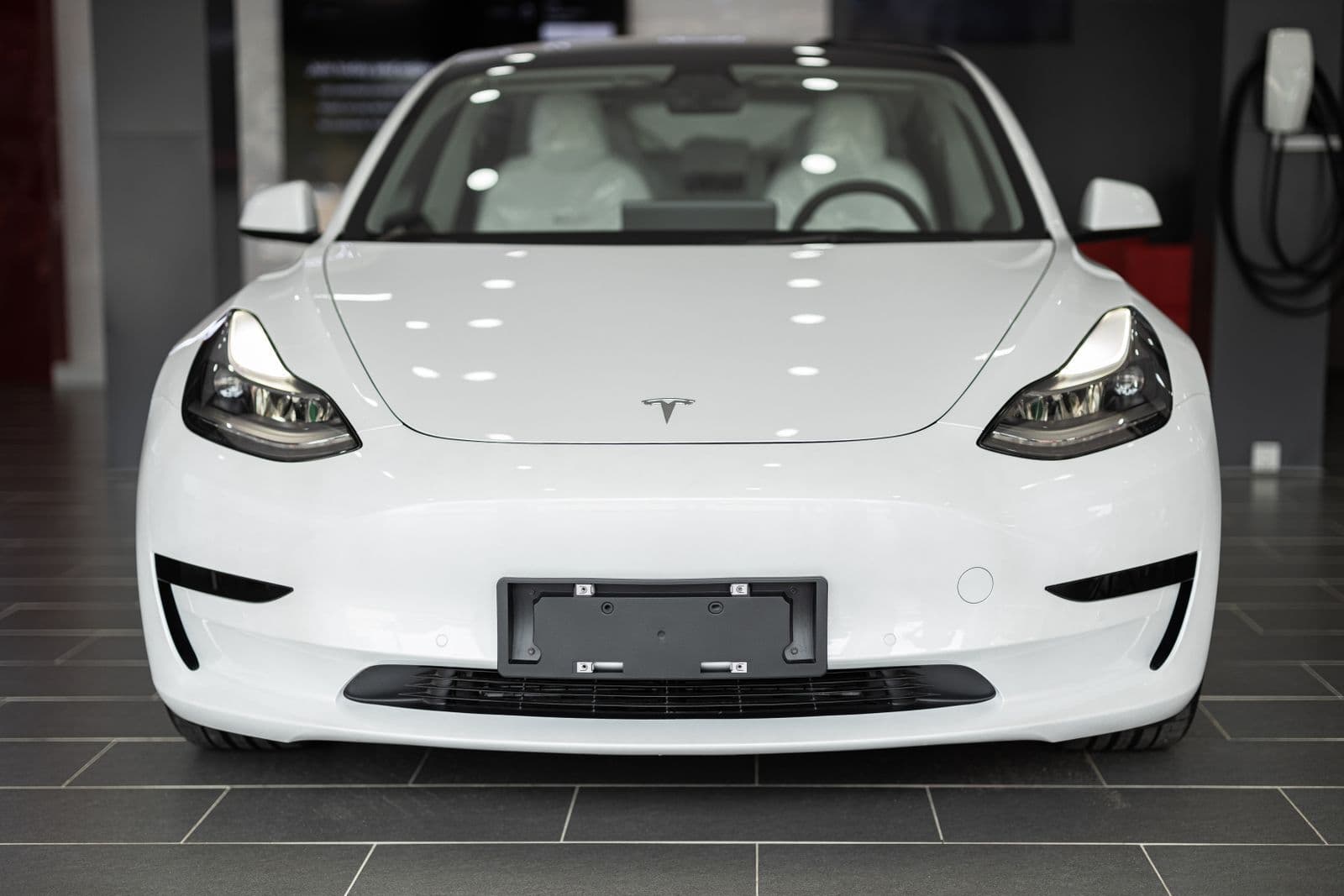
The electric car race has a new leader, and it is not close. In 2025 the world bought more than 20 million plug-in cars — and for the first time, the biggest seller of battery-electric vehicles on the planet was not Tesla. It was BYD, a Chinese company most Australians had barely heard of four years ago.
Here is how the world's top EV brands stack up on sales and revenue, how the same race looks state by state in Australia, and who is actually buying these cars — in full-year 2025 numbers, with every figure linked to its source.
- Global plug-in sales, 2025
- 20.7 million, up 18%
- World's #1 EV brand
- BYD — 2.26 million BEVs
- Tesla deliveries, 2025
- 1.64 million, down 8.6%
- 2025 revenue
- BYD US$116B vs Tesla US$94.8B
- Australia's BEV sales, 2025
- 103,355 — a record
- EV share of new cars, AU
- 13.1% (21.7% in July 2026)
The global picture: 20 million EVs and a new number one
Global sales of plug-in vehicles — battery-electric and plug-in hybrid combined — rose 18% in 2025 to about 20.7 million, according to preliminary figures from research firm Rho Motion. The International Energy Agency's own reading puts 2025 electric car sales above 20 million, or roughly a quarter of the world car market, with China near a 55% share of global volume and United States sales edging lower.
The headline, though, is the change at the top. BYD sold 2,256,714 battery-electric vehicles in 2025, up 28%, while Tesla delivered 1,636,129 — down 8.6% on 2024. That is a gap of more than 600,000 cars, and it marks the first time any company has outsold Tesla in pure EVs over a full calendar year. The Financial Times framed it bluntly: Tesla lost its crown as the world's biggest electric-car maker after a second consecutive year of declining sales.
Tesla's slide is steeper than the delivery number suggests on its own. In global BEV market share, Tesla fell from 16.5% in 2024 to 12% in 2025 — and as recently as November 2023 it had held 19.2%, the undisputed leader. BYD now leads the category with a 16.6% share, and third-placed Geely climbed from 8.5% to 10.4%, close enough that Tesla's silver medal is under genuine threat through 2026 and 2027.
None of this makes Tesla small. It still delivered more than 1.6 million cars, and the Model Y remains one of the world's best-selling vehicles of any fuel type. But the era in which "EV" and "Tesla" were synonyms is over, and 2025 is the year that became arithmetic.
The world's top EV brands, ranked
CleanTechnica's full-year 2025 table (compiled from EV-Volumes data) reads like this at the top:
| Rank | Brand | 2025 story |
|---|---|---|
| 1 | BYD | Clear leader; 16.6% of global BEV sales |
| 2 | Tesla | Comfortable runner-up, but sliding — down 4.5 points of share in a year |
| 3 | Geely | First-ever podium medal, replacing Wuling; six-figure months late in the year |
| 4–10 | Wuling, Volkswagen, Leapmotor, Xpeng, Xiaomi, SAIC brands | Volkswagen climbed from 7th to 5th; Leapmotor jumped six places from #12 to #6; Xpeng and Xiaomi arrived from outside the top 20 |
The risers tell the story of the year. Leapmotor, Xpeng and Xiaomi all forced their way into the global top 10, while the Vietnamese brand VinFast scored a record 36,496 registrations in December alone, its best-ever month and a 17th place for the year. Renault had its best December in five years off the back of fresh models, and Skoda set records on the strength of its Elroq crossover.
The fallers are just as instructive. Aion dropped six places to 14th, and Chery and Changan — Chinese legacy makers, not Western ones — fell out of the top 20 entirely. This is not a simple "China rises, the West falls" story. It is a story about which companies, anywhere, are shipping fresh electric product at competitive prices, and which are not.
Group the brands into their parent companies and the picture sharpens further. On combined BEV-plus-PHEV registrations by automotive group, BYD leads, and Geely has already passed Tesla for second place. Tesla's share of that group table has fallen from 13.3% two years ago, to 10.7% in 2024, to 7.9% in 2025. Volkswagen Group edged past SAIC in the final stage of the year, and Chery — riding its Jaecoo and Omoda export brands — climbed to seventh, ahead of both BMW Group and Hyundai-Kia.
A note on what these tables count: "brands" are the badge on the car, while "OEM" tables roll brands up into their parent groups — so Geely's table includes Volvo, Polestar, Zeekr and Lynk & Co, and Volkswagen Group's includes Audi, Skoda and Cupra. Both readings agree on the direction of travel.
Revenue and profit: the crown is heavy
If sales crowned a new king in 2025, revenue made it official. BYD reported revenue of US$116 billion for fiscal 2025, against Tesla's US$94.8 billion — the first time BYD's annual revenue has exceeded Tesla's. By every top-line measure, the Chinese company now leads the global EV industry.
The profit line tells a more complicated story. BYD's net profit fell 19% in 2025 to about US$4.7 billion (¥32.6 billion), its first annual decline since 2021, and the fourth quarter was worse, down 38% — a third consecutive quarter of contraction. The cause is China's domestic price war, where more than 200 brands are fighting over the world's largest EV market and cutting prices is the default competitive weapon. BYD, as the volume leader, is absorbing the heaviest fire.
There is a striking contrast buried in the supply chain. CATL, the battery supplier that powers roughly one in three EVs made worldwide, posted a record US$10 billion profit in 2025 — more than double the carmaker at the top of the sales table. In today's EV industry, the safest seat may be selling the batteries, not the cars.
BYD's response to the margin squeeze is geographic. For the first time, its exports now exceed its domestic sales, and it has set a 1.3 million-vehicle overseas target for 2026, up 24% year on year. A Turkish plant began production in March 2026 with 150,000 units of annual capacity, a Hungarian facility is in pilot production, and the dealer and service network is expanding from roughly 1,000 to more than 2,000 points globally. It is also spending on technology to buy breathing room: its new Blade 2.0 battery claims 210 watt-hours per kilogram and a 1,006-kilometre CLTC range from a 150 kWh pack.
The pressure is real, though: in January and February 2026, BYD's sales in China fell 36% year on year, a sixth consecutive month of domestic decline. The biggest EV company in the world is now, increasingly, an export company — which is precisely why Australia keeps turning up in its plans.
Australia in 2025: the year EVs hit a record
Australia's own numbers had their best year ever. Buyers took home 103,355 battery-electric vehicles in 2025, up 14.1%, plus 53,502 plug-in hybrids, up a remarkable 134.5% — 156,857 electrified vehicles in total, a 38.7% jump on 2024, according to FCAI VFACTS and Electric Vehicle Council data. Electrified vehicles captured 13.1% of the total new-car market, up from 9.5% the year before.
The context makes the record sharper. The overall market barely moved — up 0.9% to 1,195,999 vehicles — while petrol sales fell 10.2% and diesel slipped 1.1%. Conventional hybrids grew 14.2%. The growth in Australian new-car sales is now coming almost entirely from vehicles with a plug or a battery, and cars built in China accounted for 20% of all new vehicles sold in 2025, with BYD and Chery the standout brands.
The installed base is compounding too. Australia's EV fleet passed 370,000 vehicles on the road in 2025, up from about 180,000 just two years earlier, and buyers now choose from more than 150 electric models on sale here.
And 2026 has started faster still. As we reported in August, battery EVs were more than one in five new cars sold in July 2026 — 23,510 BEVs, 21.7% of the market, a second consecutive month above a fifth, with the year-to-date share at 17.3%. Whatever 2025's record looked like at the time, it already reads as a waypoint.
Australia's favourite EVs: the models and brands
Australia's 2025 model chart has one familiar face at the top and a genuine surprise at number two.
The Tesla Model Y held its crown as Australia's best-selling EV with 22,239 deliveries, up 4.6%, helped by the "Juniper" update. The surprise was the BYD Sealion 7: a mid-size SUV that sold 13,410 units in its first year on sale and immediately took second place — the strongest debut the Australian EV market has seen.
The rest of the chart shows how quickly tastes are moving. The Tesla Model 3 fell 61.3% to 6,617 sales as buyers abandoned sedans for SUVs. The Kia EV5 posted the year's most dramatic growth from a non-Chinese brand, up 687.3% to 4,787. New arrivals landed well: the Geely EX5 found 3,944 buyers, the Kia EV3 2,597, and the XPENG G6 1,925. Meanwhile, earlier favourites went backwards — the MG4 dropped 56.9% and the BYD Seal 40.8%.
By brand, Tesla led with 28,856 sales and roughly 28% of the BEV market, with BYD second on about 24,303 across four models — Sealion 7, Atto 3, Seal and Dolphin — for about 24%. Kia was third with 7,384. The two leaders account for a little over half the market between them, but the chase pack is closing fast.
One shape dominates: eight of the ten best-selling EVs in Australia in 2025 were SUVs. The family car of the electric era is a mid-size SUV, and every brand planning its Australian range knows it.
State by state: Australia's EV map
EV adoption is not evenly spread across the country — not even close. Estimates compiled from VFACTS and EVC data for 2025 put New South Wales first on volume at roughly 30,000 BEV sales, followed by Victoria around 25,000, Queensland around 18,000 and Western Australia around 10,000. Population explains most of that order — NSW and Victoria are simply the biggest markets.
Per head of population, the map flips. The ACT has the highest EV adoption rate in Australia, typically two to three times the national average, driven by federal government fleet electrification, high household incomes and the territory's own zero-emissions strategy. Victoria runs second per capita, helped by Melbourne's long average commutes, which strengthen the fuel-savings case. Western Australia's growth accelerated through 2025 as Perth petrol prices stayed high.
The pattern underneath the map is consistent: EVs sell best where incomes are higher, home ownership (and therefore home charging) is easier, and driving is mostly urban with occasional highway trips. Where those conditions thin out, so does adoption. The Australian Automotive Dealer Association's November 2025 survey of 2,000 drivers found purchase intention for EVs has declined in regional and rural Australia — even as intention to buy hybrids and plug-in hybrids rose. The bush is not saying no to electrification; it is saying "not yet" to full battery-electric, and yes to the fuel-tank backup a PHEV offers.
State incentives used to blur this map, but most have ended. Victoria's $3,000 rebate and Queensland's equivalent have closed, and NSW stamp-duty relief has largely concluded — the state-by-state picture of what remains is in our stamp duty and registration concessions guide. The demand that remains is now carried by economics and product, not rebates.
Who buys an EV in Australia: the demographics
The clearest picture of the Australian EV buyer comes from the 2025 EV Ownership Survey, run by the Electric Vehicle Council and the University of Sydney's Institute of Transport and Logistics Studies, with responses from 1,839 owners between May and July 2025.
The typical owner profile is still distinctly early-adopter. 80% of owners are male, 69% hold a bachelor's degree or higher, two-thirds live in major cities, and 93% own their home. Nearly eight in ten — 79% — have rooftop solar, 73% have no children at home, and the average EV household is two adults.
Income is the strongest single predictor. Analysis by NIEIR found the average EV-owning household lives in a local government area where average household income is around $150,000 — placing them in the top 22% of LGAs by income, a pattern that has held broadly consistent for seven years. EVs are spreading, but they are spreading from the top of the income ladder down.
What they spend is falling, though. The average EV purchase price in the 2025 survey was $63,500, down $6,500 on the year before — the sub-$45,000 segment (MG4, BYD Dolphin and friends) is doing exactly what it was supposed to do.
How they buy matters as much as what they earn. 75% of owners bought outright, 25% leased, and 95% bought new. A third received a government incentive, and 44% said incentives were the deciding factor. Novated leasing — supercharged by the fringe benefits tax exemption on eligible EVs — is consistently estimated to account for 30–40% of EV transactions, making it the single biggest purchase mechanism in the market.
Once they own one, the economics look like this. 70% of owners report fuel costs down by more than 60%; electricity costs roughly a quarter of petrol per kilometre. 73% spend less than $300 a year on maintenance, and over half spend under $150. 95% pay less than $2,000 a year for insurance. 93% can charge at home — 85% did so in the week before the survey — and 80% of those home chargers run on rooftop solar, at an average electricity cost of $0.27 per kWh.
Two more details round out the picture. EVs are not always the only car in the driveway: 66% of owners run multiple vehicles, typically an EV paired with a petrol or diesel car, while 34% live EV-only. And the leasing share points at the future of the used market — 59% of leased EVs are replaced within six years, against 45% of purchased ones — so the trickle of second-hand EVs is about to become a stream. If that is your entry point, our used EV buying checklist is the place to start.
Perhaps the survey's most useful finding for fence-sitters: concerns about range, charging access, purchase price and battery safety all drop sharply after people buy. The anxiety is largely pre-purchase. The ownership experience, in the words of the data, is quieter than the debate.
The interesting file
- Norway is the future, already. Plug-in vehicles have run at around nine in ten new-car sales there — the end state of the curve every other market is somewhere along.
- China crossed the half-way mark. In several months of 2025, more than half of all new cars sold in China were plug-ins — in a market of more than 20 million cars a year.
- BYD was a battery company first. Founded in 1995 to make rechargeable batteries, it adopted the slogan "Build Your Dreams" and still makes its own cells, motors and semiconductors — the vertical integration behind its price advantage.
- The battery maker out-earns the car makers. CATL supplies roughly one in three EVs built globally and posted a record ~US$10 billion profit in 2025.
- 200 brands, one market. More than 200 EV brands compete in China right now — which is why prices keep falling and why so many of them are looking offshore.
- The Model Y's place in history. In 2023 the Tesla Model Y was reported by JATO Dynamics as the first electric car to become the world's best-selling vehicle of any fuel type — a milestone that will outlive Tesla's current slump.
- Electric cars are older than petrol cars. Crude electric vehicles appeared in the 1830s, decades before the petrol car, and around 1900 roughly a third of cars on American roads were electric. This is a comeback story as much as a new technology.
- Australia's EV is an SUV. Eight of the ten best-selling EVs here in 2025 were SUVs — and the biggest-selling debut ever, the BYD Sealion 7, is one too.
- Vietnam is on the board. VinFast's record December (36,496 registrations) made it the first Vietnamese carmaker to matter globally, built in under a decade.
- The ACT drives electric like nowhere else in Australia. Per head of population, Canberrans buy EVs at two to three times the national rate.
What it means if you're buying or selling in Australia
For buyers, the wind is almost entirely at your back. Choice has exploded past 150 models, the average purchase price fell $6,500 in a year, and the global price war that is squeezing BYD's margins is the same force putting sub-$40,000 EVs in Australian showrooms. The used pipeline is filling as novated leases turn over. The main lever still standing is the FBT exemption — if you can salary-package, it is worth thousands a year, though note the announced changes coming from 2027. Running costs favour home chargers overwhelmingly, so sort out home charging first and read the real running-cost numbers before you commit.
For sellers, the buyer pool for EVs has never been deeper, but it is also better informed. Price against live listings, not against what you paid — used EV values have been reset by new-car price cuts, and a realistic price sells an EV faster than an optimistic one. Battery health is the new logbook: be ready to show it, and know what your warranty actually covers with our EV battery life and warranty guide.
The trap to avoid in 2026 is buying on 2022 assumptions — that EVs are scarce, expensive, or hold value like petrol cars. Prices are falling, choice is flooding in, and used values track new-car cuts. Check today's numbers, not the reputation.
Related
- Global electric car sales passed 20 million in 2025, the IEA reports
- Battery EVs were more than one in five new cars sold in July
- Electric cars and fringe benefits tax, explained
- Buying a used electric car: the checklist
- What an electric car actually costs to run
FAQs
Which is the biggest EV brand in the world?
BYD. In 2025 it sold 2,256,714 battery-electric vehicles — up 28% — passing Tesla's 1,636,129 for the first time over a full year. It also leads on revenue, reporting US$116 billion against Tesla's US$94.8 billion. Tesla remains a comfortable number two on sales, with Geely rising fast in third.
Is Tesla still the top EV seller?
No — not globally, and not since 2025. Tesla delivered 1.64 million cars in 2025, down 8.6%, its second consecutive annual decline. Its global BEV market share fell from 16.5% to 12% in a year. In Australia, though, Tesla still leads: 28,856 sales and about 28% of the BEV market in 2025, with the Model Y the country's best-selling EV at 22,239.
Which EV brand sells the most in Australia?
Tesla, with about 28% of Australia's BEV market in 2025 (28,856 sales), followed by BYD with about 24% (24,303 across four models) and Kia in third with 7,384. BYD's Sealion 7 was the year's standout — 13,410 sales in its first year, the strongest model debut the Australian EV market has seen.
Which Australian state buys the most EVs?
New South Wales leads on volume at roughly 30,000 BEV sales in 2025, followed by Victoria (~25,000), Queensland (~18,000) and Western Australia (~10,000) — largely reflecting population. Per head of population the ACT leads the country by a wide margin, at two to three times the national adoption rate, helped by federal fleet purchases and high incomes.
Who is the typical Australian EV buyer?
Still an early-adopter profile, but broadening. The 2025 EV Ownership Survey (1,839 owners) shows 80% are male, 69% hold a degree, 93% own their home, and 79% have rooftop solar. The average EV household lives in an area with average income around $150,000 — but the average purchase price fell $6,500 in a year to $63,500 as cheaper models arrive.
Are EV sales still growing in Australia?
Yes, and accelerating. 2025 set records: 103,355 BEVs (up 14.1%) plus 53,502 PHEVs (up 134.5%), for 13.1% of all new-car sales. In July 2026, battery EVs were 21.7% of the market — more than one in five new cars — with the 2026 year-to-date share at 17.3%. Australia's EV fleet has passed 370,000 vehicles, double what it was two years ago.