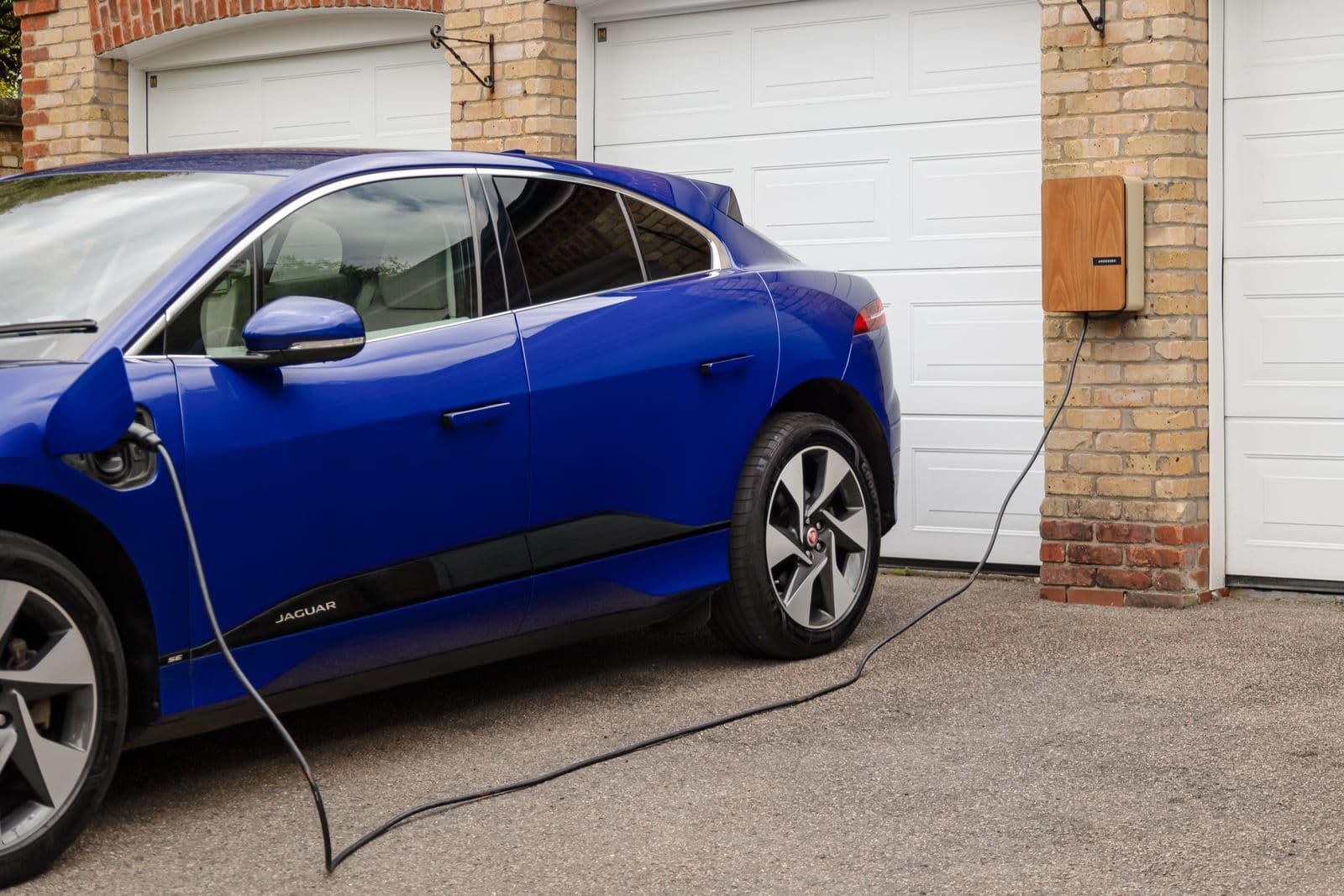
Home charging is why EV running costs work: you arrive home, plug in, and wake to a full battery at a fraction of petrol cost. The decisions are all made once, at installation — which charger, on what wiring, against which electricity plan — and this guide walks through each so you can price the setup before you buy the car.
The charger doesn't usually contain the brains — the car does. A "wallbox" is mostly a smart, safely-rated switch; paying more buys connectivity and load management, not speed your car may not accept.
The three speeds of home charging
- Trickle (10A socket, "granny charger") — every EV ships able to charge from an ordinary powerpoint at roughly 2 kW: 10–20 km of range per hour. Fine overnight for modest daily distances; slow for big batteries.
- Wallbox AC (7–22 kW) — a dedicated wall unit on its own circuit. Single-phase homes typically install 7 kW units (~40 km of range per hour); properties with three-phase power can run 11–22 kW if the car accepts it. This is the default serious answer.
- DC fast charging at home — effectively doesn't exist for households; DC hardware is what roadside chargers are. Home is where you charge slow and cheap.
Check two specs before buying anything: your switchboard (single or three-phase) and the car's onboard AC charger limit — a car capped at 11 kW wastes money on a 22 kW wallbox.
What installation actually costs
Three cost layers, in ascending order of surprise:
- The unit — basic smart wallboxes start around $600–$800; premium connected units run to $2,000+.
- The install — a dedicated circuit by a licensed electrician, commonly quoted from several hundred dollars for a simple run up to $1,500+ where the switchboard is full, distant or needs upgrading.
- The switchboard itself — older homes sometimes need switchboard replacement or spare-circuit work before any EV charger goes on; this is the quote that varies most house-to-house.
Some states and energy distributors have run subsidy or rebate schemes for EV charger installs, and these change often enough that checking your state government's energy pages is worth ten minutes before you book anyone. Solar changes the arithmetic again — a wallbox with solar-matching charges your car on sunshine and pays you back in fuel savings.
The tariff is half the savings
Charging on a flat daytime rate erodes the EV cost advantage. The wins come from time-of-use plans or dedicated EV tariffs with cheap overnight windows: set the car to charge after midnight via its app or the wallbox schedule and the effective cost per 100 km drops below anything petrol can approach. If your retailer offers an EV-specific plan, compare it against a standard time-of-use plan honestly — the cheapest headline rate isn't always the cheapest overnight window.
One safety note that's also an insurance note: extension cords and double adapters are not EV charging equipment. A permanently installed circuit with RCD protection is the only arrangement worth having.
Renters and apartments
Apartments are the hard case: body corporate approval, shared-switchboard metering and limited carparks complicate everything. Practical paths exist — some states have programs supporting strata EV infrastructure, load-managed systems let multiple chargers share one supply, and portable trickle charging from a garage powerpoint remains legal and common where wiring allows. Ask before you buy the car, not after.
Does it change what you buy?
Slightly, yes. A buyer with easy home charging can live happily with a smaller battery and slower AC acceptance; a buyer reliant on public DC charging should read our vehicle-to-grid explainer (opens in a new tab) too and weigh charging-network coverage near home. Our EV versus hybrid comparison (opens in a new tab) covers how this nets out against petrol running costs.
What this means if you're selling on MotorLoop
Selling an EV? Say whether it comes with its wallbox and cables, and mention if the location suits home charging — buyers filtering electric cars (opens in a new tab) ask about charging first. Listing is free (opens in a new tab).