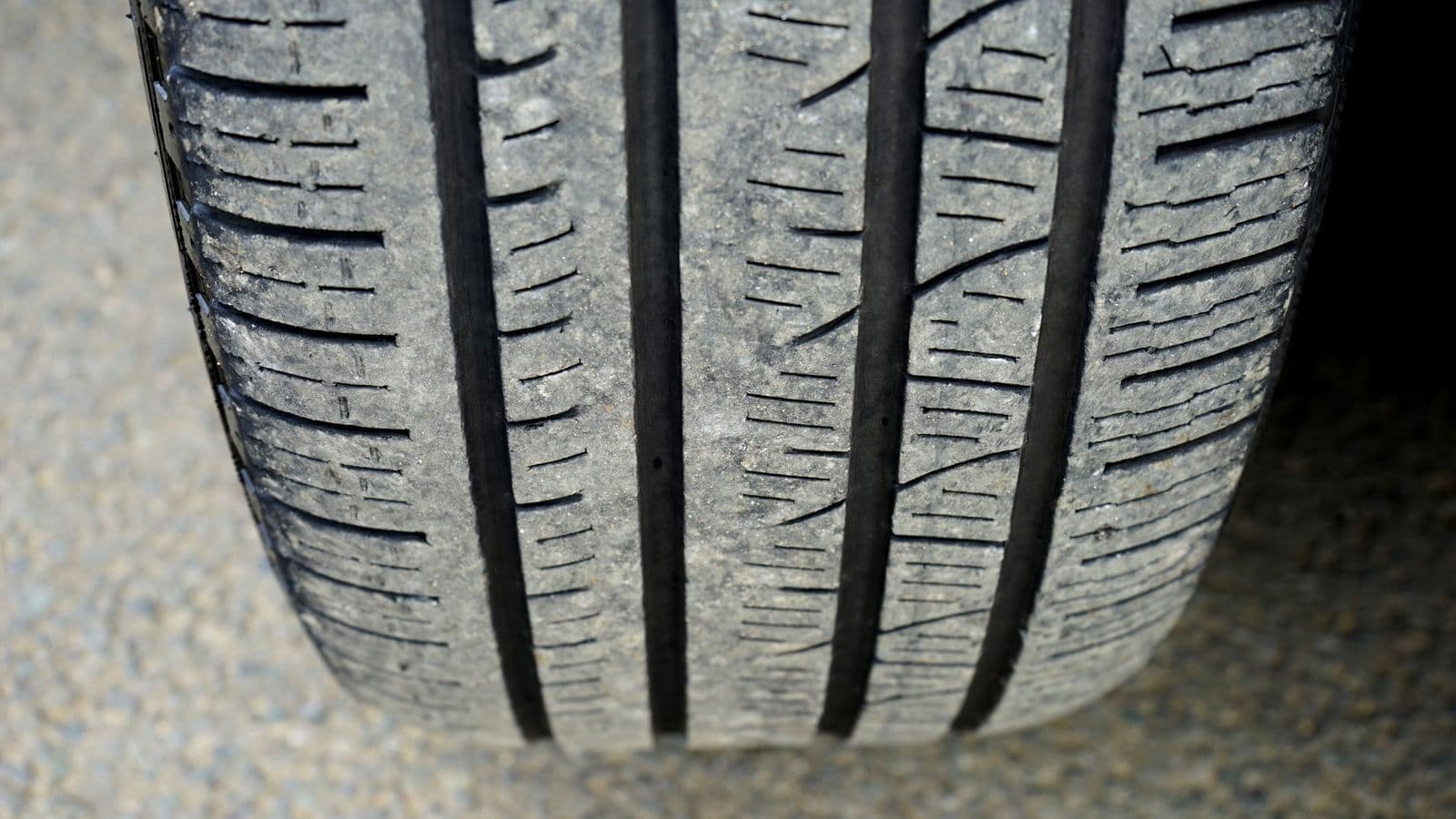
The tyres are the most informative ten minutes of a used car inspection, and most buyers spend about twenty seconds on them. They are the only component that records how the car has been driven, how it has been maintained and whether its suspension and alignment are healthy — and unlike an engine, they tell you all of it from the outside, in a car park, without tools.
They are also a genuine cost. A set of four decent tyres on a mid-size car is real money, and a car needing them soon is worth less than one that does not.
Take a tread depth gauge and a torch. Both are inexpensive, both fit in a glovebox, and between them they answer questions that otherwise cost you a workshop inspection.
Start with the numbers
Tread depth, measured in three places on each tyre. Inner, middle and outer, and ideally at a couple of points around the circumference. Australia's legal minimum is 1.5 mm in the principal grooves across the central three-quarters of the tread, and most tyre engineers suggest replacing at around 3 mm because wet braking falls away sharply below that.
Write the twelve numbers down. The pattern across each tyre matters more than any single reading.
Date codes on all five tyres. The last four digits of the DOT marking give the week and year of manufacture. Deep tread on old rubber is a real finding, particularly on a low-kilometre car: those tyres will need replacing on age rather than wear.
The tyre placard versus what is fitted. Find the placard on the door pillar, in the glove box or in the engine bay, and compare its sizes, load index and speed rating against the tyres actually on the car. A mismatch is worth understanding before you buy, because the replacement must meet the original load rating and generally the speed rating too.
Read the wear pattern
This is where the free diagnosis lives. Uneven wear is the car telling you about itself.
- Both shoulders worn, centre good — persistent under-inflation. Cheap to fix going forward, but it has been costing fuel and tyre life.
- Centre worn, shoulders good — over-inflation.
- One shoulder only — a wheel alignment problem, camber or toe. Budget for an alignment, and be aware that a car that has hit something hard enough to move its alignment may have other damage.
- Feathered edges you can feel with your palm across the tread — a toe setting out of specification.
- Cupped or scalloped patches around the circumference — worn dampers or other suspension wear letting the wheel bounce. This is the expensive one on this list.
- Different wear front to rear beyond the normal — either the tyres have never been rotated, or something is amiss.
Run your hand across each tread as well as looking at it. Feathering is easier to feel than to see.
Look at the tyres themselves
- Four matching tyres? Same brand, same model, same size across an axle at minimum. Four different budget brands on an otherwise tidy car suggests economising at the end of the ownership.
- Sidewall damage. Bulges, cuts, gouges and scuffing. A bulge in a sidewall means the internal cords have been damaged, usually by a pothole or a kerb, and the tyre needs replacing rather than repairing.
- Cracking or crazing in the sidewall or at the base of the grooves — perishing, and a sign of aged rubber.
- Repairs. Look for plugs or patches. A correctly performed repair in the central tread area is generally acceptable; a repair in the shoulder or sidewall is not, because those areas flex too much to hold one.
- Directional or asymmetric tyres fitted correctly. Check the rotation arrow points the right way and that any Outside marking faces outward. Wrongly fitted tyres are common and tell you something about the workshop that fitted them.
Then the wheels
- Kerb rash on the outer lip is cosmetic, and mostly tells you about the driver. Widespread rash on all four is worth noting.
- Buckles and flat spots. Sight along the rim edge while slowly rolling the car, or look for a wobble on a test drive. A buckled rim is a common cause of steering vibration.
- Cracks. Look carefully at the inner barrel and behind the spokes with a torch. A cracked alloy is not safely repairable and needs replacing.
- Corrosion around the bead seat, where the tyre seals. This causes slow leaks that get repeatedly misdiagnosed as punctures.
- Signs of prior wheel changes. Chewed-up nuts, mismatched nuts, or nuts that do not match the wheel's seat type suggest amateur work. If aftermarket wheels are fitted, ask about the spacers question specifically — spacers and adaptors are not permitted between the mounting face and the wheel unless fitted as original equipment by the manufacturer.
Do not skip the spare
Open the boot, lift the floor, or get under the tray. Check that there is a spare at all, that it holds air, that it has tread, and what its date code says. Confirm the jack and wheel brace are present and that the brace fits the nuts, including any locking nut and its key.
A missing locking wheel nut key is a small, irritating and surprisingly expensive discovery to make on a roadside.
On the test drive
- Vibration through the steering wheel at highway speed usually means a balance problem, a buckled wheel or, on aftermarket wheels, a missing hub-centric ring.
- Vibration through the seat rather than the wheel points to the rear of the car.
- Pulling to one side on a straight, flat road suggests alignment or uneven tyre wear.
- Roar that rises and falls with speed, unchanged by engine load, often means a worn wheel bearing rather than the tyres.
- Steering that feels vague or delayed can simply be very old or very cheap tyres.
Turning it into a price
Findings here divide into three groups, and it is worth being clear which is which when you negotiate.
- Tyres near their limit — a known, quotable cost. Get a price for the size and bring it to the conversation. This is the easiest thing on a whole inspection to negotiate on because neither party can dispute it.
- Alignment and balance — inexpensive, but ask why. The tyre wear that revealed it may point at something else.
- Cupped wear, buckled wheels, cracked rims, a bulge in a sidewall — these are either a bigger repair or a safety issue. Cupping in particular suggests suspension work, and suspension work on top of four tyres changes the arithmetic of the whole purchase.
None of this requires you to be a mechanic. It requires a gauge, a torch and ten unhurried minutes — and it is the part of an inspection with the best ratio of information gained to effort spent.
Related
- Why a brand-new tyre can already be too old
- Tread depth: what you lose as a tyre wears down
- How to read a tyre sidewall: size, load, speed and age
- Will they fit? PCD, offset and centre bore explained
- Steel, cast, flow-formed or forged: how wheels are actually made
- Used car inspection and test drive: your questions answered
FAQs
What should I check on a used car's tyres?
Measure tread depth in three places across each tyre, read the date code on all five including the spare, compare the fitted sizes and ratings against the car's tyre placard, and examine each sidewall for bulges, cuts, cracking and repairs. Then look at the wear pattern across each tyre, because that is what reveals alignment, pressure and suspension problems.
What does uneven tyre wear tell me about a car?
Wear on both shoulders indicates chronic under-inflation, wear in the centre indicates over-inflation, and wear on one shoulder only points to a wheel alignment fault. Cupped or scalloped patches around the circumference suggest worn dampers or other suspension wear, which is the most expensive finding of the group and worth investigating before you buy.
Is a bulge in a tyre sidewall serious?
Yes. A bulge means the internal cords have been damaged, usually by hitting a pothole or a kerb, and the casing is being held together by rubber alone at that point. It cannot be repaired and the tyre needs replacing. A car with a sidewall bulge has also hit something hard, which is worth keeping in mind when you look at the wheels and suspension.
Can a punctured tyre be repaired safely?
A correctly performed repair within the central tread area is generally regarded as acceptable. Repairs in the shoulder or the sidewall are not, because those areas flex far too much for a repair to hold. When inspecting a used car, look for existing plugs and patches and note where they sit.
Do I need to check the spare tyre when buying a used car?
It is worth the two minutes. Confirm a spare is actually present, that it holds air and has tread, and check its date code, since spares age on the same clock as the other tyres while usually living in harsher conditions. Check that the jack and wheel brace are there too, along with the key for any locking wheel nuts.